A Whisper in the Dark
by Louisa May Alcott
On This Page
Description
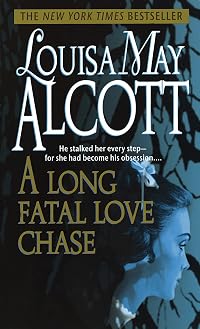
From the author of Little Women comes a collection of gothic, romantic, and spellbinding tales guaranteed to surprise and delight. This collection represents the best of Alcott's adult oeuvre, starting with "A Modern Mephistopheles," a dark Faustian tale inspired by A Long Fatal Love Chase. The stories in this volume display dramatic intensity and thrilling, suspenseful plots that show Alcott to be a complex and passionate writer. Listeners will discover within this maelstrom of murder, show more deceit, obsessive desire, treachery, duplicity, and betrayal that love and honor can still conquer all. The book takes its title from the tale "A Whisper in the Dark," arguably Alcott's gothic masterpiece, a story of imperiled innocence. Also featured are "The Abbot's Ghost," one of Alcott's few supernatural thrillers; "Perilous Play," a sensationalist story in which she suggests that with the appropriate stimulation-in this case hashish-even the innocent reveal a dark side; and "V. V.; or Plots and Counterplots," which introduces the mysterious Virginie Varens, the darkest heroine in all her work. show lessTags
Recommendations











Member Reviews
Having previously read and reviewed four of the “Twelve Thrilling Tales”, I just read the eight from this collection that were new to me.
“Modern Magic” proved interesting at times, but also boring in places. I like the concept more than the creation. 2 stars.
“Only an Actress!” felt more like a drama than a thriller, though one must bear in mind the different standards when comparing “today” with the 1850s. Overall I found this tale too depressing for my tastes. Would’ve rated this 2 stars, but as it was well-plotted with good characterisation, I feel it deserves 3 stars.
“Actress and Woman” is a fast-paced little tale set in France. Great dialogue and characterisation features throughout the text. 4 show more stars.
“Ariel” begins and continues in an upbeat tone, though abruptly turns into melancholy and despair about two-thirds of the way through.
This tale shows the author’s skill at building suspense, as there’s an element of mystery about the title character right from her first appearance. Ariel is an engaging and endearing young woman. In fact, all the main characters are appealing in one way or another.
I won’t give the ending away but it, and the build-up towards it, is amongst Ms Alcott’s finest in my view. This talented author manages to convey different emotional responses from the reader – this one, at least – towards the fate of the five main characters. This is my second favourite story in this collection – 5 stars.
“Whisper in the Dark” starts off at a moderate pace, proving quite interesting as a 17-year-old orphan girl is sent to live with her uncle and cousin Guy, the latter of which she is expected to marry.
Cousins marrying is a theme I’m accustomed to in the nineteenth-century novel, having read my fair share of them, yet I still find it hard to understand why it was so popular and deemed so natural for such a long period. It creeps me out a little.
Anyway, the story comes to life following a misunderstanding, leading the heroine into a nightmare scenario. Can’t say much more on this without spoiling what happens, but will state that the tale goes from mildly interesting to highly absorbing.
Ms Alcott’s talents shine in the latter part of this tale. Pity that this had to be a short story, as there’s scope for it to be an engrossing novel. Because of the shortness the issues are resolved too quickly. The author could certainly have squeezed more out of it had this been a novel or even a novella. Had it been I would’ve surely rated it 5 stars, but with matters being put right so quickly, plus the plodding-to-middle-paced first section, I’ll award this 4 stars.
“Plots & Counterplots” strikes me as the most ambitious of the twelve thrillers presented in this collection. At times I confess to being a little lost with it. Overall it was an engaging read, well-written as one would expect, with convincing characters. The ending was very good, even if I did guess what the female lead would do.
Ambiguity is rife in “Enigmas” yet I wasn’t especially surprised with two or three of the “revelations” that occur. A man is paid to spy on a writer but is not told why. The first-person narrator relates most of the events in journal form, though thankfully it doesn’t read like a stuffy epistolary story. Didn’t find the ending a satisfying one, nor do I rate this as one if Ms Alcott’s finest pieces, yet still feel it warrants 3 stars.
“A Look and a Laugh” is somewhat different to all the other tales in this collection. It reads more like classic detective fiction than a thriller. I was a little bemused by the ending, as – without giving anything away – it gave me an “Is that it?” response.
However, as the brief editorial intro points out, the reader should be left thinking whether the conclusions are as black and white as they seem. With this in mind, I viewed it from another angle, resulting in me raising my opinion of this tale. Once again, Ms Alcott proves her worth as a great writer, and 3 stars seems more fitting than the 2 I was originally going to rate this story.
As I’ve already reviewed the stories I’ve previously read I’ll briefly say that I rate both “Perilous Play” and “Love and Self-Love” 4 stars, “A Modern Mephistopheles” 2 stars, and “The Abbot’s Ghost” 5 stars. The latter tale is my favourite work to date by this author – and the first, it being what persuaded me to read more. show less
“Modern Magic” proved interesting at times, but also boring in places. I like the concept more than the creation. 2 stars.
“Only an Actress!” felt more like a drama than a thriller, though one must bear in mind the different standards when comparing “today” with the 1850s. Overall I found this tale too depressing for my tastes. Would’ve rated this 2 stars, but as it was well-plotted with good characterisation, I feel it deserves 3 stars.
“Actress and Woman” is a fast-paced little tale set in France. Great dialogue and characterisation features throughout the text. 4 show more stars.
“Ariel” begins and continues in an upbeat tone, though abruptly turns into melancholy and despair about two-thirds of the way through.
This tale shows the author’s skill at building suspense, as there’s an element of mystery about the title character right from her first appearance. Ariel is an engaging and endearing young woman. In fact, all the main characters are appealing in one way or another.
I won’t give the ending away but it, and the build-up towards it, is amongst Ms Alcott’s finest in my view. This talented author manages to convey different emotional responses from the reader – this one, at least – towards the fate of the five main characters. This is my second favourite story in this collection – 5 stars.
“Whisper in the Dark” starts off at a moderate pace, proving quite interesting as a 17-year-old orphan girl is sent to live with her uncle and cousin Guy, the latter of which she is expected to marry.
Cousins marrying is a theme I’m accustomed to in the nineteenth-century novel, having read my fair share of them, yet I still find it hard to understand why it was so popular and deemed so natural for such a long period. It creeps me out a little.
Anyway, the story comes to life following a misunderstanding, leading the heroine into a nightmare scenario. Can’t say much more on this without spoiling what happens, but will state that the tale goes from mildly interesting to highly absorbing.
Ms Alcott’s talents shine in the latter part of this tale. Pity that this had to be a short story, as there’s scope for it to be an engrossing novel. Because of the shortness the issues are resolved too quickly. The author could certainly have squeezed more out of it had this been a novel or even a novella. Had it been I would’ve surely rated it 5 stars, but with matters being put right so quickly, plus the plodding-to-middle-paced first section, I’ll award this 4 stars.
“Plots & Counterplots” strikes me as the most ambitious of the twelve thrillers presented in this collection. At times I confess to being a little lost with it. Overall it was an engaging read, well-written as one would expect, with convincing characters. The ending was very good, even if I did guess what the female lead would do.
Ambiguity is rife in “Enigmas” yet I wasn’t especially surprised with two or three of the “revelations” that occur. A man is paid to spy on a writer but is not told why. The first-person narrator relates most of the events in journal form, though thankfully it doesn’t read like a stuffy epistolary story. Didn’t find the ending a satisfying one, nor do I rate this as one if Ms Alcott’s finest pieces, yet still feel it warrants 3 stars.
“A Look and a Laugh” is somewhat different to all the other tales in this collection. It reads more like classic detective fiction than a thriller. I was a little bemused by the ending, as – without giving anything away – it gave me an “Is that it?” response.
However, as the brief editorial intro points out, the reader should be left thinking whether the conclusions are as black and white as they seem. With this in mind, I viewed it from another angle, resulting in me raising my opinion of this tale. Once again, Ms Alcott proves her worth as a great writer, and 3 stars seems more fitting than the 2 I was originally going to rate this story.
As I’ve already reviewed the stories I’ve previously read I’ll briefly say that I rate both “Perilous Play” and “Love and Self-Love” 4 stars, “A Modern Mephistopheles” 2 stars, and “The Abbot’s Ghost” 5 stars. The latter tale is my favourite work to date by this author – and the first, it being what persuaded me to read more. show less
This was initially a hard book to get through as I did not enjoy the first story - A Modern Mephistopheles - at all. It was dark and confusing. Some other stories that I did enjoy however were "Ariel: A Legend of the Lighthouse" which had a Hunchback of Notre Dame flavor to it, slightly. And I also enjoyed the intriguing mystery in "V.V. or Plots and Counterplots". That one kept me guessing the whole time as to how the mystery will get unraveled. Most of the stories were dark and melodramatic, most with unhappy endings or ironic twists. I'm glad I read it. If you're expecting anything like Alcott's children's classics, however, you're in for a real shock. I prefer her children's books myself.
Each story is has a paragraph of introduction by the editor. My sense of the stories, after a few years of distance, is that they were overwrought and moralistic, but readable.
A Modern Mephistopheles, and A Whisper in the Dark is available on Project Gutenberg:https://www.gutenberg.org/ebooks/54212
A Modern Mephistopheles, and A Whisper in the Dark is available on Project Gutenberg:https://www.gutenberg.org/ebooks/54212
September 12, 1999
A Whisper in the Dark
Louisa May Alcott
Many people don’t know that Alcott, famous for the Little Women and Little Men books, also wrote Gothic suspense stories – more like borderline horror, really – anonymously, just to pay the rent. That type of story was all the rage in her day, but apparently she was ashamed of them and used a pseudonym to publish them.
This story is typical of its kind: a young woman learns that she is an heiress, and also learns that her uncle, who wishes her to marry his son, has sinister plans to make her fortune his own. When she balks, he conspires with a nasty doctor to have her locked away in a strange house with guardians and a mysterious crying woman in the night.
Of course, all show more comes out well and she gets her fortune after all, and the guy too. A satisfying read. There are other stories in the book too, since it’s a collection. show less
A Whisper in the Dark
Louisa May Alcott
Many people don’t know that Alcott, famous for the Little Women and Little Men books, also wrote Gothic suspense stories – more like borderline horror, really – anonymously, just to pay the rent. That type of story was all the rage in her day, but apparently she was ashamed of them and used a pseudonym to publish them.
This story is typical of its kind: a young woman learns that she is an heiress, and also learns that her uncle, who wishes her to marry his son, has sinister plans to make her fortune his own. When she balks, he conspires with a nasty doctor to have her locked away in a strange house with guardians and a mysterious crying woman in the night.
Of course, all show more comes out well and she gets her fortune after all, and the guy too. A satisfying read. There are other stories in the book too, since it’s a collection. show less
Ratings
Members
- Recently Added By
Author Information

468+ Works 108,990 Members
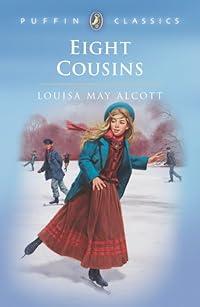
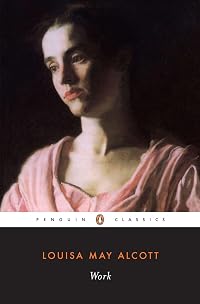
Louisa May Alcott was born in Germantown, Pennsylvania, in 1832. Two years later, she moved with her family to Boston and in 1840 to Concord, which was to remain her family home for the rest of her life. Her father, Bronson Alcott, was a transcendentalist and friend of Ralph Waldo Emerson and Henry David Thoreau. Alcott early realized that her show more father could not be counted on as sole support of his family, and so she sacrificed much of her own pleasure to earn money by sewing, teaching, and churning out potboilers. Her reputation was established with Hospital Sketches (1863), which was an account of her work as a volunteer nurse in Washington, D.C. Alcott's first works were written for children, including her best-known Little Women (1868--69) and Little Men: Life at Plumfield with Jo's Boys (1871). Moods (1864), a "passionate conflict," was written for adults. Alcott's writing eventually became the family's main source of income. Throughout her life, Alcott continued to produce highly popular and idealistic literature for children. An Old-Fashioned Girl (1870), Eight Cousins (1875), Rose in Bloom (1876), Under the Lilacs (1878), and Jack and Jill (1881) enjoyed wide popularity. At the same time, her adult fiction, such as the autobiographical novel Work: A Story of Experience (1873) and A Modern Mephistopheles (1877), a story based on the Faust legend, shows her deeper concern with such social issues as education, prison reform, and women's suffrage. She realistically depicts the problems of adolescents and working women, the difficulties of relationships between men and women, and the values of the single woman's life. (Bowker Author Biography) show less
All Editions
Some Editions
Work Relationships
Common Knowledge
- Disambiguation notice
- Please do not combine with other editions titled: A whisper in the dark This edition is a collection first published by Barnes & Noble Books in 1996 and its 12 stories are collected together for th... (show all)e first time. (See contents in book description.)
Classifications
Statistics
- Members
- 291
- Popularity
- 110,498
- Reviews
- 4
- Rating
- (3.76)
- Languages
- English
- Media
- Paper, Audiobook, Ebook
- ISBNs
- 9
- ASINs
- 5