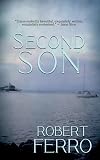
Second Son
by Robert Ferro
On This Page
Description
In a family torn apart by a mother's death and lifelong tensions between the four siblings, the devastating illness of one of the children forces each family member to search for hope and the meaning of love.Tags
Recommendations
























Member Reviews
"Second Son" follows Mark Valerian, the third of four children and, as the title suggests, the second son. Unlike his older siblings, he doesn't follow along with his parents' wishes and instead becomes a landscape architect. A very prosperous one. He also lives openly as a gay man with HIV. At the onset of the story, the matriarch of the Valerian family has passed away, and the family tries to decide what to do with their second home in Cape May: the house in which their mother died and in which Mark currently lives. His father and older brother want to sell the home in order to aid the failing family business. But Mark is adamant about not selling, further widening the rift between him and his father.
Mark also must deal with his HIV show more status and his own self-perceptions of what it is to be a gay man living with HIV. He doesn't feel deserving of love, not from his family and certainly not from another gay man, and the seclusion of the house in Cape May allows him some form of escape. But he still must live and work so he travels to Italy to work on a commission and there, through letters from his closest friend Matthew, is introduced to a theatrical designer named Brian. The connection is almost immediate and once they discover that they're both positive, a barrier crumbles between them. They grow more intimate and fall in love.
Much of the novel deals with the struggles that all families go through when someone is sick, especially during the HIV/AIDS epidemic and panic in the 80s. Mark separates himself from his family, for the most part because he feels that he needs to but also because he picks up on subtle hints from his family that steer him in that direction, such as when his brother George and his wife don't allow him to touch their granddaughter, not so much by words but by their actions and reactions to him. These feelings come to a head when he learns that the family has already mortgaged the house in the Cape without telling him, and he blurts out in anger that his father had already written him off as dead.
Another strong scene that counters this and fights against Mark's own feelings of sadness comes when his niece -- George's daughter -- goes to answer a ringing phone and sets her baby daughter in Mark's lap. Instead of playing with his great-niece, he cries sad yet happy tears that someone in his family sees him as Mark instead of as someone with HIV/AIDS. Until that point, he really didn't believe his family could see the difference.
Instead of proselytizing that having HIV/AIDS means not being able to love or being quarantined from the world, Ferro's novel teaches that everyone is deserving of love and respect, no matter what hardships or problems arise show less
Mark also must deal with his HIV show more status and his own self-perceptions of what it is to be a gay man living with HIV. He doesn't feel deserving of love, not from his family and certainly not from another gay man, and the seclusion of the house in Cape May allows him some form of escape. But he still must live and work so he travels to Italy to work on a commission and there, through letters from his closest friend Matthew, is introduced to a theatrical designer named Brian. The connection is almost immediate and once they discover that they're both positive, a barrier crumbles between them. They grow more intimate and fall in love.
Much of the novel deals with the struggles that all families go through when someone is sick, especially during the HIV/AIDS epidemic and panic in the 80s. Mark separates himself from his family, for the most part because he feels that he needs to but also because he picks up on subtle hints from his family that steer him in that direction, such as when his brother George and his wife don't allow him to touch their granddaughter, not so much by words but by their actions and reactions to him. These feelings come to a head when he learns that the family has already mortgaged the house in the Cape without telling him, and he blurts out in anger that his father had already written him off as dead.
Another strong scene that counters this and fights against Mark's own feelings of sadness comes when his niece -- George's daughter -- goes to answer a ringing phone and sets her baby daughter in Mark's lap. Instead of playing with his great-niece, he cries sad yet happy tears that someone in his family sees him as Mark instead of as someone with HIV/AIDS. Until that point, he really didn't believe his family could see the difference.
Instead of proselytizing that having HIV/AIDS means not being able to love or being quarantined from the world, Ferro's novel teaches that everyone is deserving of love and respect, no matter what hardships or problems arise show less
One of the best Gay reads ever
Ratings
Members
- Recently Added By
Author Information

7+ Works 636 Members
Awards and Honors
Awards
Common Knowledge
- Original publication date
- 1988
Classifications
Statistics
- Members
- 153
- Popularity
- 214,907
- Reviews
- 2
- Rating
- (4.08)
- Languages
- English
- Media
- Paper, Ebook
- ISBNs
- 6
- ASINs
- 1