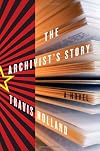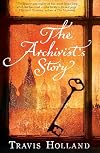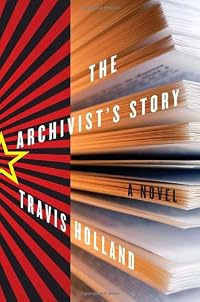
The Archivist's Story
by Travis Holland
On This Page
Description
Moscow, 1939. In the recesses of the infamous Lubyanka prison, a young archivist is sent to verify the authorship of an unfinished story, confiscated from one of the many political prisoners there. The writer is Isaac Babel. The great author of Red Cavalry is spending his last days forbidden to write, his final works consigned to the archivist, Pavel Dubrov - who will ultimately be charged with destroying them. Pavel, a former schoolmaster and lover of literature, a reluctant minion in show more Stalin's system, makes a reckless decision- he will save the last stories of the writer he admires; whatever the cost. Pavel's daring in the face of a vast bureaucracy of evil invigorates a life that had slowly lost its meaning, even as it guarantees his almost certain undoing. A story of suspicion, courage and unexpected grace, The Archivist's Story is ultimately a tribute to the enduring power of the written word. show lessTags
Recommendations
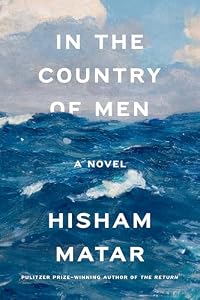
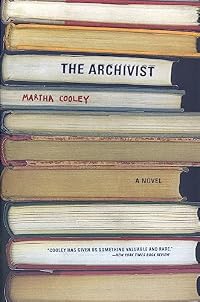
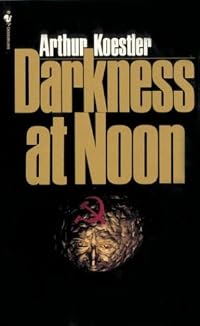
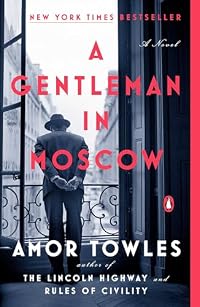

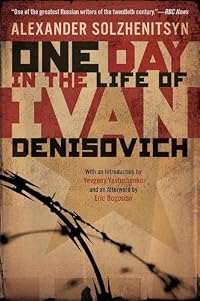


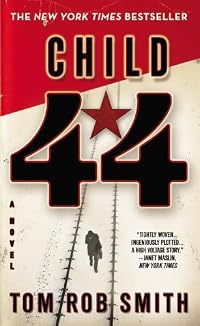

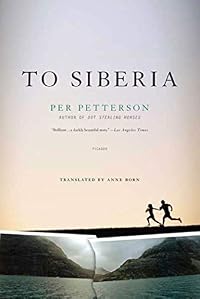
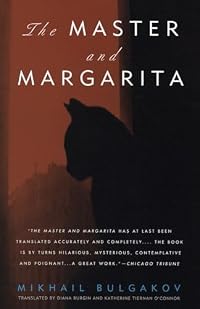

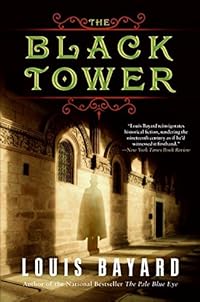
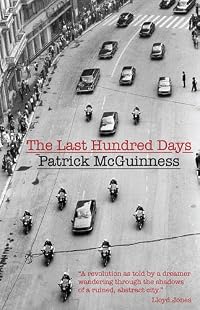


Member Recommendations
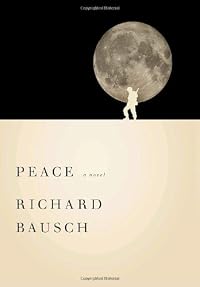
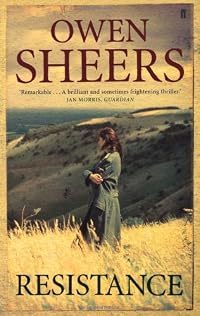
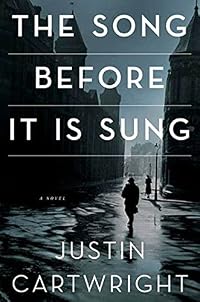
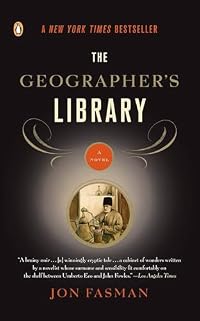
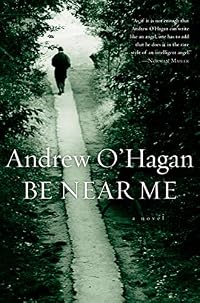
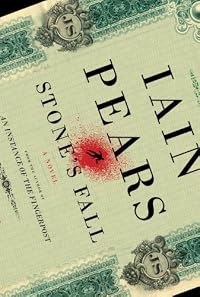
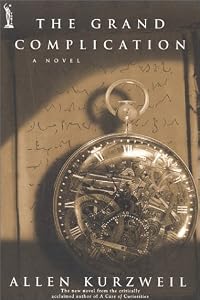
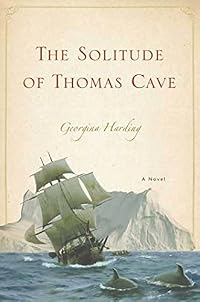
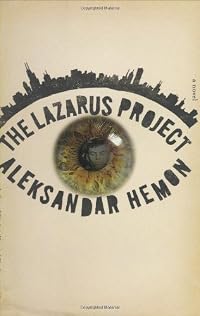
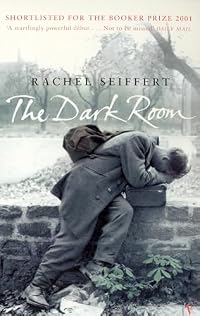
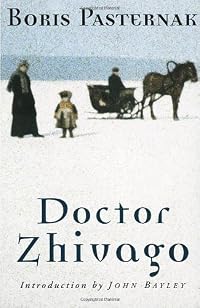
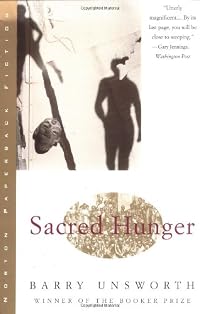
Eat_Read_Knit Two very powerful stories of what happens when a very small cog in the machine of a dictatorship decides not to turn anymore.
20
Eat_Read_Knit Two gripping portrayals of human reaction to living in a permanent state of tension and danger.
Member Reviews
If you’re intrigued by the history of totalitarianism, particularly as played out during the Stalinist period in the U.S.S.R., then you have probably read Robert Conquest’s The Great Terror, Arthur Koestler’s Darkness at Noon and Natalia Ginsburg’s Journey into the Whirlwind. Suffering on such a massive scale is difficult to imagine, much less describe for readers who have not lived through these horrific events. If anything, the graphic representation of violence in our daily lives–on T.V., the internet, video games, etc–have desensitized us to human suffering. While novels and memoirs written by those who experienced the Stalinist purges reveal the horrors they and their loved ones endured, more recent representations of show more life during communism seem to shy away from depicting overt violence. I’m thinking of the popular German movie The Lives of Others, which chose to focus on the periphery, in an incredibly effective representation of character transformation and political voyeurism.
Written in this tradition, Travis Holland’s impressive debut novel, The Archivist’s Story, attunes readers to the nuances of living under communist regimes: the constant fear; the ever-present threat of violence; the relentless surveillance; the pressure to succumb to the totalitarian machine. Instead of focusing on the key players (Stalin and his cronies) or on the violent horrors of the Gulags and prisons, Holland reveals the drama of the center stage by depicting the periphery. The story is told by Pavel Dubrov, a Lubyanka prison archivist whose job is to destroy “deviationist” literature. In a prison file, he discovers a story that he believes is written by Isaac Babel, who is himself imprisoned. Because he admires Babel and his work, the archivist performs an act that speaks to his courage: he saves one of Babel’s documents. It’s true that Pavel doesn’t have much to lose at this point: his wife was killed in a train accident; his mother is dying of brain cancer. The archivist’s life revolves around his sordid duties at the Lubyanka. Refusing to burn a document may not seem like much. But one must remember that, during the Stalinist period, even looking at someone the wrong way or not applauding loudly enough after a communist speech could mean a death sentence. Saving a document that not only went against the party line, but also countered the very spirit of dogma reigning over the U.S.S.R., was an act of heroism. Through the elegance of his prose, the strength of his characterizations and the engaging pace of his narration, Holland allows readers to step into the nightmarish reality of Stalinist Russia and appreciate its impact upon ordinary lives.
Claudia Moscovici, Notablewriters.com show less
Written in this tradition, Travis Holland’s impressive debut novel, The Archivist’s Story, attunes readers to the nuances of living under communist regimes: the constant fear; the ever-present threat of violence; the relentless surveillance; the pressure to succumb to the totalitarian machine. Instead of focusing on the key players (Stalin and his cronies) or on the violent horrors of the Gulags and prisons, Holland reveals the drama of the center stage by depicting the periphery. The story is told by Pavel Dubrov, a Lubyanka prison archivist whose job is to destroy “deviationist” literature. In a prison file, he discovers a story that he believes is written by Isaac Babel, who is himself imprisoned. Because he admires Babel and his work, the archivist performs an act that speaks to his courage: he saves one of Babel’s documents. It’s true that Pavel doesn’t have much to lose at this point: his wife was killed in a train accident; his mother is dying of brain cancer. The archivist’s life revolves around his sordid duties at the Lubyanka. Refusing to burn a document may not seem like much. But one must remember that, during the Stalinist period, even looking at someone the wrong way or not applauding loudly enough after a communist speech could mean a death sentence. Saving a document that not only went against the party line, but also countered the very spirit of dogma reigning over the U.S.S.R., was an act of heroism. Through the elegance of his prose, the strength of his characterizations and the engaging pace of his narration, Holland allows readers to step into the nightmarish reality of Stalinist Russia and appreciate its impact upon ordinary lives.
Claudia Moscovici, Notablewriters.com show less
Ah, too soon was this book over! I finished this one in a very short amount of time (it's just over 200 pages), and was so totally engrossed that I forgot I was sitting on a beautiful, tropical beach in San Juan for a while. Although very disturbing in regards to the picture it paints of a Stalinist USSR, it was an incredible book and I would recommend it highly.
Isaac Babel, an author whose works probably need little or no introduction, has been arrested and now sits in the Lubyanka prison as the novel opens. Pavel Dubrov, the archivist of the title, has been sent to speak to Babel to verify that one of the stories the NKVD has confiscated actually is one of his. In this way, Pavel (aka Pasha) tells Babel, it can be assigned to the show more proper file in the archives. Out of curiosity, Pavel begins reading it and discovers the beauty of Babel's work and decides to save it, rather than to let it molder in some file or worse, find its way into the constantly-stoked incinerators where thousands of manuscripts and other works found a final home. Pavel knows that doing so will place himself in danger, but things in his past and events in his present lead him to believe that he can perhaps not only redeem himself by saving some of Babel's work, but also (and this gets into the central theme of the novel, imho) perhaps do his bit to change the flow of the history in which he has been caught up on some miniscule level. As he watches those he loves most get caught up in the Stalinist paranoia machine (and these were still in the early days of Stalin's time), he knows he has to do something.
An amazing book, truly. I think anyone interested in the former Soviet Union would really enjoy this book, as well as anyone interested in the topic of censorship. It is very well written; I hope Holland puts out something new very shortly. Highly recommended. show less
Isaac Babel, an author whose works probably need little or no introduction, has been arrested and now sits in the Lubyanka prison as the novel opens. Pavel Dubrov, the archivist of the title, has been sent to speak to Babel to verify that one of the stories the NKVD has confiscated actually is one of his. In this way, Pavel (aka Pasha) tells Babel, it can be assigned to the show more proper file in the archives. Out of curiosity, Pavel begins reading it and discovers the beauty of Babel's work and decides to save it, rather than to let it molder in some file or worse, find its way into the constantly-stoked incinerators where thousands of manuscripts and other works found a final home. Pavel knows that doing so will place himself in danger, but things in his past and events in his present lead him to believe that he can perhaps not only redeem himself by saving some of Babel's work, but also (and this gets into the central theme of the novel, imho) perhaps do his bit to change the flow of the history in which he has been caught up on some miniscule level. As he watches those he loves most get caught up in the Stalinist paranoia machine (and these were still in the early days of Stalin's time), he knows he has to do something.
An amazing book, truly. I think anyone interested in the former Soviet Union would really enjoy this book, as well as anyone interested in the topic of censorship. It is very well written; I hope Holland puts out something new very shortly. Highly recommended. show less
THOUGH beautifully written with supremely elegant and restrained prose, this delicately told story is as powerful and frightening as your worst nightmare.
Travis Holland is American, but his debut novel reads like an authentic work of Russian literature at its grandest. It is a simple tale, opening a little window on to a small slice of the life of the characters, but related with the meticulous and fresh attention to ephemeral everyday detail that was the hallmark of the pre-Soviet literary greats.
Pasha Dubrov, formerly a teacher at the renowned Kirov Academy, is reduced to being an archivist at the notorious Lubyanka in Moscow, surrounded by the original manuscripts of the novels and poems he used to teach.
Set in the late summer of show more 1939, Muscovites have toed the official line by first demonising Germany, and Hitler, then embracing them after the surprise signing of the nonaggression pact and finally, after the Nazis invade Poland “in self-defence”, waiting and watching warily for the state to instruct them on their appropriate attitude.
The arguably halcyon days of early communism with its brotherhood, and artistic freedoms, were truly over; the era of Stalinist purges was at its height.
Librarians and archivists were no longer guardians of literary culture, but state functionaries with no appreciation of the written word, and a total commitment to the party line. Unfortunately for Dubrov, he loves literature and when commanded to incinerate a manuscript, feels he is incinerating part of his soul.
When Babel, a writer he particularly admires, is arrested, Dubrov is determined to save some of his manuscripts, and smuggles them out of Lubyanka to be hidden — an action punishable by death.
Every student of Soviet history knows that when Stalin purged, the purging was permanent, and a mere year after arrest, almost all traces of any “traitor” would have been completely obliterated. Records and manuscripts were destroyed, pictures were altered and homes were burnt down until no trace of the malcontent remained.
Though Dubrov has tried to keep away from politics, he is all too aware of the true state of affairs and when the immediate superior of his friend Victor is arrested, Dubrov warns him: “Those men who arrested your boss, they don’t care if he’s innocent or not. As long as [he] confesses, they have their case. They’ll charge him with sabotaging … the project, or spying, or they’ll simply call him a counter-revolutionary. A Trotskyite. Whatever they come up with, he’ll confess to it.”
For older South Africans, The Archivist’s Story is not a story but a harsh reminder of how things were in SA a mere 20 years ago, when images of banned or imprisoned people were forbidden, their writing was outlawed and their families were under house arrest.
“Words like ‘innocence’ and ‘guilt’ — they’re for people outside the prisons,” Dubrov tells Victor. “Mental and physical torture can make even the most blameless person confess to anything, and blurt out names, any names, just to make the pain stop.”
Apartheid SA used the same tools of subjugation as its greatest avowed enemy, the USSR, with party-controlled media, history, education, religion, literature and philosophy, enforced by a police state.
Dubrov is Everyman; decent, humane and non-political, he tries to live a quiet and trouble-free life, even if it means compromising his values and ideals.
So far, and no further. Everyone has their breaking point, and Dubrov reaches his when he is ordered to destroy Babel’s manuscripts, re-enforced when his surrogate father is arrested for no greater crime than honest literary criticism, and an irreverent sense of humour.
Excellent and thought-provoking on all levels, The Archivist’s Story should remind readers — and rulers — of the oft-quoted cliché: “Those who do not learn from lessons of history are doomed to repeat them.” show less
Travis Holland is American, but his debut novel reads like an authentic work of Russian literature at its grandest. It is a simple tale, opening a little window on to a small slice of the life of the characters, but related with the meticulous and fresh attention to ephemeral everyday detail that was the hallmark of the pre-Soviet literary greats.
Pasha Dubrov, formerly a teacher at the renowned Kirov Academy, is reduced to being an archivist at the notorious Lubyanka in Moscow, surrounded by the original manuscripts of the novels and poems he used to teach.
Set in the late summer of show more 1939, Muscovites have toed the official line by first demonising Germany, and Hitler, then embracing them after the surprise signing of the nonaggression pact and finally, after the Nazis invade Poland “in self-defence”, waiting and watching warily for the state to instruct them on their appropriate attitude.
The arguably halcyon days of early communism with its brotherhood, and artistic freedoms, were truly over; the era of Stalinist purges was at its height.
Librarians and archivists were no longer guardians of literary culture, but state functionaries with no appreciation of the written word, and a total commitment to the party line. Unfortunately for Dubrov, he loves literature and when commanded to incinerate a manuscript, feels he is incinerating part of his soul.
When Babel, a writer he particularly admires, is arrested, Dubrov is determined to save some of his manuscripts, and smuggles them out of Lubyanka to be hidden — an action punishable by death.
Every student of Soviet history knows that when Stalin purged, the purging was permanent, and a mere year after arrest, almost all traces of any “traitor” would have been completely obliterated. Records and manuscripts were destroyed, pictures were altered and homes were burnt down until no trace of the malcontent remained.
Though Dubrov has tried to keep away from politics, he is all too aware of the true state of affairs and when the immediate superior of his friend Victor is arrested, Dubrov warns him: “Those men who arrested your boss, they don’t care if he’s innocent or not. As long as [he] confesses, they have their case. They’ll charge him with sabotaging … the project, or spying, or they’ll simply call him a counter-revolutionary. A Trotskyite. Whatever they come up with, he’ll confess to it.”
For older South Africans, The Archivist’s Story is not a story but a harsh reminder of how things were in SA a mere 20 years ago, when images of banned or imprisoned people were forbidden, their writing was outlawed and their families were under house arrest.
“Words like ‘innocence’ and ‘guilt’ — they’re for people outside the prisons,” Dubrov tells Victor. “Mental and physical torture can make even the most blameless person confess to anything, and blurt out names, any names, just to make the pain stop.”
Apartheid SA used the same tools of subjugation as its greatest avowed enemy, the USSR, with party-controlled media, history, education, religion, literature and philosophy, enforced by a police state.
Dubrov is Everyman; decent, humane and non-political, he tries to live a quiet and trouble-free life, even if it means compromising his values and ideals.
So far, and no further. Everyone has their breaking point, and Dubrov reaches his when he is ordered to destroy Babel’s manuscripts, re-enforced when his surrogate father is arrested for no greater crime than honest literary criticism, and an irreverent sense of humour.
Excellent and thought-provoking on all levels, The Archivist’s Story should remind readers — and rulers — of the oft-quoted cliché: “Those who do not learn from lessons of history are doomed to repeat them.” show less
Audio version
Pavel is an archivist at the notorious Lubyanka prison, a former school teacher who left his former position in some disgrace (which you do not know why until later in the book). Set in the months leading up to WW2 we see Pavel at work, notably dealing with the records of Isaac Babel a writer who he admires and respects but who is in the prison. Pavel commits a small but significant act by saving some of Babel’s work from the eventual furnace that is the fate of all the works in the archive. The book is an unremitting depressive understated tale in which we contemplate what it would be like to live in constant fear of faceless men in dark cars taking you off to prison for, essentially, thought crimes. The author also asks show more us to imagine being a lover of literature being forced to catalogue the stories, poems and sketches of “dissdents” and taking them once they are no longer needed to be burned. I think I may have been too depressed to continue with this book if it wasn’t for the excellent vocal talents of Nick Rawlinson who narrated and brought the book alive.
Overall - Stalin’s Russia is brought depressingly to life in this tale which is shot through with many shades of grey and redolent of decay. show less
Pavel is an archivist at the notorious Lubyanka prison, a former school teacher who left his former position in some disgrace (which you do not know why until later in the book). Set in the months leading up to WW2 we see Pavel at work, notably dealing with the records of Isaac Babel a writer who he admires and respects but who is in the prison. Pavel commits a small but significant act by saving some of Babel’s work from the eventual furnace that is the fate of all the works in the archive. The book is an unremitting depressive understated tale in which we contemplate what it would be like to live in constant fear of faceless men in dark cars taking you off to prison for, essentially, thought crimes. The author also asks show more us to imagine being a lover of literature being forced to catalogue the stories, poems and sketches of “dissdents” and taking them once they are no longer needed to be burned. I think I may have been too depressed to continue with this book if it wasn’t for the excellent vocal talents of Nick Rawlinson who narrated and brought the book alive.
Overall - Stalin’s Russia is brought depressingly to life in this tale which is shot through with many shades of grey and redolent of decay. show less
This is exactly the kind of book I love - a simple but powerful novel about ordinary people living through extraordinary times. Pasha, the main character, is a former teacher of literature now forced to burn forbidden books and poetry. As the novel progresses, Pasha and each of the friends who surround him are forced to make difficult choices to risk their lives by protesting against an unjust government or to keep their families safe by ignoring -- or even committing -- atrocities. As each of the characters contemplate the meaning of life, family and freedom, I really felt what it would have been like to live through Stalinist Russia. Great book.
Tight, taut, study of oppressive state paranoia in Stalinist Russia circa 1939, wrapped with a homage to Isaac Babel and other Russian writers persecuted because of their simple humanity. This could have descended into caricature, but it remains focused and steady.
I took this from the book swapping shelf in a hip café in Dubrovnik's old city after I dropped off some of my bookcrossing books. I have to admit, I picked it solely based on the title.
I didn't hate the book, but that's the best I have to say about it. Everything in this story, absolutely everything is dreary, depressing and dark. It's either freezing cold or oppressively hot. Every building, street or quarter described is dilapidated, every room anyone enters smells bad. Every character in the book either gets sick, dies or is imprisoned. Even the tentative relationship that could develop between the main character and a young woman isn't beautiful, exiting and new but silent and dominated by an overbearing dark past.
Ok, so it's not show more the perfect story for a summer holiday but what ruined it for me is the ending or rather lack thereof. If everything is shit, then at least there has to be an end to it all. Leaving it hanging open makes it even worse and the whole reading experience very unsatisfying.
The "beauty and reality of this novel" as quoted on the cover by Elizabeth Kostova (author of the historian) didn't really register with me. Well, the reality of Soviet Moscow in 1938 did, but the beauty of the Russian literature quoted was lost on me. It didn't help mitigate the dreary reality. show less
I didn't hate the book, but that's the best I have to say about it. Everything in this story, absolutely everything is dreary, depressing and dark. It's either freezing cold or oppressively hot. Every building, street or quarter described is dilapidated, every room anyone enters smells bad. Every character in the book either gets sick, dies or is imprisoned. Even the tentative relationship that could develop between the main character and a young woman isn't beautiful, exiting and new but silent and dominated by an overbearing dark past.
Ok, so it's not show more the perfect story for a summer holiday but what ruined it for me is the ending or rather lack thereof. If everything is shit, then at least there has to be an end to it all. Leaving it hanging open makes it even worse and the whole reading experience very unsatisfying.
The "beauty and reality of this novel" as quoted on the cover by Elizabeth Kostova (author of the historian) didn't really register with me. Well, the reality of Soviet Moscow in 1938 did, but the beauty of the Russian literature quoted was lost on me. It didn't help mitigate the dreary reality. show less
Members
- Recently Added By
Published Reviews
ThingScore 50
“The Archivist’s Story” is, quite obviously, Holland’s tribute to Babel. He too is rescuing the Russian master by making him come alive in a historical novel. Yet his intense attachment to Babel can be detrimental to his own fiction. He seems to be writing in a self-imposed shadow of Babel’s genius, peppering the novel with quotes from Babel and his contemporaries and never taking show more off with the kind of freedom a very talented young novelist should take for granted. show less
added by SimoneA
Lists

International IMPAC Dublin Literary Award
179 works; 6 members
Author Information

1+ Work 340 Members
Some Editions
Awards and Honors
Series
Belongs to Publisher Series
Common Knowledge
- Original title
- The Archivist's Story
- Original publication date
- 2007-05; 2007
- People/Characters
- Isaac Babel; Pavel Dubrov; Denegin; Kutyrev; Semyon; Olga (show all 10); Victor; Pavel's Mother; Natalya; Radlov
- Important places
- Moscow, Russia; Lubyanka Building, Moscow, Russia
- Epigraph
- You took away all the oceans and all the room. You gave me my shoe-size in earth with bars around it. Where did it get you? Nowhere. You left me my lips, and they shape words, even in silence. ~Osip Mandelstam
I have only one request: that I be allowed to complete my last work... ~ Isaac Babel, Final statement before NKVD Military Tribunal, January 26, 1940. - Dedication
- For Amy
- First words
- It is a small matter that brings them together.
- Blurbers
- Kostova, Elizabeth; Davies, Peter Ho
- Original language
- English US
- Disambiguation notice
- Portions of this book appeared in a slightly different form in the Michigan Quarterly Review.
Classifications
Statistics
- Members
- 340
- Popularity
- 92,607
- Reviews
- 20
- Rating
- (3.55)
- Languages
- English, French, Italian, Spanish
- Media
- Paper, Audiobook, Ebook
- ISBNs
- 19
- ASINs
- 4