On This Page
Description
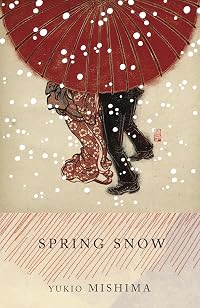
Yukio Mishima's Spring Snow is the first novel in his masterful tetralogy, The Sea of Fertility. Here we meet Shigekuni Honda, who narrates this epic tale of what he believes are the successive reincarnations of his friend, Kiyoaki Matsugae. nbsp; It is 1912 in Tokyo, and the hermetic world of the ancient aristocracy is being breached for the first time by outsiders -- rich provincial families unburdened by tradition, whose money and vitality make them formidable contenders for social and show more political power. Shigekuni Honda, an aspiring lawyer and his childhood friend, Kiyoaki Matsugae, are the sons of two such families. As they come of age amidst the growing tensions between old and new, Kiyoaki is plagued by his simultaneous love for and loathing of the spirited young woman Ayakura Satoko. But Kiyoaki's true feelings only become apparent when her sudden engagement to a royal prince shows him the magnitude of his passion -- and leads to a love affair both doomed and inevitable. show lessTags
Recommendations





Member Reviews
This book was my introduction to the works of Mishima and while I had a very weird enjoyment of this novel, I sort of wish I'd started with something else of his that's maybe shorter or focuses more on one idea so I could feel him out better. But that's just a personal preference and doesn't take away from 'Spring Snow' itself.
Even though I had a great dislike of the MC, my boy Kiyoaki, for his fickle, childish, and borderline narcissistic attitudes he displays at the beginning (and then passionate delusions at the end), I was super invested in his story and how he suffers, (which I knew he would considering the gloomy foreshadowing is extremely heavy - even without my glasses I would've seen it coming a mile away).
Each theme of the show more book is explored deeply and is woven into a complex webbing where each point is interconnected. It's quite beautifully done. There's the transition of boyhood into manhood (or the perception of, and how it falters), the changing of an era and being born during in-between times, that there are people born now who fit better into the era of the past and those born who fit into an era to come, that passion is the epitome of youth and of life - that once it's realized and passes, the best part of life is now behind you.
I did have a good time reading about mens' nipples and chest hair, though, I've been told this is typical for Mishima and I have to say I appreciate it. show less
Even though I had a great dislike of the MC, my boy Kiyoaki, for his fickle, childish, and borderline narcissistic attitudes he displays at the beginning (and then passionate delusions at the end), I was super invested in his story and how he suffers, (which I knew he would considering the gloomy foreshadowing is extremely heavy - even without my glasses I would've seen it coming a mile away).
Each theme of the show more book is explored deeply and is woven into a complex webbing where each point is interconnected. It's quite beautifully done. There's the transition of boyhood into manhood (or the perception of, and how it falters), the changing of an era and being born during in-between times, that there are people born now who fit better into the era of the past and those born who fit into an era to come, that passion is the epitome of youth and of life - that once it's realized and passes, the best part of life is now behind you.
I did have a good time reading about mens' nipples and chest hair, though, I've been told this is typical for Mishima and I have to say I appreciate it. show less
Jefferson's first day of school was a Wednesday, and I of course had a brain meltdown and barely got us out the door in time, so certainly didn't have a lunch packed or a book to read while I hung out in Mecosta and waited for time to pick him up. Plus, on Wednesdays, the library doesn't open until 1:00 (preschool starts at 11:30), but happily the used bookstore was open.
Spring Snow was the first book to catch my eye on entering the store. I suspected at the time and have since confirmed that it sounded so familiar because it was on Bookslut's top 100 books of the 20th century list. And I'm happy to say after reading it I feel it definitely deserves its spot on that list. I loved this book from beginning to end.
Set in early 20th century show more Japan, this story plays out against a backdrop of a country in flux -- where families with money and families with rank have access to different kinds of power. Where old world elegance clashes with those emulating the tastes and values of the west.
In addition to this intriguing glance into a foreign culture, are the more familiar forms of a young man's coming of age and the tragic tale of a forbidden romance. But almost all of these things seem secondary to the languid, hypnotizing style with which the story is told. One never stops to wonder how the recitation of a dream or a religious discussion or a rumination on law moves the story forward, because every word just seems to draw the reader further into the dream that is this book.
I can hardly recommend this book highly enough. show less
Spring Snow was the first book to catch my eye on entering the store. I suspected at the time and have since confirmed that it sounded so familiar because it was on Bookslut's top 100 books of the 20th century list. And I'm happy to say after reading it I feel it definitely deserves its spot on that list. I loved this book from beginning to end.
Set in early 20th century show more Japan, this story plays out against a backdrop of a country in flux -- where families with money and families with rank have access to different kinds of power. Where old world elegance clashes with those emulating the tastes and values of the west.
In addition to this intriguing glance into a foreign culture, are the more familiar forms of a young man's coming of age and the tragic tale of a forbidden romance. But almost all of these things seem secondary to the languid, hypnotizing style with which the story is told. One never stops to wonder how the recitation of a dream or a religious discussion or a rumination on law moves the story forward, because every word just seems to draw the reader further into the dream that is this book.
I can hardly recommend this book highly enough. show less
I don't know if I'm too impressionable or if every book I read is, as a matter of fact, the most beautiful book I've ever read! Like Wagner, Mishima is an artist of supremely weird personal politics and yet capable of unprecedented scale, scope, and majesty. What would, in other hands, be a fairly predictable story of star-crossed lovers here plays out in cinemascope extravagance, with a cast of very complicated characters whose motives are impossibly bound with their principles, politics, aesthetics, etc. This is a coming of age story where teenage boys discuss the transmigration of souls and true love is an endurance test of mutual manipulation. How could a book determined to end in defeat make for such suspenseful reading? How could show more such bad behavior and self-interest endear itself so sweetly? Who knows. "The path we're taking is not a road, Kiyo, it's a pier, and it ends someplace where the sea begins." Recommended for people with a high tolerance for the grandiose. show less
'Spring Snow' took quite a while to absorb me. The writing is beautiful and the atmosphere of Japan in 1912 very vivid. The difficulty, though, was that the main character Kiyoaki failed to attract my sympathy. He has been brought up with extreme refinement and delicacy, without responsibilities or pressures. As a result he has become deeply self-involved and only interested in his own internal life. Indeed, he seems to be wholly emotionally masochistic, determined to wallow in heartbreak and frustration for its own sake. It is as if the lack of strong emotion and challenges in his life drive him to manufacture his own. This is most emphatically shown by his interest in pursuing a woman he's known from childhood only awakening once she show more seemingly becomes unavailable.
Whilst this is interesting to observe, it is also frustrating. Kiyoaki's lassitude weighs upon the narrative, as I'm sure it is intended to. I felt more enthusiasm when Mishima's focus temporarily shifted to Honda, Satoko, and, especially, Tadeshina the maid (who gave me the impression of being the character with the most agency and power). That said, I couldn't help but appreciate the extreme non-involvement philosophy of Satoko's father, generally referred to as the Count:
That seems like the most elegant possible mode of expressing, 'Can't someone else do it?' Snippets like that greatly pleased me, but for the most part I found this novel's atmosphere stifling thanks to to Kioaki's point of view. Like him, it is beautiful but frustratingly blinkered. Mishima is a wonderful writer, though, and I intend to read more by him. show less
Whilst this is interesting to observe, it is also frustrating. Kiyoaki's lassitude weighs upon the narrative, as I'm sure it is intended to. I felt more enthusiasm when Mishima's focus temporarily shifted to Honda, Satoko, and, especially, Tadeshina the maid (who gave me the impression of being the character with the most agency and power). That said, I couldn't help but appreciate the extreme non-involvement philosophy of Satoko's father, generally referred to as the Count:
'Just let matters slide. How much better to accept each sweet drop of the honey that was Time, than to stoop to the vulgarity latent in every decision. However grave the matter at hand might be, if one neglected it for long enough, the act of neglect itself would begin to affect the situation and someone would emerge as an ally.'
That seems like the most elegant possible mode of expressing, 'Can't someone else do it?' Snippets like that greatly pleased me, but for the most part I found this novel's atmosphere stifling thanks to to Kioaki's point of view. Like him, it is beautiful but frustratingly blinkered. Mishima is a wonderful writer, though, and I intend to read more by him. show less
Too, too exquisite, Kiyoaki! Actions have consequences, Kiyoaki! Don't you know you're in a novel, Kiyoaki? Heed the omens!
I wanted to admonish Kiyoaki many times reading this book. But he wouldn't have listened: his whole life is nothing but carte blanche, which makes it all the more poignant when he decides to throw it away on a gesture--he doesn't know what he has. Born to the Marquis and -ise Matsugae, a second-generation family of Taisho-era nouveaux riches (Kiyo's grandfather was ennobled by the Meiji emperor for his services to the creation of modern Japan), he is in love with himself and finds little else in this vale of edium to turn him on, with the exception of Satoko, the daughter of a proper noble, who maddens him. In his show more teenagery way he doesn't know if he wants to set her on fire or just love her so hard he bursts into flames himself.
So instead there's petty lies and self-defensive sneering and Genjiesque fuckery with letters, with the result that Satoko ends up betrothed to a member of the Imperial Family (as it should be, because the decadent nobility are never any match for the rude energy of the up-and-comers: Kiyoaki destroys Ayakura Satoko with the ease of Oda Nobunaga defeating Asakura Yoshikage at Rokubou Kenshouji. And from then on it's a death spiral, black-eyed ravens.
To Kiyo's credit, he is possessed of a sensitive awareness and a mighty palette of emotions on that Bovarian, Proustian axis between ennui and exultation. You get the feeling the author is trying to tell us a little bushido would've made him into a weapon of swift death, a bishie heartbreaker, if only it weren't the Taisho era, font of corruption. To Mishima's credit, the novel has crystalline bits of human insight, natural beauty, symbolic fearsomeness. Sometimes it has to melt into turgidity and reform.
Both Kiyo and, especially, Satoko, come out quite unbearably beautiful in their utter unawareness that their moth-wings are already burning. All the young people in fact--the subtle, sincere, resolved Honda; the lithe, easeful, devout Thai princes; even minor characters like Mine who gives of her body, all come across as magnificent in their joys and foibles. Spring snow indeed, blighting persimmons left on the tree. Some of the older characters are admirable in their way--resourceful, cultivated, lore-wise--but none of them have that wild charisma. You can see why Mishima did what he did with his samurai sword, even if it was flawed in the execution.
I see this as a novel of youthful beauty, young love, which is so different from old love as to demand a different word entirely, young death, and a look through the keyhole into a historical time and place whose preoccupations Mishima seems to evoke so easily it's like he could step back and forth at will. It's good Kiyoaki went when he did, because his presence would have become an oppression in the subsequent books of this tetralogy, the airsucking presence of the born protagonist who can't imagine the world without him. show less
I wanted to admonish Kiyoaki many times reading this book. But he wouldn't have listened: his whole life is nothing but carte blanche, which makes it all the more poignant when he decides to throw it away on a gesture--he doesn't know what he has. Born to the Marquis and -ise Matsugae, a second-generation family of Taisho-era nouveaux riches (Kiyo's grandfather was ennobled by the Meiji emperor for his services to the creation of modern Japan), he is in love with himself and finds little else in this vale of edium to turn him on, with the exception of Satoko, the daughter of a proper noble, who maddens him. In his show more teenagery way he doesn't know if he wants to set her on fire or just love her so hard he bursts into flames himself.
So instead there's petty lies and self-defensive sneering and Genjiesque fuckery with letters, with the result that Satoko ends up betrothed to a member of the Imperial Family (as it should be, because the decadent nobility are never any match for the rude energy of the up-and-comers: Kiyoaki destroys Ayakura Satoko with the ease of Oda Nobunaga defeating Asakura Yoshikage at Rokubou Kenshouji. And from then on it's a death spiral, black-eyed ravens.
To Kiyo's credit, he is possessed of a sensitive awareness and a mighty palette of emotions on that Bovarian, Proustian axis between ennui and exultation. You get the feeling the author is trying to tell us a little bushido would've made him into a weapon of swift death, a bishie heartbreaker, if only it weren't the Taisho era, font of corruption. To Mishima's credit, the novel has crystalline bits of human insight, natural beauty, symbolic fearsomeness. Sometimes it has to melt into turgidity and reform.
Both Kiyo and, especially, Satoko, come out quite unbearably beautiful in their utter unawareness that their moth-wings are already burning. All the young people in fact--the subtle, sincere, resolved Honda; the lithe, easeful, devout Thai princes; even minor characters like Mine who gives of her body, all come across as magnificent in their joys and foibles. Spring snow indeed, blighting persimmons left on the tree. Some of the older characters are admirable in their way--resourceful, cultivated, lore-wise--but none of them have that wild charisma. You can see why Mishima did what he did with his samurai sword, even if it was flawed in the execution.
I see this as a novel of youthful beauty, young love, which is so different from old love as to demand a different word entirely, young death, and a look through the keyhole into a historical time and place whose preoccupations Mishima seems to evoke so easily it's like he could step back and forth at will. It's good Kiyoaki went when he did, because his presence would have become an oppression in the subsequent books of this tetralogy, the airsucking presence of the born protagonist who can't imagine the world without him. show less
I didn't know what to expect with this book. It turned out to be beautiful and sad. Set at the transition from Meiji to Taisho, with Japan still a contradiction of feudal tradition and modernity, it explores the love affair of two aristocratic young adults and the consequences of forbidden love. The observance of social niceties contrasts with the passionate yearning for freedom, with the way of life of the old guard slowly giving way to the Westernised ways of the new rich. As much as it's a commentary on society, though, it's an old fashioned love story in the mould of Abelard and Héloise or Romeo and Juliet. Mishima's prose is delicately elegant. I was carried along effortlessly by it.
After watching Paul Schrader’s Mishima: A Life in Four Chapters (see here), I decided to give some of Mishima’s fiction a go, and since the Sea of Fertility was his most famous work, I bought the first book of it: Spring Snow. It’s… good. Very good. The story is set in the second decade of the twentieth century, and concerns the relationship between the son of a wealthy family and the daughter of an impoverished aristocratic family. They grew up together and their eventual pairing was considered inevitable. But he, for whatever reasons, pretends he has no feelings for her. And so she ends up affianced to a prince of the Imperial family. As a result, the two conduct an illicit affair in the weeks leading up to her marriage. Also show more in the story are a Thai prince and his companion, who attend the son’s school and live in his family’s guest-house. I knew nothing about Mishima’s fiction – I was aware of how he had died, however – when I started this book, and I still know little other than what I read in Spring Snow. But it’s an excellent piece of writing, and the period, and lives, it depicts are fascinating. I’m almost certain I’ll read the rest of the quartet. Recommended. show less
Members
- Recently Added By
Published Reviews
"a work of brilliant historical coloring and erotic introspection"
added by GYKM
"we read 'Spring Snow' for its marvelous incidentals, graphic and philosophic, and for its scene-gazing"
added by GYKM
"The point here is that Mishima seems to share many Western illusions about not only Japan, but all of Asia" [...] "an unconvincing movie scenario portrait of Japan in the 1910s" [...] "Mishima's diction is self-consciously intellectual; his prose is filled with words drawn from the whole history of the Japanese language used in an effort to enrich the texture of his diction" [...] "However show more the translation we are offered of the first two volumes is in quite pedestrian English." show less
added by GYKM
Lists

Japanese Literature
230 works; 40 members

Philip Ward's Lifetime Reading Plan
592 works; 22 members

20th Century Literature
1,161 works; 55 members

1960s, Best books published therein
254 works; 22 members

1960s
281 works; 16 members

Best Japanese Fiction
41 works; 10 members

Good Buddhist Novels
30 works; 4 members

sea of fertility tetralogy
4 works; 1 member

Recommended Reading : 600 Classics Reviewed, Editors of Salem Press, 2015
634 works; 6 members

Favorite Books in Translation
320 works; 133 members

Books We Want To Read Again For The First Time
384 works; 160 members

Books Read in 2026
2,129 works; 70 members

NTS Book Channel
316 works; 1 member
Author Information

275+ Works 27,240 Members
Yukio Mishima, the pseudonym for Hiraoka Kimitake, was born in Tokyo in 1925. His work covers many styles: poetry, essays, modern Kabuki ja Noh drama, and novels. Among his masterpieces are The Temple of the Golden Pavilion, and the four-volume novel Sea of Fertility, which outlines the Japanese experience in the 20th century. Each of the four show more volumes in this series has a distinct title--Spring Snow, Runaway Horses, The Temple of Dawn, and Five Signs of a God's Decay--and they were published over a six-year period, from 1965-1970. Mishima's plays include Tenth Day Chrysanthemum, and the Kabuki piece The Moon Like a Drawn Bow. Although Mishima was been nominated three times for the Nobel Prize for Literature, he never received it. Nevertheless, he is considered by many critics as one of the most important Japanese novelists of the 20th century. Yukio Mishima died by his own hand in 1970, committing seppuku (ritual disembowelment). (Bowker Author Biography) show less
Some Editions
Awards and Honors
Series

Belongs to Publisher Series
Work Relationships
Is contained in
Has as a student's study guide
Common Knowledge
- Canonical title
- Spring Snow
- Original title
- 春の雪; Haru no Yuki
- Original publication date
- 1968 (original Japanese) (original Japanese); 1967; 1972 (English: Gallagher) (English: Gallagher)
- People/Characters
- Kiyoaki Matsugae; Satoko Ayakura; Shigekuni Honda; Marquis Matsugae; Count Ayakura; Tadeshina
- Important places
- Tokyo, Japan; Japan
- Important events
- Taishō period (1912 | 1914)
- Related movies
- Haru no yuki (2005 | IMDb)
- First words
- When conversation at school turned to the Russo-Japanese war, Kiyoake Matsugae asked his closest friend, Shigekuni Honda, how much he could remember about it.
- Quotations*
- Era
una domenica tranquilla, pacifica e fausta, eppure Kiyoaki aveva
l’impressione di udire il rumore che le gocce del tempo producevano
filtrando dal forellino da sempre aperto sul fondo del mondo simile a un
o... (show all)tre colmo d’acqua. - Last words
- (Click to show. Warning: May contain spoilers.)Two days after his return to Tokyo, Kiyoaki Matsugae died at the age of twenty.
- Original language
- Japanese
*Some information comes from Common Knowledge in other languages. Click "Edit" for more information.
Classifications
- Genres
- General Fiction, Fiction and Literature
- DDC/MDS
- 895.635 — Literature & rhetoric Literatures of other languages Literatures of East and Southeast Asia Japanese Japanese fiction 1945–2000
- LCC
- PL833 .I7 .H3613 — Language and Literature Languages and literatures of Eastern Asia, Africa, Oceania Languages of Eastern Asia, Africa, Oceania Japanese language and literature Japanese literature Individual authors and works
- BISAC
Statistics
- Members
- 2,929
- Popularity
- 6,151
- Reviews
- 44
- Rating
- (4.08)
- Languages
- 14 — Chinese, Dutch, English, French, German, Italian, Japanese, Norwegian (Bokmål), Portuguese, Romanian, Russian, Spanish, Swedish, Turkish
- Media
- Paper, Audiobook, Ebook
- ISBNs
- 46
- UPCs
- 1
- ASINs
- 26