The Educated Imagination
by Northrop Frye
On This Page
Description
Explores the value and uses of literature in our time. Dr. Frye offers ideas for the teaching of literature at lower school levels, designed both to promote an early interest and to lead the student to the knowledge and experience found in the study of literature.Tags
Recommendations











Member Reviews
I had to read this in high school, which usually means that the author is now dead to me. Shakespeare and Dickens pretty much the sole survivors. But reading this for a book club found Frye’s last lecture highly relevant to our current issues with “tribal” discourse on social media. Sorry I dismissed you, Prof Frye. This was a wide-ranging, thought-provoking read.
Northrop Frye, who passed away in 1991, was one of the great minds of literary criticism and theory. THE EDUCATED IMAGINATION is comprised of his six Massey Lectures, which he read over the CBC in 1962. These lectures present key concepts from Frye's ANATOMY OF CRITICISM: FOUR ESSAYS.
The book explores the idea that literature is the most valuable of studies because it educates the imagination, where (as the blurb from COLLEGE ENGLISH states) we live everyday of our lives, in all our private and public decisions . . . and of course it enables us to read our books with joy.
Fascinating stuff, and Frye's style is so direct, so accessible that no one reading the book would feel intimidated, but rather excited at the world of imaginative show more possiblities. There is SO MUCH to savor and to keep in this slim volume, but let me just quote a little for you:
"So, you may ask, what is the use of studying the world of imagination where anything is possible and anything can be assumed, where there are no rights or wrongs and all arguments are equally good? One of the most obvious uses, I think, is its encouragement of tolerance. In the imagination our own beliefs are also only possibilities, but we can also see the possibilities in the beliefs of others Bigots and fanatics seldom have any use for the arts, because they're so preoccupied with their beliefs and actions that they can't see them as also possibilities. It's possible to go to the other extreme, to be a dilettante so bemused by possibilities that one has no convictions or power to act at all. But such people are much less common than bigots, and in our world much less dangerous."
That's wonderful, isn't it? Later he discusses the scene in "King Lear" where Gloucester's eyes are put out, using it as an example of how literature develops empathy -- "Literature keeps presenting the most vicious things to us an entertainment, but what it appeals to is not any pleasure of these things, but the exhilaration of standing apart from them and being able to see them for what they are because they aren't really happening. The more exposed we are to this, the less likely we are to find an unthinking pleasure in cruel or evil things. As the eighteenth century said in a fine mouth-filling phrase, literature refines our sensibilities."
I think I shall ask all my writing students to read this, as an introduction to Frye's work, and perhaps as a way to deepen their understanding of their own. show less
The book explores the idea that literature is the most valuable of studies because it educates the imagination, where (as the blurb from COLLEGE ENGLISH states) we live everyday of our lives, in all our private and public decisions . . . and of course it enables us to read our books with joy.
Fascinating stuff, and Frye's style is so direct, so accessible that no one reading the book would feel intimidated, but rather excited at the world of imaginative show more possiblities. There is SO MUCH to savor and to keep in this slim volume, but let me just quote a little for you:
"So, you may ask, what is the use of studying the world of imagination where anything is possible and anything can be assumed, where there are no rights or wrongs and all arguments are equally good? One of the most obvious uses, I think, is its encouragement of tolerance. In the imagination our own beliefs are also only possibilities, but we can also see the possibilities in the beliefs of others Bigots and fanatics seldom have any use for the arts, because they're so preoccupied with their beliefs and actions that they can't see them as also possibilities. It's possible to go to the other extreme, to be a dilettante so bemused by possibilities that one has no convictions or power to act at all. But such people are much less common than bigots, and in our world much less dangerous."
That's wonderful, isn't it? Later he discusses the scene in "King Lear" where Gloucester's eyes are put out, using it as an example of how literature develops empathy -- "Literature keeps presenting the most vicious things to us an entertainment, but what it appeals to is not any pleasure of these things, but the exhilaration of standing apart from them and being able to see them for what they are because they aren't really happening. The more exposed we are to this, the less likely we are to find an unthinking pleasure in cruel or evil things. As the eighteenth century said in a fine mouth-filling phrase, literature refines our sensibilities."
I think I shall ask all my writing students to read this, as an introduction to Frye's work, and perhaps as a way to deepen their understanding of their own. show less
A "A Imaginação Educada" é uma séries de seis palestras do crítico literário Northrop Frye.
Nas quatro primeiras palestras Frye procura construir uma "Teoria Literária" onde ele demonstra a importância da literatura no processo de imaginação do homem.
Nas duas últimas palestras, o crítico literário procura aplicar os princípios desenvolvidos nas palestras anteriores, com isso ele demonstra que o processo educacional literário da criança deve começar com a prática literária da Bíblia, seguido da mitologia e da poesia. Frye defende que ao seguir essa abordagem, as crianças ao chegarem a fase adultas estarão muito mais aptas a reconhecer a sociedade real daquela que é idealizada pela massa popular veinculada através show more da mídias e ideologias dominantes.
O livro sem sombras de dúvidas é enriquecedor e, nos faz repensar e avaliarmos a nossa relação com a literatura e o papel que damos ela em nossa formação como indivíduos. Recomendo com entusiasmo! show less
Nas quatro primeiras palestras Frye procura construir uma "Teoria Literária" onde ele demonstra a importância da literatura no processo de imaginação do homem.
Nas duas últimas palestras, o crítico literário procura aplicar os princípios desenvolvidos nas palestras anteriores, com isso ele demonstra que o processo educacional literário da criança deve começar com a prática literária da Bíblia, seguido da mitologia e da poesia. Frye defende que ao seguir essa abordagem, as crianças ao chegarem a fase adultas estarão muito mais aptas a reconhecer a sociedade real daquela que é idealizada pela massa popular veinculada através show more da mídias e ideologias dominantes.
O livro sem sombras de dúvidas é enriquecedor e, nos faz repensar e avaliarmos a nossa relação com a literatura e o papel que damos ela em nossa formação como indivíduos. Recomendo com entusiasmo! show less
A succinct look at why imagination is important in language and other aspects of our lives. I found myself copying down quotes constantly. Frye has a way of forming a few clear sentences for broad, important topics, making his writing easy to read and quite striking. What he says resonates profoundly.
This short book is a literary criticism of sorts. It is written in a very informal/lecture type tone which means that people who like to read but are not english majors (like me!) can easily read it. It is broken down into six short ‘lectures’. Frye starts by discussing three uses of language (general, information (scientific) and imaginative (literature). He follows up by discussing how there are only a few major forms of narrative (going back to Homer) and that all other books are to some extent based on these mythologies and themes. The last chapter discusses why education in literature is important for society at large (Hence the title ‘The Educated Imagination’) I found this to be a great little book, and it makes me want show more to read more about literary criticism.
“All themes and narratives that you encounter belong to one interlocking family. You can see how true this is if you think of such words as tragedy or comedy or satire or romance: certain typical ways in which stories are told… I mentioned that all these stories go back to a single mythical story… which we can reconstruct from the myths and legends we have” The book tells us that a story called The White Goddess attempted to do just that. I think I will have to seek out this book at some point. show less
“All themes and narratives that you encounter belong to one interlocking family. You can see how true this is if you think of such words as tragedy or comedy or satire or romance: certain typical ways in which stories are told… I mentioned that all these stories go back to a single mythical story… which we can reconstruct from the myths and legends we have” The book tells us that a story called The White Goddess attempted to do just that. I think I will have to seek out this book at some point. show less
I've a always liked the literary analysis of Northrop Frye. I don't think he ever forgot his roots as a Presbyterian ministers. One can see this particularly in the "The Great Code", a fascinating probe into the meaning of the Bible. "The Educated Imagination" is something of a precursor to it. these were originally a series of six radio lectures for the CBC, known as the Massey Lectures. Frye stresses the importance of literature in schools beginning at lower grade levels through college. He takes us through such topics as metaphor, imagery, allegory, the musicality of poetry, the relationship of literature to life, and how literature can be taught.
Eloquent, witty, and worth reading, but at the same time woefully dated in some of his ideas and references.
Members
- Recently Added By
Lists

readingList
38 works; 1 member

The (So-Called) Canada Pill
150 works; 1 member
Author Information

101+ Works 7,070 Members
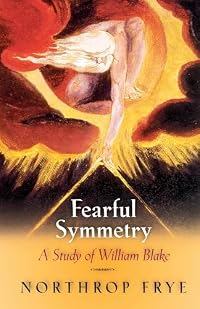
Herman Northrop Frye was born in 1912 in Quebec, Canada. His mother educated him at home until the fourth grade. After graduating from the University of Toronto, he studied theology at Emmanuel College for several years and actually worked as a pastor before deciding he preferred the academic life. He eventually obtained his master's degree from show more Oxford, and taught English at the University of Toronto for more than four decades. Frye's first two books, Fearful Symmetry (1947) and Anatomy of Criticism (1957) set forth the influential literary principles upon which he continued to elaborate in his numerous later works. These include Fables of Identity: Studies in Poetic Mythology, The Well-Tempered Critic, and The Great Code: The Bible and Literature. Frye died in 1991. (Bowker Author Biography) show less
Series
Belongs to Publisher Series
CBC Massey Lectures (1962)
Common Knowledge
- Canonical title
- The Educated Imagination
Classifications
Statistics
- Members
- 779
- Popularity
- 35,675
- Reviews
- 11
- Rating
- (4.15)
- Languages
- English, Italian, Portuguese (Brazil)
- Media
- Paper, Ebook
- ISBNs
- 8
- ASINs
- 9