The Sum of Us: What Racism Costs Everyone and How We Can Prosper Together
by Heather McGhee
On This Page
Description
NEW YORK TIMES BESTSELLER • LONGLISTED FOR THE NATIONAL BOOK AWARD • One of today’s most insightful and influential thinkers offers a powerful exploration of inequality and the lesson that generations of Americans have failed to learn: Racism has a cost for everyone—not just for people of color.WINNER OF THE PORCHLIGHT BUSINESS BOOK AWARD • ONE OF THE BEST BOOKS OF THE YEAR: Time, The Washington Post, St. Louis Post-Dispatch, Ms. magazine, BookRiot, Library Journal
“This is the show more book I’ve been waiting for.”—Ibram X. Kendi, #1 New York Times bestselling author of How to Be an Antiracist
Look for the author’s podcast, The Sum of Us, based on this book!
Heather McGhee’s specialty is the American economy—and the mystery of why it so often fails the American public. From the financial crisis of 2008 to rising student debt to collapsing public infrastructure, she found a root problem: racism in our politics and policymaking. But not just in the most obvious indignities for people of color. Racism has costs for white people, too. It is the common denominator of our most vexing public problems, the core dysfunction of our democracy and constitutive of the spiritual and moral crises that grip us all. But how did this happen? And is there a way out?
McGhee embarks on a deeply personal journey across the country from Maine to Mississippi to California, tallying what we lose when we buy into the zero-sum paradigm—the idea that progress for some of us must come at the expense of others. Along the way, she meets white people who confide in her about losing their homes, their dreams, and their shot at better jobs to the toxic mix of American racism and greed. This is the story of how public goods in this country—from parks and pools to functioning schools—have become private luxuries; of how unions collapsed, wages stagnated, and inequality increased; and of how this country, unique among the world’s advanced economies, has thwarted universal healthcare.
But in unlikely places of worship and work, McGhee finds proof of what she calls the Solidarity Dividend: the benefits we gain when people come together across race to accomplish what we simply can’t do on our own. The Sum of Us is not only a brilliant analysis of how we arrived here but also a heartfelt message, delivered with startling empathy, from a black woman to a multiracial America. It leaves us with a new vision for a future in which we finally realize that life can be more than a zero-sum game.
LONGLISTED FOR THE ANDREW CARNEGIE MEDAL. show less
Tags
Recommendations










Member Reviews
this is an excellent and thought-provoking book. It is often depressing, as you would expect, although McGhee also presents reasons for hope.
McGhee runs down the racist, anti-Black roots of many of the major societal problems in America today, examining at the same time the ways in which these policies have also greatly harmed whites along the way. Her thesis, as per the title, is that working and middle class whites have been sold a "Zero Sum" philosophy: if Blacks "win," whites, by definition, "lose." So, for one easy example, welfare programs that would help many more whites than Blacks must be bad nevertheless, because Blacks are "takers" who don't deserve taxpayer help. Never mind the number of poor whites who would be lifted as show more well.
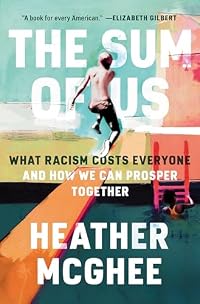
McGhee uses as her operating metaphor (as per the book's cover art) the history of public swimming pools. During the middle part of the 20th century, communities across the country, including across the South, had built public swimming pools. They were symbols in many cases of civic pride, gathering places for often thousands of people. However, when the law mandated that these pools be integrated, community after community closed the facilities, often filling the pools in and covering them over, rather than comply with that new law. So not only were Blacks kept out, but tens of thousands of white people lost their public swimming pools as well.
The book examines the housing/mortgage crisis, environmental racism, redlining, voting rights, disengenuous "color blindness" and several more issues, which all come under McGhee's microscope to convincing effect. There is also a chapter on the psychic toll that racism takes on whites called "The Hidden Wound," the title taken from Wendell Berry's 1968 book of the same name.
The book's final chapter, though, is titled "The Solidarity Dividend," and outlines several successful grass roots, cross-ethnic efforts currently underway at the grass roots level both in individual communities and across the country. McGhee spent a lot of time crossing the country and investigating her thesis and she has a career's worth of experience in policy advocating and organizing to draw on, as well.
Finally, the book is clearly and engagingly written, and does not come across as a polemic. McGhee seems to me to be writing out of sorrow and, often, frustration, but also out of love and hope for the future. She lays out the problems and conditions of our times exceedingly well, and suggests what could be a doable roadmap for the future. show less
McGhee runs down the racist, anti-Black roots of many of the major societal problems in America today, examining at the same time the ways in which these policies have also greatly harmed whites along the way. Her thesis, as per the title, is that working and middle class whites have been sold a "Zero Sum" philosophy: if Blacks "win," whites, by definition, "lose." So, for one easy example, welfare programs that would help many more whites than Blacks must be bad nevertheless, because Blacks are "takers" who don't deserve taxpayer help. Never mind the number of poor whites who would be lifted as show more well.
McGhee uses as her operating metaphor (as per the book's cover art) the history of public swimming pools. During the middle part of the 20th century, communities across the country, including across the South, had built public swimming pools. They were symbols in many cases of civic pride, gathering places for often thousands of people. However, when the law mandated that these pools be integrated, community after community closed the facilities, often filling the pools in and covering them over, rather than comply with that new law. So not only were Blacks kept out, but tens of thousands of white people lost their public swimming pools as well.
The book examines the housing/mortgage crisis, environmental racism, redlining, voting rights, disengenuous "color blindness" and several more issues, which all come under McGhee's microscope to convincing effect. There is also a chapter on the psychic toll that racism takes on whites called "The Hidden Wound," the title taken from Wendell Berry's 1968 book of the same name.
The book's final chapter, though, is titled "The Solidarity Dividend," and outlines several successful grass roots, cross-ethnic efforts currently underway at the grass roots level both in individual communities and across the country. McGhee spent a lot of time crossing the country and investigating her thesis and she has a career's worth of experience in policy advocating and organizing to draw on, as well.
Finally, the book is clearly and engagingly written, and does not come across as a polemic. McGhee seems to me to be writing out of sorrow and, often, frustration, but also out of love and hope for the future. She lays out the problems and conditions of our times exceedingly well, and suggests what could be a doable roadmap for the future. show less
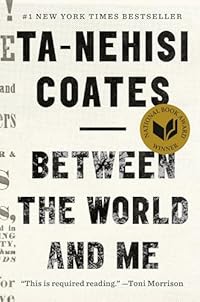
There have been a lot of exceptional, high-publicity books on institutional racism published in recent years (e.g., Caste, Project 1619, How to Be Antiracist, Between the World and Me), and this one should be right up there on that shelf. McGhee's focus is on the numbers: what is the actual, numerical cost ($$) to all of us when financially insecure, conservative white folks, who are fully accepting (even proud of) their position on the second-to-last rung on the social ladder, as long as they can count on at least one other, more oppressed group on the rung below them, vote against their own interests and financial well-being. Spoiler: the costs are staggering. We could all be doing so much better. Immediately in the first chapter I show more found myself taking screenshots of meaningful passages, but very quickly there got to be so many that I had to abandon that angle, which indicates to me that anyone I might share these excerpts with would be well-served to read the book themselves. Sadly, some passages feel tragically and heartbreakingly optimistic in hindsight, following the 2024 election and the current nightmare that is January 2026 in Minnesota. Help. show less
Much as I empathize with this book’s perspective, I found the analysis lacking and the conclusions incredulous.
Her travels and reading have convinced her that America has “reached a productive and moral limit” to the I-win-you-lose school of self-government. That it’s time to open the gates to economic and social parity. That public policy in this regard can be judged a complete failure. That if the poor and downtrodden pull together, a new age will magically appear. (Is this the dawn of Aquarius?)
McGhee figures that a Truth and Transformation committee will kickstart America onto a path of justice and economic wellbeing for all. This in a country whose track record is to beggar people who need a doctor, higher education, a show more home, or try to make a living.
It is another cruel tale of American exceptionalism, but in this case Americans have proven themselves exceptionally bad at self-governance. The binding metaphor is of a community that fills in its community swimming pool to keep the races from mixing, something that happened with astonishing regularity in the last century, both literally and figuratively.
As another reader of this book has pointed out, the book’s title is misleading. It isn’t about “how we can prosper together,” it’s a litany of situations where the many (read: white people) have prospered at the expense of the few (read: black people).
And as former Labor Secretary Robert Reich has pointed out in his endless Instagram screeds, the pandemic has proven it will happen again and again: the rich will find ways to get much richer.
Donald Trump presented his one man committee on truth. It has led America down a rabbit-hole not of transformation but of recrimination, fantasy, and self-justification such that I would argue it actually launched a new DARK AGES for mankind.
The good news for Americans is that they’re not alone. Piracy of the public agenda is an epidemic around the globe. show less
Her travels and reading have convinced her that America has “reached a productive and moral limit” to the I-win-you-lose school of self-government. That it’s time to open the gates to economic and social parity. That public policy in this regard can be judged a complete failure. That if the poor and downtrodden pull together, a new age will magically appear. (Is this the dawn of Aquarius?)
McGhee figures that a Truth and Transformation committee will kickstart America onto a path of justice and economic wellbeing for all. This in a country whose track record is to beggar people who need a doctor, higher education, a show more home, or try to make a living.
It is another cruel tale of American exceptionalism, but in this case Americans have proven themselves exceptionally bad at self-governance. The binding metaphor is of a community that fills in its community swimming pool to keep the races from mixing, something that happened with astonishing regularity in the last century, both literally and figuratively.
As another reader of this book has pointed out, the book’s title is misleading. It isn’t about “how we can prosper together,” it’s a litany of situations where the many (read: white people) have prospered at the expense of the few (read: black people).
And as former Labor Secretary Robert Reich has pointed out in his endless Instagram screeds, the pandemic has proven it will happen again and again: the rich will find ways to get much richer.
Donald Trump presented his one man committee on truth. It has led America down a rabbit-hole not of transformation but of recrimination, fantasy, and self-justification such that I would argue it actually launched a new DARK AGES for mankind.
The good news for Americans is that they’re not alone. Piracy of the public agenda is an epidemic around the globe. show less
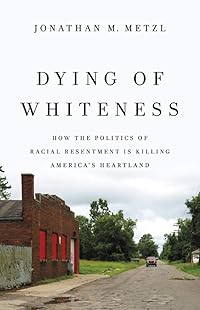
If you only read one book about race and racism, make it this one! McGhee does a deep dive into all aspects of racism, melding together many of the themes and research of other excellent books about race; Biased, the New Jim Crow, The Color of Law, the Color of Money, and Dying of Whiteness. She shows how the US was built on racism and why we our current culture and economics continue to be part of the zero sum mindset of white America. She tries to give some optimistic outlooks for the future in the last story in the book, sighting racial strides in communities like Lewiston, ME, and other small towns in America, and while I hope this is the trend, I can't help thinking it's one step forward two steps back. Rich white men still have show more most of the power, and I don't see them giving it up any time in the near future. show less
Similar ground to Dying of Whiteness—ways in which racism divides whites from people of color, especially Black people, and thus leads to worse outcomes for everyone. The public pools that were closed around the country to avoid integration, denying everyone but people who could afford private pools the ability to swim so that they wouldn’t be swimming together, are both metaphor and very concrete example of this general worsening. With pools, “[a] once-public resource became a luxury amenity, and entire communities lost out on the benefits of public life and civic engagement once understood to be the key to making American democracy real. Today, we don’t even notice the absence of the grand resort pools in our communities show more ….” Appeals to white racism allowed Republicans to switch from high marginal taxes and investment in the middle class to low taxes and disinvestment. In 1980, five out of six students at public colleges were white; now it’s under six in ten; and it is no accident that public funding for higher education was gutted during this transition, and student debt skyrocketed—including for the whites who are still the majority of those borrowers (though they carry lower debt loads). McGhee wrote before the most recent round of voter suppression measures, but those too will disenfranchise a lot of white people in order to disproportionately harm Black voters. And pollution in minority communities hurts and kills those communities, but also contaminates nearby white communities: more segregation means worse air quality in a city, even controlling for poverty.
Thus, McGhee argues, progressive politics should focus on rejecting the zero-sum framing which is right now the automatic way in which many whites perceive progressive policies, even ones presented in race-neutral terms. For example, she emphasizes the benefits of diversity, not for white people but for decisionmaking, citing research suggesting that groups with less demographic similarity produce better solutions and do better at discovering the different information held by different members. It’s more cognitive effort, which means it’s less comfortable even without racism, but it works better. show less
Thus, McGhee argues, progressive politics should focus on rejecting the zero-sum framing which is right now the automatic way in which many whites perceive progressive policies, even ones presented in race-neutral terms. For example, she emphasizes the benefits of diversity, not for white people but for decisionmaking, citing research suggesting that groups with less demographic similarity produce better solutions and do better at discovering the different information held by different members. It’s more cognitive effort, which means it’s less comfortable even without racism, but it works better. show less
White America has been cutting off its nose to spite its face. Heather McGee calls this "drained pool politics." Rather than share a public pool with Black people, whites would rather drain the pool. Now no one has a pool (except, of course, the rich).
Can we change the "us vs. them" zero-sum mentality? I think the powerful idea in this book is that being anti-racist is not a selfless act for white people. Anti-racism improves the lives of BIPOC *and* white people. To quote the book:
There are some hopeful stories in this book where folks reaped a "solidarity dividend" through unionizing a diverse workforce or getting out the vote or passing new legislation.
McGhee also says early on that her book isn't meant to minimize the impact of racism on BIPOC. She says she's "widening the aperture to show the costs of white supremacy on our entire society." We're used to only thinking about the harm racism has done to BIPOC. If you zoom out, you can see that it harms us all. show less
Can we change the "us vs. them" zero-sum mentality? I think the powerful idea in this book is that being anti-racist is not a selfless act for white people. Anti-racism improves the lives of BIPOC *and* white people. To quote the book:
Everything depends on the answer to this question. Who is an American, and what are we to one another? Politics offers two visions: one in which we are competitors and another in which our proximity forces us to admit our common humanity. The narrative thatshow more
white people should see the well-being of people of color as a threat to their own is one of the most powerful stories in America. Until we destroy that idea, opponents of progress can always unearth it and use it to block any collective action that benefits us all.
There are some hopeful stories in this book where folks reaped a "solidarity dividend" through unionizing a diverse workforce or getting out the vote or passing new legislation.
McGhee also says early on that her book isn't meant to minimize the impact of racism on BIPOC. She says she's "widening the aperture to show the costs of white supremacy on our entire society." We're used to only thinking about the harm racism has done to BIPOC. If you zoom out, you can see that it harms us all. show less
I saw this mentioned by someone I follow on Instagram (who recommends good nonfiction) and she was right (again!). This book dives into how racism is hurting all of us and how the wealthy use zero-sum reasoning to convince white people to vote against their own best interests. I've seen this reflected in my own family's voting history -- where people have been convinced by the wealthy (and those in power) that government assistance is evil, that there's an evil "other" taking their jobs, that public services are wasteful. It's wild. And listening/reading now while this administration is trying to divide "we the people" even further...staying hopeful is such a challenge these days. Finding the strength and willpower to DO SOMETHING, show more ANYTHING is equally challenging. show less
Members
- Recently Added By
Published Reviews
I am amazed with your storytelling, great job! If you allow, may I share your book to facebook in order to reach more readers? And by the way, NovelStar is currently conducting a writing competition - You have a great potential.
added by MarshaMellow
Lists

Must-Read Books by Black Authors
114 works; 90 members

Books Read in 2021
5,361 works; 113 members

Club Read's Recommended Nonfiction Written by Women
618 works; 30 members

List of Removed Books from Nimitz Library
353 works; 1 member
Author Information

2+ Works 1,297 Members
Some Editions
Awards and Honors
Awards
Distinctions
Work Relationships
Has the adaptation
Common Knowledge
- Original publication date
- 2021-02-16
- Dedication
- FOR MY MOTHER
- First words
- "Why can't we have nice things?"
- Last words
- (Click to show. Warning: May contain spoilers.)We are greater than, and greater for, the sum of us.
- Publisher's editor
- Jackson, Christopher
- Blurbers
- Gilbert, Elizabeth; Saunders, George; Kendi, Ibram X.; Barber, Rev. Dr. William J., II; Reich, Robert B.; Richards, Cecile (show all 11); Walker, Darren; Disney, Abigail; Glaude, Eddie S., Jr., Dr.; Axelrod, David; Cohen, Cathy
- Original language
- English
- Canonical DDC/MDS
- 305.800973
- Canonical LCC
- E185.8.M38
Classifications
- Genres
- Sociology, Economics, General Nonfiction, Nonfiction, History
- DDC/MDS
- 305.800973 — Social sciences Social sciences, sociology & anthropology Groups of people Ethnic and national groups standard subdivisions / Ethnic and national groups with ethnic origins from more than one continent, of European descent standard subdivisions Biography And History North America United States
- LCC
- E185.8 .M38 — History of the United States United States Elements in the population Afro-Americans Status and development since emancipation
- BISAC
Statistics
- Members
- 1,246
- Popularity
- 19,627
- Reviews
- 25
- Rating
- (4.49)
- Languages
- English
- Media
- Paper, Audiobook, Ebook
- ISBNs
- 11
- ASINs
- 2