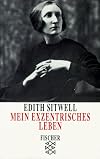
Taken Care Of: The Autobiography of Edith Sitwell
by Edith Sitwell 
On This Page
Description
Dame Edith Sitwell died while this autobiography was in the course of printing. One of the last acts of her life was to approve the 'specimen page' from the printer. She did not live to correct her proofs and what, if any, changes she might have made is a matter for conjecture. The book, as she wrote it, must now stand as the last prose work to come from a great writer of the last century and a wise, witty and compassionate woman. 'I trust', she wrote, 'that I have hurt nobody.' Dame Edith show more was much more than one of the leading English poets of her lifetime. Long, long before the age of television introduced the synthetic, professional 'personality', she was a personality without the inverted commas, and thus became a familiar figure to a public far wider than the readership of her poetry, criticism and essays. With her remarkable brothers, she stood for certain important and lasting I qualities in the artistic life of the nation-for the war against philistinism, fora progressive outlook that in its day seemed, and was, rebellious, and yet for a spirit of continuity and tradition in art that has become apparent to the layman only in the perspective of time. This sense of tradition and respect for the past was by no means incompatible with a degree of eccentricity-which givesTaken Care Of its remarkable and unique flavour. show lessTags
Recommendations




































Member Reviews
Members
- Recently Added By
Author Information

103+ Works 2,158 Members
The first child of Sir George Sitwell and Lady Ida Sitwell, Edith Sitwell became famous both as poet and bohemian. Reacting against what she called the "dim bucolics" of the Georgians, she and her brothers Osbert and Sacheverell constituted a kind of aristocratic bohemian vanguard after World War I. Sergei Diaghilev's (see Vol. 3) Russian Ballet show more joined T. S. Eliot and, improbably, Alexander Pope among the early influences on her work. A skilled publicist as well as poet, Sitwell exploited her upper-class nonconformity in numerous public controversies. Her collaboration with William Walton to produce musical settings of the Facade poems (1923) created an uproar when the work was performed. Sitwell also put her talents to work for young writers in whom she believed, chief among them Dylan Thomas, whose reputation she helped launch. Despite later public honors---Elizabeth II created her a Dame Grand Cross of the British Empire, and Oxford and Cambridge bestowed honorary degrees---she remained proudly eccentric throughout her celebrated career. Sitwell's early poetry displayed a pyrotechnic surface of dazzling images and leaps. She saw Eliot's Prufrock and Other Observations (1917) as heralding "a new era in poetry," which would lead to poets seeing the world with new eyes. Breakthroughs in perception often became the themes as well as goals of her poetry. Interested particularly in French symbolist theories of sound, she developed an intricate tonal play of verbal patterns in her verse. Her work displayed an increasingly religious orientation, and during World War II, she engaged such public themes as politics more overtly in works like Three Poems for an Atomic Age. Besides her own verse, she wrote several books of prose and edited numerous anthologies of poetry. (Bowker Author Biography) show less
Edith Sitwell has a Legacy Library. Legacy libraries are the personal libraries of famous readers, entered by LibraryThing members from the Legacy Libraries group.
Awards and Honors
Distinctions
Series
Belongs to Publisher Series
Fischer Taschenbuch (12126)
Common Knowledge
- Original title
- Taken Care Of
- Original publication date
- 1965; 1964
- People/Characters
- Edith Sitwell
- Dedication
- To the Persons from Porlock
- Original language
- Inglese
Classifications
Statistics
- Members
- 149
- Popularity
- 220,270
- Rating
- (4.00)
- Languages
- English, German, Italian
- Media
- Paper, Ebook
- ISBNs
- 9
- ASINs
- 13