On This Page
Description
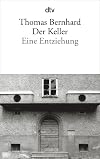
I Thomas Bernhards anden selvbiografiske roman Kælderen. En unddragelse (1976), der udspiller sig umiddelbart efter Anden Verdenskrig, indleder han sine læreår med at vende gymnasiet ryggen og gå i den modsatte retning for at begynde i købmandslære. I Salzburgs ghetto, Scherzhauserfeldkvarteret, kommer den unge købmandslærling i livets hårde skole blandt byens ydmygede og sårede. Arbejdet og de mange menneskelige møder, forvandler den introverte dreng til et socialt individ og show more sender mod slutningen hans stræben i en ny retning; han begynder at tage undervisning i sang. Kælderen kan læses som en klassisk dannelsesrejse, hvor et ungt menneske ved at vælge sin egen vej finder sig selv. Bernhards kontrapunktiske prosa og kompromisløse sandhedssøgen er endnu engang med til at gøre rejsen til en helt igennem moderne selvbeskrivelse. show lessTags
Recommendations




























Member Reviews
Goodbye, Mr Kipps...!
In this part of his autobiography, published in 1979, four years after Die Ursache, and covering the period (as near as I could work out) 1946-48, Thomas Bernhard surprises no-one by setting off in the opposite direction. He has a lot of fun with the paradox that dropping out of grammar school and going to work as a grocer's assistant in a basement in the dodgiest working-class neighbourhood of Salzburg brought him to the happiest and most fulfilling (nützlich) period of his life. Plenty of opportunity to snipe at bourgeois values, but it's all a lot more subtle than the raw anger of Die Ursache. And perhaps it is a little bit harder for him to attack Salzburgness this time: apart from his venture into the retail show more trade, he is also describing the pleasure and fulfilment he got from the very Salzburgish activity of studying music...
In the last section of the book Bernhard throws a few too many aphorisms at us (only a little bit: probably registering about 0.05 on the Thomas Mann scale of abstract nounery), but for the rest it's just as brilliant, fresh and unexpected as we would expect from him. show less
In this part of his autobiography, published in 1979, four years after Die Ursache, and covering the period (as near as I could work out) 1946-48, Thomas Bernhard surprises no-one by setting off in the opposite direction. He has a lot of fun with the paradox that dropping out of grammar school and going to work as a grocer's assistant in a basement in the dodgiest working-class neighbourhood of Salzburg brought him to the happiest and most fulfilling (nützlich) period of his life. Plenty of opportunity to snipe at bourgeois values, but it's all a lot more subtle than the raw anger of Die Ursache. And perhaps it is a little bit harder for him to attack Salzburgness this time: apart from his venture into the retail show more trade, he is also describing the pleasure and fulfilment he got from the very Salzburgish activity of studying music...
In the last section of the book Bernhard throws a few too many aphorisms at us (only a little bit: probably registering about 0.05 on the Thomas Mann scale of abstract nounery), but for the rest it's just as brilliant, fresh and unexpected as we would expect from him. show less
In the age of the novel being the author and the main hero at the same time is tough. The style, which is in itself a conscious, deliberate choice may become an obstacle and a contradiction. Thus Bernhard's writing is convolute, every idea circling around the sink hole for pages before it goes down, the text inexorably a stream of conciousness, the narrator unreliable but authoritative.
But it catches and closes on what it's being read by like a zipper on a body bag.
The last 30 pages or so are fiercely bleak, relentless and without redemption, well worth the downward spiral.
But it catches and closes on what it's being read by like a zipper on a body bag.
The last 30 pages or so are fiercely bleak, relentless and without redemption, well worth the downward spiral.
Todo parte de una decisión: cambiar de camino y tomar la dirección opuesta. Un joven Bernhard de dieciséis años va a la oficina, donde conseguir un empleo que suponga un cambio radical de dirección en su vida, dejar un tanto de lado a su familia, pero sobre todo abandonar el instituto. Y la dirección opuesta consiste en ser aprendiz en una tienda de ultramarinos en el barrio más repudiado de Salzburgo, el poblado de Scherzhauserfeld, la antesala del infierno o el infierno. Pese a ser un trabajo duro y estar rodeado de miseria, Bernhard se siente bien, se siente necesario, se siente vivo. Atrás quedaron el odiado instituto católico y el tedio de sus clases y estudios. Si acaso, arremete contra los sábados y los domingos, los show more sábados más que los domingos, que suponen una suspensión del trabajo hasta que llega de nuevo el lunes. Si con su abuelo aprendió lo que es la soledad, en la tienda aprende lo que es estar cerca de las personas. Entre otros pensamientos, Bernhard apreciará lo que es la verdad en la mentira, y la necesidad vital de escribir. ‘El sótano’ rezuma melancolía y una triste felicidad. Resulta extraño comprobar que Bernhard también tuvo días de felicidad. show less
This is my first encounter with Thomas Bernhard, and:
* this book contains few full stops, few chapters and very few - if any - line breaks
* the style is kind of Aspergerish, in a good way
You get into a trance with the writing, which is obviously either by a master or by somebody who got really lucky with writing a book. It's not long, but in here, Bernhard gets a lot in, e.g. why Saturdays and Sundays are the real Killers of People and why there's only One True Path.
I can't do this book justice. It's like twirling Dervishes and trance music: you have to get into it to be able to really appreciate it. So go.
* this book contains few full stops, few chapters and very few - if any - line breaks
* the style is kind of Aspergerish, in a good way
You get into a trance with the writing, which is obviously either by a master or by somebody who got really lucky with writing a book. It's not long, but in here, Bernhard gets a lot in, e.g. why Saturdays and Sundays are the real Killers of People and why there's only One True Path.
I can't do this book justice. It's like twirling Dervishes and trance music: you have to get into it to be able to really appreciate it. So go.
Mitunter das Hasserfüllteste und Misanthropischste, was ich je las. Es ist wundervoll.
Mitunter das Hasserfüllteste und Misanthropischste, was ich je las. Es ist wundervoll.
Mitunter das Hasserfüllteste und Misanthropischste, was ich je las. Es ist wundervoll.
Members
- Recently Added By
Lists

stories at work
43 works; 7 members
Author Information

286+ Works 16,466 Members
Thomas Bernhard was born to Austrian parents in Holland and reared by his mother in the vicinity of Salzburg. His temperament and erratic health created difficulties for him as he grew up in a society governed by National Socialists. Bernhard found the alpine landscapes of his native Austria far more harsh than lyrical. The isolation of the show more characters in his novels is only slightly mitigated by friendship, generally only between men, and never by love. Yet many readers feel this lack of sentimentality gives Bernhard's work an epic power. (Bowker Author Biography) show less
Some Editions
Series

Belongs to Publisher Series
dtv (1426)
Work Relationships
Common Knowledge
- Canonical title
- Der Keller. Eine Entziehung
- Original title
- Der Keller. Eine Entziehung
- Original publication date
- 1979; 1976
- Important places
- Salzburg, Austria; Scherzhauserfeldsiedlung, Salzburg, Austria
- First words
- Die anderen Menschen fand ich in der engegengesetzten Richtung...
- Last words*
- (Click to show. Warning: May contain spoilers.)Das ist alles.
- Original language
- German
*Some information comes from Common Knowledge in other languages. Click "Edit" for more information.
Classifications
Statistics
- Members
- 259
- Popularity
- 125,448
- Reviews
- 13
- Rating
- (4.11)
- Languages
- 13 — Catalan, Danish, English, Finnish, French, German, Italian, Norwegian (Bokmål), Polish, Croatian, Spanish, Swedish, Turkish
- Media
- Paper, Audiobook, Ebook
- ISBNs
- 19
- ASINs
- 4