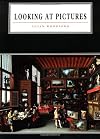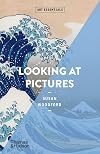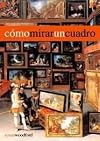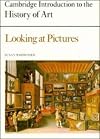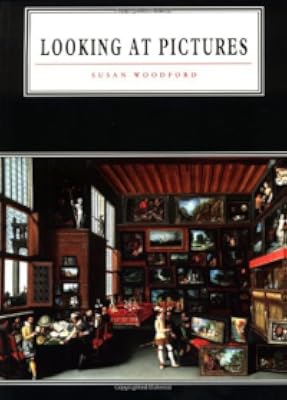
Looking at Pictures
by Susan Woodford
On This Page
Description
"Exploring the origins, designs and themes of over one hundred pictures from different periods and places, Susan Woodford artfully expands our appreciation of pictures. Woodford's riveting prose compares different artistic approaches, questions assumptions and introduces us to a wide range of stimulating ideas. Wether looking a Japanese woodcut, Leonardo da Vinci's Last Supper or Picasso's Guernico, Looking at Pictures develops our eyes as well as our confidence to analyze pictures. This show more essential guide includes a glossary of key terms, ranging from art movement and technical terminology to religious and classical vocabulary, and gives invaluable suggestions for further reading."--Front flap. show lessTags
Recommendations























Member Reviews
Almost the book I'm looking for.?á I'm beginning to think that such a book cannot exist, because I have a son taking a sequence of art (appreciation, principles, creation, a bit of history) courses in college, and there is a *lot* to learn.?á At least Woodford attempts to offer some general ideas, some things to look for in a variety of different works.?á And this book is very short, can't begin to cover everything but at least can be read by any interested novice.
Unfortunately (for library patrons, not buyers) not many works are in color.?á Also, little attention is paid to the scale of the work, and (imnsho) it matters a lot whether the figures are life-sized and the work is meant for a larger room, a richer patron, or the show more work is small enough for a ladies' drawing room....?á Also unfortunately, the works are indeed 'pictures' and moreover they are all by males, almost all long- dead white Europeans.?á?á African sculptures and Japanese garden installations, that kind of thing, would have been welcome.?á Also, I wish there had been a 'for further reading' section... but maybe that's implied by the list of other books in the series of The Cambridge Introduction to Art."
One tip I learned is that the upright hand, that often looks like the figure is signaling 'stop' or is even beginning to perform a blessing, that is often seen in works of some many centuries ago depicting Biblical scenes, is an iconographic representation of awe.?á It's supposed to show the figure saying 'wow' not 'whoa.'
The introduction of this is actually the best part of it.?á It very simply points out that there are specific and distinct ways of looking at pictures... perspective lenses from which to view creations.?á For example:
1. What was it's purpose??á To adorn a patron's home, to educate a congregation, to express the artist's political views...?
2.?á What does it tell us about the culture that produced it??á Does that culture value direct representation, or does it welcome intriguing metaphors, or does it prefer the viewer choose her own message?
3. How realistic is the work??á How well crafted??á Is the craftsmanship relevant??á Does the artist focus on details to make the image more real, or does he focus on certain design elements, certain features, at the expense of realism?
4. How are the elements of design applied??á Are the colors more warm or cool??á Are the outlines more linear or more painterly??á How relevant is perspective??á Are the borders more open or closed?" show less
Unfortunately (for library patrons, not buyers) not many works are in color.?á Also, little attention is paid to the scale of the work, and (imnsho) it matters a lot whether the figures are life-sized and the work is meant for a larger room, a richer patron, or the show more work is small enough for a ladies' drawing room....?á Also unfortunately, the works are indeed 'pictures' and moreover they are all by males, almost all long- dead white Europeans.?á?á African sculptures and Japanese garden installations, that kind of thing, would have been welcome.?á Also, I wish there had been a 'for further reading' section... but maybe that's implied by the list of other books in the series of The Cambridge Introduction to Art."
One tip I learned is that the upright hand, that often looks like the figure is signaling 'stop' or is even beginning to perform a blessing, that is often seen in works of some many centuries ago depicting Biblical scenes, is an iconographic representation of awe.?á It's supposed to show the figure saying 'wow' not 'whoa.'
The introduction of this is actually the best part of it.?á It very simply points out that there are specific and distinct ways of looking at pictures... perspective lenses from which to view creations.?á For example:
1. What was it's purpose??á To adorn a patron's home, to educate a congregation, to express the artist's political views...?
2.?á What does it tell us about the culture that produced it??á Does that culture value direct representation, or does it welcome intriguing metaphors, or does it prefer the viewer choose her own message?
3. How realistic is the work??á How well crafted??á Is the craftsmanship relevant??á Does the artist focus on details to make the image more real, or does he focus on certain design elements, certain features, at the expense of realism?
4. How are the elements of design applied??á Are the colors more warm or cool??á Are the outlines more linear or more painterly??á How relevant is perspective??á Are the borders more open or closed?" show less
Mediante la exploración de los orígenes, los diseños y los temas de más de un centenar de imágenes procedentes de distintas épocas y lugares, Susan Woodford logra aumentar con ingenio nuestra apreciación de las obras de arte.
Su apasionante prosa aborda la comparación de distintos enfoques artísticos, pone en tela de juicio las ideas preconcebidas y nos presenta toda una serie de estimulantes ideas.
Su apasionante prosa aborda la comparación de distintos enfoques artísticos, pone en tela de juicio las ideas preconcebidas y nos presenta toda una serie de estimulantes ideas.
Jan 25, 2021Catalan
Ratings
Members
- Recently Added By
Author Information
17+ Works 651 Members
Susan Woodford has written five other books for the general reader: The Parthenon (1981), Looking at Pictures and Images of Myths in Classical Antiquity (2002, winner of the Criticos Prize 2003), The Art of Greece and Rome (2004) and The Trojan War in Ancient Art (Bloomsbury Academic, 1993).
Series
Belongs to Publisher Series
Common Knowledge
- Canonical title
- Looking at Pictures
- Original title
- Looking at Pictures
- Disambiguation notice
- Original title "Looking at Pictures" (Cambridge Introduction to the History of Art)
Classifications
Statistics
- Members
- 211
- Popularity
- 155,010
- Reviews
- 2
- Rating
- (3.44)
- Languages
- 8 — Dutch, English, French, German, Italian, Portuguese, Russian, Spanish
- Media
- Paper
- ISBNs
- 12