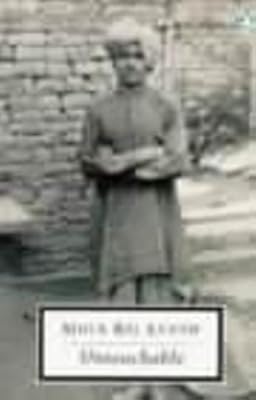
Untouchable
by Mulk Raj Anand
On This Page
Description
In Mulk Raj Anand's finest and most controversial novel he conveys precisely, with urgency and barely disguised fury, what it might feel like to be one of India's Untouchables. Bakha is a young man, a proud and even an attractive young man, but none the less he is an outcast in a system that is now only slowly changing and was then as cruel and debilitating as that of apartheid. Into this re-creation of one day in the life of Bakha, sweeper and latrine-cleaner, Anand poured a vitality, fire show more and richness of detail that have caused him to be acclaimed as his country's Charles Dickens as well as this century's greatest revealer of the 'other' India. 'It recalled to me very vividly the occasions I have walked 'the wrong way' in an Indian city and it is a way down which no novelist has yet taken me . . .' E.M. Forster 'One of the most eloquent and imaginative works to deal with this difficult and emotive subject' - Martin Seymour-Smith show lessTags
Recommendations














Member Reviews
A day in the life of a single Dalit and the ways in which he secures food and tries to accommodate his mixture of yearning and resignation with those of his family and those of the castes above him.
Feels much more modern than what I expected from a 1930s book. Beautifully written. Concerned with the plight of the Dalit and their slave-like existence on the periphery of Hindu society, but does so not through melodrama or preachiness, but by presenting their lives as-is. Attitudes and viewpoints are contrasted, not by setting up straw characters to serve as mouthpieces for political views, but by having nuanced characters clash in nuanced ways. Life as she is lived makes an excellent case for change, better than authorial filibustering show more ever could. The one speech that does make it into the book is admittedly anvilicious, but even that is tempered by how its effects on the main character are different from the ones intended. Even so, the book left me wonderfully conflicted. Nicely done! show less
Feels much more modern than what I expected from a 1930s book. Beautifully written. Concerned with the plight of the Dalit and their slave-like existence on the periphery of Hindu society, but does so not through melodrama or preachiness, but by presenting their lives as-is. Attitudes and viewpoints are contrasted, not by setting up straw characters to serve as mouthpieces for political views, but by having nuanced characters clash in nuanced ways. Life as she is lived makes an excellent case for change, better than authorial filibustering show more ever could. The one speech that does make it into the book is admittedly anvilicious, but even that is tempered by how its effects on the main character are different from the ones intended. Even so, the book left me wonderfully conflicted. Nicely done! show less
Bakha is a young Untouchable, at an age where passion and reason battle fiercely and rebellion is difficult to contain. Through the adventures of a day, we see the contrasts of his life - his social condition, his familial predicament, his precious humanity. Anand thus walks us through all the emotions from servility to righteous anger, as this young man navigates life's unfairness.
The conclusion is a hopeful one: Gandhi, who preaches unity and independence, and modernity which is knocking at India's door both carried by the heavy gusts of wind, lead us to believe that Bakha can have a better future... the question that remains is, will he (Bakha) have the enduring courage to see it through.
The conclusion is a hopeful one: Gandhi, who preaches unity and independence, and modernity which is knocking at India's door both carried by the heavy gusts of wind, lead us to believe that Bakha can have a better future... the question that remains is, will he (Bakha) have the enduring courage to see it through.
Untouchable by Anand
3 stars
Bakha is a young man born into a caste system in which he is labeled one of the untouchables because he cleans latrines and waste products. Untouchables are seen as less than human. They are unable to drink from the same water, cannot touch a member of the higher castes, and their presence is believed to pollute their environment. The Untouchable takes us into the world of these people in India and lets the reader experience the hardship, loneliness, and helplessness that go along with being seen as impure. Bakha is kind, a hard worker, and unwilling to accept his situation. He attempts to escape his social position by mimicking the clothes of the British. But escape is not so easy in his world and he faces show more multiple setbacks that remind him of the powerlessness of his situation.
I really enjoyed the first two thirds of the book. The author provided very rich detail about Bakha and his surroundings. Some of the passages were beautiful and I liked the way that Bakha was able to see the beauty in the world that was often ignored by others. I would have rated the book higher if not for the last third that devolved into very a preachy, hit-you-over-the-head message. Not that I disagree with the message -- I agree that it’s a terrible system that should have been outlawed from the beginning. However, I dislike when authors write as if the readers aren’t smart enough to figure out the message when it is weaved it into the narrative and instead feel the need to lecture the reader. One of the things I liked about the first two thirds was how Bakha’s story, his every day life, illustrated the cruelty and inhumanity of the caste system. I didn't think the author need to end the way he did because it felt tacked on and completely different with the rest of the book which told a story and supported the message that was lectured on at the end.
Quotes:
‘May you die,’ the woman cursed Bakha, thinking she had acquired enough merit by being good to the holy man and wouldn’t lose much of it by being unkind to the sweeper.
The mind which has once peeped into the wonderland of the new, contemplated various aspects of it with longing and desire, is shocked and disappointed when living reality pulls in the reins of the wild house of fancy.
He was feeling quite detached from the human world, swathed in a sort of unadulterated melancholy.
Heredity had furrowed no deep grooves in his soul where flowers could grow or grass abound. The cumulative influence of careful selection had imprisoned his free will in the shackles of slavery to the dreary routine of one occupational environment. show less
3 stars
Bakha is a young man born into a caste system in which he is labeled one of the untouchables because he cleans latrines and waste products. Untouchables are seen as less than human. They are unable to drink from the same water, cannot touch a member of the higher castes, and their presence is believed to pollute their environment. The Untouchable takes us into the world of these people in India and lets the reader experience the hardship, loneliness, and helplessness that go along with being seen as impure. Bakha is kind, a hard worker, and unwilling to accept his situation. He attempts to escape his social position by mimicking the clothes of the British. But escape is not so easy in his world and he faces show more multiple setbacks that remind him of the powerlessness of his situation.
I really enjoyed the first two thirds of the book. The author provided very rich detail about Bakha and his surroundings. Some of the passages were beautiful and I liked the way that Bakha was able to see the beauty in the world that was often ignored by others. I would have rated the book higher if not for the last third that devolved into very a preachy, hit-you-over-the-head message. Not that I disagree with the message -- I agree that it’s a terrible system that should have been outlawed from the beginning. However, I dislike when authors write as if the readers aren’t smart enough to figure out the message when it is weaved it into the narrative and instead feel the need to lecture the reader. One of the things I liked about the first two thirds was how Bakha’s story, his every day life, illustrated the cruelty and inhumanity of the caste system. I didn't think the author need to end the way he did because it felt tacked on and completely different with the rest of the book which told a story and supported the message that was lectured on at the end.
Quotes:
‘May you die,’ the woman cursed Bakha, thinking she had acquired enough merit by being good to the holy man and wouldn’t lose much of it by being unkind to the sweeper.
The mind which has once peeped into the wonderland of the new, contemplated various aspects of it with longing and desire, is shocked and disappointed when living reality pulls in the reins of the wild house of fancy.
He was feeling quite detached from the human world, swathed in a sort of unadulterated melancholy.
Heredity had furrowed no deep grooves in his soul where flowers could grow or grass abound. The cumulative influence of careful selection had imprisoned his free will in the shackles of slavery to the dreary routine of one occupational environment. show less
Part of book project. Short but dense, I found it a little slow going. Spoiler Alert. The character was maybe over-described. The life description was very strong & clear & horrifying. I don't know if I had thought of the low-caste people as not being Hindus. You wonder -- does Gandhi have any effect at all, or is all the change from modernization. The graphic picture of how they couldn't be clean because they couldn't have water. It is also interesting that it was written in 1935 so it is a living picture of the crowds & Gandhi, not a looking back on it. Anand didn't know what would happen.
Untouchable by Sibel Hodge is the best psychological thriller that I’ve read this year. Psychological thrillers are one of my favorite genres, so I’m always super excited when I find a new author who knows how to write a page-turner like this one.
The synopsis describes this novel as “chillingly dark”, which I think is the perfect description. Maya and her boyfriend Jamie are about to celebrate their second year anniversary. Jamie is several hours late returning home for their anniversary celebration. The police arrive at their home and deliver Maya the devastating news that Jamie hanged himself in the woods. Maya doesn’t believe Jamie would commit suicide, because he was happy that morning and discussed their evening plans. show more Her suspicion grows and her personal investigation leads her to a children’s home called “The Big House” where child sex abuse is commonplace. Maya wants to reveal the truth, but the people involved want to keep it a secret.
This engaging thriller made me wish I could read faster because I was dying to know what happened next. I love how the author built suspense by leaving cliffhangers at the end of each chapter. The alternating points of view work well in this novel. It actually adds to the suspense. The storytelling was so captivating that I couldn’t tab through the eBook fast enough.
The characters were so well developed they felt real, especially Maya, Jamie, Mitchell and the children and staff at “The Big House”. I was still thinking about them days after I finished the book. I felt sorry for those boys at “The Big House” having to face that horrible abuse, which is such a difficult topic to write about in a novel. I don’t think most writers like to touch topics like child sex abuse, but Sibel Hodge handled it courageously and sensitively. I appreciated the fact that the author implied most of the sexual acts and avoided details. It’s still difficult to read those scenes knowing what’s going on even if the writer isn’t spelling it out for you.
The only part that dragged a little for me was at the 75% mark in the eBook. Honestly, I don’t’ even remember what was going on at the time, but I just wanted it to get to the resolution. Other than that, the story kept moving at a good pace. I kept incorrectly guessing how this was going to end, but it still had a great ending. I’d love to read a sequel just because of how it ended.
Fans of psychological thrillers will enjoy this one.
A special thank you to NetGalley and the publisher for a copy of this book in exchange for an honest review.
Blog | Facebook | Twitter show less
The synopsis describes this novel as “chillingly dark”, which I think is the perfect description. Maya and her boyfriend Jamie are about to celebrate their second year anniversary. Jamie is several hours late returning home for their anniversary celebration. The police arrive at their home and deliver Maya the devastating news that Jamie hanged himself in the woods. Maya doesn’t believe Jamie would commit suicide, because he was happy that morning and discussed their evening plans. show more Her suspicion grows and her personal investigation leads her to a children’s home called “The Big House” where child sex abuse is commonplace. Maya wants to reveal the truth, but the people involved want to keep it a secret.
This engaging thriller made me wish I could read faster because I was dying to know what happened next. I love how the author built suspense by leaving cliffhangers at the end of each chapter. The alternating points of view work well in this novel. It actually adds to the suspense. The storytelling was so captivating that I couldn’t tab through the eBook fast enough.
The characters were so well developed they felt real, especially Maya, Jamie, Mitchell and the children and staff at “The Big House”. I was still thinking about them days after I finished the book. I felt sorry for those boys at “The Big House” having to face that horrible abuse, which is such a difficult topic to write about in a novel. I don’t think most writers like to touch topics like child sex abuse, but Sibel Hodge handled it courageously and sensitively. I appreciated the fact that the author implied most of the sexual acts and avoided details. It’s still difficult to read those scenes knowing what’s going on even if the writer isn’t spelling it out for you.
The only part that dragged a little for me was at the 75% mark in the eBook. Honestly, I don’t’ even remember what was going on at the time, but I just wanted it to get to the resolution. Other than that, the story kept moving at a good pace. I kept incorrectly guessing how this was going to end, but it still had a great ending. I’d love to read a sequel just because of how it ended.
Fans of psychological thrillers will enjoy this one.
A special thank you to NetGalley and the publisher for a copy of this book in exchange for an honest review.
Blog | Facebook | Twitter show less
Untouchable by Mulk Raj Anand was originally published in 1935. It is a short novel that depicts a day in the life of Bakha, a young "sweeper", who is classed as an untouchable due to his work of cleaning latrines and sweeping the streets. This story highlights the unjustness and inhumanity of the Indian caste system.
Over the course of this particular day various incidents occur that cause Bakha to question the system of oppression that he lives under. It is a day of being slapped, shouted at, and having crowds set against him. Getting no sympathy from his father, he spends the afternoon playing grass hockey with his friends. But when he carries a higher caste injured player home all he gets is more abuse. His father, angry at him for show more being gone all afternoon, throws him out and he finds himself at the train station listening to a speech by Mahatma Ghandi who talks about the plight of the Untouchables and how he would like to end the caste system. Bakha also overhears a couple educated men discussing Ghandi's speech and although he doesn't understand much of what has been said, he does hear them say that changes are coming and that there will soon be flushable toilets which sends him home with some hope for the future.
Untouchable was obviously written to show the lack of dignity given to the lower caste people of India. The author also seems to pointing out the upcoming clash between modernity and tradition. The story also brought home to me my own ignorance about the caste system and how it affected all levels of society. I had never realized before that the caste system was followed by the Hindus while the Muslims did not. Untouchable was an easily read story filled with well described images that gave the book a feeling of authenticity. show less
Over the course of this particular day various incidents occur that cause Bakha to question the system of oppression that he lives under. It is a day of being slapped, shouted at, and having crowds set against him. Getting no sympathy from his father, he spends the afternoon playing grass hockey with his friends. But when he carries a higher caste injured player home all he gets is more abuse. His father, angry at him for show more being gone all afternoon, throws him out and he finds himself at the train station listening to a speech by Mahatma Ghandi who talks about the plight of the Untouchables and how he would like to end the caste system. Bakha also overhears a couple educated men discussing Ghandi's speech and although he doesn't understand much of what has been said, he does hear them say that changes are coming and that there will soon be flushable toilets which sends him home with some hope for the future.
Untouchable was obviously written to show the lack of dignity given to the lower caste people of India. The author also seems to pointing out the upcoming clash between modernity and tradition. The story also brought home to me my own ignorance about the caste system and how it affected all levels of society. I had never realized before that the caste system was followed by the Hindus while the Muslims did not. Untouchable was an easily read story filled with well described images that gave the book a feeling of authenticity. show less
Just 157 pages and one day in the life of eighteen year old Bakha, a "sweeper" in charge of cleaning three rows of public latrines on the edge of his town. He is an Untouchable.
Bakha starts his day working "earnestly, quickly, without loss of effort". He dreams of the day he will be able to do the work of his father, the head of all the local sweepers who is responsible for cleaning the streets of the town and the temple courtyard. His wish is fulfilled that very day when his father becomes ill, and he sends Bakha to do his job.
The actual horror of the position of an Untouchable emerges as we see Bakha's sister wait in line with others of her caste for a kind hearted upper caste person who will take the time to fill her water jug, and show more as we watch Bakha, overwhelmed by the sights on the street, forget to call to warn of his approach and accidentally touch a high-caste man. The "Lalla" proceeds to vilify Bakha: "Do you know you have touched me and defiled me, you cock-eyed son of a bow-legged scorpion! Now I will have to go and take a bath to purify myself. And it was a new dhoti and shirt I put on this morning!" And Bakha's day does not improve. He is thrown off the steps of the temple where wandered to listen to the prayers and try to see into the temple although he knew his presence would "pollute" the temple and it would then have to undergo a purification ceremony. He must then go to a row of houses to beg for bread for his family. When finally some is thrown to him, it falls to the ground where he picks it up to bring it home to his father, sister and brother.
Bakha actually displays a love of life that is momentarily depressed by these events, but which rises to the fore over and over. At the end of the day, Bakha is mystified by a Christian missionary who tries to "save" him from his untouchability through Jesus, an unexpected opportunity to hear (but not understand) the great Mahatma Gandhi expound his ideas for changing Indian society, and a local dandy explaining the ultimate solution to the problem of the untouchables--flush toilets. Bakha ruminates on the meaning of it all. Hopeful again, he turns for home to tell his father about Gandhi and the new machine--the flush toilets.
"Untouchable" was a contemporary story. It is still a stirring account of the basic humanity of those members of the lowest castes of Indian society, and the wretchedness of their lives. show less
Bakha starts his day working "earnestly, quickly, without loss of effort". He dreams of the day he will be able to do the work of his father, the head of all the local sweepers who is responsible for cleaning the streets of the town and the temple courtyard. His wish is fulfilled that very day when his father becomes ill, and he sends Bakha to do his job.
The actual horror of the position of an Untouchable emerges as we see Bakha's sister wait in line with others of her caste for a kind hearted upper caste person who will take the time to fill her water jug, and show more as we watch Bakha, overwhelmed by the sights on the street, forget to call to warn of his approach and accidentally touch a high-caste man. The "Lalla" proceeds to vilify Bakha: "Do you know you have touched me and defiled me, you cock-eyed son of a bow-legged scorpion! Now I will have to go and take a bath to purify myself. And it was a new dhoti and shirt I put on this morning!" And Bakha's day does not improve. He is thrown off the steps of the temple where wandered to listen to the prayers and try to see into the temple although he knew his presence would "pollute" the temple and it would then have to undergo a purification ceremony. He must then go to a row of houses to beg for bread for his family. When finally some is thrown to him, it falls to the ground where he picks it up to bring it home to his father, sister and brother.
Bakha actually displays a love of life that is momentarily depressed by these events, but which rises to the fore over and over. At the end of the day, Bakha is mystified by a Christian missionary who tries to "save" him from his untouchability through Jesus, an unexpected opportunity to hear (but not understand) the great Mahatma Gandhi expound his ideas for changing Indian society, and a local dandy explaining the ultimate solution to the problem of the untouchables--flush toilets. Bakha ruminates on the meaning of it all. Hopeful again, he turns for home to tell his father about Gandhi and the new machine--the flush toilets.
"Untouchable" was a contemporary story. It is still a stirring account of the basic humanity of those members of the lowest castes of Indian society, and the wretchedness of their lives. show less
Members
- Recently Added By
Lists

The Guardian's 1000 Novels Everyone Must Read
1,005 works; 550 members

1001 Books You Must Read Before You Die
1,448 works; 1,134 members

Novels set over the course of a single day (or less)
72 works; 8 members

1930s
262 works; 5 members

My TBR
371 works; 3 members

Books You Read For University
184 works; 3 members

One Day
27 works; 2 members
Author Information

95+ Works 1,373 Members
Awards and Honors
Notable Lists
Series
Belongs to Publisher Series
Work Relationships
Common Knowledge
- Canonical title
- Untouchable
- Original title
- Untouchable
- Original publication date
- 1935
- Dedication
- The original edition of this novel
was dedicated to
EDITH YOUNG
In this edition I add the
names of
Perspirer K. S. SHELVANKAR
and
Inspirer MAHATMA GANDHI - First words
- Some years ago, I came across a copy of a book by myself, A Passage to India, which had apparently been read by an indignant Colonel. (Preface)
The outcastes' colony was a group of mud-walled houses that clustered together in two rows, under the shadow both of the town and the cantonment, but outside their boundaries and separate from them. - Last words
- (Click to show. Warning: May contain spoilers.)His Indian day is over and the next day will be like it, but on the surface of the earth if not in the depths of the sky, a change is at hand. (Preface)
(Click to show. Warning: May contain spoilers.)And he proceeded homewards. - Original language
- English
Classifications
Statistics
- Members
- 855
- Popularity
- 31,909
- Reviews
- 18
- Rating
- (3.58)
- Languages
- 6 — Dutch, English, German, Italian, Spanish, Swedish
- Media
- Paper, Ebook
- ISBNs
- 22
- ASINs
- 6