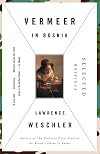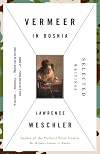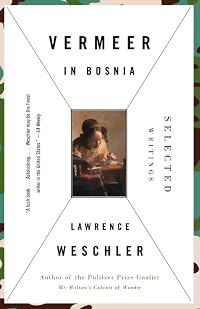
Vermeer in Bosnia: Selected Writings
by Lawrence Weschler
On This Page
Description
There are writers who specialize in the strange and others whose genius is to find the strangeness in the familiar, the unexpected meanings in stories we thought we knew. Of that second category, Lawrence Weschler is the master. Witness the pieces in this splendidly disorienting collection, spanning twenty years of his career and the full range of his concerns–which is to say, practically everything. Only Lawrence Weschler could reveal the connections between the twentieth century’s show more Yugoslav wars and the equally violent Holland in which Vermeer created his luminously serene paintings. In his profile of Roman Polanski, Weschler traces the filmmaker’s symbolic negotiations with his nightmarish childhood during the Holocaust. Here, too, are meditations on artists Ed Kienholz and David Hockney, on the author’s grandfather and daughter, and on the light and earthquakes of his native Los Angeles. Haunting, elegant, and intoxicating, Vermeer in Bosnia awakens awe and wonder at the world around us. show lessTags
Recommendations




Member Reviews
I bought this book by mistake. Great title and cover art. I was prepared to read anything about Vermeer. But this turned out to be more veneer than Vermeer. Rather than a novel this book is a collection of articles previously published by the author as journalist, foreign correspondent and cultural correspondent. The association with Vermeer comes from the first few articles. The basic premise is Vermeer is the go to time out for those associated with the war crimes tribunal in The Hague. They sit through hours of description of horror and inhumanity and need the relief of the Vermeer's to take their minds to a more peaceful place. The author asserts that the little known fact is that Vermeer was concentrating of scenes of normal life show more as a way to avoid the horrors of inhumane acts that occupied life around where he was painting. Seems tenuous but makes some sense.
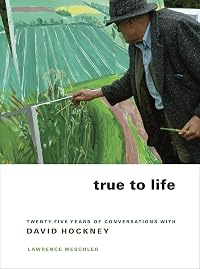
The metaphor begins to get stretched the further we get in to the book. The next section begins to see the association between art and war with lengthy insights into the life of people caught in the Holocaust of WWII such as Roman Polanski and the author's grandfather, Ernest Toch, a composer who fled the horrors of Germany to have a major career in films. Beyond that, Poland seems to be what ties this together. We gets side trips learning about the author's daughter, Sara, Ira Glass of This American Life, David Hockney, and Ed Kienholz. The major glue that holds these together is the author, Lawrence Weschler, staff writer for the New Yorker. Fortunately he's a talented writer and has some keen insights.
I don't think this will ever be turned in to a movie, possibly a few documentaries. show less
The metaphor begins to get stretched the further we get in to the book. The next section begins to see the association between art and war with lengthy insights into the life of people caught in the Holocaust of WWII such as Roman Polanski and the author's grandfather, Ernest Toch, a composer who fled the horrors of Germany to have a major career in films. Beyond that, Poland seems to be what ties this together. We gets side trips learning about the author's daughter, Sara, Ira Glass of This American Life, David Hockney, and Ed Kienholz. The major glue that holds these together is the author, Lawrence Weschler, staff writer for the New Yorker. Fortunately he's a talented writer and has some keen insights.
I don't think this will ever be turned in to a movie, possibly a few documentaries. show less
A wide-ranging collection of essays and other writings, which varied in personal interest level but which were all nicely written. The first section, "A Balkan Tryptich," and "A Season with the Borrowers" were my favorite among the included pieces.
Ratings
Members
- Recently Added By
Author Information

35+ Works 3,330 Members
Lawrence Weschler is regarded as one of the leading practitioners of literary nonfiction. His essays have appeared in The New Yorker for over twenty years, and his series of "Convergences" is a regular feature in McSweeney's Quarterly. The recepient of a Lannan Literary Award and the National Book Critics Circle Award for Criticism, he currently show more teaches at New York University. show less
Classifications
- Genres
- Nonfiction, Art & Design, General Nonfiction, History
- DDC/MDS
- 700 — Arts & recreation Arts Arts & Recreation
- LCC
- NX65 .W45 — Fine Arts Arts in general Arts in general General
- BISAC
Statistics
- Members
- 217
- Popularity
- 151,065
- Reviews
- 2
- Rating
- (3.98)
- Languages
- English
- Media
- Paper, Ebook
- ISBNs
- 3
- ASINs
- 2