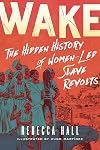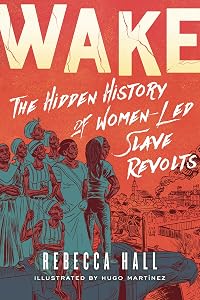
Wake: The Hidden History of Women-Led Slave Revolts
by Rebecca Hall, Hugo Martinez (Illustrator)
On This Page
Description
"An historical and imaginative tour-de-force, WAKE brings to light for the first time the existence of enslaved black women warriors, whose stories can be traced by carefully scrutinizing historical records; and where the historical record goes silent, WAKE reconstructs the likely past of two female rebels, Adono and Alele, on the slave ship The Unity. WAKE is a graphic novel that offers invaluable insight into the struggle to survive whole as a black woman in today's America; it is a show more historiography that illuminates both the challenges and the necessity of uncovering the true stories of slavery; and it is an overdue reckoning with slavery in New York City where two of these armed revolts took place. It is, also, a transformative and transporting work of imaginative fiction, bringing to three-dimensional life Adono and Alele and their pasts as women warriors. In so doing, WAKE illustrates the humanity of the enslaved, the reality of their lived experiences, and the complexity of the history that has been, till now, so thoroughly erased"-- show lessTags
Recommendations



Member Reviews
Rebecca Hall creates a vibrant and fascinating mix of memoir, history, historiography, and historical fiction as she explores the present day for clues to women-led slave revolts in the 18th century, worrying tidbits out of dusty archives protected by uncooperative white men, and -- like a paleontologist imagining an entire dinosaur from a few small bones -- conjecturing why and how the revolts might have actually happened, bringing to life women whose very names have been lost to history.
The art is a little rougher than I prefer, but the story is masterfully polished and I could not bring myself to stop reading until I had finished.
The art is a little rougher than I prefer, but the story is masterfully polished and I could not bring myself to stop reading until I had finished.
A vividly illustrated account of Black women rebels that combines elements of memoir, archival research, and informed imaginings of its subjects' lives.
A former tenants rights lawyer, Hall pursued a doctorate in history to uncover America's warped justice system. "In order to understand our experiences as Black women today,” she writes, “I had to study slavery.” This collaboration with illustrator Martínez focuses on two women-led revolts in New York City and uprisings during the trans-Atlantic slave trade. Of a 1712 revolt, Hall finds in court records the first names of four women involved and sentenced to execution; none are quoted in transcripts. "This is one way history erases us….You think you are reading an accurate show more chronicle written at the time, but if who we are and what we care about are deemed irrelevant, it won't be in there,” writes Hall. The author also examines a 1708 revolt led by a woman referred to in documents as the “Negro Fiend”; she was burned at the stake. The granddaughter of slaves, the author seeks to honor her ancestors by filling in the silent record. Facing difficulty accessing records and digesting their information, Hall called upon her deceased grandmother for strength. In London, Hall delved into archives of the trans-Atlantic slave trade, reading hundreds of slave-ship logs. Revolts at sea were largely a suicide mission fueled by slaves' desire to "take their captors with them to the bottom of the ocean." Research shows that the more women onboard a slave ship, the more likely a revolt. Hall believes that this was because women were mostly kept unchained and on deck, where it was easier for crew members to rape them; this also gave them access to weapons. The black-and-white illustrations nicely complement the text and elevate the artfulness and the power of the book, which begins and ends with scenes depicting women-led revolts aboard a ship Hall calls the Unity.
An urgent, brilliant work of historical excavation. show less
A former tenants rights lawyer, Hall pursued a doctorate in history to uncover America's warped justice system. "In order to understand our experiences as Black women today,” she writes, “I had to study slavery.” This collaboration with illustrator Martínez focuses on two women-led revolts in New York City and uprisings during the trans-Atlantic slave trade. Of a 1712 revolt, Hall finds in court records the first names of four women involved and sentenced to execution; none are quoted in transcripts. "This is one way history erases us….You think you are reading an accurate show more chronicle written at the time, but if who we are and what we care about are deemed irrelevant, it won't be in there,” writes Hall. The author also examines a 1708 revolt led by a woman referred to in documents as the “Negro Fiend”; she was burned at the stake. The granddaughter of slaves, the author seeks to honor her ancestors by filling in the silent record. Facing difficulty accessing records and digesting their information, Hall called upon her deceased grandmother for strength. In London, Hall delved into archives of the trans-Atlantic slave trade, reading hundreds of slave-ship logs. Revolts at sea were largely a suicide mission fueled by slaves' desire to "take their captors with them to the bottom of the ocean." Research shows that the more women onboard a slave ship, the more likely a revolt. Hall believes that this was because women were mostly kept unchained and on deck, where it was easier for crew members to rape them; this also gave them access to weapons. The black-and-white illustrations nicely complement the text and elevate the artfulness and the power of the book, which begins and ends with scenes depicting women-led revolts aboard a ship Hall calls the Unity.
An urgent, brilliant work of historical excavation. show less
(Full disclosure: I received a free e-ARc for review through NetGalley/Edelweiss. Trigger warning for racist and misogynist violence, including rape.)
Dr. Rebecca Hall's first career was as a lawyer: educated at Berkeley, Hall served as a tenant's rights lawyer for eight years. The avalanche of racism and sexism she faced eventually led Hall down a different path: "to get at the root of what was warping the world." She decided to go back to school to pursue a doctorate in history, with a focus on "the history of race and gender in America." Her dissertation, which would culminate in this graphic novel some twenty years later, centered on women who led slave revolts.
show more target="_top">https://www.flickr.com/photos/smiteme/50926953782/in/dateposted-public/
Unsurprisingly, her battle was an uphill one, since these women have largely been erased from history. For example, four women were involved in a 1712 slave revolt in New York City; while their names - Sarah, Abigail, Lily, Amba - made it into the public record, their testimony did not, save for this cryptic entry: "Having nothing to say for herself than that she had previously said..." Coverage of a 1708 uprising, also in NYC, which ultimately "resulted in the statutory framework that shaped slave control, and was a crucial linchpin in turning New York from a society with slaves into a slave society," referred only to the leaders as "Indian Sam" and "the Negro Wench" or "the Negro Fiend."
Other times, the keepers and owners of the records threw up their own roadblocks: upon requesting records pertaining to the slave trade at the British parliamentary archives, Hall was told that no such records exist (!). Lloyd's of London, which got its start insuring slave ships, outright refused her access (at least in part due to fears of well-deserved litigation).
Given these challenges, WAKE: THE HIDDEN HISTORY OF WOMEN-LED SLAVE REVOLTS is equally a story of Black women's resistance against the brutality and inhumanity of slavery - and a look at the heartbreaking and often tedious work of historians, especially those excavating atrocities that so many would rather bury, ignore, and outright deny. Hall's story is further informed and inspired by her own familial history: her paternal grandmother Harriet Thorpe was born into the shackles of slavery, but died a free woman.
https://www.flickr.com/photos/smiteme/50926144178/in/dateposted-public/
WAKE is both harrowing and illuminating, hard to read and yet impossible to put down. Though precious little is known about women-led slave revolts, through "a measured use of historical imagination," Hall imagines who these women were, who took up arms and resisted their captors, both on ships during the Middle Passage, and in the Americas. She also interrogates the toxic milieu of racism and misogyny that kept them in chains - and then disappeared them from history.
WAKE would make an excellent addition to high school history classrooms. In just three pages (see: 134-136), Hall taught me more about the nuances of the Atlantic slave trade than I learned in four years of high school. Likewise, the only slave revolt I can remember from AP History was the raid on Harper's Ferry (cynically, I can't help but wonder if it's because it had as its face a white man); never could I have ever dreamed of learning about revolts led by women. Her entries on the burning of women for treason as well as the increased likelihood of slave revolts on ships carrying more women (surprise!) are simply amazing and make me want to know more.
Seriously, can this become a miniseries on Netflix or something?
Hall's exhaustive research and passionate storytelling is complemented nicely by Hugo Martínez's illustrations. Part of me wished for color, to further pull the story into the present, but the art is captivating just the same. show less
Dr. Rebecca Hall's first career was as a lawyer: educated at Berkeley, Hall served as a tenant's rights lawyer for eight years. The avalanche of racism and sexism she faced eventually led Hall down a different path: "to get at the root of what was warping the world." She decided to go back to school to pursue a doctorate in history, with a focus on "the history of race and gender in America." Her dissertation, which would culminate in this graphic novel some twenty years later, centered on women who led slave revolts.
show more target="_top">https://www.flickr.com/photos/smiteme/50926953782/in/dateposted-public/
Unsurprisingly, her battle was an uphill one, since these women have largely been erased from history. For example, four women were involved in a 1712 slave revolt in New York City; while their names - Sarah, Abigail, Lily, Amba - made it into the public record, their testimony did not, save for this cryptic entry: "Having nothing to say for herself than that she had previously said..." Coverage of a 1708 uprising, also in NYC, which ultimately "resulted in the statutory framework that shaped slave control, and was a crucial linchpin in turning New York from a society with slaves into a slave society," referred only to the leaders as "Indian Sam" and "the Negro Wench" or "the Negro Fiend."
Other times, the keepers and owners of the records threw up their own roadblocks: upon requesting records pertaining to the slave trade at the British parliamentary archives, Hall was told that no such records exist (!). Lloyd's of London, which got its start insuring slave ships, outright refused her access (at least in part due to fears of well-deserved litigation).
Given these challenges, WAKE: THE HIDDEN HISTORY OF WOMEN-LED SLAVE REVOLTS is equally a story of Black women's resistance against the brutality and inhumanity of slavery - and a look at the heartbreaking and often tedious work of historians, especially those excavating atrocities that so many would rather bury, ignore, and outright deny. Hall's story is further informed and inspired by her own familial history: her paternal grandmother Harriet Thorpe was born into the shackles of slavery, but died a free woman.
https://www.flickr.com/photos/smiteme/50926144178/in/dateposted-public/
WAKE is both harrowing and illuminating, hard to read and yet impossible to put down. Though precious little is known about women-led slave revolts, through "a measured use of historical imagination," Hall imagines who these women were, who took up arms and resisted their captors, both on ships during the Middle Passage, and in the Americas. She also interrogates the toxic milieu of racism and misogyny that kept them in chains - and then disappeared them from history.
WAKE would make an excellent addition to high school history classrooms. In just three pages (see: 134-136), Hall taught me more about the nuances of the Atlantic slave trade than I learned in four years of high school. Likewise, the only slave revolt I can remember from AP History was the raid on Harper's Ferry (cynically, I can't help but wonder if it's because it had as its face a white man); never could I have ever dreamed of learning about revolts led by women. Her entries on the burning of women for treason as well as the increased likelihood of slave revolts on ships carrying more women (surprise!) are simply amazing and make me want to know more.
Seriously, can this become a miniseries on Netflix or something?
Hall's exhaustive research and passionate storytelling is complemented nicely by Hugo Martínez's illustrations. Part of me wished for color, to further pull the story into the present, but the art is captivating just the same. show less
I went in expecting a history book. But this is actually more about the author's drive to find the stories of slave women just as much as it is about the revolts. We get to see how various modern social systems treat her in this search and how she processes everything she learns, coming to terms with some really dark truths without letting them overpower her. So so good. I loved the art because it reminded me of the underground indie style that I grew up on: rebellious and unique, not sterilized like you get with, say, the DC house style. Also, the layouts are really creative and the artist does a fantastic job with detailing the scenes.
Author Rebecca Hall was a successful attorney and was happily married with a child. Nevertheless, she felt called to dig more deeply into the story of her people, the American slaves, particularly the women who seemed to be left out of the narrative. This graphic describes in the first person her PhD research as she searches for the records of enslaved women who were part of slave revolts.
She starts out searching records in New York City, which although we don’t think of it, was once a focal point for the US slave trade. She finds a few enticing records – clearly these strong women existed, although she only finds the names of four women, condemned to death – one by burning at the stake - for their part in slave rebellions.
Her show more research became more fruitful when she began searching records of rebellions on slave ships. There she found that the more women (and thus children) included in the ship’s manifesto, the more likely the chances of slave ship rebellions. She attributes this to the facts that male slaves were chained in the lowest decks; females in a higher deck with less restriction – the horrible speculation is that this gave sailors ‘better access’ to the women to use as they wished. In addition, children were usually not chained and could travel between men and women’s decks with messages. The purpose of these rebellions was to end their continual suffering with death and to take as many of their captors as they could with them.
This is a different, ugly face of American slavery. It also serves as first person narrative as to the frustrations of searching out records which often turn out to be incomplete or have been omitted. I enjoyed the graphic novel format which took it from what could have been the dry recitation of PhD research to an interesting account of Dr Hall’s work and the humanity of those whose stories she found. show less
She starts out searching records in New York City, which although we don’t think of it, was once a focal point for the US slave trade. She finds a few enticing records – clearly these strong women existed, although she only finds the names of four women, condemned to death – one by burning at the stake - for their part in slave rebellions.
Her show more research became more fruitful when she began searching records of rebellions on slave ships. There she found that the more women (and thus children) included in the ship’s manifesto, the more likely the chances of slave ship rebellions. She attributes this to the facts that male slaves were chained in the lowest decks; females in a higher deck with less restriction – the horrible speculation is that this gave sailors ‘better access’ to the women to use as they wished. In addition, children were usually not chained and could travel between men and women’s decks with messages. The purpose of these rebellions was to end their continual suffering with death and to take as many of their captors as they could with them.
This is a different, ugly face of American slavery. It also serves as first person narrative as to the frustrations of searching out records which often turn out to be incomplete or have been omitted. I enjoyed the graphic novel format which took it from what could have been the dry recitation of PhD research to an interesting account of Dr Hall’s work and the humanity of those whose stories she found. show less
This is a graphic novel and a story brilliantly told and imagined by a scholar who researches women's roles in slave rebellions, a field she seemingly has all to herself. Hall travels to New York and London (where she is refused admission to the archives of Lloyds of London, which insured much of the trade) to search maritime and historical archives from the 1700s. With very little that could be verified by written records (she basically finds only the first names of only four women), Hall creates her own narration and imagines how the brave leaders, in desperation and knowing the outcome is certain death, form their plans on land and sea. The most remarkable part of the book portrays the circumstances on the ships themselves: the show more diagrams she found which specified various configurations to pack the most humanity into the tiniest spaces, and the way women were allowed to be unchained on the decks, because the captains did not believe them capable of carrying out insurrection, and also to provide “benefit to the crew”. She also disputes the false claims that Africans were primarily responsible for enslavement of their fellow citizens and illuminates the difference between chattel (for profit) slavery and the sale of captives captured in wars, which happened in every country on earth. The illustrations are drawn in B&W comic book style, which I don't particularly like, with font size way too small, but the important story shines through.
Quotes: “The British would like us to think that their only role in the trade was its abolition, but it was central to England’s economy, and regulated and managed at every level.”
“History, by definition, is the study of change over time.” show less
Quotes: “The British would like us to think that their only role in the trade was its abolition, but it was central to England’s economy, and regulated and managed at every level.”
“History, by definition, is the study of change over time.” show less
“If you believe something doesn’t exist, you don’t go looking for it. Worse, if you stumble on it, you still can’t see it.”
I’ve always asked why there is so little attention on slave revolts from people of African descent, hmm... I really enjoyed the level of research Hall has compiled, and the digging she did to find the little that was documented. Then, she had to look between the lines.
I didn’t personally mesh well with the artwork, but it conveyed the story fine. I just wish the shading wasn’t drawn with harsh, thick black lines.
I’ve always asked why there is so little attention on slave revolts from people of African descent, hmm... I really enjoyed the level of research Hall has compiled, and the digging she did to find the little that was documented. Then, she had to look between the lines.
I didn’t personally mesh well with the artwork, but it conveyed the story fine. I just wish the shading wasn’t drawn with harsh, thick black lines.
Members
- Recently Added By
Lists

BLM
210 works; 1 member

Books Read in 2023
5,547 works; 145 members

Books Read in 2024
4,623 works; 126 members
Author Information

1+ Work 465 Members
All Editions
Awards and Honors
Awards
Distinctions
Common Knowledge
- Original publication date
- 2021-06
- People/Characters
- Rebecca Hall; Sarah; Abigail (slave of Gysbert Vaninburgh); Lily; Amba; Ekua (show all 24); Adolphus Philipse; William Hallett (Jnr); Indian Sam; Negro Fiend; Harriet Thorpe Hall (grandmother of Rebecca Hall); Haywood Hall (grandfather of Rebecca Hall); Otto Hall (uncle of Rebecca Hall); Harry Haywood Hall (father of Rebecca Hall); John Bell (ship surgeon); James Barbot (captain); Adono (of the Ahosi of Dahomey); Alele (of the Ahosi of Dahomey); Ahosi of Dahomey (female warriors/Amazons); Maya Angelou; Thomas Jefferson; Audre Lorde; Bea Hammond (partner of Rebecca Hall); Caleb (son of Rebecca Hall and Bea Hammond)
- Important places
- New York, New York, USA; Santa Cruz, California, USA; Omaha, Nebraska, USA; Chicago, Illinois, USA; London, England, UK; Whydah (now Ouidah, Benin) (show all 10); Ouidah, Benin (as Whydah); Dahomey; Liverpool, England, UK; Avebury, Wiltshire, England, UK
- Important events
- Transatlantic slave trade
- First words
- Atlantic Ocean, 1770
"They wait . . . for our signal."
"Adono -- you know we will die here."
"We are dead already, Alele."
"At least we die together."
"In unity!" - Quotations
- We reach the final stage of healing from trauma when we integrate the past into who we are. It becomes a part of us that we acknowledge and provides understanding of our world. The past is not a ghost we want to banish or exo... (show all)rcise. It is something we want to internalize. Like at a wake, a wake as in a funeral, we speak of the dead and for the dead. At this wake we must defend the dead. Our memories must be longer than our lifetimes.
- Last words
- (Click to show. Warning: May contain spoilers.)For the future!
- Blurbers
- Davis, Angela Y.; Jennings, John; Brewer, Rose M.; Araujo, Ana Lucia; Blain, Keisha N.; Getz, Trevor R. (show all 10); Passmore, Ben; Dent, Gina; Haraway, Donna; Gill, Joel Christian
- Original language
- English
Classifications
- Genres
- Nonfiction, Graphic Novels & Comics
- DDC/MDS
- 741.5 — Arts & recreation Drawing & decorative arts Drawing Comic books, graphic novels, fotonovelas, cartoons, caricatures, comic strips
- LCC
- PN6727 .H2556 .W35 — Language and Literature Literature (General) Literature (General) Collections of general literature Comic books, strips, etc.
- BISAC
Statistics
- Members
- 478
- Popularity
- 63,392
- Reviews
- 21
- Rating
- (4.16)
- Languages
- English, French, German
- Media
- Paper, Audiobook, Ebook
- ISBNs
- 10
- ASINs
- 3