Conundrum
by Jan Morris
On This Page
Description
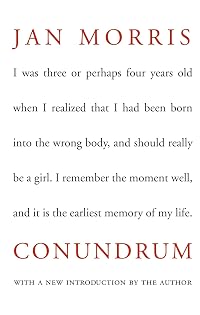
The great travel writer Jan Morris was born James Morris. James Morris distinguished himself in the British military, became a successful and physically daring reporter, climbed mountains, crossed deserts, and established a reputation as a historian of the British empire. He was happily married, with several children. To all appearances, he was not only a man, but a man's man. Except that appearances, as James Morris had known from early childhood, can be deeply misleading. James Morris had show more known all his conscious life that at heart he was a woman. "Conundrum, "one of the earliest books to discuss transsexuality with honesty and without prurience, tells the story of James Morris's hidden life and how he decided to bring it into the open, as he resolved first on a hormone treatment and, second, on risky experimental surgery that would turn him into the woman that he truly was. show lessTags
Recommendations

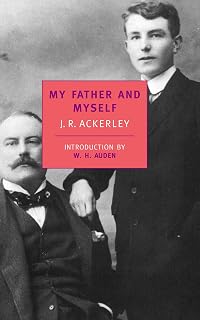
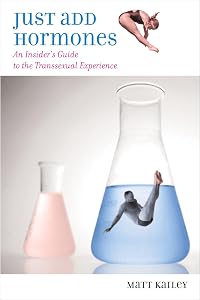
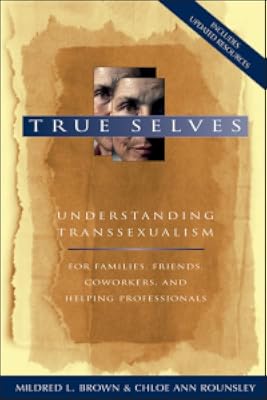
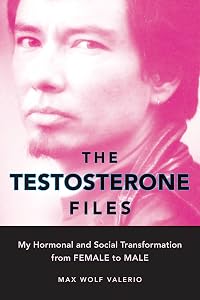














Member Reviews
A highly readable memoir by one of the earliest high-profile transgender women to undergo the physical transformation from male to female through surgery. James Morris was a respected journalist and foreign correspondent for The Guardian, among other publications, and was part of Sir Edmund Hilary's Mt. Everest expedition, climbing with the party, and running dispatches down the mountain to a messenger who conveyed them to "civilization" where they could be transmitted worldwide. Having left prep school at 17 to join the 9th Queen's Royal Lancers, Morris enjoyed his "excursions into {the} male society" of the Army, but could not feel totally a part of it. From early childhood he had felt he was inhabiting the wrong body--that he was show more meant to be a girl. After leaving the Army, he resolved to try to understand the ambiguity he had felt all his life---why did others see him as virile and in all ways unequivocally a man, while he, healthy and sane, with no desire to be "cured" of anything, knew himself to be a woman. Yet he fell in love with and married a woman, fathered 5 children with her, and despite long separations and a legally mandated divorce when he changed from "M" to "F" on official documents, remained devoted to her throughout their long lives. In fact, the couple re-married when it was legal to do so…in their 80s. First published in 1974, my Slightly Foxed edition contains a 2001 preface by the author, addressing the great changes in "conceptions of sexual identity" that had taken place in the intervening years. As Morris said at that time, "This book is already a period piece." And now, with another quarter century’s distance, even more changes strike the current reader. But the prose is exquisite, the insights enlightening, the narrative moving. Highly recommended. show less
Morris's classic memoir of her life and her transition from male to female in midlife was a joy to read. Her observations are fascinating and the glimpse into her world is poignant. Some of her attitudes (and language) feel dated now, and I sometimes wondered at her propensity to generalize about how men and women think, but she also draws some attention to those generalizations and speculates that she may be wrong or that the time and place where one grew up may have a significant effect on how one sees the world as male or female. Stuff to think on here, and I'm glad I read it.
Not only was Jan Morris, AMAB, lucky, she knew she was lucky, even though she was sure of her womanhood in a male body. Career, marriage, and family were all successful and all appreciated but did not address or allay the discomfort of being in the wrong body. So she changed it. And retained the essentials of her successes and gained the joy of a body and role in society that fit her internal identity.
I found Morris' concepts and experience of womanhood extremely foreign to my experience, more so than her accounts of her 35 years of living as a man among men. But they worked for her.
I found Morris' concepts and experience of womanhood extremely foreign to my experience, more so than her accounts of her 35 years of living as a man among men. But they worked for her.
It seems to me that what has happened to me and what I have tried to describe in this book is one of the most fascinating experiences that ever befell a human being.
What does it feel like for a man to be a man, for a woman to be a woman? Is it possible for a man, never ceasing to be a man and therefore to gain the necessary perspective, to objectively experience, and then to articulate, what it feels like to inhabit a male body? And likewise for woman? These are some of the questions Jan Morris's courageous memoire of her sex change attempts to cast light on.
The facts are well known, how James Morris, man, journalist, historian, adventurer and travel writer became Jan Morris, grandmother, dame, traveller, novelist and woman. Morris show more gives here a very personal account of her life. Her memoire is searching, candid, and of course, as one would expect from a writer of Morris's stature and accomplishment, beautifully written. She gives an intimate account of the relationship between gender, sexuality and the self, an account which does more to illuminate the enigma of trans-sexuality than a whole bibliography of psychological text books and case studies. It's a tale told from the inside, and thus doubly valuable, both as a record of the personal and of the universal.
At the same time this inner perspective reveals a few ideological blindnesses about our dear Jan. First, is the entrapment in Western modes of sexuality in which male and female are clearly differentiated. Eastern genders are much less clearly defined. Asian men display more qualities associated in the West with femininity: grace, forgiveness, delicacy, softness; while Asian women frequently display qualities designated in the West as masculine: strength, dogmaticism, insensitivity, ambition. The most important deity of Asia is the trans-sexual Guan Yin, who appears in male and female guises.Perhaps Morris was as much a victim of her milieu as a product of it.
Secondly, it has to be said that Morris has been a life long member of the Establishment. Educated at Oxford and Lancing, with an early career in the 9th Lancers, then a job with The Times during the long decline of Empire, her journey from male to female has therefore been eased by the tolerance towards eccentricity, the politeness of members of the Establishment towards one of their own. I couldn't help feeling, as Morris describes how 'a man from the Ministry' drove all the way to her dacha in Wales to give her her new social security card, that, had Morris been born into a lower social class and been living in a semi-detached in Nottingham, the powers who rule our lives would not have been quite so sycophantically helpful. Indeed, tales of official and legal obstruction for those seeking to change their sex are still the norm. In this sense, Conundrum cannot be regarded as typical of the transsexual experience.
Thirdly, and this is my main objection to an otherwise fascinating and moving book, is Morris's attitude to homosexuality. Morris writes of a childfree homosexual couple she once knew:
They left behind them... only a void. A marriage as loyal as marriage could be had ended sterile and uncreative, and if the two of them had lived into old age their lives I fear, would have proved progressively more sterile still, the emptiness creeping in, the fullness retreating.
Here we have two myths with which heterosexual people love to bolster their gender hegemony: the sickly kind of sentimentality 'liberal' people display towards homosexuals (the truth and pathos of their condition), and 'breeder fascism'.
'Breeder fascism', as Chavenet defined it, is the attitude that those who do not have children are somehow incomplete, lacking (childless), diminished, sterile, uncreative, and by virtue of having no offspring, lead empty, unfulfilled lives, unable to experience the loftier human virtues of selfless love, responsibility, blood loyalty, self-sacrifice, duty and devotion, which can only be the exclusive prerogative of those who reproduce. Breeder fascism is the attitude that having children is a uniquely special achievement which lifts parents onto a higher level of human development. To encounter this attitude in otherwise quite sane, normal, educated, enlightened people is always something of a shock. To encounter it here in a tale of a trans-sexual is something of a grotesque.
Having offspring is not a special achievement; it is mere biology. Every known life form in the universe does it, even the lowliest micro-structure does it. It is not unique or special, it is ubiquitous, commonplace, mundane, uninteresting even; and claiming that it gives exclusive access to a higher level of human development is just offensive nonsense. Worse, given the way the planet is currently groaning under an unsustainable burden of a human population fast approaching 7 billion, it is also a sign of gross selfishness, incontinence and irresponsibility.
Raising children, however, so that they become tolerant, considerate, well-adjusted members of a global community is another matter. That is special, and, given the large number of people who fail so spectacularly at it, must be uncommonly difficult. However, this is not the exclusive prerogative of breeders, but can be attempted by anyone of any gender or sexual persuasion who has access to an adoption agency and a large enough income.
To claim that having children is the only way to protect one from the void, as Jan Morris does here, is the key sign of breeder fascism. (Shakespeare says the same thing in the early, most tedious, sonnets of his cycle.) The fact is, every human being faces the void. The generations of men are like leaves, the blind poet said, and having offspring is only a postponement of the void, a postponement which in the face of that void, is infinitely insignificant.
From The Lectern show less
What does it feel like for a man to be a man, for a woman to be a woman? Is it possible for a man, never ceasing to be a man and therefore to gain the necessary perspective, to objectively experience, and then to articulate, what it feels like to inhabit a male body? And likewise for woman? These are some of the questions Jan Morris's courageous memoire of her sex change attempts to cast light on.
The facts are well known, how James Morris, man, journalist, historian, adventurer and travel writer became Jan Morris, grandmother, dame, traveller, novelist and woman. Morris show more gives here a very personal account of her life. Her memoire is searching, candid, and of course, as one would expect from a writer of Morris's stature and accomplishment, beautifully written. She gives an intimate account of the relationship between gender, sexuality and the self, an account which does more to illuminate the enigma of trans-sexuality than a whole bibliography of psychological text books and case studies. It's a tale told from the inside, and thus doubly valuable, both as a record of the personal and of the universal.
At the same time this inner perspective reveals a few ideological blindnesses about our dear Jan. First, is the entrapment in Western modes of sexuality in which male and female are clearly differentiated. Eastern genders are much less clearly defined. Asian men display more qualities associated in the West with femininity: grace, forgiveness, delicacy, softness; while Asian women frequently display qualities designated in the West as masculine: strength, dogmaticism, insensitivity, ambition. The most important deity of Asia is the trans-sexual Guan Yin, who appears in male and female guises.Perhaps Morris was as much a victim of her milieu as a product of it.
Secondly, it has to be said that Morris has been a life long member of the Establishment. Educated at Oxford and Lancing, with an early career in the 9th Lancers, then a job with The Times during the long decline of Empire, her journey from male to female has therefore been eased by the tolerance towards eccentricity, the politeness of members of the Establishment towards one of their own. I couldn't help feeling, as Morris describes how 'a man from the Ministry' drove all the way to her dacha in Wales to give her her new social security card, that, had Morris been born into a lower social class and been living in a semi-detached in Nottingham, the powers who rule our lives would not have been quite so sycophantically helpful. Indeed, tales of official and legal obstruction for those seeking to change their sex are still the norm. In this sense, Conundrum cannot be regarded as typical of the transsexual experience.
Thirdly, and this is my main objection to an otherwise fascinating and moving book, is Morris's attitude to homosexuality. Morris writes of a childfree homosexual couple she once knew:
They left behind them... only a void. A marriage as loyal as marriage could be had ended sterile and uncreative, and if the two of them had lived into old age their lives I fear, would have proved progressively more sterile still, the emptiness creeping in, the fullness retreating.
Here we have two myths with which heterosexual people love to bolster their gender hegemony: the sickly kind of sentimentality 'liberal' people display towards homosexuals (the truth and pathos of their condition), and 'breeder fascism'.
'Breeder fascism', as Chavenet defined it, is the attitude that those who do not have children are somehow incomplete, lacking (childless), diminished, sterile, uncreative, and by virtue of having no offspring, lead empty, unfulfilled lives, unable to experience the loftier human virtues of selfless love, responsibility, blood loyalty, self-sacrifice, duty and devotion, which can only be the exclusive prerogative of those who reproduce. Breeder fascism is the attitude that having children is a uniquely special achievement which lifts parents onto a higher level of human development. To encounter this attitude in otherwise quite sane, normal, educated, enlightened people is always something of a shock. To encounter it here in a tale of a trans-sexual is something of a grotesque.
Having offspring is not a special achievement; it is mere biology. Every known life form in the universe does it, even the lowliest micro-structure does it. It is not unique or special, it is ubiquitous, commonplace, mundane, uninteresting even; and claiming that it gives exclusive access to a higher level of human development is just offensive nonsense. Worse, given the way the planet is currently groaning under an unsustainable burden of a human population fast approaching 7 billion, it is also a sign of gross selfishness, incontinence and irresponsibility.
Raising children, however, so that they become tolerant, considerate, well-adjusted members of a global community is another matter. That is special, and, given the large number of people who fail so spectacularly at it, must be uncommonly difficult. However, this is not the exclusive prerogative of breeders, but can be attempted by anyone of any gender or sexual persuasion who has access to an adoption agency and a large enough income.
To claim that having children is the only way to protect one from the void, as Jan Morris does here, is the key sign of breeder fascism. (Shakespeare says the same thing in the early, most tedious, sonnets of his cycle.) The fact is, every human being faces the void. The generations of men are like leaves, the blind poet said, and having offspring is only a postponement of the void, a postponement which in the face of that void, is infinitely insignificant.
From The Lectern show less
I have to push down the urge to now run out and buy every single book that Jan Morris has written. She writes travel books, and also wrote a three part work on the history of the British Empire. This is a travel book... of her journey through the search for her Identity. It is written so, so well. She is sincere without ever being close to schmaltzy. You can feel as you read that she delved deep into her past psyche and really, really worked to make her feelings describable, even tangible. That's difficult to do even with 'normal' feelings - and she's gone back through to her male past (which must have been difficult to remember since she had been living and thinking and feeling for years in a much more feminine manner) to describe show more feelings. I also appreciated it for what it is - her story of her journey, not a history of a group, or a medical description - it does not apply to anyone except her, and she does not try to force it to apply to anyone else but herself. (which I really wish more people would do nowadays) She says in the introduction to this newer edition that transsexuals have appeared as this kind of person and that, or in other words, matching the diversity of the rest of the world. Although she comments only on other transsexuals as the diverse group that they are, her work to describe her inner struggles with clarity helps anyone who reads it realize the inner forces at work for all transsexuals. show less
Memoir from 1974 of the author's life as James and transition to Jan.
James led what appeared to be a macho and cultured, not to say privileged, life in the Army, and as a foreign correspondent and travel writer, but then transititioned to become Jan. The fluent prose makes it fascinating reading, though I'm not sure how much today's trans activists would agree with her reflections on what it is to be male and female.
James led what appeared to be a macho and cultured, not to say privileged, life in the Army, and as a foreign correspondent and travel writer, but then transititioned to become Jan. The fluent prose makes it fascinating reading, though I'm not sure how much today's trans activists would agree with her reflections on what it is to be male and female.
Written in 1974 as a description of her life and steps to transsexual change, this is an illuminating autobiography.
She quotes from Cecil Day Lewis’ The Volunteer near the end:
Tell them in England, if they ask
What brought us to these wars,
To this plateau beneath the night’s
Grave manifold of stars –
It was not fraud or foolishness,
Glory, revenge, or pay:
We came because our open eyes
Could see no other way.
Others have written that it is dated, but it is autobiography and necessarily reflects life as the author found it, from her perspective.
I happened to be reading her collection of vignettes, Contact!, at the same time and noticed a number of scenes extracted and modified in the later work.
She quotes from Cecil Day Lewis’ The Volunteer near the end:
Tell them in England, if they ask
What brought us to these wars,
To this plateau beneath the night’s
Grave manifold of stars –
It was not fraud or foolishness,
Glory, revenge, or pay:
We came because our open eyes
Could see no other way.
Others have written that it is dated, but it is autobiography and necessarily reflects life as the author found it, from her perspective.
I happened to be reading her collection of vignettes, Contact!, at the same time and noticed a number of scenes extracted and modified in the later work.
Members
- Recently Added By
Published Reviews
Still, a comparison to later works suggests that Morris is perhaps withholding more than just the details of sex. It's almost as though Morris has traveled to some gorgeous jungle and waxed on about the landscape, the flora and fauna, the waterfalls, a chirp of a bird, but has forgotten all about the people. And maybe the parallel stays intact here: armchair travel, after all, is not travel show more itself, and the place in question is never quite at the hands of the reader. In Conundrum, Morris says several times that she imagines her condition as mystical or spiritual, and perhaps what all this irksome withholding is intended to do is retain, amid the candor, some of that mystery for herself. show less
added by John_Vaughan
Both as a man and as a woman the author has always had a remarkable capacity for sexual sublimation, feeling an estheticized "lust" for cities, for landscapes, for sights, sounds and smells. While she says that orgasm is "possible," one gets the impression that sex does not interest her, though she is still in her 40's. Obviously, what is an ideal solution for her would not appeal to everyone. show more "Conundrum" suggest that identity is more important than sex and few reasonable people would argue with this. But even granting that it must be an enormous relief, as well as a positive pleasure, to break through to a clear sense of long-suppressed self, one experiences at this point in the book a feeling of anticlimax. show less
added by John_Vaughan
Lists

Trans Books by Trans Authors
134 works; 10 members

Books Read in 2020
3 works; 1 member

Sexuality & Gender
160 works; 3 members

Club Read's Recommended Nonfiction Written by Women
618 works; 30 members

The Best LGBTQ Nonfiction
222 works; 73 members
Author Information

88+ Works 10,650 Members
Jan Morris served as an intelligence officer with the 9th Queen's Royal Lancers, studied at Oxford University, and was a reporter for the Times and the Guardian before launching a successful career as a novelist, history author, and travel writer
Awards and Honors
Series
Belongs to Publisher Series
Common Knowledge
- People/Characters
- Jan Morris
Classifications
- Genres
- Biography & Memoir, Nonfiction, LGBTQ+, Sexuality and Gender Studies, General Nonfiction
- DDC/MDS
- 306.768 — Society, government, & culture Social sciences, sociology & anthropology Social Behavior - Dating, Marriage, Divorce Sexual relations Sexual orientation, transgender identity, intersexuality Transgender identity and intersexuality
- LCC
- HQ77.8 .M67 .A3 — Social sciences The family. Marriage, Women and Sexuality The Family. Marriage. Women Sexual life Transexualism
- BISAC
Statistics
- Members
- 613
- Popularity
- 47,809
- Reviews
- 12
- Rating
- (3.85)
- Languages
- 6 — Dutch, English, German, Portuguese, Spanish, Swedish
- Media
- Paper, Audiobook, Ebook
- ISBNs
- 20
- ASINs
- 12