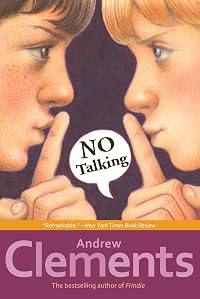
No Talking
by Andrew Clements
On This Page
Description
The noisy fifth grade boys of Laketon Elementary School challenge the equally loud fifth grade girls to a "no talking" contest.Tags
Recommendations



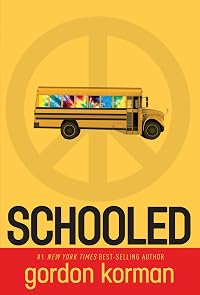

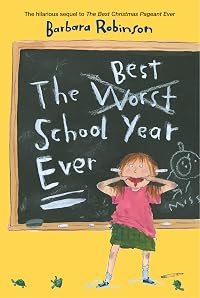

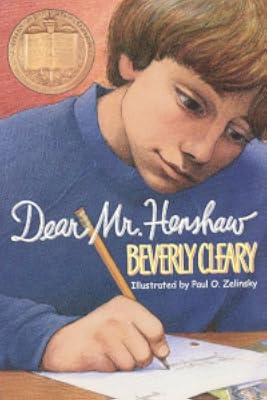

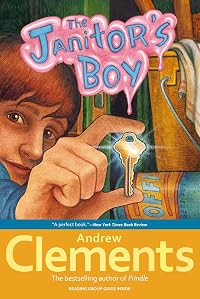
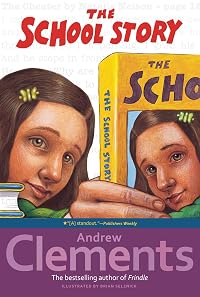
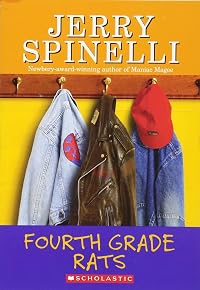
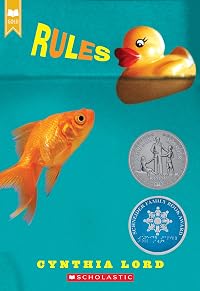
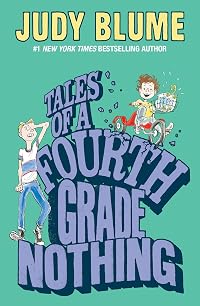
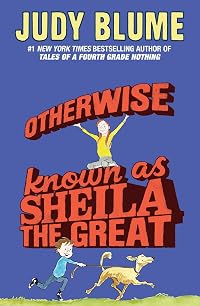
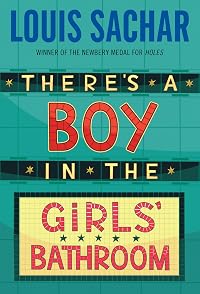
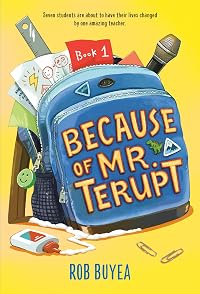
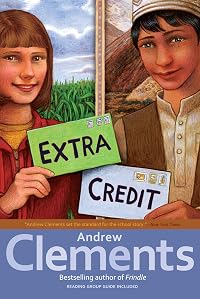
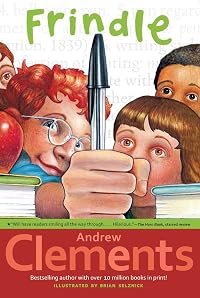







Member Recommendations

cf66 Ragazzi che cercano soluzioni con originalità a problemi quotidiani
Member Reviews
I read this at the suggestion of one of my library paras, because one of the grade levels at this school is one of those groups that is made up of lovely individual kids who are unruly as a group, and every grade level they go through is left reeling. In No Talking it is the fifth grade, named the Unshushables by school staff. A report about India and Gandhi inspires a boy to try to go a whole day without speaking. An ugly confrontation with a bitter rival (and a dratted girl) leads to a contest: no talking for two days, boys vs girls, excepting when spoken to first by a teacher, and then the response may by no more than three words. Students must rely on the honor system for time away from school, and unauthorized takling is penalized show more per word. The contest has interesting and thought-provoking effects on students and also teachers, who, having spent years trying to get this group to stop talking, now find themselves trying to get them to talk. Very well done.
Curriculum: this would be an excellent literature circle group, with implications about how the actions of a few affect the whole community.
Clements, A. & Elliott, M. (2009). No talking. New York: Aladdin. show less
Curriculum: this would be an excellent literature circle group, with implications about how the actions of a few affect the whole community.
Clements, A. & Elliott, M. (2009). No talking. New York: Aladdin. show less
It’s boys vs. girls when the noisiest, most talkative, and most competitive fifth graders in history challenge one another to see who can go longer without talking. Teachers and school administrators are in an uproar, until an innovative teacher sees how the kids’ experiment can provide a terrific and unique lesson in communication. In No Talking, Andrew Clements portrays a battle of wills between some spunky kids and a creative teacher with the perfect pitch for elementary school life that made Frindle an instant classic.
The teachers at Dave's school call the 5th-graders The Unshushables, because they never stop talking. But that all changes when Dave and Lynsey start and boys-vs-girls contest to see who can last the longest without talking at all.
A fun read, but there's nothing earth-shattering here.
A fun read, but there's nothing earth-shattering here.
"Mrs. Marlow glared at him. 'Conservation is for energy and water and soil and forests. Words don't need conserving.' 'Maybe they do," Kyle said,'". This is one of the many fascinating moments I found in Andrew Clements' 'No Talking'. Author Clements uses the narrator to dive into the story from as many characters as possible. Instead of sticking to one or two characters the narrator get in the heads of students, teachers, parents, even the principal of Laketon Elementary as the narrator acts as an all-knowing being capable of knowing who thinks what and why as well as going back and forth in time. But there are individuals that the narrator focus more on, particularly 5th grader Dave Packer. While working on an oral report about show more Mahatma Ghandi, Dave is intrigued by his belief of going one day a week without speaking in order "to bring order to his mind". Dave decides to experiment with this concept he defines "interesting". He breaks this silence when annoyed by one of the girls', Lynsey Burgess, constant "girl talks" during lunch time who, like his entire 5th grade class, nicknamed the Unshushables by faculty, is equally as talkative as himself. These two unofficial class leaders for their respective genders make a class-wide contest out of who can talk the less; the boys or girls. That one concept that will bring such inspiration to the school. The students having a boys v.s. girls contest, will end up thinking about what it is they say before they say it, and how they use their words. This is a creative idea that has everyone choosimg the words they use when allowed to speak. The teachers are on opposing sides about this game ofor theirs. But the principal, used to controlling everything, wants to be the one to have the Unshushables be quiet when the time asks for it and to talk when asked to. She sees this is unnatural and they are not learning to conserve their words properly. But that is exactly what this book tells. These many different ways of thinking in a school setting clash in an incredibly creative way by Clements' style of writing. The loudest kids in school learn to think more and become more respectable children in ways none of them thought possible. Unknowingly, the boys learn to respect the girls and the girls learn to respect the boys in their class that was once split between the genders; even working together at points.This isn't directly shown, but our narrator has the power to go in time to see these events, showing the readers the result of what started out as a contest, ends in a different, but positive, way for the entire school. The impact the power of one man who fought the British army out of India with words and ideas impacts one boy who impacts one girl that impacts their class in turn impacting their school whole in how they all think; it is contagious. This incredibly told story, the ideas and characters in "No Talking" have so much I want to say them and go on and on about but must eventually end. I dont know how Andrew Clements found the brilliant way to end this amazing novel, that he did. But by using the three word rule from the story and what Dave Packer would probably describe this work, I will try to end this review: An 'interesting' story. show less
Andrew Clement's No Talking tells the story of one David Packer and how he and Lynsey Burgess change their fifth grade class -and even their entire school- for the better. It all started with a challenge; a challenge to be quiet.
The numerous points of view Andrew Clements took on in this novel was fascinating to me. Of course, it was fun seeing the boys and girls each take on the challenge of being quiet for 48 hours and their own individual approaches and challenges they faced. I was not expecting, however, to get a glimpse of how the teachers interpreted the experiment. My favorite teacher out of the novel was definitely Mr. Burton, the English teacher who decided to write a report on the event for his Masters program, probably show more because at this stage in my life I would have the exact reaction to seeing the loudest kids in the school experiment with a new, quieter form of communication.
I would also really like to look into how the experiment affected the student's empathy towards those who can't use verbal communication. In fact, if I were teaching this book to students, I would try to somehow fit a lesson in about deaf culture and maybe teach the class a little sign language. show less
The numerous points of view Andrew Clements took on in this novel was fascinating to me. Of course, it was fun seeing the boys and girls each take on the challenge of being quiet for 48 hours and their own individual approaches and challenges they faced. I was not expecting, however, to get a glimpse of how the teachers interpreted the experiment. My favorite teacher out of the novel was definitely Mr. Burton, the English teacher who decided to write a report on the event for his Masters program, probably show more because at this stage in my life I would have the exact reaction to seeing the loudest kids in the school experiment with a new, quieter form of communication.
I would also really like to look into how the experiment affected the student's empathy towards those who can't use verbal communication. In fact, if I were teaching this book to students, I would try to somehow fit a lesson in about deaf culture and maybe teach the class a little sign language. show less
I would like to renamed this book “The Day the Unhushables Finally Hushed.” I really enjoyed the book. It is about a boy named Dave who, after reading about Mahatma Gandhi, decides to have a no talking competition, boys versus girls. Initially, I thought it was going to be just boys versus girls but it was much more. The main theme of the book is communication. It’s amazing how taking away talking opens the door to so many that otherwise seem impossible. The book is told in third person omniscient. Clements allowed us to see in to the mind of not only the students who were a part of the competition but also the teachers affected by it. Through the use of third person we were able to see the connection between the students and show more teachers. We were also able to see character development on both sides. It was interesting to be able to see how the teachers handled the situation. Each teacher had his/her own opinion and each teacher eventually tried to use the situation to his/her own advantage. While reading, I wondered how I would initially handle the situation. Would I be annoyed like Mrs. Marlow or play along like Mr. Burton? The book touched on topics such as gender stereotypes, trust and respect. It was boys versus girls with students and the teachers. The boys and girls had to trust each other and the principal had to trust her teachers. Throughout the book Dave spoke of all the great things that came from no talking, like thinking more and be respectful. Overall, Clements did a great job at showing how a simple experiment can lead to many great discoveries. show less
Andrew Clements practically was my childhood. Me and my Mum both loved them, so she would read them to me (Or as I got older, I would read them, and then let her read them to me, because she was too slow 😄). I read almost all of his books growing up, and I loved them! I read them so many times.
This was never one of my favourites, and I think I only read it once or twice, but when my mum got it out of the library for my brother, I was curious what I would think of it now.
No Talking is a fun book for younger kids. I enjoyed it⎯it was engagingly written, and sort of funny at times⎯but the characters were really petty, and seemed a bit immature for ten... I would have maybe put them at eight or so.
Overall, I think this is a great show more book for younger kids. Six to ten, I would say, would probably really enjoy this book. I just don't think this book stands up for an older audience. show less
This was never one of my favourites, and I think I only read it once or twice, but when my mum got it out of the library for my brother, I was curious what I would think of it now.
No Talking is a fun book for younger kids. I enjoyed it⎯it was engagingly written, and sort of funny at times⎯but the characters were really petty, and seemed a bit immature for ten... I would have maybe put them at eight or so.
Overall, I think this is a great show more book for younger kids. Six to ten, I would say, would probably really enjoy this book. I just don't think this book stands up for an older audience. show less
Members
- Recently Added By
Lists

Children and YA books involving school
58 works; 2 members

AR Level 5 in cloudLibrary
170 works; 1 member
Author Information

116 Works 61,192 Members
Andrew Clements was born in Camden, New Jersey on May 7, 1949. He received a bachelor's degree in literature from Northwestern University and master's degree in teaching from National Louis University. Before becoming a full-time author, he taught in the public schools north of Chicago for seven years, was a singer-songwriter, and worked in show more publishing. He is well known for his picture book texts, but it was his middle school novel, Frindle, that was a breakthrough for his writing career. Frindle won numerous awards including the Georgia Children's Book Award, the Sasquatch Children's Book Award, the Massachusetts Children's Book Award, the Rhode Island Children's Book Award, and the Year 2000 Young Hoosier Book Award. His other works include The Landry News, The Janitor's Boy, No Talking, Things Not Seen, Things Hoped For, and Things That Are. (Bowker Author Biography) show less
Awards and Honors
Awards
Notable Lists
Work Relationships
Common Knowledge
- Canonical title
- No Talking
- Original publication date
- 2007
- Dedication
- For my brother, Matthew Day Clements
- First words
- Dave Packer was in the middle of his fourth hour of not talking.
- Last words
- (Click to show. Warning: May contain spoilers.)Not one word.
- Original language
- English
Classifications
- Genres
- Kids, Fiction and Literature, Children's Books
- DDC/MDS
- 813.54 — Literature & rhetoric American literature in English American fiction in English 1900-1999 1945-1999
- LCC
- PZ7 .C59118 — Language and Literature Fiction and juvenile belles lettres Fiction and juvenile belles lettres Juvenile belles lettres
- BISAC
Statistics
- Members
- 3,033
- Popularity
- 5,874
- Reviews
- 103
- Rating
- (4.03)
- Languages
- 5 — Chinese, English, German, Italian, Spanish
- Media
- Paper, Audiobook, Ebook
- ISBNs
- 33
- ASINs
- 6