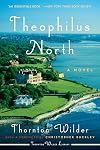
Theophilus North
by Thornton Wilder
On This Page
Description
The last of Thornton Wilder's works published during his lifetime, Theophilus North is part autobiographical and part the imagined adventures of Wilder's twin brother who died at birth. This edition features an updated afterword from Wilder's nephew, Tappan Wilder, with illuminating material about the novelist, story and setting. Setting out to see the world in the summer of 1926, Theophilus North gets as far as Newport, Rhode Island, before his car breaks down. To support himself, show more Theophilus takes jobs in the elegant mansions along Ocean Drive, just as Wilder himself did in the same decade. Soon the young man finds himself playing the roles of tutor, tennis coach, spy, confidant, lover, friend and enemy as he becomes entangled in adventure and intrigue in Newport's fabulous addresses, as well as in its local boarding houses, restaurants, dives and military barracks. Narrated by the elderly North from a distance of fifty years, Theophilus North is a fascinating commentary on youth and education from the vantage point of age, and deftly displays Wilder's trademark wit juxtaposed with his lively and timeless ruminations on what really matters, at the end of the day, about life, love, and work. show lessTags
Recommendations

























Member Reviews
Thornton Wilder was a true man of letters who led a life that any author would be envious of. How fitting is it that he cranked out Theophilus North at the age of 76, just a couple years before dying, as a parting gift to the literary world. This is a backward glance at the 1920’s which reads as if it were written by a young man living in the time period.
It’s also a wonderful tribute to his twin brother whose death shortly after being born haunted him throughout his life; the book is in part a fantasy of the life Theophilus would have led, part autobiographical, and part things Thornton himself wishes he could have done while living in Newport, Rhode Island. His main character spends time tutoring, giving tennis lessons, and show more hobnobbing among the rich, who all seem to have problems he can help with in his quiet way.
The book brings back this bygone time, but it’s not sentimental in the slightest, and is a better read than most of F. Scott Fitzgerald’s works about the wealthy, even though it was written fifty years later. Wilder was certainly more grounded because of his upbringing, and not ‘one of them’. As with all of his books, it is intelligent and restrained, but deceptively subversive. The rich are parodied, and there are several instances of recreational sex; while those are without graphic detail, I almost fell off my chair in the chapter called ‘Alice’ when a married woman meets Theophilus in a bar and later asks him to “give her a baby”, since her husband cannot.
There is dignity, wit, culture, and grace here, all while acknowledging man’s shortcomings, his weaknesses and occasional madness. It’s moral without being prudish. It has common sense and humanity, all while asking the question, as he put it in a letter to a friend, “What does a man do with his despair, his rage, his frustration?”
Quotes:
On doctors:
“Many great surgeons have to set up a kind of wall between themselves and the patients. To shield their hearts. See if you can change that. Put your face near to the patients when you talk to them. Pat them lightly on the elbow or the shoulder and smile. You’re going down into the valley of death together, see what I mean?”
On the military:
“I returned his gaze with that impassive expression I had learned to adopt in the Army where irrationality knows no bounds and where we underlings have no choice but to make a pretense of unfathomable stupidity.”
And this one; I love how the chivalry of early air combat is followed in a simple way by the hell of war:
“Air combat was new; its rules and practice were improvised daily. The acquisition of technical accomplishment above the earth filled them with a particular kind of pride and elation. There were no gray-haired officers above them. They were pioneers and frontiersman. Their relations with their fellow-fliers and even with their enemies partook of a high camaraderie. Unrebuked, they invented a code of chivalry with the German airmen. None would have stooped to attack a disabled enemy plane trying to return to its home base. Both sides recognized enemies with whom they had had encounters earlier, signaled to them in laughing challenge.
The lived ‘Homerically’; that was what the Iliad was largely about – young, brilliant, threatened lives. (Goethe said, ‘The Iliad teaches us that it is our task here on earth to enact hell daily.’) Many survivors were broken by it and their later lives were a misery to themselves and to others. (‘We didn’t have the good fortune to die,’ as one of them said to me.) Others continued to live long and stoic lives. In some cases, if one looked closely, it was evident that a ‘spring had broken down’ in them, a source of courage and gaiety had been depleted, had been spent.”
On flirting; I loved moments like these spread throughout the book:
“Then under the tablecloth she pinched me in what I suppose is called the thigh.”
“I admired her enormously and wished I were many miles away. I was rattled; I floundered; I talked too much and too little.”
“So there we sat, face to face, over that table, looking into each other’s eyes. I can go out of my mind about a pair of fine eyes. Mrs. Willis’s were unusual in several ways. Firstly there was a slight ‘cast’ – so mistakenly called a ‘flaw’ – in her right eye; in the second place you couldn’t tell what color they were; thirdly, they were deep and calm and amused. When I go swimming in a pair of eyes I am not fully master of what I may say.” show less
It’s also a wonderful tribute to his twin brother whose death shortly after being born haunted him throughout his life; the book is in part a fantasy of the life Theophilus would have led, part autobiographical, and part things Thornton himself wishes he could have done while living in Newport, Rhode Island. His main character spends time tutoring, giving tennis lessons, and show more hobnobbing among the rich, who all seem to have problems he can help with in his quiet way.
The book brings back this bygone time, but it’s not sentimental in the slightest, and is a better read than most of F. Scott Fitzgerald’s works about the wealthy, even though it was written fifty years later. Wilder was certainly more grounded because of his upbringing, and not ‘one of them’. As with all of his books, it is intelligent and restrained, but deceptively subversive. The rich are parodied, and there are several instances of recreational sex; while those are without graphic detail, I almost fell off my chair in the chapter called ‘Alice’ when a married woman meets Theophilus in a bar and later asks him to “give her a baby”, since her husband cannot.
There is dignity, wit, culture, and grace here, all while acknowledging man’s shortcomings, his weaknesses and occasional madness. It’s moral without being prudish. It has common sense and humanity, all while asking the question, as he put it in a letter to a friend, “What does a man do with his despair, his rage, his frustration?”
Quotes:
On doctors:
“Many great surgeons have to set up a kind of wall between themselves and the patients. To shield their hearts. See if you can change that. Put your face near to the patients when you talk to them. Pat them lightly on the elbow or the shoulder and smile. You’re going down into the valley of death together, see what I mean?”
On the military:
“I returned his gaze with that impassive expression I had learned to adopt in the Army where irrationality knows no bounds and where we underlings have no choice but to make a pretense of unfathomable stupidity.”
And this one; I love how the chivalry of early air combat is followed in a simple way by the hell of war:
“Air combat was new; its rules and practice were improvised daily. The acquisition of technical accomplishment above the earth filled them with a particular kind of pride and elation. There were no gray-haired officers above them. They were pioneers and frontiersman. Their relations with their fellow-fliers and even with their enemies partook of a high camaraderie. Unrebuked, they invented a code of chivalry with the German airmen. None would have stooped to attack a disabled enemy plane trying to return to its home base. Both sides recognized enemies with whom they had had encounters earlier, signaled to them in laughing challenge.
The lived ‘Homerically’; that was what the Iliad was largely about – young, brilliant, threatened lives. (Goethe said, ‘The Iliad teaches us that it is our task here on earth to enact hell daily.’) Many survivors were broken by it and their later lives were a misery to themselves and to others. (‘We didn’t have the good fortune to die,’ as one of them said to me.) Others continued to live long and stoic lives. In some cases, if one looked closely, it was evident that a ‘spring had broken down’ in them, a source of courage and gaiety had been depleted, had been spent.”
On flirting; I loved moments like these spread throughout the book:
“Then under the tablecloth she pinched me in what I suppose is called the thigh.”
“I admired her enormously and wished I were many miles away. I was rattled; I floundered; I talked too much and too little.”
“So there we sat, face to face, over that table, looking into each other’s eyes. I can go out of my mind about a pair of fine eyes. Mrs. Willis’s were unusual in several ways. Firstly there was a slight ‘cast’ – so mistakenly called a ‘flaw’ – in her right eye; in the second place you couldn’t tell what color they were; thirdly, they were deep and calm and amused. When I go swimming in a pair of eyes I am not fully master of what I may say.” show less
I feel like an old lady at a health resort, reading about a really nice young man, who is so sharp-witted and gentle that one can almost imagine how handsome he is.
(The above is going to be expanded on and spoilers are going to be added).
On the whole, it seems like a book about a self-righteous piece of shit smart-assing around town. This guy is a teacher and went to college, but he seems to have been alert to human condition and has learned how to be smooth to the point of actually helping mentally and socially challenged people. He knows a gazillion European languages as well as some ancient ones and makes use of his knowledge as he gets his jobs in Newport, reading aloud in tongues to rich people and instructing kids in lawn tennis. show more The book is broken into chapters, each of which presents a social, psychological, medical or other problem connected to a certain member of society, the protagonist being summoned or feeling compelled to rescue the person in question from their predicament. He constructs a plan involving subtle favours from characters who are thus introduced into the narrative, or have been rescued by Mr. North in other chapters. The plan invariably succeeds, leaving the chapter's pet and its milieu in tears of happiness and undying gratitude. The idea behind this structure is to create a fragmentary image of the post-WWI Newport as seen by a post WWII-person as will be read by an old lady in the seventies. The author makes a special fuss about his separating of the city into nine layers (the way Schliemann is supposed to have discovered Troy) and introduces references to the "layers" into the story probably to make us feel better what kind of behaviour is to be expected from the actors. I could never keep up with these numerics. Another point of special importance for the author is fulfilling his ambitions he presents in the first chapter; he lives up to them in that he is something like a detective in one chapter, something like an archaeologist in the other and so on.
I will not dwell on the actual achievements of the guy. The are impressive and largely incredible. People connected to the person in distress may be compassionate or malevolent, but they are always either severely impeded or very dull, at least compared to the protagonist.
He reminded me of Remarque's heroes - men, who are intellectually superior to everyone around them, having even some nearly transcendental knowledge (say, expertise in Han dynasty ceramics), and a long history of liberating suffering. These heros are fun to learn from. Mr. North, however, is somewhat different. He does not shrink from metaphysics. At a certain point he indulges in healing through channeling of secret energies (once he even makes it easy for an old woman to die - something, she says, the Lord does not want to allow her for some reason), and though he keeps saying he is an atheist and "a fake and a fraud" as a healer, still his séance leaves him exhausted, he an barely walk and falls asleep on the stairs or falls from his bike twice. It is, possibly, his gentle humanism he uses to sort out every problem, that he channels. Maybe it is a metaphor. I couldn't tell. In general, the book is full of contradictions. North says he hates generalizations, but you can find a generalization on almost every page. "Well-conditioned women like to forgive when they are asked to" is a good example of the level of generalizations he allows himself.
He is in love with a 14 year old girl (who can blame him for that?) and without thinking twice he condescends to impregnating a shore widow whose husband is supposed to be infertile. His paramours are actually the best part of the narrative. He is very unscrupulous, and what he cannot fuck he is supposed to have fucked before. But obscenities should be kept out of the book.
Nobody talks as a living human being in the book. A conversation is always an exchange of information.
Sorry, I am sick of this book and my own review. It was ok. show less
(The above is going to be expanded on and spoilers are going to be added).
On the whole, it seems like a book about a self-righteous piece of shit smart-assing around town. This guy is a teacher and went to college, but he seems to have been alert to human condition and has learned how to be smooth to the point of actually helping mentally and socially challenged people. He knows a gazillion European languages as well as some ancient ones and makes use of his knowledge as he gets his jobs in Newport, reading aloud in tongues to rich people and instructing kids in lawn tennis. show more The book is broken into chapters, each of which presents a social, psychological, medical or other problem connected to a certain member of society, the protagonist being summoned or feeling compelled to rescue the person in question from their predicament. He constructs a plan involving subtle favours from characters who are thus introduced into the narrative, or have been rescued by Mr. North in other chapters. The plan invariably succeeds, leaving the chapter's pet and its milieu in tears of happiness and undying gratitude. The idea behind this structure is to create a fragmentary image of the post-WWI Newport as seen by a post WWII-person as will be read by an old lady in the seventies. The author makes a special fuss about his separating of the city into nine layers (the way Schliemann is supposed to have discovered Troy) and introduces references to the "layers" into the story probably to make us feel better what kind of behaviour is to be expected from the actors. I could never keep up with these numerics. Another point of special importance for the author is fulfilling his ambitions he presents in the first chapter; he lives up to them in that he is something like a detective in one chapter, something like an archaeologist in the other and so on.
I will not dwell on the actual achievements of the guy. The are impressive and largely incredible. People connected to the person in distress may be compassionate or malevolent, but they are always either severely impeded or very dull, at least compared to the protagonist.
He reminded me of Remarque's heroes - men, who are intellectually superior to everyone around them, having even some nearly transcendental knowledge (say, expertise in Han dynasty ceramics), and a long history of liberating suffering. These heros are fun to learn from. Mr. North, however, is somewhat different. He does not shrink from metaphysics. At a certain point he indulges in healing through channeling of secret energies (once he even makes it easy for an old woman to die - something, she says, the Lord does not want to allow her for some reason), and though he keeps saying he is an atheist and "a fake and a fraud" as a healer, still his séance leaves him exhausted, he an barely walk and falls asleep on the stairs or falls from his bike twice. It is, possibly, his gentle humanism he uses to sort out every problem, that he channels. Maybe it is a metaphor. I couldn't tell. In general, the book is full of contradictions. North says he hates generalizations, but you can find a generalization on almost every page. "Well-conditioned women like to forgive when they are asked to" is a good example of the level of generalizations he allows himself.
He is in love with a 14 year old girl (who can blame him for that?) and without thinking twice he condescends to impregnating a shore widow whose husband is supposed to be infertile. His paramours are actually the best part of the narrative. He is very unscrupulous, and what he cannot fuck he is supposed to have fucked before. But obscenities should be kept out of the book.
Nobody talks as a living human being in the book. A conversation is always an exchange of information.
Sorry, I am sick of this book and my own review. It was ok. show less
What a complete pleasure reading this! I didn't want Teddy to leave Newport since that meant the book would end! Loved reading about the 9 "cities" of Newport ... all the different families he interacted with, problems he solved... satire on the manners and mores of the "upper set"
Think I'll end up buying this ... it's worth owning.
Think I'll end up buying this ... it's worth owning.
Episodic novel, great writing, but some storylines are on the slight side. Wilder has little on New England that Marquand didn't say better.
Wilder's fictionalized autobiographical novel about what might have been if things had been all glossy and bright. Nevertheless a fun tale with insight into some great characters.
Loved this book.
Ratings
Members
- Recently Added By
Published Reviews
ThingScore 83
Das Allgemein-Menschliche ist Wilders Thema auch in diesem Roman. Ein außerordentliches Buch: gescheit, voll Humor und Lebensweisheit. Vor allem aber fesselt einen die Menschenliebe des Autors, seine Anteilnahme am gewöhnlichen Alltag des Lebens, genauso wie an seinen Tiefen und Untiefen.
added by rat_in_a_cage
Diese innere Heiterkeit steckt an, eine der besten Ansteckungen, denen man sich aussetzen kann.
added by rat_in_a_cage
Thornton Wilder, der Moralist, der Weise und Lehrer der Nation, hat mit »Theophilus North« seinen siebenten Roman geschrieben, seinen heitersten gewiss, vielleicht auch seinen erfolgreichsten.
added by rat_in_a_cage
Lists

In and About the 1920s
181 works; 31 members

Writers In Public Domain 2026
90 works; 1 member
Author Information

112+ Works 18,551 Members
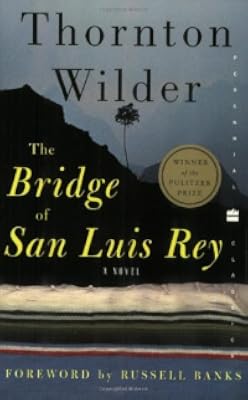
One of the most honored and versatile of modern writers, Thornton Wilder combined a career as a successful novelist with work for the theater that made him one of this century's outstanding dramatists. It was an early short novel, however, that first brought him fame. The Bridge of San Luis Rey (1927), a bestseller that won the Pulitzer Prize in show more 1927, is the story of a group of assorted people who happen to be on a bridge in Peru when it collapses. Ingeniously constructed and rich in its philosophical implications about fate and synchronicity, Wilder's book would seem to be the first well-known example of a formula that has become a cliche in popular literature. His attraction to classical themes is manifested in The Woman of Andros (1930), a tragedy about young love in pre-Christian Greece, and The Ides of March (1948), set in the time of Julius Caesar and told in letters and documents covering a long span of years. Heaven's My Destination (1934), is a seriocomic and picaresque story about a young book salesman traveling through the Midwest during the early years of the Great Depression.Theophilus North (1973), Wilder's last novel, disappointed many reviewers, but it provided its author with opportunities to offer some wry observations on the life of the idle rich in Newport during the summer of 1926 and to ponder in the story of his alter ego what might have happened if Wilder had stayed home, so to speak, instead of becoming Thornton Wilder. As a serious writer of fiction, Wilder's main claim rests on The Eighth Day (1967), an intellectual thriller, which the N.Y. Times called "the most substantial fiction of his career." It won the National Book Award for fiction in 1968. (Bowker Author Biography) show less
Some Editions
Awards and Honors
Distinctions
Series
Belongs to Publisher Series
Fischer Taschenbuch (1826)
Work Relationships
Is contained in
Has the adaptation
Common Knowledge
- Canonical title
- Theophilus North
- Original title
- Theophilus North
- Original publication date
- 1973
- People/Characters*
- Theophilus North; James McHenry Bosworth; Amelia Cranston; Henry Simmons; Bill Wentworth; Diana Bell (show all 23); Norine Wyckoff; Flora Deland; Egon Bodo von Stams; Persis Tennyson; Sarah Bosworth; Nicholas Vanwinkle (Rip); Elbert Hughes; Doris Keefe; Millicent Fenwick; Myra Granberry; Benjamino Matera (Mino); Ailsa Laughlin; Hilary Jones; Elspeth Skeel; Arthur Skeel (Galloper); Edweena Wills; Josiah Dexter
- Important places
- Newport, Rhode Island, USA; Rhode Island, USA; USA
- Related movies
- Mr. North (1988 | IMDb)
- Dedication*
- Für Robert Maynard Hutchins
- First words*
- Im Frühling 1926 kündigte ich meine Stellung auf.
- Quotations*
- Ich wärmte meine Hände am Feuer des Lebens; es fällt zusammen, und ich bin bereit zu gehen. (Walter Savage Landor)
- Last words*
- (Click to show. Warning: May contain spoilers.)Die Phantasie schöpft aus der Erinnerung. Erinnerung und Phantasie können gemeinsam einen Dienstbotenball inszenieren - oder ein Buch schreiben, falls dies ihr Wunsch ist.
*Some information comes from Common Knowledge in other languages. Click "Edit" for more information.
Classifications
Statistics
- Members
- 563
- Popularity
- 52,556
- Reviews
- 6
- Rating
- (3.83)
- Languages
- 7 — Czech, English, French, German, Italian, Russian, Spanish
- Media
- Paper, Audiobook, Ebook
- ISBNs
- 33
- ASINs
- 24