On This Page
Description
Instant #1 New York Times BestsellerAARP The Magazine – Recommended Summer Reading
CNN – A Most Anticipated Book of August
Bustle – A Most Anticipated Book of August
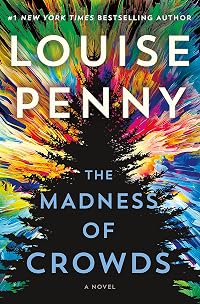
Chief Inspector Armand Gamache returns to Three Pines in #1 New York Times bestseller Louise Penny's latest spellbinding novel
You're a coward.
Time and again, as the New Year approaches, that charge is leveled against Armand Gamache.
It starts innocently enough.
While the residents of the Québec village of Three Pines show more take advantage of the deep snow to ski and toboggan, to drink hot chocolate in the bistro and share meals together, the Chief Inspector finds his holiday with his family interrupted by a simple request.
He's asked to provide security for what promises to be a non-event. A visiting Professor of Statistics will be giving a lecture at the nearby university.
While he is perplexed as to why the head of homicide for the Sûreté du Québec would be assigned this task, it sounds easy enough. That is until Gamache starts looking into Professor Abigail Robinson and discovers an agenda so repulsive he begs the university to cancel the lecture.
They refuse, citing academic freedom, and accuse Gamache of censorship and intellectual cowardice. Before long, Professor Robinson's views start seeping into conversations. Spreading and infecting. So that truth and fact, reality and delusion are so confused it's near impossible to tell them apart.
Discussions become debates, debates become arguments, which turn into fights. As sides are declared, a madness takes hold.
Abigail Robinson promises that, if they follow her, ça va bien aller. All will be well. But not, Gamache and his team know, for everyone.
When a murder is committed it falls to Armand Gamache, his second-in-command Jean-Guy Beauvoir, and their team to investigate the crime as well as this extraordinary popular delusion.
And the madness of crowds.
. show less
Tags
Recommendations



























Member Reviews
In this alternate universe with Three Pines, the pandemic (not named, but definitely COVID-19) is over and everyone is cautiously returning to a life resembling the Before Times. Gamache is assigned to organize the police protection for a statistician named Abigail Robinson, who is delivering a lecture at a small local university during the holiday break. Her ideas are controversial and morally repugnant, and she nearly ends up being shot. There are many ethical issues raised in this book, and nobody on the team or in Three Pines is immune from having to grapple with them. I would not categorize this as a cozy read for this time and place, especially because we’re still living through the COVID-19 pandemic at the time of this review show more (April 2022); it may feel a bit too soon for some readers to read about a post-pandemic world. show less
I can rely on Louise Penny to deliver stories that contemplate the big questions of our time, every time, in an appealing Canadian village package. It was hard that so many of the new characters were difficult and unlikeable, but it felt so very on target for these waning pandemic times. Also, I think it's a good reminder that some of the strongest and most admired people in the world have lived through traumas that strip away likeability, and that, too, is part of their strength. Powerful, mesmerizing, a lot of red herrings that lead to a whole.
I'm always impressed by Louise Penny's ability to connect our contemporary world with an event from Canadian history. Never a warm and fuzzy event, but one that is at best fraught with moral ambiguity, and at worst, deplorable. While doing this she doesn't shy away from contemporary social and political maladies; she holds a mirror up to present and past events and forces us to look into our personal and communal souls to reflect on what constitutes right and wrong.
Also to her credit is that most of her much-beloved characters - Armand Gamache, his family, his colleagues in the Quebec Surete, and the quirky residents of the village of Three Pines - have faced ethical challenges with all too human results. We have come to think of them show more as family, and just like family, we love them despite their flaws.
We learn at the start of the book that Gamache has been ordered, on short notice, to provide security for an academic who is speaking at a nearby university. As he prepares for the event he researches the professor and finds that she holds views he finds reprehensible, and that her following is growing. Her talk could turn ugly as emotions run high on both sides of the issue.
But here's the thing - WE don't know what that issue is for the first third of the book! Penny artfully moves her plot forward without sharing the professor's proposal for something that insures a population exhausted by the pandemic that "all will be well".
Eventually we learn the facts and the history of the characters. Violence follows, and we learn more about how these characters' pasts are intertwined with real-life historical events.
Masterfully done, as always. With this series, each entry is unique and well done. Reading these books always leaves me feeling a little better about the world because no matter how bad things look, she reminds us that there are still people who will do the right thing. show less
Also to her credit is that most of her much-beloved characters - Armand Gamache, his family, his colleagues in the Quebec Surete, and the quirky residents of the village of Three Pines - have faced ethical challenges with all too human results. We have come to think of them show more as family, and just like family, we love them despite their flaws.
We learn at the start of the book that Gamache has been ordered, on short notice, to provide security for an academic who is speaking at a nearby university. As he prepares for the event he researches the professor and finds that she holds views he finds reprehensible, and that her following is growing. Her talk could turn ugly as emotions run high on both sides of the issue.
But here's the thing - WE don't know what that issue is for the first third of the book! Penny artfully moves her plot forward without sharing the professor's proposal for something that insures a population exhausted by the pandemic that "all will be well".
Eventually we learn the facts and the history of the characters. Violence follows, and we learn more about how these characters' pasts are intertwined with real-life historical events.
Masterfully done, as always. With this series, each entry is unique and well done. Reading these books always leaves me feeling a little better about the world because no matter how bad things look, she reminds us that there are still people who will do the right thing. show less
Louise Penny continues to amaze me. This is #17 of her Inspector Gamache series and it is as strong a plot as all the rest of them. As much as I enjoyed the last book which took place in Paris I was happy that this one is back in Three Pines.
It's the week between Christmas and New Year's Eve. All of the Gamache family convened in the Gamache home in Three Pines for the holidays. (Just how big is this place--I always pictured a cottage with a couple of bedrooms on the second floor--but even with the kids sharing a bedroom there would have to be 4 more for adults.) Inspector Gamache has been requested to provide security for a talk given by a visiting statistics professor at the nearby university. Doesn't seem like something that would be show more a big draw especially at this time of year. Then Gamache looks up Professor Abigail Robinson and he realises there is a potential for demonstrations and even violence. Dr. Robinson has a controversial proposal for how the country can recover from the pandemic something she was asked to analyze for the government enquiry looking into the post-pandemic economy. Dr. Robinson says the country can recover if they just agree to forcibly euthanize all the infirm and elderly and terminate the pregnancy of any disabled fetus. When she presented her findings to the enquiry they refused to accept her recommendation so she decided to publicize it herself. The Chancellor of the university is an old family friend and offered to set up this lecture. Gamache is appalled and tries to talk both the Chancellor and the President of the university into cancelling the talk. However, the lecture proceeds and, just as Gamache feared, someone took a shot at Dr. Robinson. Gamache reacted quickly and shoved the professor to the floor and the shot missed. The Surete continues to provide security for her as she and her assistant stay with the Chancellor. Despite Gamache's instructions on New Year's Eve the Chancellor, Professor Robinson and her assistant turn up at the party at the Three Pines Inn and Spa.Then, shortly after midnight the body of a woman is found bludgeoned near the Inn. As she is face down initially Gamache cannot tell who it is and assumes it is the professor. When the coroner arrives and turns the body over everyone is surprised to see it is the assistant, Debbie Schneider. Was she mistaken for the professor or was she the intended victim?
So the body doesn't show up until page 165 which is rather unusual in a mystery. But then, Louise Penny is a rather unusual mystery writer. Although she covers the investigation and the eventual zeroing in on the culprit there is so much more going on in this book. One of the subplots involves a Somali woman who is probably going to be the next Nobel Peace Prize winner. She is in Three Pines at the invitaion of Myrna Landers who had helped support her crusade for social justice in her country. Her experience of torture and rape while a young girl cause her to be doubtful about almost any other human being. Meanwhile, Inspector Gamache's wife, Reine-Marie, has turned her archival skills to combing through the papers of a recently deceased woman at the request of the woman's children. She finds that the woman seemed obsessed with monkeys, drawing them on unconnected pieces of paper throughout her life. As Reine-Marie discovers this woman was one of the victims of Dr. Ewan Cameron at the McGill University's infamous Allan Memorial Institute. Dr. Cameron carried out experiments on people suffering from mental health problems such as post-partum depression using sleep deprivation, shock treatment, and drugs such as LSD at the request of the CIA. Since writers don't usually throw in unrelated people and events it doesn't take a genius to figure out that torture will figure in the motive for the murder. But it does take a dedicated team of detectives to find the murderer so keep reading to follow all the twists and turns. show less
It's the week between Christmas and New Year's Eve. All of the Gamache family convened in the Gamache home in Three Pines for the holidays. (Just how big is this place--I always pictured a cottage with a couple of bedrooms on the second floor--but even with the kids sharing a bedroom there would have to be 4 more for adults.) Inspector Gamache has been requested to provide security for a talk given by a visiting statistics professor at the nearby university. Doesn't seem like something that would be show more a big draw especially at this time of year. Then Gamache looks up Professor Abigail Robinson and he realises there is a potential for demonstrations and even violence. Dr. Robinson has a controversial proposal for how the country can recover from the pandemic something she was asked to analyze for the government enquiry looking into the post-pandemic economy. Dr. Robinson says the country can recover if they just agree to forcibly euthanize all the infirm and elderly and terminate the pregnancy of any disabled fetus. When she presented her findings to the enquiry they refused to accept her recommendation so she decided to publicize it herself. The Chancellor of the university is an old family friend and offered to set up this lecture. Gamache is appalled and tries to talk both the Chancellor and the President of the university into cancelling the talk. However, the lecture proceeds and, just as Gamache feared, someone took a shot at Dr. Robinson. Gamache reacted quickly and shoved the professor to the floor and the shot missed. The Surete continues to provide security for her as she and her assistant stay with the Chancellor. Despite Gamache's instructions on New Year's Eve the Chancellor, Professor Robinson and her assistant turn up at the party at the Three Pines Inn and Spa.Then, shortly after midnight the body of a woman is found bludgeoned near the Inn. As she is face down initially Gamache cannot tell who it is and assumes it is the professor. When the coroner arrives and turns the body over everyone is surprised to see it is the assistant, Debbie Schneider. Was she mistaken for the professor or was she the intended victim?
So the body doesn't show up until page 165 which is rather unusual in a mystery. But then, Louise Penny is a rather unusual mystery writer. Although she covers the investigation and the eventual zeroing in on the culprit there is so much more going on in this book. One of the subplots involves a Somali woman who is probably going to be the next Nobel Peace Prize winner. She is in Three Pines at the invitaion of Myrna Landers who had helped support her crusade for social justice in her country. Her experience of torture and rape while a young girl cause her to be doubtful about almost any other human being. Meanwhile, Inspector Gamache's wife, Reine-Marie, has turned her archival skills to combing through the papers of a recently deceased woman at the request of the woman's children. She finds that the woman seemed obsessed with monkeys, drawing them on unconnected pieces of paper throughout her life. As Reine-Marie discovers this woman was one of the victims of Dr. Ewan Cameron at the McGill University's infamous Allan Memorial Institute. Dr. Cameron carried out experiments on people suffering from mental health problems such as post-partum depression using sleep deprivation, shock treatment, and drugs such as LSD at the request of the CIA. Since writers don't usually throw in unrelated people and events it doesn't take a genius to figure out that torture will figure in the motive for the murder. But it does take a dedicated team of detectives to find the murderer so keep reading to follow all the twists and turns. show less
I found this endlessly grim and depressing, with the characters and background more upsetting than any mere murder ever could be, and it contains the most absolutely preposterous denouement I've ever encountered, in which the detectives seem to accuse nearly everyone in turn before settling on the obvious choice. The author writes very well, but I feel the strain of trying to make everything topical with characters taken from current events is more than the book can bear. It was certainly more than I could bear. And it begs the question sitting there in plain sight, why would anyone live in this little village that seems to be a cesspool of murder and assorted awfulness. I forgive books all sorts of sins when they grab me, but this one show more left me wanting to just forget everything about it. I've only read a couple others in the series, and they did not have this effect on me. show less
Summary: A Christmas assignment to provide security for a professor proposing mercy killing leads to a murder investigation in Three Pines.
It began with a request to provide security for a speech at a nearby university at an old gym over the Christmas holidays.. It seems like something far beneath the pay grade of Gamache until he investigates the speaker. Abigail Robinson is a polished academic, comfortable with statistics who speaks with calm conviction. She had submitted a report to the Canadian government about pandemic deaths that concluded with a startling proposal. The havoc wrought on the economy meant that the government couldn’t continue to support the elderly and others with disabilities. The answer was mercy killing. And show more she assures her audiences with this familiar tag line, “All will be well” or in Quebec, “ça va bien aller.” Her message cuts like a sword, attracting a growing social media following of those who embrace her ideas and a contingent of those outraged that such a thing might even be considered.
Gamache recognizes the danger such an event represents. He knows he cannot legally stop her but pleads that the university cancel the event. Citing free speech, they refuse. A huge and volatile crowd of all ages arrives and despite security, an attempt is made on her life. Only Gamache’s reaction saves her…and he wonders if he should have.
The professor’s ideas reach deeply into Gamache’s circle. His granddaughter Idola, Jean Guy’s daughter, is a Downs Syndrome child. She would be a candidate for mercy killing. Both Gamache and Beauvoir struggle not only with the inherent moral issue Professor Robinson’s ideas raise, but the reality that they could not let this happen to Idola, even as they also understand the reality of the challenges of care for a special needs child.
Meanwhile, a Nobel prize nominee, Haniya Daoud, is visiting Three Pines, the guest of Myrna, who was one of the first to support her human rights organization in Canada. She relentlessly works to free children and women in bondage in South Sudan. She’s fierce, having killed her own drunken captor to escape, and killing others to free captive children. Her face bears the physical scars of her captivity. There are other scars that go deeper, including a hatred for law enforcement. Having heard about Abigail Robinson, whose ideas are against all she stands for, she calls Gamache a coward for protecting her.
While Gamache’s team investigates the murder attempt, which involved more than the person apprehended, Professor Robinson and her assistant Debbie Schneider are given protection but asked not to leave Chancellor Collette Roberge’s home. Roberge had been a mentor to Abigail Robinson after her father’s death and was responsible for the invitation to speak. On New Year’s Eve, Roberge was invited to a gathering at the Hadley House, now the Auberge, and she brings Abigail and Debbie along. Vincent Gilbert, “the Asshole Saint” we’ve encountered in earlier volumes is there. There is an uncomfortable encounter when Gilbert challenges the morality of what Robinson is proposing and she brings up the name of Ewan Cameron, whose unethical psychological experiments were used by the CIA in interrogations, that left a trail of human wreckage that will become important to the plot. We learn later that Gilbert was a lowly lab assistant caring for animals who knew what was happening and did nothing, a secret he’d protected for years, now exposed.
The New Year’s celebration occurs. Kids light sparklers, there is a huge fireworks display, couples kiss, teens go off in the woods to drink. Just before midnight, Debbie and Collette step outside. Minutes later, as Billy Williams is extinguishing the bonfire, kids race out of the woods, reporting a body laying in the snow. Gamache fears it is Robinson, but when the crime scene investigators arrive, it is discovered to be Debbie Schneider, dead from blunt force trauma from a piece of firewood. They face two questions. Did the killer mistake her for Abigail or was she the target? And who is the killer? Vincent Gilbert? Collette Roberge? Abigail Robinson herself? The son of the man arrested for the gym incident, who was working the party? Or maybe Haniya Daoud, who has killed before?
Penney raises important questions. How has the pandemic changed us? Has the cavalier disregard for elder lives in care settings on the part of some, opened the door to consider measures like mercy killing that were once off the table? Are the elderly and those with disabilities a “drag” on the economy and a burden to society we cannot afford? On what basis will we defend their right to life? And what price are we willing to pay for our safety? Ewan Cameron was not a fictional character. Unsuspecting patients, often women suffering post-partum depression, were victims of his CIA research which used curare, LSD, electroconvulsive shock, and sensory deprivation. The CIA continues to use the fruits of his research in interrogations.
Gamache has to wrestle with these issues as he prepares his own report on the horrors he witnessed in care facilities during the pandemic. And Beauvoir will confront these in a very different way in the climactic scene of the novel. I also find myself wondering if we’ve seen the last of Haniya Daoud. Louise Penny is still writing! show less
It began with a request to provide security for a speech at a nearby university at an old gym over the Christmas holidays.. It seems like something far beneath the pay grade of Gamache until he investigates the speaker. Abigail Robinson is a polished academic, comfortable with statistics who speaks with calm conviction. She had submitted a report to the Canadian government about pandemic deaths that concluded with a startling proposal. The havoc wrought on the economy meant that the government couldn’t continue to support the elderly and others with disabilities. The answer was mercy killing. And show more she assures her audiences with this familiar tag line, “All will be well” or in Quebec, “ça va bien aller.” Her message cuts like a sword, attracting a growing social media following of those who embrace her ideas and a contingent of those outraged that such a thing might even be considered.
Gamache recognizes the danger such an event represents. He knows he cannot legally stop her but pleads that the university cancel the event. Citing free speech, they refuse. A huge and volatile crowd of all ages arrives and despite security, an attempt is made on her life. Only Gamache’s reaction saves her…and he wonders if he should have.
The professor’s ideas reach deeply into Gamache’s circle. His granddaughter Idola, Jean Guy’s daughter, is a Downs Syndrome child. She would be a candidate for mercy killing. Both Gamache and Beauvoir struggle not only with the inherent moral issue Professor Robinson’s ideas raise, but the reality that they could not let this happen to Idola, even as they also understand the reality of the challenges of care for a special needs child.
Meanwhile, a Nobel prize nominee, Haniya Daoud, is visiting Three Pines, the guest of Myrna, who was one of the first to support her human rights organization in Canada. She relentlessly works to free children and women in bondage in South Sudan. She’s fierce, having killed her own drunken captor to escape, and killing others to free captive children. Her face bears the physical scars of her captivity. There are other scars that go deeper, including a hatred for law enforcement. Having heard about Abigail Robinson, whose ideas are against all she stands for, she calls Gamache a coward for protecting her.
While Gamache’s team investigates the murder attempt, which involved more than the person apprehended, Professor Robinson and her assistant Debbie Schneider are given protection but asked not to leave Chancellor Collette Roberge’s home. Roberge had been a mentor to Abigail Robinson after her father’s death and was responsible for the invitation to speak. On New Year’s Eve, Roberge was invited to a gathering at the Hadley House, now the Auberge, and she brings Abigail and Debbie along. Vincent Gilbert, “the Asshole Saint” we’ve encountered in earlier volumes is there. There is an uncomfortable encounter when Gilbert challenges the morality of what Robinson is proposing and she brings up the name of Ewan Cameron, whose unethical psychological experiments were used by the CIA in interrogations, that left a trail of human wreckage that will become important to the plot. We learn later that Gilbert was a lowly lab assistant caring for animals who knew what was happening and did nothing, a secret he’d protected for years, now exposed.
The New Year’s celebration occurs. Kids light sparklers, there is a huge fireworks display, couples kiss, teens go off in the woods to drink. Just before midnight, Debbie and Collette step outside. Minutes later, as Billy Williams is extinguishing the bonfire, kids race out of the woods, reporting a body laying in the snow. Gamache fears it is Robinson, but when the crime scene investigators arrive, it is discovered to be Debbie Schneider, dead from blunt force trauma from a piece of firewood. They face two questions. Did the killer mistake her for Abigail or was she the target? And who is the killer? Vincent Gilbert? Collette Roberge? Abigail Robinson herself? The son of the man arrested for the gym incident, who was working the party? Or maybe Haniya Daoud, who has killed before?
Penney raises important questions. How has the pandemic changed us? Has the cavalier disregard for elder lives in care settings on the part of some, opened the door to consider measures like mercy killing that were once off the table? Are the elderly and those with disabilities a “drag” on the economy and a burden to society we cannot afford? On what basis will we defend their right to life? And what price are we willing to pay for our safety? Ewan Cameron was not a fictional character. Unsuspecting patients, often women suffering post-partum depression, were victims of his CIA research which used curare, LSD, electroconvulsive shock, and sensory deprivation. The CIA continues to use the fruits of his research in interrogations.
Gamache has to wrestle with these issues as he prepares his own report on the horrors he witnessed in care facilities during the pandemic. And Beauvoir will confront these in a very different way in the climactic scene of the novel. I also find myself wondering if we’ve seen the last of Haniya Daoud. Louise Penny is still writing! show less
This was one of my most anticipated releases of the year. I fell in love with this series last year and I’m thrilled every time a new book comes out. We are back in Three Pines this time after visiting Paris in the last book. It’s a post-pandemic world and a woman named Abigail Robinson is touring the country lecturing on a controversial and morally-bankrupt idea. Jean-Guy Beauvoir struggles not to take the proposal personally.
I loved that Penny embraced writing in a world where a pandemic is part of the conversation. I thought it might be exhausting to read that, but it was oddly cathartic and comforting to see the way we were all united in the shared experience.
With every book new we learn more about the lives of our beloved show more characters. The plot meandered a bit in the end, but I didn’t for one second wish the philosophical murder mystery had ended sooner. I read it as slowly as I could because I never get tired of Armand Gamache and his crew.
“The trick wasn’t necessarily having less fear it was having more courage.” show less
I loved that Penny embraced writing in a world where a pandemic is part of the conversation. I thought it might be exhausting to read that, but it was oddly cathartic and comforting to see the way we were all united in the shared experience.
With every book new we learn more about the lives of our beloved show more characters. The plot meandered a bit in the end, but I didn’t for one second wish the philosophical murder mystery had ended sooner. I read it as slowly as I could because I never get tired of Armand Gamache and his crew.
“The trick wasn’t necessarily having less fear it was having more courage.” show less
Members
- Recently Added By
Lists

Globe and Mail | Canadian Fiction: June 18, 2022
10 works; 2 members

Globe and Mail | Canadian Fiction: Dec. 11, 2021
10 works; 2 members

Globe and Mail | Canadian Fiction: June 11, 2022
10 works; 1 member

Globe and Mail | Canadian Fiction: Oct. 23, 2021
10 works; 1 member

Globe and Mail | Canadian Fiction: June 25, 2022
10 works; 1 member
Globe and Mail | Canadian Fiction: Oct. 30, 2021
10 works; 1 member
Globe and Mail | Canadian Fiction: July 2, 2022
10 works; 1 member
Globe and Mail | Canadian Fiction: Oct. 9, 2021
10 works; 1 member
Globe and Mail | Canadian Fiction: Nov. 27, 2021
10 works; 1 member

Top Five Books of 2021
604 works; 181 members

Globe and Mail | Canadian Fiction: June 4, 2022
10 works; 1 member
Globe and Mail | Canadian Fiction: Oct. 16, 2021
10 works; 1 member
Globe and Mail | Canadian Fiction: July 9, 2022
10 works; 1 member
Globe and Mail | Canadian Fiction: Nov. 6, 2021
10 works; 1 member
Globe and Mail | Canadian Fiction: Nov. 13, 2021
10 works; 1 member
Globe and Mail | Canadian Fiction: Dec. 4, 2021
10 works; 1 member
Globe and Mail | Canadian Fiction: Dec. 18, 2021
10 works; 1 member
Globe and Mail | Canadian Fiction: Dec. 25, 2021
10 works; 1 member
Globe and Mail | Canadian Fiction: Nov. 20, 2021
10 works; 1 member

Books Read in 2021
5,361 works; 114 members

COVID in literature
96 works; 9 members
Globe and Mail | Canadian Fiction: July 16, 2022
10 works; 1 member
Author Information

40+ Works 63,515 Members
Louise Penny was born in Toronto, Canada in 1958. She earned a Bachelor of Applied Arts (Radio and Television) from Ryerson Polytechnical Institute (now Ryerson University) in 1979. Before she turned to writing mystery novels in 2004, she was a journalist and radio host for the Canadian Broadcasting Corporation in various cities across Canada for show more 25 years. She writes the Chief Inspector Gamache Novel series. She has won numerous awards including the New Blood Dagger, Arthur Ellis, Barry, Anthony, and Dilys awards for Still Life and the 2007 Agatha Award for Best Novel for A Fatal Grace. Louise's title, The Long Way Home, made the Hot Mystery Title's List for Summer 2014. Her titles The Nature of the Beast made The New York Times best seller list in 2015 and A Great Reckoning made The New York Times best seller list in 2016. (Bowker Author Biography) show less
Some Editions
Awards and Honors
Awards
Notable Lists
Series

Common Knowledge
- Canonical title
- The Madness of Crowds
- Original title
- The Madness of Crowds
- Original publication date
- 2021
- People/Characters
- Armand Gamache; Reine-Marie Gamache; Jean-Guy Beauvoir; Isabelle Lacoste; Ruth Zardo; Professor Amelia Robinson (show all 10); Debbie Schneider; Haniya Daoud; Colette Roberge; Vincent Gilbert
- Important places
- Three Pines, Québec, Canada; Québec, Canada
- Related movies
- Three Pines (2022 | IMDb)
- Dedication
- This book is dedicated to all those on the front line
of the pandemic who have worked so hard, in often
impossible conditions, to keep the rest of us safe.
If ca va bien aller, it's thanks to you.
Louise... (show all) Penny, 2021 - First words
- "This doesn't feel right, patron."
- Last words
- (Click to show. Warning: May contain spoilers.)She thought maybe it was true.
- Original language*
- Englisch
*Some information comes from Common Knowledge in other languages. Click "Edit" for more information.
Classifications
Statistics
- Members
- 2,030
- Popularity
- 10,323
- Reviews
- 96
- Rating
- (3.97)
- Languages
- 5 — English, French, German, Italian, Russian
- Media
- Paper, Audiobook, Ebook
- ISBNs
- 25
- ASINs
- 10