On This Page
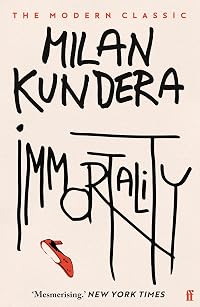
Description
Milan Kundera's sixth novel springs from a casual gesture of a woman to her swimming instructor, a gesture that creates a character in the mind of a writer named Kundera. Like Flaubert's Emma or Tolstoy's Anna, Kundera's Agnes becomes an object of fascination, of indefinable longing. From that character springs a novel, a gesture of the imagination that both embodies and articulates Milan Kundera's supreme mastery of the novel and its purpose; to explore thoroughly the great, themes of show more existence. show lessTags
Recommendations

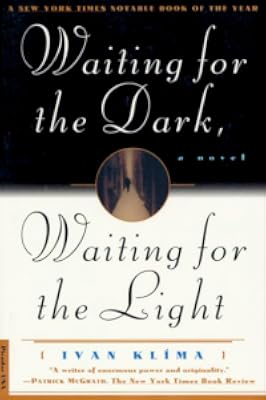
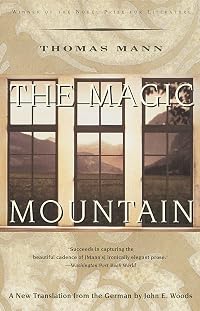

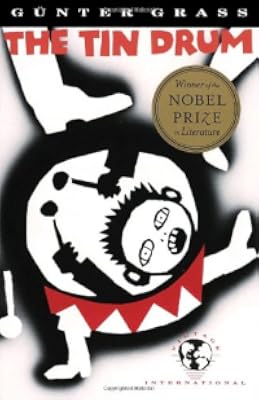
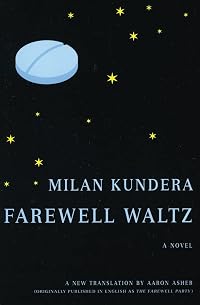
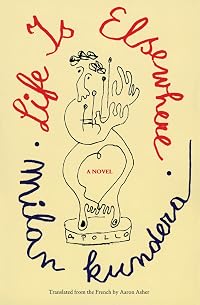



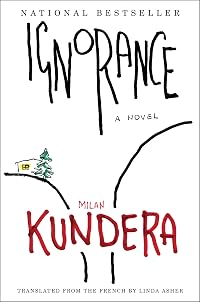





Member Recommendations


olonec Woman, art, and a bit of philosophy
Member Reviews
Ah, I forgot about how old czech men write women. I remember disliking it as a teen, but I think I was more tolerant, maybe because of the literature available to me at the time, maybe because I lived in that culture, maybe just because grown women were something outside of my identity. In any case I found it more noticeable and annoying here than in other works. I did quite like some moments, generally at the beginning: I feel Agnes' early misanthropy, I've felt this walking down the street. And her desire for solitude. And the screed against universal fame and watching, that's become more relevant than ever. But the long middle section about weird-ass gender relations really dragged it down. I still enjoy Kundera's writing and ideas, show more and I have no problem taking the good from this to prompt my own thoughts. show less
I had trouble connecting to the characters as flesh and blood people. I suppose that is similar to much of Kundera. A world populated with narcissists. Some of the divergent threads were quite interesting but unlike many of his earlier novels, here, he seems to repeating himself. I feel that if I reread this at some point, I may get more out of it.
In einem Fitness-Club über den Dächern von Paris sitzt Milan Kundera, Autor und Figur der Unsterblichkeit, und beobachtet, wie eine etwa sechzigjährige Frau Schwimmstunden nimmt. Zum Abschied winkt sie dem Schwimmlehrer noch einmal zu und macht dabei eine so graziöse Handbewegung, daß der Betrachter beschließt, diese Geste, die die ganze unerträgliche Leichtigkeit des Seins zu enthalten scheint, der Heldin seines Romans, Agnes, zum Geschenk zu machen.
Als würden auch wir auf diese Weise in den Roman gewunken: zu Agnes, der scheinbar Ätherischen, die ein erotisches Doppelleben führt; zu Laura, ihrer ein bißchen sentimentalen Schwester, die mit dem Journalisten Bernard nicht glücklich werden darf, weil dessen Geschwätz im show more Radio den Autor jeden Morgen zum Wahnsinn treibt; und zu Paul, der – auf seine Weise – bei den Schwestern seine Spuren hinterläßt. Darüber unterhalten sich auf höherer Ebene, im Jenseits: Goethe (in Pantoffeln, mit einer Sonnenblende am Stirnband) und Hemingway. Aber es gibt in diesem musikalischen Roman eben nicht nur die »große Unsterblichkeit« der Berühmten, sondern auch diese graziöse Handbewegung, die unvergessen bleibt: aufgehoben für alle Zeiten und unsterblich geworden in diesem Roman. show less
Als würden auch wir auf diese Weise in den Roman gewunken: zu Agnes, der scheinbar Ätherischen, die ein erotisches Doppelleben führt; zu Laura, ihrer ein bißchen sentimentalen Schwester, die mit dem Journalisten Bernard nicht glücklich werden darf, weil dessen Geschwätz im show more Radio den Autor jeden Morgen zum Wahnsinn treibt; und zu Paul, der – auf seine Weise – bei den Schwestern seine Spuren hinterläßt. Darüber unterhalten sich auf höherer Ebene, im Jenseits: Goethe (in Pantoffeln, mit einer Sonnenblende am Stirnband) und Hemingway. Aber es gibt in diesem musikalischen Roman eben nicht nur die »große Unsterblichkeit« der Berühmten, sondern auch diese graziöse Handbewegung, die unvergessen bleibt: aufgehoben für alle Zeiten und unsterblich geworden in diesem Roman. show less
What an amazing book... Having just closed it, it's reverberating inside of me like a new love. Kundera put into (beautiful) words so many thoughts and observations I made or at least believe I made in my first 36 years on this planet. In this book, the paradoxes, blatant untruths and crazy ideas all serve to highlight the many, many times his philosophical whims match 100% with your views and experiences.
I am sure however, that every reader will agree with different things in [b:Immortality|28634|Immortality|Milan Kundera|https://images.gr-assets.com/books/1388507539s/28634.jpg|2776625]. This turns this book into perfect material for hot debate, sleepless nights and a lot of pondering and wondering.
Where [b:The Unbearable Lightness of show more Being|678974|The Unbearable Lightness of Being|Milan Kundera|https://images.gr-assets.com/books/1362345638s/678974.jpg|4489585] left me nearly depressed, Immortality feels like a celebration of life and urges us to go and live it to the fullest.
Full five stars: beautifully written, exceptionally unique style and great material all in one. show less
I am sure however, that every reader will agree with different things in [b:Immortality|28634|Immortality|Milan Kundera|https://images.gr-assets.com/books/1388507539s/28634.jpg|2776625]. This turns this book into perfect material for hot debate, sleepless nights and a lot of pondering and wondering.
Where [b:The Unbearable Lightness of show more Being|678974|The Unbearable Lightness of Being|Milan Kundera|https://images.gr-assets.com/books/1362345638s/678974.jpg|4489585] left me nearly depressed, Immortality feels like a celebration of life and urges us to go and live it to the fullest.
Full five stars: beautifully written, exceptionally unique style and great material all in one. show less
Kundera does here more or less what Günter Grass does in Headbirths: it's a spare if not skeletal story, a knot of intersubjectivities laid out around a thorny metaphysical question which the author is attempting to define as well as answer, and so comes at multilaterally--with the tale of a troubled family; with the extended essayistic digressions of the cerebral, sometimes cold Central European public intellectual; with a parallel thread on Goethe and Bettina von Arnim, a metacommentary from the afterlife provided by Goethe and (in a hammy cameo) Hemingway; a magisterial professor-figure who brings the action's circle to its close, gives it its meaning, and brings the cogitating author and his heartsad characters together to talk show more about it.
And so what's the question? It involves fear of death, I guess, and the need to make a mark--the titular "immortality" might in many ways have been "legacy" or even just "remembrance". It involves the belief, which I do not share, that total love is the only love, and as a result that love is something most of us never experience. It suggests that a world without love is a really, well, lovely one in someways--art and war both become impossible too; contrast the elevated emotions and horror of the 19th and 20th centuries with what in some small ways is perhaps becoming a more decent, less brutal Western civilization, and recall that Harold Bloom thought the Romantic era never ended--Kundera calling the travesty-enabling phenomenon that Bloom describes a "hypertrophy of the soul".
This dilemma, whatever it is, also seemingly comes out of the insistence on the right to a private life, to lies, to the refusal to justify oneself. It worries a lot about coincidence, about erotic tension and its loss, and it may protest too much with its weird combo of relentless virility and surging anomie. I think of the Foucauldian injunction to enjoy. But this is Kundera, after all, and I must say I find the older Kundera of 1990 much less aggressively obliquely sexbraggy than the younger Kundera of The Unbearable Lightness of Being, and as a result more pleasant to be around. He's even sometimes funny(!), just funny,in an uncomplicated unconsidered no-ulterior-motives way--Brigitte's apologetic warguilty German teacher could have come out of, I dunno, Fawlty Towers.
And if Kundera's obvious earnestness to map out the amorphous region of human hurt and desire where he has staked his claim can sometimes be pedantic or banal or incomprehensible or like he doesn't have it worked out yet or like he's throwing in a stylistic flourish to distract you from that fact or like he's talking to you like you're two, you still get the feeling that he's trying honestly and seriously with the tools at his disposal--that he wants to say something true and have us find it useful. (A feeling, once again, that I never got from TULoB.). That'd be his immortality, then. show less
And so what's the question? It involves fear of death, I guess, and the need to make a mark--the titular "immortality" might in many ways have been "legacy" or even just "remembrance". It involves the belief, which I do not share, that total love is the only love, and as a result that love is something most of us never experience. It suggests that a world without love is a really, well, lovely one in someways--art and war both become impossible too; contrast the elevated emotions and horror of the 19th and 20th centuries with what in some small ways is perhaps becoming a more decent, less brutal Western civilization, and recall that Harold Bloom thought the Romantic era never ended--Kundera calling the travesty-enabling phenomenon that Bloom describes a "hypertrophy of the soul".
This dilemma, whatever it is, also seemingly comes out of the insistence on the right to a private life, to lies, to the refusal to justify oneself. It worries a lot about coincidence, about erotic tension and its loss, and it may protest too much with its weird combo of relentless virility and surging anomie. I think of the Foucauldian injunction to enjoy. But this is Kundera, after all, and I must say I find the older Kundera of 1990 much less aggressively obliquely sexbraggy than the younger Kundera of The Unbearable Lightness of Being, and as a result more pleasant to be around. He's even sometimes funny(!), just funny,in an uncomplicated unconsidered no-ulterior-motives way--Brigitte's apologetic warguilty German teacher could have come out of, I dunno, Fawlty Towers.
And if Kundera's obvious earnestness to map out the amorphous region of human hurt and desire where he has staked his claim can sometimes be pedantic or banal or incomprehensible or like he doesn't have it worked out yet or like he's throwing in a stylistic flourish to distract you from that fact or like he's talking to you like you're two, you still get the feeling that he's trying honestly and seriously with the tools at his disposal--that he wants to say something true and have us find it useful. (A feeling, once again, that I never got from TULoB.). That'd be his immortality, then. show less
Not as emotionally involving as Unbearable Lightness, I still enjoyed Kundera's musings and his imaginitive approach to storytelling. He juggles a number of separate, related narratives, but the most interesting one involves the poet and philosopher, Goethe. I particularly enjoyed the dialogue between Goethe's ghost and Hemingway's ghost in heaven. Unfortunately, the purely fictional characters didn't grab me in the same way.
Ultimately, the characters and their stories weren't as compelling as the author's thoughts on a wide variety of subjects. While I didn't agree with a lot of the ideas he put forward, I wasn't put off by them, as much as they helped me reexamine my own beliefs. His ideas are very personal and reflect a unique show more personality. Though some have found him misogynistic, and I can understand why, I don't necessarily buy it (or hope that he's not). The philosophical wanderings were enough to make me enjoy reading it, I just wish the story had left me with more of an emotional impact. show less
Ultimately, the characters and their stories weren't as compelling as the author's thoughts on a wide variety of subjects. While I didn't agree with a lot of the ideas he put forward, I wasn't put off by them, as much as they helped me reexamine my own beliefs. His ideas are very personal and reflect a unique show more personality. Though some have found him misogynistic, and I can understand why, I don't necessarily buy it (or hope that he's not). The philosophical wanderings were enough to make me enjoy reading it, I just wish the story had left me with more of an emotional impact. show less
As much a conversation with the reader as a novel, Kundera obeys his own maxim "A novel should not be like a bicycle race but a feast of many courses": the plot meanders at a leisurely pace and explores ideas about the nature of immortality, human love and sexuality along the way, drawing in characters historical figures such as Goethe and Bettina, Hemingway and Dali. At the same time, the distinction between story and storyteller becomes blurred, the picture frame becoming part of the picture, as the writer enters his own story, meeting up with his characters in the final scene.
One of Kundera's greatest skills is to show the internal landscape of his characters, the very colours of their souls, and in so economical a fashion. A puppet show more master showing the strings, Kundera creates his main character from a gesture, with casual sleight of hand, and the main events for his story from half heard extracts of radio programmes.
There's plenty to chew over, even after finishing the book. My mind keeps coming back to the scene where Agnes imagines a stranger visiting her and asking her (in her husband's company) whether she wants to be together with him in her next incarnation in another world. The acid test for any love. She is faced with the dilemma of telling the truth and hurting Paul, or lying to save his feelings.
There are also some wonderfully quotable lines in the book and I kept finding myself reaching for a piece of paper to write down some of the best. I loved:- "Our heads are full of dreams, but our behinds drag us down like an anchor". How true!
Kundera is very good company and I enjoyed the book, but feel that The Unbearable Lightness of Being is by far the stronger novel. show less
One of Kundera's greatest skills is to show the internal landscape of his characters, the very colours of their souls, and in so economical a fashion. A puppet show more master showing the strings, Kundera creates his main character from a gesture, with casual sleight of hand, and the main events for his story from half heard extracts of radio programmes.
There's plenty to chew over, even after finishing the book. My mind keeps coming back to the scene where Agnes imagines a stranger visiting her and asking her (in her husband's company) whether she wants to be together with him in her next incarnation in another world. The acid test for any love. She is faced with the dilemma of telling the truth and hurting Paul, or lying to save his feelings.
There are also some wonderfully quotable lines in the book and I kept finding myself reaching for a piece of paper to write down some of the best. I loved:- "Our heads are full of dreams, but our behinds drag us down like an anchor". How true!
Kundera is very good company and I enjoyed the book, but feel that The Unbearable Lightness of Being is by far the stronger novel. show less
Members
- Recently Added By
Author Information

58+ Works 61,524 Members
One of the foremost contemporary Czech writers, Kundera is a novelist, poet, and playwright. His play The Keeper of the Keys, produced in Czechoslovakia in 1962, has long been performed in a dozen countries. His first novel, The Joke (1967), is a biting satire on the political atmosphere in Czechoslovakia in the 1950s. It tells the story of a show more young Communist whose life is ruined because of a minor indiscretion: writing a postcard to his girlfriend in which he mocks her political fervor.The Joke has been translated into a dozen languages and was made into a film, which Kundera wrote and directed. His novel Life Is Elsewhere won the 1973 Prix de Medicis for the best foreign novel. Kundera has been living in France since 1975. His books, for a long time suppressed in his native country, are once again published.The Unbearable Lightness of Being (1984), won him international fame and was a successful English-language film. In this work Kundera moves toward more universal and philosophically tinged themes, thus transforming himself from a political dissident into a writer of international significance. (Bowker Author Biography) show less
Some Editions
Awards and Honors
Distinctions
Series

Belongs to Publisher Series
Work Relationships
Is contained in
Common Knowledge
- Canonical title
- Immortality
- Original title
- Nesmrtelnost
- Original publication date
- 1990 (original) (original)
- People/Characters
- Johann Wolfgang von Goethe; Bettina Brentano von Armin; Agnes; Romain Rolland
- Important places
- Paris, France
- First words
- The woman might have been sixty or sixty-five.
- Quotations
- "Journalists realized that posing questions was not merely a practical working method for the reporter modestly gathering information with notebook and pencil in hand; it was a means of exerting power. The journalist is not m... (show all)erely the one who asks questions but the one who has a sacred right to ask anyone about anything."
- Last words
- (Click to show. Warning: May contain spoilers.)It was in such circumstances that Agnes longed to buy a forget-me-not, a single forget-me-not stem; she longed to hold it before her eyes as a last, scarcely visible trace of beauty.
- Original language*
- Deutsch
*Some information comes from Common Knowledge in other languages. Click "Edit" for more information.
Classifications
- Genres
- Fiction and Literature, General Fiction
- DDC/MDS
- 891.8635 — Literature & rhetoric Literatures of other languages East Indo-European and Celtic literatures West and South Slavic languages (Bulgarian, Slovene, Polish, Czech, Slovak, Serbo-Croatian, and Macedonian) Czech Czech fiction 1900–1989
- LCC
- PG5039.21 .U6 .N3413 — Language and Literature Slavic languages and literatures. Baltic languages. Albanian language Slavic. Baltic. Albanian Slavic Czech
- BISAC
Statistics
- Members
- 3,780
- Popularity
- 4,235
- Reviews
- 38
- Rating
- (3.91)
- Languages
- 27 — Arabic, Catalan, Chinese, Czech, Danish, Dutch, English, Estonian, Finnish, French, German, Greek, Hebrew, Hungarian, Icelandic, Italian, Japanese, Lithuanian, Norwegian (Bokmål), Polish, Romanian, Russian, Croatian, Spanish, Swedish, Turkish, Portuguese (Portugal)
- Media
- Paper, Audiobook, Ebook
- ISBNs
- 111
- UPCs
- 1
- ASINs
- 40