On This Page
Tags
Recommendations






















Member Reviews
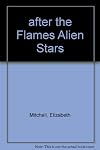
After the Flames is an anthology made up of three novellas in the apocalyptic/post-apocalyptic genre. Having read the collection when it first appeared in the eighties, I was curious about how well it had withstood the last three decades. As it turns out, not too bad.
In “The Election” a provisional government has finally been established in Kentucky, fifteen years after “the Blowup”. Aiming to bring democracy and free elections to the neighbouring territories, they’re surprised to find that exporting democracy may be a tough job.
Post-20th century history may have made Robert Silverberg’s point a bit obvious. Still, this is one of those rare SF stories that could be counted as near prophetic, and well worth reading.
Norman show more Spinrad’s “World War Last” is burlesque satire. The chairman of the Soviet Union is an embalmed, computer animated corpse. The president of the USA is a raving sex maniac kept closeted in a padded cell at Camp David, trotted out only for badly lip-synced TV speeches. With the two countries' administrations working on automat, it’s business as usual and a nicely maintained balance of terror. Until the ruler of a miniature Arabic state - a drug-addled neo-hippie, self-styled hassasin and the world’s richest man - acquire nuclear-tipped cruise missiles. With the clock ticking and the fate of the world hanging on a summit meeting between the two superpowers’ heads of state, anything can happen. And does.
It’s genuinely funny, if you enjoy Spinrad’s brand of humor. At the same time I’m a bit unsure what readers that weren’t around in the eighties will make of it. The story is a near-future satire over a world order that no longer exists, and such works necessarily come with an expiry date.
In Kube-McDowell’s “When Winter Ends”, a particular piece of brinkmanship (does anybody still use that word?) by the US government has gone disastrously wrong. We're introduced to Daniel and Bernadette working on a crash program planning, producing and distributing caches that will hopefully aid any survivors of the coming ragnarok. They get to see the launch of the last two special caches, satellites that will only return to Earth several generations later, before they are obliterated in the first wave of megatonnage. The story then takes up again with a hunter-gatherer clan long after the nuclear winter has ended. It’s a society in decline, and the rest of the story revolves around whether the re-entry to Earth of the “special caches” can indeed aid the remnants of humanity.
“When Winter Ends” is the longest offering, and the only story in this collection that takes the nuclear war setting seriously. Where the other two stories use the apocalypse merely as backdrop, Kube-McDowell did some serious thinking on nuclear war and its long term effects. Nonetheless, it’s the story I feel have stood the test of time least well. Twenty-seven years later, it reads as a statement on eighties thinking on the subject. On the other hand, maybe just that may interest new readers?
Robert Silverberg: ”The Election”
70 pages, Analog Science Fiction/Science Fact (1983)
Norman Spinrad: “World War Last”
98 pages, Isaac Asimov’s Science Fiction Magazine (1985)
Michael P. Kube-McDowell: “When Winter Ends”
107 pages, The Magazine of Fantasy & Science Fiction (1985)
(Reviewed for Librarything group challenge Go review that book!) show less
In “The Election” a provisional government has finally been established in Kentucky, fifteen years after “the Blowup”. Aiming to bring democracy and free elections to the neighbouring territories, they’re surprised to find that exporting democracy may be a tough job.
Post-20th century history may have made Robert Silverberg’s point a bit obvious. Still, this is one of those rare SF stories that could be counted as near prophetic, and well worth reading.
Norman show more Spinrad’s “World War Last” is burlesque satire. The chairman of the Soviet Union is an embalmed, computer animated corpse. The president of the USA is a raving sex maniac kept closeted in a padded cell at Camp David, trotted out only for badly lip-synced TV speeches. With the two countries' administrations working on automat, it’s business as usual and a nicely maintained balance of terror. Until the ruler of a miniature Arabic state - a drug-addled neo-hippie, self-styled hassasin and the world’s richest man - acquire nuclear-tipped cruise missiles. With the clock ticking and the fate of the world hanging on a summit meeting between the two superpowers’ heads of state, anything can happen. And does.
It’s genuinely funny, if you enjoy Spinrad’s brand of humor. At the same time I’m a bit unsure what readers that weren’t around in the eighties will make of it. The story is a near-future satire over a world order that no longer exists, and such works necessarily come with an expiry date.
In Kube-McDowell’s “When Winter Ends”, a particular piece of brinkmanship (does anybody still use that word?) by the US government has gone disastrously wrong. We're introduced to Daniel and Bernadette working on a crash program planning, producing and distributing caches that will hopefully aid any survivors of the coming ragnarok. They get to see the launch of the last two special caches, satellites that will only return to Earth several generations later, before they are obliterated in the first wave of megatonnage. The story then takes up again with a hunter-gatherer clan long after the nuclear winter has ended. It’s a society in decline, and the rest of the story revolves around whether the re-entry to Earth of the “special caches” can indeed aid the remnants of humanity.
“When Winter Ends” is the longest offering, and the only story in this collection that takes the nuclear war setting seriously. Where the other two stories use the apocalypse merely as backdrop, Kube-McDowell did some serious thinking on nuclear war and its long term effects. Nonetheless, it’s the story I feel have stood the test of time least well. Twenty-seven years later, it reads as a statement on eighties thinking on the subject. On the other hand, maybe just that may interest new readers?
Robert Silverberg: ”The Election”
70 pages, Analog Science Fiction/Science Fact (1983)
Norman Spinrad: “World War Last”
98 pages, Isaac Asimov’s Science Fiction Magazine (1985)
Michael P. Kube-McDowell: “When Winter Ends”
107 pages, The Magazine of Fantasy & Science Fiction (1985)
(Reviewed for Librarything group challenge Go review that book!) show less
Members
- Recently Added By
Author Information
All Editions
Series

Work Relationships
Contains
Common Knowledge
- Canonical title
- After the Flames
- Original publication date
- 1985
Classifications
- Genres
- Fiction and Literature, Science Fiction
- DDC/MDS
- 813.087608 — Literature & rhetoric American literature in English American fiction in English By type Genre fiction Adventure fiction Speculative fiction Collections
- LCC
- PZ4 .S573 — Language and Literature Fiction and juvenile belles lettres Fiction and juvenile belles lettres Fiction in English
- BISAC
Statistics
- Members
- 47
- Popularity
- 639,226
- Reviews
- 1
- Languages
- English
- Media
- Paper
- ISBNs
- 1
- ASINs
- 1