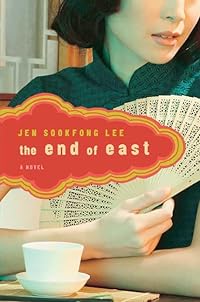
The End of East
by Jen Sookfong Lee
On This Page
Description
At age eighteen, Seid Quan is the first in the Chan family to emigrate from China to Vancover in 1913. Paving the way for a wife and son, he is profoundly lonely, even as he joins the Chinatown community.Tags
Recommendations

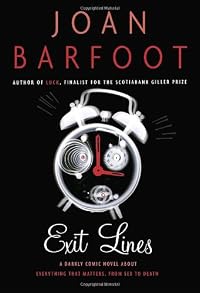
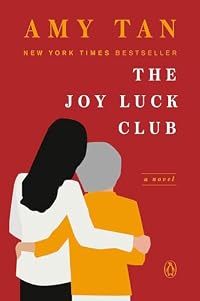

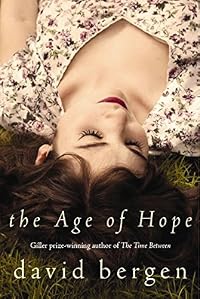

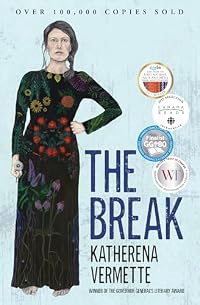






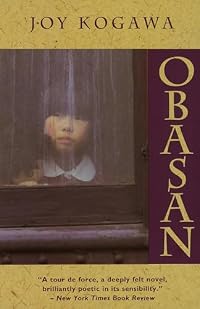

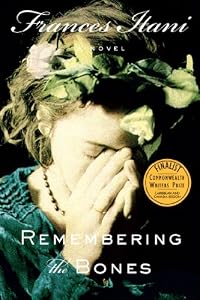
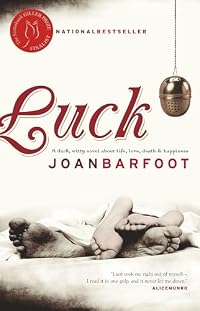

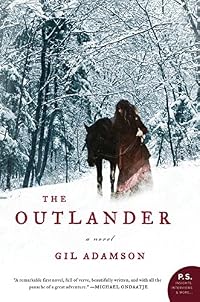




Member Recommendations
by rjuris
Member Reviews
I was so happy to see some Can Lit on my NJ library bookshelf! They could have chosen better!
This book was an interesting look into a Chinese-Canadian family's life and history, but I found it a little dry, and some of the characters very infuriating! Although the Grandfather's life story broke my heart, his wife, children and grandchildren broke his and each others'!
Wayson Choy did the story of Chinese immigration and assimilation, and he did it so much better! Grab his novel, The Jade Peony, and it's sequel "All That Matters" and fall into a wonderful story well told!
This book was an interesting look into a Chinese-Canadian family's life and history, but I found it a little dry, and some of the characters very infuriating! Although the Grandfather's life story broke my heart, his wife, children and grandchildren broke his and each others'!
Wayson Choy did the story of Chinese immigration and assimilation, and he did it so much better! Grab his novel, The Jade Peony, and it's sequel "All That Matters" and fall into a wonderful story well told!
Jen Sookfong Lee's first novel, The End of East, is a complicated story about immigrants, work ethic, family relationships, arranged marriages, the mythology of the North American Pacific Coast and a blending (and clash) of cultures.
The author is quite skilled at developing a very rich sense of place for her readers. I could feel the chill of British Columbia's relentlessly overcast weather just as I came to appreciate the red clay of the Chinese Village back home. I could easily imagine walking through Vancouver's Chinatown of the 1930s and later. The Chan family's saga for first-generation immigrants is one of an uprooting journey to Canada, years of isolation, loneliness, hard work and sacrifice in the face of bigotry and show more discrimination by Occidental Canada. For the second generation it is handling the embarrassment of and/or rebellion at the humble beginnings, rigidity and stifling expectations of the parents and the helpless frustration of unrealized potential. The third generation of Chans is a story about duty, alienation and family ties of the mother-daughter variety.
It is with this last generation where the story droops a bit. The five Chan sisters, including the youngest, our narrator, aren't well developed. What we do see are five daughters who want as little to do with their mother as possible. The complicated, mostly hurtful, relationships among female family members was a constant in the story. What stood out to me was the cruel, ironic twist of the girls' mother, herself so ill-treated by her mother in law, eventually dishing up the same animus to her own daughters. The lack of a son in this third generation of Chans was a source of great suffering to the earlier generations. As with so many cultures, much rested on having a son. By the end of the book, there is a glimmer of hope offered that things might improve between the Chan women.
While the character development was weak for this third wave of Chans, the mythology of the Pacific Coast immigrant was richly evident throughout the book. To the European mindset, North America's West Coast is 'the end," the edge of the Americas, the last stopping point. The place where the conservation movement is born, home to high-tech innovation, new ideas. To Asian immigrants, however, this place, this End of East, is but a beginning...of a new land, new opportunities, all to be tested, molded and made part of oneself. A place of beginning anew. Ultimately, that is the strength of this book: the picture it paints of the immigrant experience: the good, the bad, the ugly. show less
The author is quite skilled at developing a very rich sense of place for her readers. I could feel the chill of British Columbia's relentlessly overcast weather just as I came to appreciate the red clay of the Chinese Village back home. I could easily imagine walking through Vancouver's Chinatown of the 1930s and later. The Chan family's saga for first-generation immigrants is one of an uprooting journey to Canada, years of isolation, loneliness, hard work and sacrifice in the face of bigotry and show more discrimination by Occidental Canada. For the second generation it is handling the embarrassment of and/or rebellion at the humble beginnings, rigidity and stifling expectations of the parents and the helpless frustration of unrealized potential. The third generation of Chans is a story about duty, alienation and family ties of the mother-daughter variety.
It is with this last generation where the story droops a bit. The five Chan sisters, including the youngest, our narrator, aren't well developed. What we do see are five daughters who want as little to do with their mother as possible. The complicated, mostly hurtful, relationships among female family members was a constant in the story. What stood out to me was the cruel, ironic twist of the girls' mother, herself so ill-treated by her mother in law, eventually dishing up the same animus to her own daughters. The lack of a son in this third generation of Chans was a source of great suffering to the earlier generations. As with so many cultures, much rested on having a son. By the end of the book, there is a glimmer of hope offered that things might improve between the Chan women.
While the character development was weak for this third wave of Chans, the mythology of the Pacific Coast immigrant was richly evident throughout the book. To the European mindset, North America's West Coast is 'the end," the edge of the Americas, the last stopping point. The place where the conservation movement is born, home to high-tech innovation, new ideas. To Asian immigrants, however, this place, this End of East, is but a beginning...of a new land, new opportunities, all to be tested, molded and made part of oneself. A place of beginning anew. Ultimately, that is the strength of this book: the picture it paints of the immigrant experience: the good, the bad, the ugly. show less
 This review was written for LibraryThing Early Reviewers.
"End of East: A Novel" tells the story of a Chinese-Canadian family with some very serious problems. The story is so sad and gritty, and is populated by dejected, disillusioned, lonely, misunderstood people who pass their dissatisfaction with life down through the generations. The familial relationships are suffocating and dysfunctional - at times while reading "The End of East" I felt so frustrated with the characters and their behavior towards one another. The story takes a barefaced, honest look at some of the problems encountered by immigrants and how the generations deal with them.
This review was written for LibraryThing Early Reviewers.Sadness pervades the book. It makes it a really tough read. There is also so little true communication between the characters that it is frustrating. So many family dynamics are like this. If only you could shake them out of their silence!
I would like more people who are so anti-immigration (especially in the US) to read books such as this. People need to identify more with their situation and what they sacrifice to come live in another country. Perhaps "The End of East" might provide some needed empathy?
I would like more people who are so anti-immigration (especially in the US) to read books such as this. People need to identify more with their situation and what they sacrifice to come live in another country. Perhaps "The End of East" might provide some needed empathy?
This review was written for LibraryThing Early Reviewers.The premise of this book was more promising than its actuality. Chinese-Canadian issues are not oft written about and I was really looking forward to this novel ~ to glimpse into a new world. However, it is so spare in its prose that I never got a real feel for any one character, nor really understood or sympathized with their situations. Plus, the women characters were patently unlikeable, they were all so very mean to each other. I particularly did not care for Samatha, the seemingly "main" character. The concept of family looms large, but I just wondered why there was so much hate among the families. A lot of that was never explained, we just had to accept that mothers hate their daughters much of their lives for nothing other than show more their female-ness. I suppose it is the author's experience but it was not enjoyable to read about. The male characters seemed like afterthoughts, although every once in a while a sensitivity or thought was beautiful. I just think it is too daunting of a task to span three generations of such a complex immigration experience well, especially in only 243 pages. I was left feeling that this was only pieces of something, nothing complete. If it I were not an Early Reviewer for this pick, I am doubtful I would have finished it. show less
This review was written for LibraryThing Early Reviewers.I abandoned this book after reading 86 pages. The author is incorporating three time periods in her work, but it is difficult to find where she transitions from one to the other. This book is in serious need of many chapter breaks to help the reader with those divisions. There was very little plot action in this first third of the book and what was there did not grab me and make me want to read more. I normally love immigrant stories, and I expected to like this one, but I was greatly disappointed.
The beginning was hard to get into; the prose in the chapters describing the grandfather's and father's beginning years in Canada seemed unnatural, not really how a Cantonese speaker would speak. It sounds like the author transcribed their conversations with a Western ear.
The book definitely got better, more intense and emotional. It's a great example of family expectations and its inability to communicate and how it manifests itself in their actions and the words that do explode from their mouths. I love the ending, it's truer to life than other books of this ilk.
So much strain. Strain! Strain! Strain!
The book definitely got better, more intense and emotional. It's a great example of family expectations and its inability to communicate and how it manifests itself in their actions and the words that do explode from their mouths. I love the ending, it's truer to life than other books of this ilk.
So much strain. Strain! Strain! Strain!
This review was written for LibraryThing Early Reviewers.Members
- Recently Added By
Author Information

12 Works 459 Members
Common Knowledge
Classifications
Statistics
- Members
- 114
- Popularity
- 284,152
- Reviews
- 16
- Rating
- (3.23)
- Languages
- English
- Media
- Paper, Ebook
- ISBNs
- 5
- ASINs
- 3