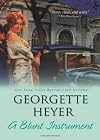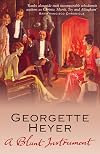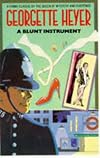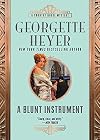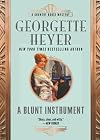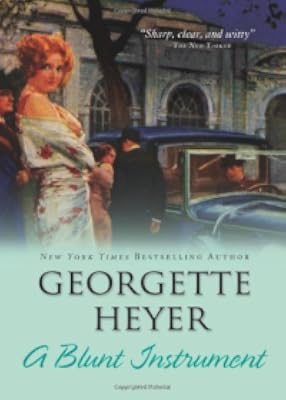
A Blunt Instrument
by Georgette Heyer
Inspectors Hannasyde and Hemingway (4), Country House Mysteries (7)
On This Page
Description
"Ranks alongside such incomparable whodunnit authors as Christie,Marsh, Tey, and Allingham."
—San Francisco Chronicle
Who would kill the perfect gentleman?
When Ernest Fletcher is found bludgeoned to death in his study, everyone is shocked and mystified: Ernest was well liked and respected, so who would have a motive for killing him?
Superintendent Hannasyde, with consummate skill, uncovers one dirty little secret after another, and with them, a host of people who all have reasons for show more wanting Fletcher dead. Then, a second murder is committed, giving a grotesque twist to a very unusual case, and Hannasyde realizes he's up against a killer on a mission...
"Given the chance I could happily devour a stack of her novels one after the other."
—A Work In Progress
"A few things that you are guaranteed when you pick up a Georgette Heyer novel of any kind are unique characters and a fast-paced plot."
—We Be Reading
. show less
Tags
Recommendations







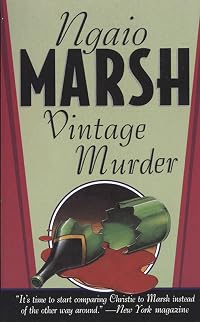

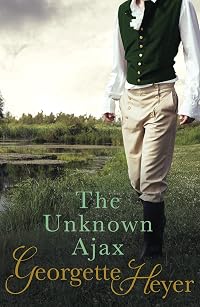


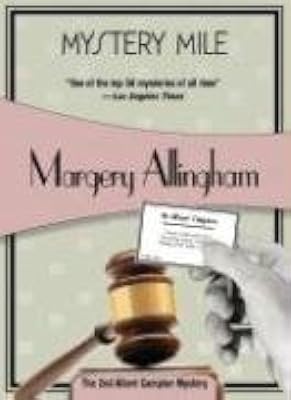
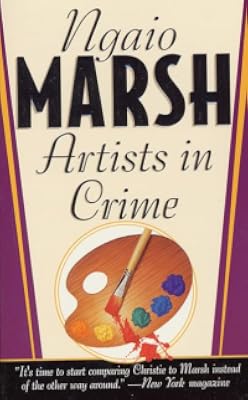
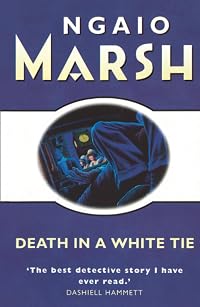
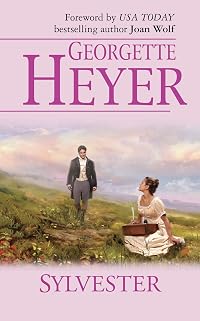
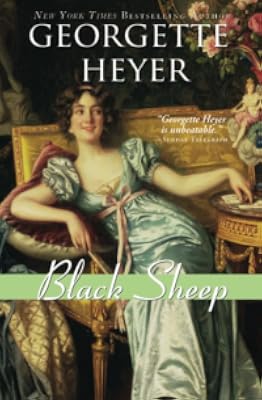


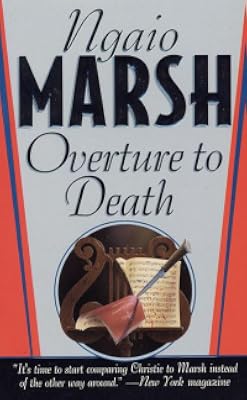






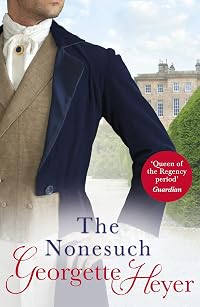

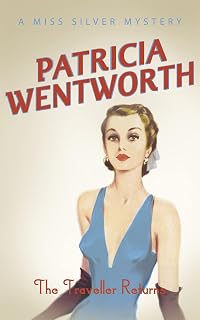
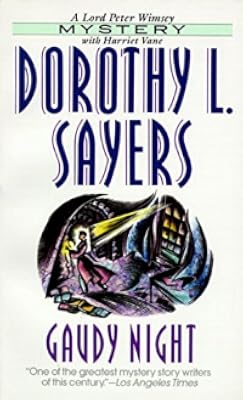
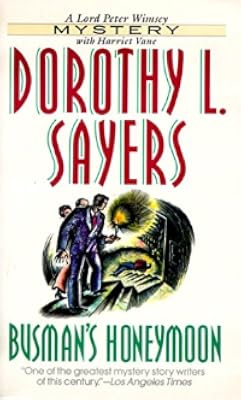

Member Recommendations

Member Reviews
(Obligatory Heyer caveat: she hated literally everyone. She was a racist, sexist, homophobic, classist, antisemitic horror, and boy does it come through in all her books. This particular book hits hard on the antisemitism front, but when you pick up one of her books you're just rolling the dice on which specific groups she'll be hating on.)
Okay, so Heyer's mystery plots are never anything to write home about. (I recently read that her husband came up with her mystery plots, and let me say that I am Not Surprised.) They are quite easily solved. You read Heyer, if you do, for her characters and their banter. And this book does supply some solid characters, and there is definitely significant banter, and I'm pretty sure that's why I loved show more this as a teenager.
As an adult, though, this book falls squarely into the "Oh My God, Someone Help The Straights" category. Like. I enjoyed this a whole lot less because I was just CRINGING at the married couple. The coldness! The lack of communication! The wife's terror of her husband! The husband's total lack of trust in his wife! The ... everything. The problem was everything. (In fact, the marriage was so awful that partway through the book I googled, hoping Heyer never married, but alas. She was very much married when she wrote this. That's how I learned the thing about her husband and her mystery plots, though. I REALLY hope she wasn't writing from experience here.) I spent most of the book so distracted by the hideous spectacle of heterosexuality as portrayed by Heyer that the banter was almost lost on me.
So, honestly, this would be a two-star review if I were reading it for the first time today. I still have those fond teenaged memories, though, so. Three stars it is. show less
Okay, so Heyer's mystery plots are never anything to write home about. (I recently read that her husband came up with her mystery plots, and let me say that I am Not Surprised.) They are quite easily solved. You read Heyer, if you do, for her characters and their banter. And this book does supply some solid characters, and there is definitely significant banter, and I'm pretty sure that's why I loved show more this as a teenager.
As an adult, though, this book falls squarely into the "Oh My God, Someone Help The Straights" category. Like. I enjoyed this a whole lot less because I was just CRINGING at the married couple. The coldness! The lack of communication! The wife's terror of her husband! The husband's total lack of trust in his wife! The ... everything. The problem was everything. (In fact, the marriage was so awful that partway through the book I googled, hoping Heyer never married, but alas. She was very much married when she wrote this. That's how I learned the thing about her husband and her mystery plots, though. I REALLY hope she wasn't writing from experience here.) I spent most of the book so distracted by the hideous spectacle of heterosexuality as portrayed by Heyer that the banter was almost lost on me.
So, honestly, this would be a two-star review if I were reading it for the first time today. I still have those fond teenaged memories, though, so. Three stars it is. show less
When wealthy Englishman Ernest Fletcher is found in his study with his head bashed in, his relatives and neighbors are shocked. Ernest was well-liked and seemingly had no enemies, so why would anyone want to kill him? But as Superintendent Hannasyde and Sergeant Hemingway investigate the case, they soon uncover several motives. First there's Neville Fletcher, the dead man's nephew and heir to his fairly large fortune. Then there is Helen North, who has a secret involving Ernest that she doesn't want anybody -- especially her husband -- to know about. Or the culprit could be Abraham Budd, a businessman who was complicit in some of Ernest's shady financial dealings. But as the police collect motives and unearth secrets, they become more show more and more puzzled by the conflciting testimony about what actually happened on the night of the murder. And when a second victim appears, Hannasyde and Hemingway know they will have to act fast to catch a partiuclarly elusive killer.
In general I prefer Heyer's romances to her mysteries, but I really enjoyed this book! There are some wonderful characters in this one: the vague, mischievous Neville, who is much sharper than he appears; the blunt, monocle-wearing Sally Drew, who writes detective novels; Constable Glass, the Bible-quoting policeman; and the impatient, down-to-earth Sergeant Hemingway. The dialogue is witty and sparkling, as usual, and I loved the romance(s) that emerged throughout the course of the book. The mystery itself is also a bit more substantial than in some of Heyer's other books, and I was surprised by the Christie-esque twist that revealed the murderer's identity. Overall, if you're interested in trying Heyer's mysteries, I think this is a really good place to start! (Hannasyde and Hemingway are recurring characters in her mysteries, but the books absolutely do not have to be read in order.) I'm reading these mysteries in chronological order, so I'll be interested to see whether they get even better as they go on! show less
In general I prefer Heyer's romances to her mysteries, but I really enjoyed this book! There are some wonderful characters in this one: the vague, mischievous Neville, who is much sharper than he appears; the blunt, monocle-wearing Sally Drew, who writes detective novels; Constable Glass, the Bible-quoting policeman; and the impatient, down-to-earth Sergeant Hemingway. The dialogue is witty and sparkling, as usual, and I loved the romance(s) that emerged throughout the course of the book. The mystery itself is also a bit more substantial than in some of Heyer's other books, and I was surprised by the Christie-esque twist that revealed the murderer's identity. Overall, if you're interested in trying Heyer's mysteries, I think this is a really good place to start! (Hannasyde and Hemingway are recurring characters in her mysteries, but the books absolutely do not have to be read in order.) I'm reading these mysteries in chronological order, so I'll be interested to see whether they get even better as they go on! show less
The beginning of the book and the title rather give away whodunnit, but the whole point of a Heyer novel is simply to be frothy confection of banter and characters who run the gamut from "fairly implausible" to "highly improbable." In other words, excellent to read when you're jet-lagged and awake at 4a.m.
Who would kill the perfect gentleman?
When Ernest Fletcher is found bludgeoned to death in his study, everyone is shocked and mystified: Ernest was well liked and respected, so who would have a motive for killing him? Inspectors of Scotland Yard felt it was an unlikely crime for the London suburbs: a perfectly respectable chap at home with his head bashed in. It seems the real Fletcher was far from the gentleman he pretended to be. There is, in fact, no shortage of people who wanted him dead.
Superintendent Hannasyde and Sergeant Hemingway, with consummate skill, uncover one dirty little secret after another, and with them, a host of people who all have reasons for wanting Fletcher dead. Who tiptoed into the study to do the deed? The show more rather nefarious nephew Neville? A neighbor's wandering wife? A fat man in a bowler hat?
The mystery's key was a blunt instrument--a weapon that the police could not find... and that the murderer can to use once more. Then, a second murder is committed, with striking similarities to the first, giving a grotesque twist to a very unusual case, and the inspectors realize they are up against a killer on a mission.... show less
When Ernest Fletcher is found bludgeoned to death in his study, everyone is shocked and mystified: Ernest was well liked and respected, so who would have a motive for killing him? Inspectors of Scotland Yard felt it was an unlikely crime for the London suburbs: a perfectly respectable chap at home with his head bashed in. It seems the real Fletcher was far from the gentleman he pretended to be. There is, in fact, no shortage of people who wanted him dead.
Superintendent Hannasyde and Sergeant Hemingway, with consummate skill, uncover one dirty little secret after another, and with them, a host of people who all have reasons for wanting Fletcher dead. Who tiptoed into the study to do the deed? The show more rather nefarious nephew Neville? A neighbor's wandering wife? A fat man in a bowler hat?
The mystery's key was a blunt instrument--a weapon that the police could not find... and that the murderer can to use once more. Then, a second murder is committed, with striking similarities to the first, giving a grotesque twist to a very unusual case, and the inspectors realize they are up against a killer on a mission.... show less
During the last third of the book I had a sudden conviction of who was the murderer, and I was right.I feel rather chuffed about that, pleased with myself over it.
And I will spend the next few days thinking, writing and speaking in early 20th Century English. Some authors do that to one.
Ernest Fletcher (and yes, the Murder She Wrote theme music was a regular feature of my reading of this) is found bludgeoned to death. Most of the people around him describe him as well-liked but this is on the surface only. When he's found dead and there doesn't appear to be a very long window of opportunity Superintendent Hannasyde has to investigate, helped and hindered by his bible thumping Constable Glass and the indolent nephew of the deceased show more Neville. As the layers begin to be scraped off the stories a lot of suspects begin to mount up and things get more and more complicated. Then a second body turns up...
I enjoyed it, inter-war fiction is some of my favourite reads and this was a good example, yes the characters behave in strange-to-a-modern-reader manners but I just let the story flow and enjoy. While I did work out the murderer it was still interesting to see what would happen with the main characters. I found it enjoyable, there was some reflection of the horrors of World War I lurking in the story which I found interesting as well, though not as much as in Dorothy Sayers. show less
And I will spend the next few days thinking, writing and speaking in early 20th Century English. Some authors do that to one.
Ernest Fletcher (and yes, the Murder She Wrote theme music was a regular feature of my reading of this) is found bludgeoned to death. Most of the people around him describe him as well-liked but this is on the surface only. When he's found dead and there doesn't appear to be a very long window of opportunity Superintendent Hannasyde has to investigate, helped and hindered by his bible thumping Constable Glass and the indolent nephew of the deceased show more Neville. As the layers begin to be scraped off the stories a lot of suspects begin to mount up and things get more and more complicated. Then a second body turns up...
I enjoyed it, inter-war fiction is some of my favourite reads and this was a good example, yes the characters behave in strange-to-a-modern-reader manners but I just let the story flow and enjoy. While I did work out the murderer it was still interesting to see what would happen with the main characters. I found it enjoyable, there was some reflection of the horrors of World War I lurking in the story which I found interesting as well, though not as much as in Dorothy Sayers. show less
Here's the thing about most Golden Age mysteries: the puzzle is all. No matter how witty or clever or brilliant the writing is, it's almost never about the characters themselves, but about the murder mystery puzzle. Which is, of course, why I read mysteries; I love the puzzle and I love trying to solve it. But unfortunately, if the reader does solve the murder/puzzle, there's not a lot of characterisation to fall back on; solve the puzzle and the remaining story can be tedious.
I solved this one on page 88-89. I don't think I did anything particularly clever, just that a certain passage hit me a certain way and it all became clear to me. The only thing I ended up getting wrong was the relation of the murderer to one of the characters show more and then only because I imagined the murderer to be the wrong age.
I didn't dnf, or skip to the end to see if I was correct solely because, when Heyer is 'on' with her writing she is on, and this is one of her better writing efforts, even if the plotting went astray (and I've found out her mysteries were all plotted by her husband). The story behind the mystery plot is a farce and Heyer thoroughly caricatures everyone except Hannasyde. The dialog was electric and even though I was thoroughly impatient with Neville at the start, I thought him wildly entertaining by the end. I wanted to keep reading just to see what he'd say and do next.
So, 2 stars for the plotting because... page 89. There was never any doubt on my part that I was wrong. But an extra star because the characters are Heyer at her wittiest and most hilarious. show less
I solved this one on page 88-89. I don't think I did anything particularly clever, just that a certain passage hit me a certain way and it all became clear to me. The only thing I ended up getting wrong was the relation of the murderer to one of the characters show more and then only because I imagined the murderer to be the wrong age.
I didn't dnf, or skip to the end to see if I was correct solely because, when Heyer is 'on' with her writing she is on, and this is one of her better writing efforts, even if the plotting went astray (and I've found out her mysteries were all plotted by her husband). The story behind the mystery plot is a farce and Heyer thoroughly caricatures everyone except Hannasyde. The dialog was electric and even though I was thoroughly impatient with Neville at the start, I thought him wildly entertaining by the end. I wanted to keep reading just to see what he'd say and do next.
So, 2 stars for the plotting because... page 89. There was never any doubt on my part that I was wrong. But an extra star because the characters are Heyer at her wittiest and most hilarious. show less
historical-fiction, cosy-mystery, sly-humor, snarky, law-enforcement, verbal-humor, situational-humor, British-detective
Didn't know that she wrote early twentieth century police mysteries, and while the mystery was fairly good, the characters are so over the top, and the humor so delightful that I giggled and snuffled and guffawed through the whole book!
I love a period mystery, and this one is great fun!
I requested and received a free ebook copy from SOURCEBOOKS Landmark via NetGalley!
Didn't know that she wrote early twentieth century police mysteries, and while the mystery was fairly good, the characters are so over the top, and the humor so delightful that I giggled and snuffled and guffawed through the whole book!
I love a period mystery, and this one is great fun!
I requested and received a free ebook copy from SOURCEBOOKS Landmark via NetGalley!
Members
- Recently Added By
Lists

Favorite Georgette Heyer Novels, Ranked
49 works; 29 members

Crime and Mysteries to Read
746 works; 31 members

British Mystery
469 works; 14 members

Barzun and Taylor's Classics of Crime
93 works; 3 members
Must Read Detective Stories (Nick Fuller)
278 works; 2 members
Author Information

125+ Works 78,174 Members
Georgette Heyer was born on August 16, 1902 at Wimbledon, London. She wrote The Black Moth as a story for her brother Boris. Her father, impressed with his daughter's imagination, suggested that she prepare it to be published, which it was by Constable in 1921. Having scored an instant success with The Black Moth at the age of nineteen under her show more own name, Georgette Heyer, she experimented with a pseudonym, Stella Martin, for her third book, published by Mills & Boon. She continued writing and in 1925 she married Ronald Rougier, a mining engineer. After reasonable but not spectacular sales from her first few books the instant success of These Old Shades in 1926 brought her a solid source of income which was very necessary at the time since the family relied to a large extent on the income from Georgette Heyer's writing. She wrote over fifty books during her lifetime and created the Regency England genre of romance novels. She died on July 4, 1974 at the age of 71. (Bowker Author Biography) show less
Some Editions
Awards and Honors
Distinctions
Series


Belongs to Publisher Series
Work Relationships
Common Knowledge
- Canonical title
- A Blunt Instrument
- Original title
- A Blunt Instrument
- Original publication date
- 1938
- People/Characters
- Hannasyde (Superintendent); Hemingway (Sergeant); PC Glass; Ernest Fletcher; Neville Fletcher; Lucy Fletcher (show all 11); Abraham Budd; Helen North; John North; Sally Drew; Charles Carpenter
- Important places
- England, UK
- First words
- A breeze, hardly more than a whisper of wind, stirred the curtains that hung on either side of the long window, and wafted into the room the scent of the wistaria covering the wall of the house.
- Last words
- (Click to show. Warning: May contain spoilers.)'Not interested,' Hannasyde said.
- Original language
- English
Classifications
Statistics
- Members
- 955
- Popularity
- 27,792
- Reviews
- 32
- Rating
- (3.64)
- Languages
- 9 — Danish, Dutch, English, French, German, Italian, Russian, Spanish, Swedish
- Media
- Paper, Audiobook, Ebook
- ISBNs
- 41
- UPCs
- 1
- ASINs
- 23