
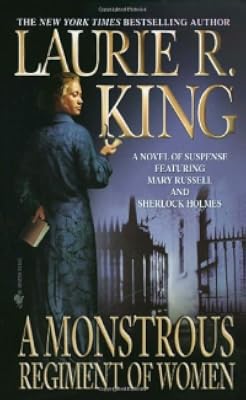
A Monstrous Regiment of Women
by Laurie R. King 
Mary Russell (2), Mary Russell: Chronological Order (December 1920-February 1921)
On This Page
Description
It is 1921 and Mary Russell-Sherlock Holmes's brilliant apprentice, now an Oxford graduate with a degree in theology-is on the verge of acquiring a sizable inheritance. Independent at last, with a passion for divinity and detective work, her most baffling mystery may now involve Holmes and the burgeoning of a deeper affection between herself and the retired detective. Russell's attentions turn to the New Temple of God and its leader, Margery Childe, a charismatic suffragette and a mystic, show more whose draw on the young theology scholar is irresistible. But when four bluestockings from the Temple turn up dead shortly after changing their wills, could sins of a capital nature be afoot? Holmes and Russell investigate, as their partnership takes a surprising turn in "A Monstrous Regiment of Women" by Laurie R. King. show lessTags
Recommendations


















Member Recommendations
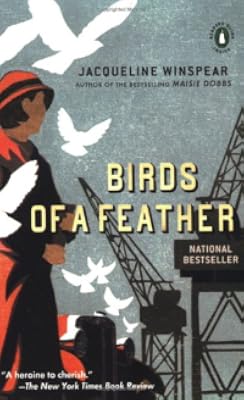
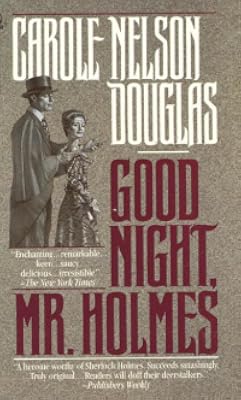
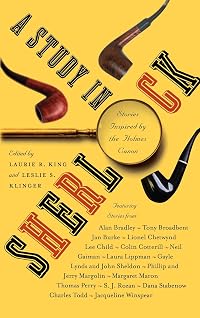
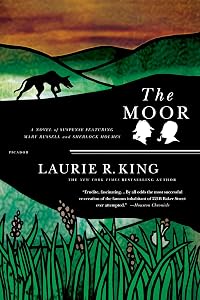
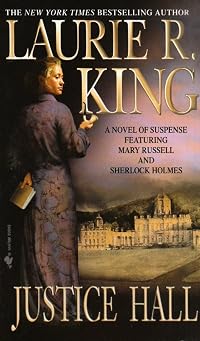
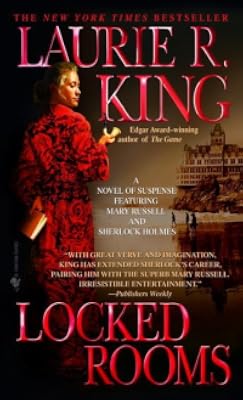
zembla Both feature good banter, a mystery set in a mostly-female environment, and a tentative romance between the sleuth protagonists.
60
Member Reviews
When we last left Mary Russell, she was a young woman on the verge of partnering with the incomparable Sherlock Holmes. She had a razor sharp wit, blistering fast powers of observation and deduction which rivaled those of Holmes.
Now in A Monstrous Regiment of Women Mary's adventures as Holmes's sidekick continue. She progressively hones her skills as a super sleuth while advancing her academic studies in Oxford. A chance encounter with an old friend leads Mary to Margery Childe, a enthusiastic leader of an organization called the New Temple of God, a bizarre combination of post World War I suffrage activities and feminist Christianity. Childe's approach to feminism and religion draws Mary into the membership but when a series of murders show more claim the lives of wealthy female volunteers, Mary cannot help but wonder if she has stepped into a trap. She more than fits the profile of the previous victims: wealthy young woman dedicated with their minds, hearts and purses to the cause. show less
Now in A Monstrous Regiment of Women Mary's adventures as Holmes's sidekick continue. She progressively hones her skills as a super sleuth while advancing her academic studies in Oxford. A chance encounter with an old friend leads Mary to Margery Childe, a enthusiastic leader of an organization called the New Temple of God, a bizarre combination of post World War I suffrage activities and feminist Christianity. Childe's approach to feminism and religion draws Mary into the membership but when a series of murders show more claim the lives of wealthy female volunteers, Mary cannot help but wonder if she has stepped into a trap. She more than fits the profile of the previous victims: wealthy young woman dedicated with their minds, hearts and purses to the cause. show less
Technically, this is the second Mary Russell book, but its the one I began the series with. I started with this book because the mystery involving a church run entirely by women really interested me. Plus, I had been told that King does a good job of subtly incorporating women's history into her story-lines. This really intrigued me as I was curious to see what aspects of the 1920's era King would incorporate into the narrative.
The novel begins with Mary about to turn 21, an age she has eagerly been waiting to reach as it means assuming full control over her inheritance and no longer having to rely on the whims of her aunt. In addition to her near birthday, Mary is also close to receiving her degree in theology from Oxford. So when a show more friend from the university joins a church run exclusively by women Mary is fascinated. Agreeing to attend one of the sermons, Mary acts as a skeptical observer watching Margery Childe, the leader of the church, speak to and interact with her congregation. Wrangled into a private interview with the woman, Mary quickly finds herself talked into returning to the church on a regular basis in order to teach Margery another language. During these lessons, Mary begins to notice some odd occurrences involving the church and Margery. Slowly the deaths of several church members, written off as accidents, begin to surface, along with strange reports of Margery miraculously healing herself from extensive injuries. All of which leads to Mary investigating the church and its leader.
Mary was pretty kick-ass in this one. She spends a lot of the book working by herself on the case with Holmes only popping in and out of the narrative until close to the end. This is largely due to the fight they have near the beginning of the novel, but also because both Mary and Holmes are at an odd moment in their relationship and neither seem to know what to do about it. I loved Mary's internal struggle around Holmes. It really fit her character to be so up in the air concerning the potential shift in the dynamics of their relationship. Holmes own realization that Mary is seeing him differently is pretty on-key as well. Aside from all this, Mary also goes through a pretty traumatizing experience that really allows the strength of her character to shine. I was pretty impressed with how King used that experience to incorporate one of Holmes demons into the narrative without making it feel contrived or forced.
My only problem with the book came from how, at times, it lagged. Mostly, this came when the theological discussions would get a little too dense for me, but things generally picked back up pretty quick. Really, this was just an awesome read. Highly recommended. show less
The novel begins with Mary about to turn 21, an age she has eagerly been waiting to reach as it means assuming full control over her inheritance and no longer having to rely on the whims of her aunt. In addition to her near birthday, Mary is also close to receiving her degree in theology from Oxford. So when a show more friend from the university joins a church run exclusively by women Mary is fascinated. Agreeing to attend one of the sermons, Mary acts as a skeptical observer watching Margery Childe, the leader of the church, speak to and interact with her congregation. Wrangled into a private interview with the woman, Mary quickly finds herself talked into returning to the church on a regular basis in order to teach Margery another language. During these lessons, Mary begins to notice some odd occurrences involving the church and Margery. Slowly the deaths of several church members, written off as accidents, begin to surface, along with strange reports of Margery miraculously healing herself from extensive injuries. All of which leads to Mary investigating the church and its leader.
Mary was pretty kick-ass in this one. She spends a lot of the book working by herself on the case with Holmes only popping in and out of the narrative until close to the end. This is largely due to the fight they have near the beginning of the novel, but also because both Mary and Holmes are at an odd moment in their relationship and neither seem to know what to do about it. I loved Mary's internal struggle around Holmes. It really fit her character to be so up in the air concerning the potential shift in the dynamics of their relationship. Holmes own realization that Mary is seeing him differently is pretty on-key as well. Aside from all this, Mary also goes through a pretty traumatizing experience that really allows the strength of her character to shine. I was pretty impressed with how King used that experience to incorporate one of Holmes demons into the narrative without making it feel contrived or forced.
My only problem with the book came from how, at times, it lagged. Mostly, this came when the theological discussions would get a little too dense for me, but things generally picked back up pretty quick. Really, this was just an awesome read. Highly recommended. show less
The betrayal I felt at the end of this book regarding this romance angle was IMMENSE. The first book was a good time, well written and with a really refreshing view of Holmes from the perspective of a teen growing into a newly modern woman. Went into this book expecting a fun 1920s mystery romp with a dash of Sherlock thrown in, great, good fun, love it. This book is still well written, researched, and had a supernatural angle which though is a bit hard for Sherlock fans, is tied in kind of as the book references Doyle's occult phase. Then a bit of romance rears its head as the protagonist nurses a crush for her mentor/father figure. For Mary to have a crush on Sherlock, who is about 40 years her elder, fine. We've all had a crush on show more Sherlock at some point, it's very college-age-person-crushing-on-professor vibes. But to take a character as iconic as Sherlock and marry him off with a child who just turned 21 and who he essentially helped raise since she was in her mid-teens....YUCK GROSS WHYYYYYY. It caught me off guard, as in my mind I had firmly crossed off that possibility. The strength of the book imo was in the building of a family by 2 lonely people with similar traits and interests who are frequently misunderstood, plus adventures. So stupid to throw that away on a kiss that I think most people would find disgusting, and which really undermines the entire relationship. To add to the grossness, he says he's wanted to kiss her since he first saw her, to which she saucily replies, you mean when I was dressed like a boy (winky face) instead of what we were all screaming in our heads, which was, YOU MEAN WHEN SHE WAS 15 YOU PERVERT?!?! (angry face). It ruined the book for me, and brought me here with my rant. show less
"A Monstrous Regiment Of Woman" is well written, skillfully narrated, filled with memorable characters, and spiced with discussions of challenging ideas on religion and on the role of women.
In the first book, "The Beekeeper's Apprentice", Mary Russell was an "apprentice" to the Master Craftsman of detection, Sherlock Holmes. She was as young and as impressionable as she was passionate and talented.
In "A Monstrous Regiment Of Women" she comes into her majority in every way. She inherits her fortune, establishes her own household, prepares prestigious academic papers and gets her own "case" to pursue.
Holmes plays an important role in the book, Russell's relationship to him defines a great deal about her, but it Russell who is central. Her show more mind, her passions, her religious views, shape the events in this story and give it meaning.
One of the strengths of "A Monstrous Regiment Of Women" is how embedded it is in the period without being buried in historical detail. The book opens at Christmas 1920, when men, many of them damaged, had returned from the Great War to a land that was not "fit for heroes", when woman were being displaced from the jobs they performed while the men were at war and when the "doomed generation" haunted by death, and stalked by mental instability, sought relief in through sex and drugs and jazz music. The book captures the restless, fragmented spirit of the time beautifully by focusing on events around Margery Childe, a charismatic "Minister" who uses the bible to preach love and demonstrate the value of women while promoting pragmatic philanthropy. This opens up discussions on poverty, social inequity, misogyny, theology and mysticism.
I was fascinated by the effect that Childe had on Russell. Russel is a theological scholar, passionately devoted to studying the Jewish and Christian religious texts to learn their history and unravel the meaning their writers intended to convey. Childe is aware only of the St Jame's version of the Bible. She reads it to understand what God intends for the world. Russel's understanding of the text is superior to Childe's in every way except that Childe has the gift of deep, all-absorbing belief. Russell is suspicious of Childe. She is reluctant to accept that what she is seeing is a woman channeling God's grace. It is easier for her to believe that she is seeing a woman seeking power and perhaps wealth. Unfortunately for Russell she is too honest and her mind is too subtle to stop there. She has to confront the contrast between strength of Childe's belief and the depth of her own knowledge and wonder which of them is the poorer.
Childe's "sermons" are wonderful. Although I learned nothing new about the scriptures, I could feel the tug of her passion, the undertow of her belief. I understood the appeal of surrendering myself to it rather than swimming against that tide. That Russell did not surrender tells me a great deal about her.
One of the most memorable things about the book was the misogynistic quotes that open each chapter. King doesn't comment on them. She doesn't have to. Each one is breathtakingly appalling in its bigotry and anger. That these quotes come from educated men who were leaders in their time is astonishing. I have become so used to the aspiration on gender equality, no matter how seldom it is achieved, that I had allowed myself to forget the centuries of male thought and teaching that declared women to be less than fully human.
The quotes took the violence against the women in the book, especially Childe and Russell, and defined it not as some extraordinary melodramatic device but as part of the day to day world, an interpretation that is much more chilling.
I continued to enjoy the contrapuntal nature of the relationship between Russell and Holmes. She is a child of the twentieth century, a woman in a society where the old certainties on gender are starting to erode, a jew studying chemistry and theology with the same intellectual curiosity. He was raised to be a Victorian Gentleman, with all the advantages of gender and class on his side, has almost retreated from public life, has a passion for science but has no noticeable inclination towards theism. What binds them together is that they both see the world in a fundamentally analytical way, that allows them a clear view of the people around them while placing them at a distance from them. They both carry scars and guilt and both choose to retain their individuality even at the cost of living outside the bounds of respectability.
I'm hooked on this series now that it is clear that Russell is not the new Watson. I'm looking forward to the rest of the books. show less
In the first book, "The Beekeeper's Apprentice", Mary Russell was an "apprentice" to the Master Craftsman of detection, Sherlock Holmes. She was as young and as impressionable as she was passionate and talented.
In "A Monstrous Regiment Of Women" she comes into her majority in every way. She inherits her fortune, establishes her own household, prepares prestigious academic papers and gets her own "case" to pursue.
Holmes plays an important role in the book, Russell's relationship to him defines a great deal about her, but it Russell who is central. Her show more mind, her passions, her religious views, shape the events in this story and give it meaning.
One of the strengths of "A Monstrous Regiment Of Women" is how embedded it is in the period without being buried in historical detail. The book opens at Christmas 1920, when men, many of them damaged, had returned from the Great War to a land that was not "fit for heroes", when woman were being displaced from the jobs they performed while the men were at war and when the "doomed generation" haunted by death, and stalked by mental instability, sought relief in through sex and drugs and jazz music. The book captures the restless, fragmented spirit of the time beautifully by focusing on events around Margery Childe, a charismatic "Minister" who uses the bible to preach love and demonstrate the value of women while promoting pragmatic philanthropy. This opens up discussions on poverty, social inequity, misogyny, theology and mysticism.
I was fascinated by the effect that Childe had on Russell. Russel is a theological scholar, passionately devoted to studying the Jewish and Christian religious texts to learn their history and unravel the meaning their writers intended to convey. Childe is aware only of the St Jame's version of the Bible. She reads it to understand what God intends for the world. Russel's understanding of the text is superior to Childe's in every way except that Childe has the gift of deep, all-absorbing belief. Russell is suspicious of Childe. She is reluctant to accept that what she is seeing is a woman channeling God's grace. It is easier for her to believe that she is seeing a woman seeking power and perhaps wealth. Unfortunately for Russell she is too honest and her mind is too subtle to stop there. She has to confront the contrast between strength of Childe's belief and the depth of her own knowledge and wonder which of them is the poorer.
Childe's "sermons" are wonderful. Although I learned nothing new about the scriptures, I could feel the tug of her passion, the undertow of her belief. I understood the appeal of surrendering myself to it rather than swimming against that tide. That Russell did not surrender tells me a great deal about her.
One of the most memorable things about the book was the misogynistic quotes that open each chapter. King doesn't comment on them. She doesn't have to. Each one is breathtakingly appalling in its bigotry and anger. That these quotes come from educated men who were leaders in their time is astonishing. I have become so used to the aspiration on gender equality, no matter how seldom it is achieved, that I had allowed myself to forget the centuries of male thought and teaching that declared women to be less than fully human.
The quotes took the violence against the women in the book, especially Childe and Russell, and defined it not as some extraordinary melodramatic device but as part of the day to day world, an interpretation that is much more chilling.
I continued to enjoy the contrapuntal nature of the relationship between Russell and Holmes. She is a child of the twentieth century, a woman in a society where the old certainties on gender are starting to erode, a jew studying chemistry and theology with the same intellectual curiosity. He was raised to be a Victorian Gentleman, with all the advantages of gender and class on his side, has almost retreated from public life, has a passion for science but has no noticeable inclination towards theism. What binds them together is that they both see the world in a fundamentally analytical way, that allows them a clear view of the people around them while placing them at a distance from them. They both carry scars and guilt and both choose to retain their individuality even at the cost of living outside the bounds of respectability.
I'm hooked on this series now that it is clear that Russell is not the new Watson. I'm looking forward to the rest of the books. show less
I enjoyed my reread of A Monstrous Regiment of Women. My most vivid memory of the book was the chapter headings of historical misogynist quotes They make an interesting juxtaposition to Mary Russell's investigation, the times they depict, and her relationship with Sherlock Holmes.
For those who don't know, this is a part of series, begun in the previous book, The Beekeeper's Apprentice which matches Sherlock Holmes with King's creation, Mary Russell. She's only just gained her majority and her inheritance at the beginning of this book; just turned twenty-one to Sherlock Holmes fifty-nine. I like how she's both a match and foil--this American Jewish feminist who read theology and chemistry at Oxford and can more than keep up with Holmes' show more agile mind, and whenever they're together in this book, it's a treat.
This is set in the England of 1921, after World War I, the age of Jazz, flapper, and the Lost Generation. As Russell herself explains at one point, British women were seen as "surplus." Of six million men of marriageable men at the beginning of the war, two million returned wounded and one million never returned at all. And women, though they finally had the vote, found themselves displaced from positions of responsibility and independence they had held during the war. Enter Margery Childe, the charismatic head of the New Temple of God, which tries to mix feminist theology and politics and give those displaced women a new purpose. Mary Russell is drawn into her circle and into danger when women associated with the Temple are mysteriously killed.
I loved the blend of romance, historical fiction, mystery and suspense. If this shines a bit less than The Beekeeper's Apprentice, its only because the novelty, the delighted shock over King's invention of the character has worn off--the quality has not, and this was a pleasure to read. show less
For those who don't know, this is a part of series, begun in the previous book, The Beekeeper's Apprentice which matches Sherlock Holmes with King's creation, Mary Russell. She's only just gained her majority and her inheritance at the beginning of this book; just turned twenty-one to Sherlock Holmes fifty-nine. I like how she's both a match and foil--this American Jewish feminist who read theology and chemistry at Oxford and can more than keep up with Holmes' show more agile mind, and whenever they're together in this book, it's a treat.
This is set in the England of 1921, after World War I, the age of Jazz, flapper, and the Lost Generation. As Russell herself explains at one point, British women were seen as "surplus." Of six million men of marriageable men at the beginning of the war, two million returned wounded and one million never returned at all. And women, though they finally had the vote, found themselves displaced from positions of responsibility and independence they had held during the war. Enter Margery Childe, the charismatic head of the New Temple of God, which tries to mix feminist theology and politics and give those displaced women a new purpose. Mary Russell is drawn into her circle and into danger when women associated with the Temple are mysteriously killed.
I loved the blend of romance, historical fiction, mystery and suspense. If this shines a bit less than The Beekeeper's Apprentice, its only because the novelty, the delighted shock over King's invention of the character has worn off--the quality has not, and this was a pleasure to read. show less
Mary has graduated from Oxford and is just about to turn twenty-one and finally claim her inheritance and independence from her despised aunt when she encounters old friend Ronnie Beaconsfield in London. Ronnie introduces her to Margery Childe who is running a religious, feminist, charitable organization.
Mary is fascinated when she hears Margery speak and is intrigued by her take on theology. She is also intrigued by the various charitable and political activities of temple since they fit into her feminist viewpoints. But things are not all wonderful. There have been a series of deaths of women associated with the Temple who just happen to have included the Temple in their wills for substantial amounts.
When Ronnie is almost a victim of show more a fatal accident, Mary begins to put things together to investigate who might have a reason to want to collect these young women's gifts long before they should. She cannot suspect Margery herself but those around her are certainly suspects.
When Mary herself is kidnapped and held by a kidnapper who tries to addict her to heroin, it takes a while for Sherlock to realize she is missing and then to find her. Mary's kidnapping certainly clarified her feelings for Holmes and his for her which had been a source of stress for both of them since Mary had grown up.
I loved the historical setting and the intriguing information about theology that is included in the book. I also loved seeing the aftereffects of World War I both on the men who fought it and the women who stayed at home. Women who had substantial roles in work and society weren't going to be stuffed back into their roles as subordinate to men and confined to household duties.
This is quite an intriguing and thought-provoking historical mystery where the mystery plays equally with the other themes of social change and religion. show less
Mary is fascinated when she hears Margery speak and is intrigued by her take on theology. She is also intrigued by the various charitable and political activities of temple since they fit into her feminist viewpoints. But things are not all wonderful. There have been a series of deaths of women associated with the Temple who just happen to have included the Temple in their wills for substantial amounts.
When Ronnie is almost a victim of show more a fatal accident, Mary begins to put things together to investigate who might have a reason to want to collect these young women's gifts long before they should. She cannot suspect Margery herself but those around her are certainly suspects.
When Mary herself is kidnapped and held by a kidnapper who tries to addict her to heroin, it takes a while for Sherlock to realize she is missing and then to find her. Mary's kidnapping certainly clarified her feelings for Holmes and his for her which had been a source of stress for both of them since Mary had grown up.
I loved the historical setting and the intriguing information about theology that is included in the book. I also loved seeing the aftereffects of World War I both on the men who fought it and the women who stayed at home. Women who had substantial roles in work and society weren't going to be stuffed back into their roles as subordinate to men and confined to household duties.
This is quite an intriguing and thought-provoking historical mystery where the mystery plays equally with the other themes of social change and religion. show less
Mary has graduated from Oxford and is just about to turn twenty-one and finally claim her inheritance and independence from her despised aunt when she encounters old friend Ronnie Beaconsfield in London. Ronnie introduces her to Margery Childe who is running a religious, feminist, charitable organization.
Mary is fascinated when she hears Margery speak and is intrigued by her take on theology. She is also intrigued by the various charitable and political activities of temple since they fit into her feminist viewpoints. But things are not all wonderful. There have been a series of deaths of women associated with the Temple who just happen to have included the Temple in their wills for substantial amounts.
When Ronnie is almost a victim of show more a fatal accident, Mary begins to put things together to investigate who might have a reason to want to collect these young women's gifts long before they should. She cannot suspect Margery herself but those around her are certainly suspects.
When Mary herself is kidnapped and held by a kidnapper who tries to addict her to heroin, it takes a while for Sherlock to realize she is missing and then to find her. Mary's kidnapping certainly clarified her feelings for Holmes and his for her which had been a source of stress for both of them since Mary had grown up.
I loved the historical setting and the intriguing information about theology that is included in the book. I also loved seeing the aftereffects of World War I both on the men who fought it and the women who stayed at home. Women who had substantial roles in work and society weren't going to be stuffed back into their roles as subordinate to men and confined to household duties.
This is quite an intriguing and thought-provoking historical mystery where the mystery plays equally with the other themes of social change and religion. show less
Mary is fascinated when she hears Margery speak and is intrigued by her take on theology. She is also intrigued by the various charitable and political activities of temple since they fit into her feminist viewpoints. But things are not all wonderful. There have been a series of deaths of women associated with the Temple who just happen to have included the Temple in their wills for substantial amounts.
When Ronnie is almost a victim of show more a fatal accident, Mary begins to put things together to investigate who might have a reason to want to collect these young women's gifts long before they should. She cannot suspect Margery herself but those around her are certainly suspects.
When Mary herself is kidnapped and held by a kidnapper who tries to addict her to heroin, it takes a while for Sherlock to realize she is missing and then to find her. Mary's kidnapping certainly clarified her feelings for Holmes and his for her which had been a source of stress for both of them since Mary had grown up.
I loved the historical setting and the intriguing information about theology that is included in the book. I also loved seeing the aftereffects of World War I both on the men who fought it and the women who stayed at home. Women who had substantial roles in work and society weren't going to be stuffed back into their roles as subordinate to men and confined to household duties.
This is quite an intriguing and thought-provoking historical mystery where the mystery plays equally with the other themes of social change and religion. show less
Members
- Recently Added By
Lists

Best Historical Fiction
620 works; 261 members

Favorite Books Based on Sherlock Holmes Stories
20 works; 10 members

Historical Fiction
889 works; 91 members

Crime and Mysteries to Read
746 works; 31 members

Female Author
1,235 works; 67 members

Majkia's Mystery/ Thriller TBR
86 works; 3 members

Books Read in 2012 (Numbered)
168 works; 6 members
Literature About Women and Girls
394 works; 39 members

Detective Stories
343 works; 5 members

Best Mysteries With a Historical Setting
292 works; 160 members
Author Information

80+ Works 46,691 Members
Laurie R. King is the bestselling author of "A Darker Place," four contemporary novels featuring Kate Martinelli, and five acclaimed Mary Russell mysteries. She lives in northern California. Her newest book is the ninth one in the Mary Russell mystery series, The Language of Bees. (Publisher Provided) Laurie R. King is a mystery writer, who holds show more a bachelor's degree and a master's degree in theology. Her first novel, Grave Talent, was published in 1993 and won the Edgar Award for Best First Novel. Since then, she has written over twenty books including the Mary Russell Mysteries series, the Stuyvesant and Grey series, the Kate Martinelli Mystery series, A Darker Place, Folly, and Keeping Watch. She has also co-authored a number of nonfiction works and anthologies including Crime Writing, The Grand Game, and Studies in Sherlock. Laurie's title, Dreaming Spies, is a 2015 New York Times Bestseller. (Bowker Author Biography) show less
Laurie R. King is a LibraryThing Author, an author who lists their personal library on LibraryThing.
Some Editions
Awards and Honors
Awards
Series


Work Relationships
Common Knowledge
- Canonical title
- A Monstrous Regiment of Women
- Original publication date
- 1995
- People/Characters
- Mary Russell; Sherlock Holmes; Veronica Beaconsfield; John H. Watson; Margery Childe; Miles Fitzwarren
- Important places
- London, England, UK; Sussex, England, UK; Oxford, Oxfordshire, England, UK
- Epigraph
- For who can deny that is repugnant to nature that the blind shall be appointed to lead and conduct such as do see, that the weak, the sick and the impotent shall nourish and keep the whole and the strong, and, finally, that t... (show all)he foolish, mad, and frenetic shall govern the discrete and give counsel to such as be sober of mind? And such be all women compared to man in bearing of authority.
--JOHN KNOX (1505-1572)
The First Blast of the Trumpet Against the Monstrous Regiment of Women (published in 1558 against Mary Tudor; later applied to Mary Stuart. Regiment is used in the sense of régime.) - Dedication
- for Zoe
το φωζ των ανθρωπων - First words
- I sat back in my chair, jabbed the cap onto my pen, threw it into the drawer, and abandoned myself to the flood of satisfaction, relief and anticipation that was let loose by that simple action.
- Quotations
- In a minute, she jumped up again and began a prowl around the perimeter of the room, and so strong was the image of cat that I should not have been greatly surprised had she leapt up on the sideboard and threaded her way betw... (show all)een the bottles.
At that moment, something entered the room, a thing compounded of the memory of our argument atop the hansom, of the intimacy of the hour and the place, of my thin and clinging blouse and his long legs stretched out towards t... (show all)he fire and of my growing sense of womanliness.
My red herring had performed its function, but I knew that this particular old hound would not be misled for long before backtracking to the main scent.
Then I sat and listened as a very different silence lowered itself onto the room.
The walls closed in, and the quiet was loud, and I was far from sleep.
I had met Sherlock Holmes at a time when adolescence and the devastating circumstances of my orphaning had left me with an exterior toughness and an interior that was malleable to the personality of anyone willing to listen t... (show all)o me and take me seriously. Had Holmes been a cat burglar or forger, no doubt I should have come into adulthood learning to walk parapets at night or concocting arcane inks.
It had the brutal effect of making me feel a trivialiser, as if I had confidently set out to analyse a minute section of a wall and stepped back from my completed work, only to find myself in the Sistine Chapel.
Monday a ragged-coated philanthropist, Friday too poor for a taxi, and Sunday on the edge of being a multimillionaire (in dollars, perhaps, if the market was strong and the exchange rate very good).
"Very well," I began. "No doubt you've already guessed that I really haven't the foggiest what to do with you two. I'm twenty-one, I've just inherited a packet, and I decided to find out what might be done with it. It's no go... (show all)od pretending I'm used to a formal household; I've never had a ladies' maid, a chauffeur, or a butler, so I'm sure to step on your toes a dozen times a day, answering the telephone, picking up the mail, fixing myself a meal—everything I'm not s'posed to do. I'll drive you potty. If you're willing to put up with me, I'm willing to give it a try. What do you say?"
None of that was absolutely true, but it fit the image and laid a basis for my future behavior, which was to do whatever I damn well pleased, and not to be ruled by my servants.
The fog had closed in. Such a mild monosyllable, fog, for London's own particular brand of purgatory, this greasy, burning, indescribably thick yellow miasma that seared the nose and fouled the lungs, rotted clothing a... (show all)nd blackened buildings, caused hundreds of deaths by mishaps and brought the proud capital of an empire stumbling literally to its knees.
Opiates leave one with a profound disinclination to do much of anything.
One feels so very satisfied with life, the only improvement is actual slumber.
I straightened my shoulders and stepped into the light, then walked out of my cellar prison and up the bright stairs, feeling like the mermaid granted feet.
For the first time in days I was anchored again to the progress of the sun through the heavens.
I looked back as we went down the drive, and I saw a big, ugly, down-at-its-heels stone country house, like a hundred others. Nothing whatsoever to distinguish it, except the knowledge that I had left the remnants of my youth... (show all) in one of its deserted cellars. - Last words
- (Click to show. Warning: May contain spoilers.)And yes, Holmes and I married too, and although it may not have been a union of conventional bliss, it was never dull.
- Original language
- English
Classifications
Statistics
- Members
- 3,332
- Popularity
- 5,066
- Reviews
- 102
- Rating
- (3.97)
- Languages
- 8 — Danish, Dutch, English, French, German, Italian, Portuguese, Swedish
- Media
- Paper, Audiobook, Ebook
- ISBNs
- 39
- ASINs
- 10