Freedom
by Sebastian Junger
On This Page
Description
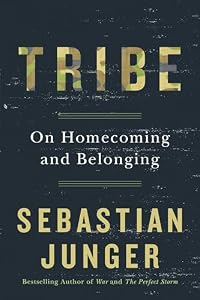
"A profound rumination on the concept of freedom from the New York Times bestselling author of Tribe"-- Throughout history, humans have been driven by the quest for two cherished ideals: community and freedom. The two don't coexist easily. We value individuality and self-reliance, yet are utterly dependent on community for our most basic needs. In this intricately crafted and thought-provoking book, Sebastian Junger examines the tension that lies at the heart of what it means to be human.Tags
Recommendations











Member Reviews
This short book is a series of essays that came about as the author hiked with various individuals from Washington, DC to the beginnings of the Ohio River. They hiked in a series of shorter trips along railroad lines and much of the trek was through rural Pennsylvania, an area quite familiar to me. The book is divided into three sections: Run, Fight, Think.
Much of the first section of the book takes place along the Juniata River, the name of which comes from the term Standing Stone from one of the Native languages of the area. This part also reflects upon the Native Americans and their cultures, who were here before the European settlers arrived. The Juniata once was the boundary of the wilderness area. It was the beginning of where show more European settlers would head to avoid colonial authority. In doing so, they were slowly imposing their own oppression upon each other as they sought to defend themselves in this wilderness from the people who were already here. There are pithy thoughts about the nature of freedom, such as "...but lots of things that look like freedom when you are with other people are just a form of exile when you're alone....But the inside joke about freedom....is that you're always trading obedience to one thing for obedience to another" And another profound statement relative to current events: "The idea that we can enjoy the benefits of society while owing nothing in return is literally infantile. Only children owe nothing."
The second section, "Fight" is summed up by his quote about the origins of the word freedom: "comes from vridom, which means 'beloved' in medieval German, and is thought to reflect the idea that only people in one's immediate group were considered worthy of having rights or protection." So this brings us to an understanding of the way that claims on freedom often assume an us vs. them mentality. Or tribalism where one group is pitted against another, hence "Fight".
The final secion, "Think" relates to the tension between freedom and oppression. "The central problem for human freedom is that groups that are well organized enough to defend themselves against others are well organized enough to oppress their own. Power is so readily abused that one could almost say that its concentration is antitheticl to freedom. Democracy --both in its modern form and in its original for --is an attempt to balance the two."
Without naming names or pointing fingers, the author presents some interesting thoughts that are reflective of the political climate in the US and the world today. I found it to be very thought provoking. Oh...and I liked that they actually stopped at a bar in the small town where I grew up. show less
Much of the first section of the book takes place along the Juniata River, the name of which comes from the term Standing Stone from one of the Native languages of the area. This part also reflects upon the Native Americans and their cultures, who were here before the European settlers arrived. The Juniata once was the boundary of the wilderness area. It was the beginning of where show more European settlers would head to avoid colonial authority. In doing so, they were slowly imposing their own oppression upon each other as they sought to defend themselves in this wilderness from the people who were already here. There are pithy thoughts about the nature of freedom, such as "...but lots of things that look like freedom when you are with other people are just a form of exile when you're alone....But the inside joke about freedom....is that you're always trading obedience to one thing for obedience to another" And another profound statement relative to current events: "The idea that we can enjoy the benefits of society while owing nothing in return is literally infantile. Only children owe nothing."
The second section, "Fight" is summed up by his quote about the origins of the word freedom: "comes from vridom, which means 'beloved' in medieval German, and is thought to reflect the idea that only people in one's immediate group were considered worthy of having rights or protection." So this brings us to an understanding of the way that claims on freedom often assume an us vs. them mentality. Or tribalism where one group is pitted against another, hence "Fight".
The final secion, "Think" relates to the tension between freedom and oppression. "The central problem for human freedom is that groups that are well organized enough to defend themselves against others are well organized enough to oppress their own. Power is so readily abused that one could almost say that its concentration is antitheticl to freedom. Democracy --both in its modern form and in its original for --is an attempt to balance the two."
Without naming names or pointing fingers, the author presents some interesting thoughts that are reflective of the political climate in the US and the world today. I found it to be very thought provoking. Oh...and I liked that they actually stopped at a bar in the small town where I grew up. show less
In a several years when all of the ruckus is behind us this book will be much more appreciated as a story that sums up at least last 20 years of constant mental play with minds of every person on this planet, constant gaslighting by contradictory news and information.
It is not like other author's works. This one has a feeling of more private diary into which one writes thoughts while going through a journey - physical or spiritual.
We follow author and his friends as they travel by foot from Eastern USA towards West, from Pennsylvania towards Ohio. They are all men who went through much, too much and they have taken this track as a way of escape from craziness of modern world, sort of a going back to the roots and attempt to keep their show more minds sane.
As they track and live off land and generosity of people they meet they are on constant lookout and avoiding authority [guarding against vagrants and guarding railroad installationss] they start to contemplate on people, individuals and states we have today. And what better symbol of technical progress and today's techno society than railroad - strong, visible and in plain sight (unlike planes or ships), actual bloodline of the civilization linking it and bringing every possible good and materiel wherever needed. Everything in the book happens around railroads, from author's tracking to stories about the people that lived and fought following the same paths railroads were built on.
In all of this atmosphere author starts writing his thoughts on people, humans, describing them in all their might and weakness. Evolved from the thousands of years of hard-ship humans have hardened themselves up physically and socially. I truly enjoyed chapters on human physical endurance, it was truly inspiring. Then we move from one time period to another - from native tribes of East Coast to settlers that were given chance to settle the Wild West in order to act as buffer in wild frontier - people who faced very short lives but endured. Today we might call them whatever we want because we are so far from the hardships they endured as we are away from walking strange planets in the deep space.
They had to live in hard circumstances but free from the state control and as it goes in such situations they encountered native tribes that followed the same philosophy. War between them was more than equal - guerilla fighters on both sides, equally bloodthirsty and equally savage in their attempts to protect their families. To talk about natives as mild, meek people would be an affront - these were people and tribes proud and ready and willing to conquer everything around them. In many ways unlike the colonists that were trying to carve their own piece of Heaven on Earth while escaping prosecution form their countries of origin.
And then author further develops discussion about the relation between freedom - in true sense, individual and close family - and community/state, social construct (ha!) made to make people safer and live more easily but with a price, rules and obligations that apply to all. Then we are taken to the role of leaders - and how unscrupulous always want the power but no obligation and how hard it is to to get true leaders to position of power (interestingly in most nomadic nations all true leaders have that oh so vilified streak of stoicism). As society grows author touches on aspect of dehumanization (you know that old, them fascists/conservatives/lefties/commies/stupid/fools/low-iq etc) in order to divide the people and get greater hold of larger populace and justify any kind of repression. Then we are given another aspect of human being, ideology and willingness to fight for the idea - from guerilla fighters in Americas west to urban chaos in Ireland. We are shown what is possible when people are united as were workers in US unions fighting the corporations and big business - how they were mowed down by state working hand in hand with above mentioned corporations but also how they finally got their satisfaction when laws were brought that broke the corporate hold on their lives.
Isn't it funny how economic injustice runs human societies to greatness. It looks like it is unbroken rule - when one creates society of opportunities it is impossible to guarantee the economical equality because to have economical equality one has to impose rules, restrictions and start treating people equally but in this case opportunities are lost because not everything can be made available to everyone. As author states it is those most nomadic societies that are most free and economically equal but they come with few drawbacks - they are always the most warlike ones and I would like to see people wanting to live their lifestyle, always surrounded by death and possibility to quickly perish due to lack of food and water. Not quite appealing, right?
I wont go into details any more but in this short book one will find various information on people, individuals and societies, their strengths and weaknesses, power of the human will (or spirit if you like) and many more. This is not book on one subject.
This is book on plethora of subjects that have boggled minds of many a man in the past and definitely will in future. Subjects that are becoming more actual today - in days when dehumanization and ad-hominem attacks are the only language public knows, respects and uses to explain everything around them, where we all become more and more dependent on the corporations that are working hand in hand with the state. Not to mention micro-dictators that have risen their heads in all corners of the world and that have no intention of relieving themselves of the power they have taken.
This is interesting book for interesting times, treat it like an index booklet referencing other works treating every subject in more detail.
It is strange in the most beautiful way. I wholeheartedly recommend it. show less
It is not like other author's works. This one has a feeling of more private diary into which one writes thoughts while going through a journey - physical or spiritual.
We follow author and his friends as they travel by foot from Eastern USA towards West, from Pennsylvania towards Ohio. They are all men who went through much, too much and they have taken this track as a way of escape from craziness of modern world, sort of a going back to the roots and attempt to keep their show more minds sane.
As they track and live off land and generosity of people they meet they are on constant lookout and avoiding authority [guarding against vagrants and guarding railroad installationss] they start to contemplate on people, individuals and states we have today. And what better symbol of technical progress and today's techno society than railroad - strong, visible and in plain sight (unlike planes or ships), actual bloodline of the civilization linking it and bringing every possible good and materiel wherever needed. Everything in the book happens around railroads, from author's tracking to stories about the people that lived and fought following the same paths railroads were built on.
In all of this atmosphere author starts writing his thoughts on people, humans, describing them in all their might and weakness. Evolved from the thousands of years of hard-ship humans have hardened themselves up physically and socially. I truly enjoyed chapters on human physical endurance, it was truly inspiring. Then we move from one time period to another - from native tribes of East Coast to settlers that were given chance to settle the Wild West in order to act as buffer in wild frontier - people who faced very short lives but endured. Today we might call them whatever we want because we are so far from the hardships they endured as we are away from walking strange planets in the deep space.
They had to live in hard circumstances but free from the state control and as it goes in such situations they encountered native tribes that followed the same philosophy. War between them was more than equal - guerilla fighters on both sides, equally bloodthirsty and equally savage in their attempts to protect their families. To talk about natives as mild, meek people would be an affront - these were people and tribes proud and ready and willing to conquer everything around them. In many ways unlike the colonists that were trying to carve their own piece of Heaven on Earth while escaping prosecution form their countries of origin.
And then author further develops discussion about the relation between freedom - in true sense, individual and close family - and community/state, social construct (ha!) made to make people safer and live more easily but with a price, rules and obligations that apply to all. Then we are taken to the role of leaders - and how unscrupulous always want the power but no obligation and how hard it is to to get true leaders to position of power (interestingly in most nomadic nations all true leaders have that oh so vilified streak of stoicism). As society grows author touches on aspect of dehumanization (you know that old, them fascists/conservatives/lefties/commies/stupid/fools/low-iq etc) in order to divide the people and get greater hold of larger populace and justify any kind of repression. Then we are given another aspect of human being, ideology and willingness to fight for the idea - from guerilla fighters in Americas west to urban chaos in Ireland. We are shown what is possible when people are united as were workers in US unions fighting the corporations and big business - how they were mowed down by state working hand in hand with above mentioned corporations but also how they finally got their satisfaction when laws were brought that broke the corporate hold on their lives.
Isn't it funny how economic injustice runs human societies to greatness. It looks like it is unbroken rule - when one creates society of opportunities it is impossible to guarantee the economical equality because to have economical equality one has to impose rules, restrictions and start treating people equally but in this case opportunities are lost because not everything can be made available to everyone. As author states it is those most nomadic societies that are most free and economically equal but they come with few drawbacks - they are always the most warlike ones and I would like to see people wanting to live their lifestyle, always surrounded by death and possibility to quickly perish due to lack of food and water. Not quite appealing, right?
I wont go into details any more but in this short book one will find various information on people, individuals and societies, their strengths and weaknesses, power of the human will (or spirit if you like) and many more. This is not book on one subject.
This is book on plethora of subjects that have boggled minds of many a man in the past and definitely will in future. Subjects that are becoming more actual today - in days when dehumanization and ad-hominem attacks are the only language public knows, respects and uses to explain everything around them, where we all become more and more dependent on the corporations that are working hand in hand with the state. Not to mention micro-dictators that have risen their heads in all corners of the world and that have no intention of relieving themselves of the power they have taken.
This is interesting book for interesting times, treat it like an index booklet referencing other works treating every subject in more detail.
It is strange in the most beautiful way. I wholeheartedly recommend it. show less
Finding freedom is like searching for the great white whale. Here a monthslong march, evading guards along rail lines, loosely organizes Junger's Moby-Dick musings on railroads, indigenous Americans, unions, income inequality, Cain and Abel, nomads, warfare and combat sports. His anonymous camping companions stay strangely unexamined, yet they're at the heart of the quest. On this underground railroad, the way to freedom is through dependence.
I really enjoyed listening to this, perhaps because of Junger's warm voice. More than that, it got me to thinking about why our cultures are the way they are. I'm not sure I agree with his conclusion that all cultures are based on the same primitive survival struggle, but he sure makes a good case for it.
I was also taken by the idea of just walking as the most independent way of travel. We may all end up doing just that, and I don't think that would be a bad thing.
I was also taken by the idea of just walking as the most independent way of travel. We may all end up doing just that, and I don't think that would be a bad thing.
Sebastian Junger's Freedom is a well written and engrossing extended essay on the concept and history of freedom interspersed with an equally interesting accounting of a long trek, which he referred to as "the Last Patrol", through Pennsylvania.
The book is extremely well researched and, except for the trek, well documented. Many bits of information are stunning: "...it was the Apache's ability to cross terrain quickly and invisibly that allowed fourteen generations to remain outside the control of white society."
Some points he makes are truisms we would, until 2001, expect every American to understand and accept as incontrovertible: "...accepting an election loss may be the ultimate demonstration of how free you want to be." Maybe more show more to the point: "An important part of freedom is not having to make sacrifices for people who don't have to make sacrifices for you." show less
The book is extremely well researched and, except for the trek, well documented. Many bits of information are stunning: "...it was the Apache's ability to cross terrain quickly and invisibly that allowed fourteen generations to remain outside the control of white society."
Some points he makes are truisms we would, until 2001, expect every American to understand and accept as incontrovertible: "...accepting an election loss may be the ultimate demonstration of how free you want to be." Maybe more show more to the point: "An important part of freedom is not having to make sacrifices for people who don't have to make sacrifices for you." show less
Sebastian Junger, known mainly for his 1997 best seller “The Perfect Storm,” writes a memoir of four men, all having been in war, and a dog named Daisy, walking a 400 mile trek along the railway lines in south-central Pennsylvania. Ostensibly a chronicle of the often grueling hike in sometimes challenging terrain and always trying to avoid the authorities, the book is as much a philosophical treatise as it is a travel book. Junger philosophizes about western man and his idea of freedom and control of other humans. There is much to ponder here, probably a good candidate for a political science college class.
Freedom by Sebastian Junger uses vagabond type walking/travelling coupled with historical and philosophical commentary to illustrate the various ways freedom is and isn't experienced. I found some parts better than others but on completion I think the book hit its mark.
While Junger's writing is good, it just didn't click with me in this book. I say that less as a statement about the quality of it and more about the dynamics of my reading of his writing. I was not moved emotionally nor compelled to think deeply as often as I would have expected from a book like this. Take this commentary of mine with a grain of salt, no doubt this will resonate with some readers, and frankly I can understand why, it just didn't quite do it for me often show more enough.
That said, I came away with some ideas to consider and I will likely revisit the book at some point and I fully expect it to be better the second time. For these reasons I have no problem recommending the book to readers either already familiar with his style or who like books that use something other than a standard explanatory style to discuss ideas.
Reviewed from a copy made available by the publisher via Goodreads. show less
While Junger's writing is good, it just didn't click with me in this book. I say that less as a statement about the quality of it and more about the dynamics of my reading of his writing. I was not moved emotionally nor compelled to think deeply as often as I would have expected from a book like this. Take this commentary of mine with a grain of salt, no doubt this will resonate with some readers, and frankly I can understand why, it just didn't quite do it for me often show more enough.
That said, I came away with some ideas to consider and I will likely revisit the book at some point and I fully expect it to be better the second time. For these reasons I have no problem recommending the book to readers either already familiar with his style or who like books that use something other than a standard explanatory style to discuss ideas.
Reviewed from a copy made available by the publisher via Goodreads. show less
Members
- Recently Added By
Lists

Non-fiction
55 works; 1 member

History
37 works; 1 member
Author Information

17+ Works 13,309 Members
Sebastian Junger was born in 1962 in Belmont, Massachusetts. He received his BA degree from Wesleyan University in Cultural Anthropology in 1984. He is a freelance journalist who writes for numerous magazines, including Outside, American Heritage, Men's Journal, and the New York Times Magazine. As an underemployed journalist who assigned himself show more stories and worked as a stringer for the Associated Press in Bosnia, Junger was fascinated by the dangers that people face regularly while doing ordinary jobs. Junger was working as a climber for a tree removal service when the storm occurred that provided the inspiration for his first book. The Perfect Storm (1997) is a carefully researched account of the wreck of the swordfishing boat Andrea Gail, The wreck took place during what one meteorologist called a "perfect storm"--a storm with the worst possible conditions. In order to relate the story of a disaster that left no survivors and had no eyewitnesses, Junger used a combination of sound research, technical detail, and personal insight to reconstruct the final hours. After the publication of this book he was nicknamed the new Hemingway. In 2000, this book was made into a film starring George Clooney and Mark Wahlberg. He wrote several books such as War which is about his time spent with a U.S. Army platoon in Afghanistan. At the Sundance Film Festival in 2010 his documentary Restrepo won Grand Jury Prize for a domestic documentary. Junger's book, Tribe, made the New York Times Bestseller list in 2016. (Bowker Author Biography) show less
Awards and Honors
Awards
Distinctions
Classifications
- Genres
- Nonfiction, General Nonfiction, Biography & Memoir
- DDC/MDS
- 323.440973 — Society, government, & culture Political science Civil Rights & Liberties/ Human Rights The state and the individual Liberty
- LCC
- JC599 .U62 .J86 — Political Science Political theory Political theory. The state. Theories of the state Purpose, functions, and relations of the state
- BISAC
Statistics
- Members
- 274
- Popularity
- 117,352
- Reviews
- 14
- Rating
- (3.77)
- Languages
- Dutch, English
- Media
- Paper, Audiobook, Ebook
- ISBNs
- 17
- ASINs
- 3