
Christopher Lasch (1932–1994)
Author of The Culture of Narcissism: American Life in an Age of Diminishing Expectations
About the Author
Christopher Lasch (1932-1994) was a professor of history at the University of Rochester and wrote, among many other works. The True and Only Heaven: Progress and Its Critics and the best-selling Revolt of the Elites and the Betrayal of Democracy.
Image credit: Culture Rover
Works by Christopher Lasch
The Culture of Narcissism: American Life in an Age of Diminishing Expectations (1979) 1,730 copies, 19 reviews
The New Radicalism in America 1889-1963: The Intellectual as a Social Type (1967) 191 copies, 1 review
Associated Works
The American Political Tradition and the Men Who Made it (1948) — Foreword, some editions — 1,370 copies, 15 reviews
Tagged
Common Knowledge
- Canonical name
- Lasch, Christopher
- Other names
- Lasch, Kit
- Birthdate
- 1932-06-01
- Date of death
- 1994-02-14
- Gender
- male
- Education
- Harvard University (BA|1954)
Columbia University (MA|1955|Ph.D|1961) - Occupations
- professor
historian
moralist
social critic - Organizations
- University of Rochester
Northwestern University
University of Iowa - Awards and honors
- Bowdoin Prize (1954)
- Cause of death
- cancer
- Nationality
- USA
- Birthplace
- Omaha, Nebraska, USA
- Places of residence
- Omaha, Nebraska, USA (birth)
- Place of death
- Pittsford, New York, USA
- Map Location
- Nebraska, USA
Members
Reviews
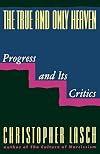
My second Lasch after Culture of Narcissism. Like that book, this one has some hard sentences to swallow for your typical left-leaning bloke. The thing that kept Lasch living in my head for weeks after I finished Narcissism and will after finishing this book too, is that it's difficult to read his books as a person on the left-side of the tracks and not come away with at least a few of your long held suppositions about society shaken to their core. This verve partially comes from the clear show more satisfaction he takes in being a contrarian, an instinct that I can imagine was forged in too many meetings, demonstrations, and protests where he was surrounded by people that all thought the same way and were proud of it - a condition that is sure to lead to overconfidence, pretension, and hardened notions of what is "right" and "wrong". Sometimes Lasch comes at the "sacred cows" of the leftist program (abortion comes to mind) in a way that can incite a twinge of annoyance - but I think these critiques must be understood as a way of exploring the real implications of political ideologies, rather than relying on rote platitudes that both sides have been telling themselves about what they believe for decades. I think a central theme of this book is the idea that the true motivations of people in a democracy are not always what the people say they are - Lasch, despite his harsh tone, is incredibly empathetic in his instinct to understand what drives people to make the decisions they do, even when considering "less enlightened" opinions, the anti-bussing movement in 1970s Boston for instance. The key thing to remember here whenever you feel like Lasch is leading you down uncomfortable paths, away from the safehouse of liberal doctrine, is this: he is at bottom a true democrat (small d) and anti-capitalist. As such, he sets himself against all elitism and and financial interests, the two classic enemies of left thought - a fact that has tragically been buried by American liberalism of the last 50 years. If you keep an open mind, Lasch will show you how your liberal opinions have actually been infected by these twin cancers, and how no leftist movement can succeed until they are excised.
It's important to recognize that Lasch's definition of "progress" is different than the way it is typically used in popular discourse. I have no doubt that Lasch would include the identity politics that we now identify with progressivism in his critique had he lived to see their development as it stands today. It's safe to say that the liberation of various groups that have been historically oppressed is of course a good thing, and the "progress" we've made in the time since Lasch's book was published is a net good in my opinion, though I'm sure Lasch would do his best to attenuate that opinion if he could. However, the "progress" that Lasch is critiquing here is explicitly defined in the beginning and (especially) the end of the book as bigger than the word as we typically use it. So big, in fact, that it can be difficult for people who grew up in the society as it stands today to even recognize it as a idea that can have any alternative, it is so taken for granted. It is essentially this: having thrown off the strictures of religion and tradition, a huge part of humanity believes that our ability to expand (our knowledge, our economy, our lebensraum) is essentially infinite. Lasch here is gravely warning against this ideology, which by this point has become the unquestioned norm. He is mourning the loss of limits, without which human ambition becomes avaricious, pompous, destructive. In this book, he is documenting what he sees as the spiritual, economic, and (for this he deserves much credit for being ahead of his time) environmental degradation of humanity and the planet. The biggest, baddest manifestation of this loss of limits is the looming, seemingly unstoppable reality of climate change, which has made clear the absurd wastefulness and profligacy of Western life, and highlighted the insidiousness of capitalism's promise that it can spread this standard of living to every person on Earth. What may seem like a generous promise of global prosperity, is instead a base money grab, and struggle for survival for an economic system that needs constant growth and expansion of markets to keep itself alive.
Though he may get lost in the weeds of political theory and history, Lasch is essentially trying to layout a secular version of what almost all religions have taught - human effort is, in the end dwarfed by the machinations of God, and that to try and transgress the limits of existence is to call disaster upon yourself. Though the reality of a higher being seems to have been refuted a long time ago, it is of utmost importance that humanity, especially nonbelievers, recognize the value of such a concept, and which trampling upon and leaving in the dust of history has contributed so much to creating the precipice we now find ourselves looking over the edge of. show less
It's important to recognize that Lasch's definition of "progress" is different than the way it is typically used in popular discourse. I have no doubt that Lasch would include the identity politics that we now identify with progressivism in his critique had he lived to see their development as it stands today. It's safe to say that the liberation of various groups that have been historically oppressed is of course a good thing, and the "progress" we've made in the time since Lasch's book was published is a net good in my opinion, though I'm sure Lasch would do his best to attenuate that opinion if he could. However, the "progress" that Lasch is critiquing here is explicitly defined in the beginning and (especially) the end of the book as bigger than the word as we typically use it. So big, in fact, that it can be difficult for people who grew up in the society as it stands today to even recognize it as a idea that can have any alternative, it is so taken for granted. It is essentially this: having thrown off the strictures of religion and tradition, a huge part of humanity believes that our ability to expand (our knowledge, our economy, our lebensraum) is essentially infinite. Lasch here is gravely warning against this ideology, which by this point has become the unquestioned norm. He is mourning the loss of limits, without which human ambition becomes avaricious, pompous, destructive. In this book, he is documenting what he sees as the spiritual, economic, and (for this he deserves much credit for being ahead of his time) environmental degradation of humanity and the planet. The biggest, baddest manifestation of this loss of limits is the looming, seemingly unstoppable reality of climate change, which has made clear the absurd wastefulness and profligacy of Western life, and highlighted the insidiousness of capitalism's promise that it can spread this standard of living to every person on Earth. What may seem like a generous promise of global prosperity, is instead a base money grab, and struggle for survival for an economic system that needs constant growth and expansion of markets to keep itself alive.
Though he may get lost in the weeds of political theory and history, Lasch is essentially trying to layout a secular version of what almost all religions have taught - human effort is, in the end dwarfed by the machinations of God, and that to try and transgress the limits of existence is to call disaster upon yourself. Though the reality of a higher being seems to have been refuted a long time ago, it is of utmost importance that humanity, especially nonbelievers, recognize the value of such a concept, and which trampling upon and leaving in the dust of history has contributed so much to creating the precipice we now find ourselves looking over the edge of. show less
This is a well-written and valuable book. Coming from a left-leaning perspective, Lasch’s critiques of what most Americans would consider the foundations of “liberal” politics are novel and cutting, even over 40 years after the publication of this book. For someone who doesn’t consider themselves as allied with either stream of mainline American political thought, it’s amazing how much of the political dogmas you still might absorb. There were dozens of times reading this book show more where I encountered a perspective on a problem that I simply had never even heard of before, let alone considered. The stock liberal/conservative tropes are so drilled into my brain that I often found my self trying to place Lasch in some kind of paradigm, only to remember that his whole project here is to undermine that kind of thinking. Lasch is definitely acting as contrarian here, and I can’t say I agree with everything he says. His views on Feminism, while interesting and worthwhile, are almost certainly outdated at this point. But as someone who values argument for arguments sake, i found a ton to think about in this book.
Most relevant to my life, and I would expect for most people in their late 20s early 30s, are Lasch’s views on education, sexuality, and the idea of societal progress. I had taken it for granted my whole life without really being conscious of it that public, state-run education systems were a flawed but commendable ideal - Lasch in just a few pages demonstrates the obvious problems with this ideal; the homogenized standards that hold everyone, regardless of ability, interest, or personality to the same bureaucratic standard; the degradation of educational standards that comes from pushing so many different people through the system; the idea that the school is now the fulcrum of a child’s entire life and that it’s held responsible not just for their academic education but also for their physical fitness, mental health, even practical skills like keeping house, cooking, repairing things etc.
In the chapter on sexuality, Lasch trots out some of the Freudian mumbo jumbo that sometimes sneaks into the book that I don’t care enough about to truly understand - at best these segments were a kind of surrealistic intermission from the rest of the book with nightmarish descriptions of vaginas with teeth and women with man-crushing legs. But I do think Lasch’s insight into the emptiness of the sexual environment is still pertinent. So many people of my generation, myself included, have been hardened and disheartened by modern dating, bulwarked as it is by dating apps, social networks, face-tuned photos, and ghosting. In many ways this situation couldn’t have been better designed to suit the narcissistic zeitgeist that Lasch is critiquing. For a while I’ve had the intimation that the economic and environment past and prognosis under which we grew up has scarred us in a way that pushed our generation into fickleness and unreliability, cultivating a “zen” feeling towards the temporary nature of relationships and external conditions, only as a coping mechanism against the ever-rising sensation of danger and instability.
All of this ties into Lasch’s main point which is that the left has too long been associated with, and drawn it’s inspiration from, an unbridled tendency towards “progress”, and that this progress, in the process of changing some truly outdated and disgusting societal problems, has also destroyed the things that have moored humanity since time immemorial. I came of age during the first Obama campaign and victory and found it super inspiring. I remember at that time the general tenor among the liberal adults around me was that the progressive ideal was coming to fruition. Of course that wasn’t true, both in the actions of the Obama administration once in office, and the shocking rebuke of this ideal when Trump was elected. I’m sure there are million things written about Trump as the manifestation of Lasch’s idea of narcissism, so I won’t wade into those deep waters. But left leaning folks have been been in the ideological wilderness for a while now, and I think letting go of this oppressive idea of “progress” could be a way out. One thing Lasch makes clear is, the “progress” we’ve talked about for so long is not that of the average person - it is instead that of cynical, exploitative capitalism, one of which’s most striking features is its ability to absorb any criticism and opposition into itself and use it against its dissidents.
What keeps Lasch relevant for me, is that despite his seemingly conservative views or retrograde inclinations, he is always clear about what the problem is here: capitalism and bureaucracy run rampant. If anything can draw the two sides of the political spectrum in America together, it’s this common enemy.
As a side note, it feels extremely timely reading this book after getting into Norm MacDonald over the last few months, mostly thru YouTube videos, and then after the comedians recent death. Through what I learned about him in interviews and such, MacDonald wouldn’t have called himself an anti-capitalist or leftist by any stretch, but I feel like he had a Laschian streak for sure; never following any party line, politically undefinable, aggressively down to earth and plain spoken, never afraid to touch the third rail of any issue. Despite differences of opinion or background I will always have an appreciation for brilliant, principled people. Lasch and Macdonald were both most certainly that. show less
Most relevant to my life, and I would expect for most people in their late 20s early 30s, are Lasch’s views on education, sexuality, and the idea of societal progress. I had taken it for granted my whole life without really being conscious of it that public, state-run education systems were a flawed but commendable ideal - Lasch in just a few pages demonstrates the obvious problems with this ideal; the homogenized standards that hold everyone, regardless of ability, interest, or personality to the same bureaucratic standard; the degradation of educational standards that comes from pushing so many different people through the system; the idea that the school is now the fulcrum of a child’s entire life and that it’s held responsible not just for their academic education but also for their physical fitness, mental health, even practical skills like keeping house, cooking, repairing things etc.
In the chapter on sexuality, Lasch trots out some of the Freudian mumbo jumbo that sometimes sneaks into the book that I don’t care enough about to truly understand - at best these segments were a kind of surrealistic intermission from the rest of the book with nightmarish descriptions of vaginas with teeth and women with man-crushing legs. But I do think Lasch’s insight into the emptiness of the sexual environment is still pertinent. So many people of my generation, myself included, have been hardened and disheartened by modern dating, bulwarked as it is by dating apps, social networks, face-tuned photos, and ghosting. In many ways this situation couldn’t have been better designed to suit the narcissistic zeitgeist that Lasch is critiquing. For a while I’ve had the intimation that the economic and environment past and prognosis under which we grew up has scarred us in a way that pushed our generation into fickleness and unreliability, cultivating a “zen” feeling towards the temporary nature of relationships and external conditions, only as a coping mechanism against the ever-rising sensation of danger and instability.
All of this ties into Lasch’s main point which is that the left has too long been associated with, and drawn it’s inspiration from, an unbridled tendency towards “progress”, and that this progress, in the process of changing some truly outdated and disgusting societal problems, has also destroyed the things that have moored humanity since time immemorial. I came of age during the first Obama campaign and victory and found it super inspiring. I remember at that time the general tenor among the liberal adults around me was that the progressive ideal was coming to fruition. Of course that wasn’t true, both in the actions of the Obama administration once in office, and the shocking rebuke of this ideal when Trump was elected. I’m sure there are million things written about Trump as the manifestation of Lasch’s idea of narcissism, so I won’t wade into those deep waters. But left leaning folks have been been in the ideological wilderness for a while now, and I think letting go of this oppressive idea of “progress” could be a way out. One thing Lasch makes clear is, the “progress” we’ve talked about for so long is not that of the average person - it is instead that of cynical, exploitative capitalism, one of which’s most striking features is its ability to absorb any criticism and opposition into itself and use it against its dissidents.
What keeps Lasch relevant for me, is that despite his seemingly conservative views or retrograde inclinations, he is always clear about what the problem is here: capitalism and bureaucracy run rampant. If anything can draw the two sides of the political spectrum in America together, it’s this common enemy.
As a side note, it feels extremely timely reading this book after getting into Norm MacDonald over the last few months, mostly thru YouTube videos, and then after the comedians recent death. Through what I learned about him in interviews and such, MacDonald wouldn’t have called himself an anti-capitalist or leftist by any stretch, but I feel like he had a Laschian streak for sure; never following any party line, politically undefinable, aggressively down to earth and plain spoken, never afraid to touch the third rail of any issue. Despite differences of opinion or background I will always have an appreciation for brilliant, principled people. Lasch and Macdonald were both most certainly that. show less
The culture of narcissism : American life in an age of diminishing expectations by Christopher Lasch
A withering critique of contemporary society, probably more relevant (and frightening) read today than back in '79. He leans heavily on Freud and mixes in Marxist/Frankfurt school style criticism. More or less his thesis reinforces everything a pessimistic cultural critic already sees/feels in 'late capitalist' society, but here, he persuasively argues that the reader is more than likely a narcissist and probably has never been aware of his condition (which, as Lasch defines, is the new show more psychological nerusosis of our time: the implication that a narcissist is a narcissist without knowing it). Who, me? show less
Lasch, on the evidence of this book, is the American Adorno. He writes in a similar style; each sentence is perfectly formed, but often not so well connected to the preceding and following sentences. He has no patience for the conservative/progressive distinction, and would rather discuss the effects of an idea or practice rather than immediately laud or damn it (so, for instance, 'feminism' isn't abruptly praised or scornfully ignored; rather, the difficulties of putting feminist doctrine show more into effect, and the inadequacy of feminism as a theory of society, are outlined... without concluding that women are inferior to men). Finally, this is Major Theory. He is not 'making a space for conversation' or 'analyzing discourses' or adding one brick to the great Academic Wall. He has a theory that late twentieth century life is really messed up, he traces out how we got to be like we are and speculates about how we could stop being that way. And his theory does seem to explain an awful lot.
In short, the conjunction of progressive liberalism and capitalism destroys traditional forms of life without providing any satisfactory replacement. Since people can no longer rely on those traditional forms, we feel a) at a loss, homeless, as if the world is out to crush us, but also, b) we're completely and increasingly dependent on the world. Our psychological defense against this is to become 'narcissistic,' reliant upon others for praise to boost our self-esteem. That praise needn't be genuine, in fact, it's usually better if it's not, since then there's no danger of our becoming dependent upon anyone. Relationships seem to require co-dependence, rather than friendship or love. It's increasingly difficult for us to become mature adults. Nonetheless, Lasch doesn't seem to be advocating a return to feudalism or anything. Socialism - not bureaucracy, but the human control of the economy, state and society - is his chosen solution to these problems.
The big problem with the book is that it's all a little Freudy. If you're allergic to Freud, as many people seem to be, you'll find that pretty off-putting. But there's not a whole lot of the really whacky Oedipus stuff. Lasch relies on the later Freud's theory of the id/ego/super-ego, to suggest that the revolt against authority makes it impossible for us to form an effective ego. Instead, it's all id (uncontrolled instinct) and terrifying super-ego (crushing guilt and self-loathing). You can and should cherry-pick chapters, even if you don't like Freud.
The second problem is that this is not a book for people who don't know about sociology and psychology as traditions of thought. In that way he's like Adorno too- this isn't popular non-fiction, whatever else it is. How it became a best-seller I'll never know. I do think that someone who's done a good job with a core undergraduate education should be able to muddle through and get the point; but how many people have done that? This is frustrating, because I want to recommend it to everyone I know. And if I do that, half of my friends will think I've become a knee-jerk conservative, one quarter will say 'oh Justin, up to his commie tricks again,' and the other quarter will roll their eyes and wish I wasn't such an elitist. Well suck it up, friends- I'm a conservative, socialist, elitist. Maybe I just like this book because I already agreed with it. show less
In short, the conjunction of progressive liberalism and capitalism destroys traditional forms of life without providing any satisfactory replacement. Since people can no longer rely on those traditional forms, we feel a) at a loss, homeless, as if the world is out to crush us, but also, b) we're completely and increasingly dependent on the world. Our psychological defense against this is to become 'narcissistic,' reliant upon others for praise to boost our self-esteem. That praise needn't be genuine, in fact, it's usually better if it's not, since then there's no danger of our becoming dependent upon anyone. Relationships seem to require co-dependence, rather than friendship or love. It's increasingly difficult for us to become mature adults. Nonetheless, Lasch doesn't seem to be advocating a return to feudalism or anything. Socialism - not bureaucracy, but the human control of the economy, state and society - is his chosen solution to these problems.
The big problem with the book is that it's all a little Freudy. If you're allergic to Freud, as many people seem to be, you'll find that pretty off-putting. But there's not a whole lot of the really whacky Oedipus stuff. Lasch relies on the later Freud's theory of the id/ego/super-ego, to suggest that the revolt against authority makes it impossible for us to form an effective ego. Instead, it's all id (uncontrolled instinct) and terrifying super-ego (crushing guilt and self-loathing). You can and should cherry-pick chapters, even if you don't like Freud.
The second problem is that this is not a book for people who don't know about sociology and psychology as traditions of thought. In that way he's like Adorno too- this isn't popular non-fiction, whatever else it is. How it became a best-seller I'll never know. I do think that someone who's done a good job with a core undergraduate education should be able to muddle through and get the point; but how many people have done that? This is frustrating, because I want to recommend it to everyone I know. And if I do that, half of my friends will think I've become a knee-jerk conservative, one quarter will say 'oh Justin, up to his commie tricks again,' and the other quarter will roll their eyes and wish I wasn't such an elitist. Well suck it up, friends- I'm a conservative, socialist, elitist. Maybe I just like this book because I already agreed with it. show less
Lists
Awards


You May Also Like


Associated Authors
Statistics
- Works
- 21
- Also by
- 3
- Members
- 3,939
- Popularity
- #6,419
- Rating
- 3.8
- Reviews
- 33
- ISBNs
- 135
- Languages
- 14
- Favorited
- 16