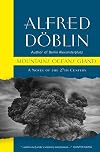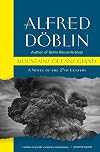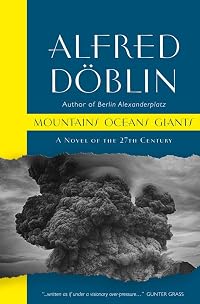
Mountains Oceans Giants: An Epic of the 27th Century
by Alfred Döblin
On This Page
Description
The 27th century: beleaguered elites decide to melt the Greenland icecap. Why? - to open up a new continent, for colonisation by the unruly masses. How? - by harvesting the primordial heat of the Earth from Iceland's volcanoes. Nature fights back, and it all goes horribly wrong...Tags
Recommendations






































Member Reviews
I came across [b:Mountains Oceans Giants|74452822|Mountains Oceans Giants|Alfred Döblin|https://i.gr-assets.com/images/S/compressed.photo.goodreads.com/books/1677902525l/74452822._SY75_.jpg|2004104] while browsing the library sci-fi section and was immediately intrigued by the idea of an epic Weimar Republic-era future history. From the blurb I learned it had only just been translated into English, almost exactly a hundred years after publication, and that 'it can be seen as a literary counterpart to the painted dreams and nightmares of Hieronymous Bosch.' Who could resist that? The future history concept is akin to H. G. Wells' [b:The Shape of Things to Come|29966|The Shape of Things to Come|H.G. show more Wells|https://i.gr-assets.com/images/S/compressed.photo.goodreads.com/books/1611101404l/29966._SY75_.jpg|1011738] or Olaf Stapledon's [b:The Last and First Men|25520137|The Last and First Men|Olaf Stapledon|https://i.gr-assets.com/images/S/compressed.photo.goodreads.com/books/1431332788l/25520137._SY75_.jpg|1631490]. The style and content, however, are entirely distinct and reminded me of much later works (including but not limited to Neon Genesis Evangelion). The pervasive apocalyptic gloom was akin to [b:The Purple Cloud|209525|The Purple Cloud|M.P. Shiel|https://i.gr-assets.com/images/S/compressed.photo.goodreads.com/books/1328817985l/209525._SY75_.jpg|923941] of twenty years earlier, but that is a much more of an individual Last Man narrative.
The tone of [b:Mountains Oceans Giants|74452822|Mountains Oceans Giants|Alfred Döblin|https://i.gr-assets.com/images/S/compressed.photo.goodreads.com/books/1677902525l/74452822._SY75_.jpg|2004104] is best described as delirious; there is a meandering narrative but little sustained attention to plot or characterisation. The most powerful passages are descriptions of nature, particularly geology. As the translator's note mentions, Döblin was heavily preoccupied with elemental forces. He was also prescient enough to foresee the environmental disasters that might result from humanity's attempts to control them. The style of writing and translation is more lyrical than I'm used to from the little 20th century German literature I've read. I enjoyed this, indeed it was the beauty of the writing that kept me going at times when actual events become turgid. For instance, this is perhaps the most poetic description of online advertising that I've come across:
This translation trick of listing multiple synonyms was also used in [b:Deep Wheel Orcadia|58320923|Deep Wheel Orcadia|Harry Josephine Giles|https://i.gr-assets.com/images/S/compressed.photo.goodreads.com/books/1634398669l/58320923._SX50_.jpg|91441976]; I liked the effect there and it worked well here too. The first half of [b:Mountains Oceans Giants|74452822|Mountains Oceans Giants|Alfred Döblin|https://i.gr-assets.com/images/S/compressed.photo.goodreads.com/books/1677902525l/74452822._SY75_.jpg|2004104] plays out concerns that were in the air during the 1920s: nationalism, eugenics, increasingly deadly weapons, industrialisation, racism, women's liberation, sexuality, self-destruction, and 'degeneration'. Where characters are evoked to lead and personify struggles around these issues, their interactions are so melodramatic and overwrought that it's hard to see them as more than mythic ciphers. This isn't really a novel about people as individuals, it's about people in aggregate and their interactions with the environment. I think the comparison with Bosch is apt, given the vivid and often horrible imagery that dominates the narrative. I have to wonder whether substances had any role in its composition, or perhaps Döblin was merely having a weird time.
I recently read [b:Regenesis: Feeding the World Without Devouring the Planet|58838928|Regenesis Feeding the World Without Devouring the Planet|George Monbiot|https://i.gr-assets.com/images/S/compressed.photo.goodreads.com/books/1647260230l/58838928._SY75_.jpg|93035508], in which George Monbiot argues that agriculture is destroying Earth's ecosystem and we need lab-based food production (among other measures) to save it. [b:Mountains Oceans Giants|74452822|Mountains Oceans Giants|Alfred Döblin|https://i.gr-assets.com/images/S/compressed.photo.goodreads.com/books/1677902525l/74452822._SY75_.jpg|2004104] includes just such a development, including this lovely passage:
However, in this vision of the future artificial food physically weakens the human race and ultimately there is a violent reaction against it. A movement of 'settlers' return to agriculture and destroy food factories. The legacy of the First World War hangs heavily over the book from the opening sentence: 'None were still living of those who came through the war they called the World War'. The accounts of subsequent pointless and confused wars could equally apply to WWI:
The apex of the book is a hubristic and disastrous act of terraforming: Iceland is destroyed in order to melt Greenland. This unleashes chaos and monsters. Döblin uses natural processes as extended similes for people, but also uses people as extended similes for nature. In this case, for the mountains of Iceland:
That epic analogy isn't entirely coherent, but it's certainly vivid and arresting. The descriptions of Greenland's glaciers formed my favourite passages in the whole book:
'As the motes sintered and froze...' is simply beguiling. Then some hubristic fools pick a fight with these glaciers and the whole world suffers. I appreciated such ecological fable aspects very much, but will not pretend that [b:Mountains Oceans Giants|74452822|Mountains Oceans Giants|Alfred Döblin|https://i.gr-assets.com/images/S/compressed.photo.goodreads.com/books/1677902525l/74452822._SY75_.jpg|2004104] is an easy book to read. It's long, despite being abridged by the translator, and took me a while to get into. The hectic power struggles of human beings are simply not as compelling as the environmental sequences. The latter half is focused on terraforming and its consequences, which I found much more involving. It's hard for me to say what the whole novel adds up to, though. The episodic structure weaves together anxieties of Weimar Germany and deeper conflicts between human industry and nature. While I came to appreciate the poetic writing and translation style, it takes some getting used to and occludes as much as it elucidates. I'm glad that I persisted with reading [b:Mountains Oceans Giants|74452822|Mountains Oceans Giants|Alfred Döblin|https://i.gr-assets.com/images/S/compressed.photo.goodreads.com/books/1677902525l/74452822._SY75_.jpg|2004104] as it was a unique experience, however I can only recommend it with cautions. After a fair bit of effort, it leaves you feeling rather befuddled. show less
The tone of [b:Mountains Oceans Giants|74452822|Mountains Oceans Giants|Alfred Döblin|https://i.gr-assets.com/images/S/compressed.photo.goodreads.com/books/1677902525l/74452822._SY75_.jpg|2004104] is best described as delirious; there is a meandering narrative but little sustained attention to plot or characterisation. The most powerful passages are descriptions of nature, particularly geology. As the translator's note mentions, Döblin was heavily preoccupied with elemental forces. He was also prescient enough to foresee the environmental disasters that might result from humanity's attempts to control them. The style of writing and translation is more lyrical than I'm used to from the little 20th century German literature I've read. I enjoyed this, indeed it was the beauty of the writing that kept me going at times when actual events become turgid. For instance, this is perhaps the most poetic description of online advertising that I've come across:
Messages were spread. In the townzones they had manmade magical devices that broadcast to every other place what people were up to, what they were talking about, how they were modifying their surroundings, what distinctive changes were in progress. Tele-pictures sent out images of people and objects. Any stimulus that stood out was a firestorm that grew from a spark to a flame to engulf a whole neighbourhood, a town. In distant lands, on mountainsides, along wide rushing rivers, on sultry tropical animal-teeming plains dwelled people who kept themselves to themselves. Stimuli words images reached them. Images were there before their eyes, appeared again and again, tugged at them. Told them to leave the river behind, come away from the cradling heat. Like a shovel under a pile of stones lying mossy on the ground, the blandishments scraped at the people, lifted them, scattered them.
This translation trick of listing multiple synonyms was also used in [b:Deep Wheel Orcadia|58320923|Deep Wheel Orcadia|Harry Josephine Giles|https://i.gr-assets.com/images/S/compressed.photo.goodreads.com/books/1634398669l/58320923._SX50_.jpg|91441976]; I liked the effect there and it worked well here too. The first half of [b:Mountains Oceans Giants|74452822|Mountains Oceans Giants|Alfred Döblin|https://i.gr-assets.com/images/S/compressed.photo.goodreads.com/books/1677902525l/74452822._SY75_.jpg|2004104] plays out concerns that were in the air during the 1920s: nationalism, eugenics, increasingly deadly weapons, industrialisation, racism, women's liberation, sexuality, self-destruction, and 'degeneration'. Where characters are evoked to lead and personify struggles around these issues, their interactions are so melodramatic and overwrought that it's hard to see them as more than mythic ciphers. This isn't really a novel about people as individuals, it's about people in aggregate and their interactions with the environment. I think the comparison with Bosch is apt, given the vivid and often horrible imagery that dominates the narrative. I have to wonder whether substances had any role in its composition, or perhaps Döblin was merely having a weird time.
I recently read [b:Regenesis: Feeding the World Without Devouring the Planet|58838928|Regenesis Feeding the World Without Devouring the Planet|George Monbiot|https://i.gr-assets.com/images/S/compressed.photo.goodreads.com/books/1647260230l/58838928._SY75_.jpg|93035508], in which George Monbiot argues that agriculture is destroying Earth's ecosystem and we need lab-based food production (among other measures) to save it. [b:Mountains Oceans Giants|74452822|Mountains Oceans Giants|Alfred Döblin|https://i.gr-assets.com/images/S/compressed.photo.goodreads.com/books/1677902525l/74452822._SY75_.jpg|2004104] includes just such a development, including this lovely passage:
Wild beasts had been shot, tawny lion panther. Termites had been expelled, streams diverted, huts built, solid houses, villages with dogs, sheds for hens geese cows. In southern zones were regions that had been cleared deforested only a century or two earlier. Northmen in their iron glory had come, had torn ripped throttled the land, devoured mangled chewed plants and roots. Stones buried in the soil had been lifted and dumped in rubble heaps. In the black bed left behind by the corpses of trees and plants, they had sown pale delicate seeds by the million. The ground welcomed these, the seeds pushed green tips above the surface. Wide green fields, dense forests of stalks, ears of grain waving gently in the breeze. There they lay, beside the barns sheds living quarters that now were emptying. People returned to the vast cities. They encysted themselves in the cities. Left most of the Earth to itself. The soil rested.
However, in this vision of the future artificial food physically weakens the human race and ultimately there is a violent reaction against it. A movement of 'settlers' return to agriculture and destroy food factories. The legacy of the First World War hangs heavily over the book from the opening sentence: 'None were still living of those who came through the war they called the World War'. The accounts of subsequent pointless and confused wars could equally apply to WWI:
Images of dead landscapes appeared in every waiting clamorous town. There was no attempt at concealment. No defeat was declared. Only: nothing had changed. Youngsters, men and women, the leaders, flags held high, had cried their power. Fire from the Earth, in human hands, blazing up to the stars: there it is on the Russian Plain, from the Urals to the Valdai hills. Ground torn up, rivers drained, people trees animals devoured. Horrible dead land. This was the work of the youngsters with their flags. Their achievement. This was the secret of the devices, the marvellous powers of Nature harnessed to their retorts. Those returning from the fleet told that these were no mere fables, what the technologists and experts said about the air-squalls water-squalls long-wave and short-wave radiation fiery explosions. But nothing could be done with it. People in the cities went about as before, grew flowers in greenhouses, enjoyed sport and circuses. What were you supposed to do? The young ruling men and women had failed. Their ridiculous flags. Let them tear up the earth, poison cities. If they want, they can destroy our western lands as well.
The apex of the book is a hubristic and disastrous act of terraforming: Iceland is destroyed in order to melt Greenland. This unleashes chaos and monsters. Döblin uses natural processes as extended similes for people, but also uses people as extended similes for nature. In this case, for the mountains of Iceland:
Like a people defeated and subjugated centuries before, its men and women scattered, their language banned, their tribe scorned, their customs held to ridicule; the men went as slaves into foreign service, let themselves be taken off to foreign wars. And some defected, shone among the foreigners who despised them. Like when young men and women, half-children, emerge covertly among such a people; angrily in private they confront the elders of their people and in secret rooms they say: we've had enough of cowardice, the appeasement that's fed to us, of being insulted and demeaned. They'd give their lives to wipe away the shame. And they go about, distribute leaflets, hold furtive meetings. A stir goes through the people, through every little family, through the young girls who must clean house for foreigners and fall prey to foreign men. And one day it's war. And one day the streets are empty. And one day a flag flies from the rooftops, a new flag. And processions fill the streets, rejoicing in a language - what language - the despised and now victorious language! Everyone weeps behind windows and in the streets. In this hour the dead of lost centuries stir in their graves, flutter in huge swarms to the living from their bare unmarked resting places, to join the jubilant procession. Thousands, thousands sing along, run ahead of the flags and hold the battle-streamers and kiss the muddy boots and caps of the young marchers.
Like these men and women and people, the rocks the mountain ranges the craters ridges the deathly silent ice-covered giant peaks were seized, gripped like a lock by the key, and had to yield. Followed thrumming, and around them everything exploded into light.
Loosened, great Dyngja Herðubreið Tögl Skjald-breiður.
That epic analogy isn't entirely coherent, but it's certainly vivid and arresting. The descriptions of Greenland's glaciers formed my favourite passages in the whole book:
Water had wedded itself to this swelling of the Earth at the North Pole; unlike the other continents water had not abandoned the land and withdrawn to the seas. It scrabbled hammered tore at primordial rock. Dropped swirling unceasing from dark and daylit air, snow, myriads of shimmering six-branched crystals stars motes, sprinkled pressed softly silently down on giant stolid domes peaks hollows. And as the motes sintered and froze they congealed, cemented together into greenish glacier ice that laid itself over the older ice sheet. And through its gaps new water flowed, froze again in the depths. The mountain of ice grew.
'As the motes sintered and froze...' is simply beguiling. Then some hubristic fools pick a fight with these glaciers and the whole world suffers. I appreciated such ecological fable aspects very much, but will not pretend that [b:Mountains Oceans Giants|74452822|Mountains Oceans Giants|Alfred Döblin|https://i.gr-assets.com/images/S/compressed.photo.goodreads.com/books/1677902525l/74452822._SY75_.jpg|2004104] is an easy book to read. It's long, despite being abridged by the translator, and took me a while to get into. The hectic power struggles of human beings are simply not as compelling as the environmental sequences. The latter half is focused on terraforming and its consequences, which I found much more involving. It's hard for me to say what the whole novel adds up to, though. The episodic structure weaves together anxieties of Weimar Germany and deeper conflicts between human industry and nature. While I came to appreciate the poetic writing and translation style, it takes some getting used to and occludes as much as it elucidates. I'm glad that I persisted with reading [b:Mountains Oceans Giants|74452822|Mountains Oceans Giants|Alfred Döblin|https://i.gr-assets.com/images/S/compressed.photo.goodreads.com/books/1677902525l/74452822._SY75_.jpg|2004104] as it was a unique experience, however I can only recommend it with cautions. After a fair bit of effort, it leaves you feeling rather befuddled. show less
Ratings
Members
- Recently Added By
Lists

Best Science Fiction Originally Published in a Language Other Than English
449 works; 34 members

Speculative Fiction from around the World
610 works; 18 members
Author Information

129+ Works 4,717 Members
Novelist, playwright, poet, essayist, Alfred Doblin was one of the most prolific writers of his time. He was also a practicing physician in Berlin's working-class district of Alexanderplatz. His novel of this name (1930) is considered his best work, and represents, in its montage technique, Doblin's experimental attitude toward prose writing. show more Doblin fled the Nazi regime in 1933 and lived for a while in the United States. Later, he became a French citizen and a convert to the Roman Catholic Church. (Bowker Author Biography) show less
Awards and Honors
Notable Lists
Series
Belongs to Publisher Series
Common Knowledge
- Canonical title*
- Горы, моря и гиганты
- Original title
- Berge Meere und Giganten
- Original publication date
- 1924
*Some information comes from Common Knowledge in other languages. Click "Edit" for more information.
Classifications
- Genres
- Fiction and Literature, Science Fiction
- DDC/MDS
- 830 — Literature & rhetoric German & related literatures German literature and literatures of related languages
- LCC
- PT2607 .O35 .B4 — Language and Literature German, Dutch and Scandinavian literatures German literature Individual authors or works 1860/70-1960
- BISAC
Statistics
- Members
- 70
- Popularity
- 449,704
- Reviews
- 1
- Rating
- (3.50)
- Languages
- English, French, German, Russian
- Media
- Paper, Ebook
- ISBNs
- 11
- ASINs
- 5