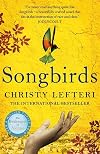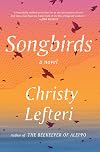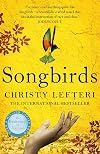
Songbirds: A Novel
by Christy Lefteri
On This Page
Description
"From the prize-winning author of The Beekeeper of Aleppo, a stunning novel about the disappearance of a Sri Lankan nanny and how the most vulnerable people find their voices. "It began with a crunch of leaves and earth. So early, so cold, the branches shone with ice. I'd returned to collect the songbirds. They are worth more than their weight in gold." Yiannis is a poacher, trapping the tiny protected songbirds that stop in Cyprus as they migrate each year from Africa to Europe and selling show more them on the black market. He dreams of finding a new way of life, and of marrying Nisha, who works on the island as a nanny and maid--having left her native Sri Lanka to try to earn enough to support her daughter, left behind and raised by relatives. But Nisha has vanished; one evening, she steps out on a mysterious errand and doesn't return. The police write off her disappearance as just another runaway domestic worker, so her employer, Petra, undertakes the investigation. Petra's unravelling of Nisha's last days in Cyprus lead her to Nisha's friends--other maids in the neighborhood--and to the darker side of a migrant's life, where impossible choices leave them vulnerable, captive, and worse. Based on the real-life disappearance of domestic workers in Cyprus, Christy Lefteri has crafted a poignant, deeply empathetic narrative of the human stories behind the headlines. With infinite tenderness and skill, Songbirds offers a triumphant story of the fight for truth and justice, and of women reclaiming their lost voices"-- show lessTags
Recommendations

























Member Reviews
2023 Advent, Day 20: his book was beautifully written and had a wonderful theme about how we often get caught up in our own lives to the detriment of being able to connect with other human beings about theirs, particularly when others are different from us. The story follows a wealthy widow woman as she tries to track down what happened to her missing migrant maid and along the way gets to know who her maid really is, more so than she did during the years and years of service prior.
I would have given this book a very high score and considered it a great book. But the ending just seemed very abrupt, unsatisfying and unhappy. This book does not end in good way from either an emotional or narrative perspective. This is intentional because show more the book is based on a true occurrence of migrant women being targeted by a serial killer. True life sometimes does not have a happily ever after and apparently that means this book doesn't. show less
I would have given this book a very high score and considered it a great book. But the ending just seemed very abrupt, unsatisfying and unhappy. This book does not end in good way from either an emotional or narrative perspective. This is intentional because show more the book is based on a true occurrence of migrant women being targeted by a serial killer. True life sometimes does not have a happily ever after and apparently that means this book doesn't. show less
An excellent but tragic story, inspired by real events in Cyprus. Christy Leferi carried out extensive research, including around events when five female migrant workers were murdered and the police took no action to investigate. These women were not Cypriots and were dismissed as less than people.
Nisha is the focus of the story but from the beginning she has gone missing on a Sunday night and the narrative is told by two characters, Petra and Yiannis, who have alternating chapters. From Sri Lanka, Nisha has left a young daughter at home with her grandmother. This is an excellent story but Christy Leferi also tackles a number of issues, including the affordability of live-in maids in Cyprus and the assumption by many in Cyprus that show more mothers who leave their children don't really care about them. Nisha's boss Petra and Yiannis, her partner, work separately to find out what has happened to Nisha.
Alongside this story of women being almost disposable are the song birds of Cyprus. These are caught in thousands, illegally, and eaten and Yiannis is involved in catching, killing and distributing the birds. There are parallels between the two stories. The catching and killing of these mostly migrant birds seems to go on with only a small fear of being caught up by the law. They are eaten in restaurants.
The two stories also run in parallel as the story shows how an attachment with an individual highlights societies cruelty. Yiannis and Petra both care about Nisha and Yiannis takes on the care of a bird injured in the catch but alive.
Among the chapters from Yiannis and Petra are short chapters about decomposition, as a dead hare returns to the ground. This is well done as a stand-in for the a human body.
An excellent read that kept me gripped and is beautifully written and interesting. show less
Nisha is the focus of the story but from the beginning she has gone missing on a Sunday night and the narrative is told by two characters, Petra and Yiannis, who have alternating chapters. From Sri Lanka, Nisha has left a young daughter at home with her grandmother. This is an excellent story but Christy Leferi also tackles a number of issues, including the affordability of live-in maids in Cyprus and the assumption by many in Cyprus that show more mothers who leave their children don't really care about them. Nisha's boss Petra and Yiannis, her partner, work separately to find out what has happened to Nisha.
Alongside this story of women being almost disposable are the song birds of Cyprus. These are caught in thousands, illegally, and eaten and Yiannis is involved in catching, killing and distributing the birds. There are parallels between the two stories. The catching and killing of these mostly migrant birds seems to go on with only a small fear of being caught up by the law. They are eaten in restaurants.
The two stories also run in parallel as the story shows how an attachment with an individual highlights societies cruelty. Yiannis and Petra both care about Nisha and Yiannis takes on the care of a bird injured in the catch but alive.
Among the chapters from Yiannis and Petra are short chapters about decomposition, as a dead hare returns to the ground. This is well done as a stand-in for the a human body.
An excellent read that kept me gripped and is beautifully written and interesting. show less
Set in Cyprus after the civil war, Nisha is the maid and nanny to Petra and her daughter, Aliki. She is also the lover of Yiannis, Petra's tenant in the upstairs apartment. The story of Nisha and her disappearance is told in alternating narratives between Yiannis, Petra, and an omniscient voice. The first chapter is Yiannis who foreshadows Nisha's disappearance: "One day Nisha vanished and turned to gold."
Through subsequent chapters we learn that Nisha is a widow with a daughter and mother-in-law in Sri Lanka whom she has been supporting for the past 9 years through her meager wages as a maid. This came about because the family was destitute after her husband's death in a mining accident.
Petra is also a widow whose husband died shortly show more before Aliki's birth, but as an optician she is able to procure Nisha as a foreign domestic worker through an agency that essentially bonds the workers, keeping them in debt. Upon Nisha's disappearance, Petra comes to realize how little she knew of Petra and how much she had taken her for granted. Much of the information she learns is through Aliki, who was more attached to Nisha than her mother, Petra. Which spurs Petra to investigate further into Nisha's disappearance.
The oppressive plight of foreign domestic workers is the major theme in this book. The title Songbirds uses Yiannis' participation in illegally poaching songbirds in mist nets as a metaphor for the traps the foreign domestic workers find themselves in.
It's a heartbreaking story that sheds light on how the privileged benefit from those with less power and privilege and how this is systemic in our society. There are also themes of love and loss, freedom and entrapment, and the importance of community. show less
Through subsequent chapters we learn that Nisha is a widow with a daughter and mother-in-law in Sri Lanka whom she has been supporting for the past 9 years through her meager wages as a maid. This came about because the family was destitute after her husband's death in a mining accident.
Petra is also a widow whose husband died shortly show more before Aliki's birth, but as an optician she is able to procure Nisha as a foreign domestic worker through an agency that essentially bonds the workers, keeping them in debt. Upon Nisha's disappearance, Petra comes to realize how little she knew of Petra and how much she had taken her for granted. Much of the information she learns is through Aliki, who was more attached to Nisha than her mother, Petra. Which spurs Petra to investigate further into Nisha's disappearance.
The oppressive plight of foreign domestic workers is the major theme in this book. The title Songbirds uses Yiannis' participation in illegally poaching songbirds in mist nets as a metaphor for the traps the foreign domestic workers find themselves in.
It's a heartbreaking story that sheds light on how the privileged benefit from those with less power and privilege and how this is systemic in our society. There are also themes of love and loss, freedom and entrapment, and the importance of community. show less
Once again this author has chosen a topic we know or hear little of in the southern hemisphere.
Nisha, a Sri Lankan widow, has no option other than to seek employment as a domestic servant in Cyprus. It means she must leave her beloved daughter in the care of her mother and miss Kumari's childhood years but she wishes to fulfill her dream of sending Kumari to university, to create a better life.
She is fortunate to be placed with another widow, Petra,heavily pregnant with her first child. Nisha forms a strong bond with baby Aliki, as Petra is still grieving for her husband. Petra returns to work full time as an optician to support her household.
Upstairs lives Yiannis, who has lost his bank job, his home and his wife. He survives by show more illegal poaching of songbirds for the black market. He and Nisha have fallen in love and one day he proposes marriage. He has to reveal to Nisha his means of income, to prove that he can support her and her daughter and mother financially. Nisha is disappointed and asks him to stop. The following day Nisha disappears from their lives. The police are not interested and believe she has left of her own choice. Neither Petra nor Yiannis accept this and together they seek answers to her disappearance.
The book was inspired by the real life disappearance of several domestic workers in Cyprus. These migrants feel invisible as they have no status and often find themselves placed in abusive situations, heavily indebted to their agents.
The author brings to life these women, gives them a voice and tells their story for them. I was planning to search online but the in depth author's notes at the conclusion of the story made this unnecessary. It is a poignant tale which caused this reader to shed a tear.
UpstairsTen years pass and show less
Nisha, a Sri Lankan widow, has no option other than to seek employment as a domestic servant in Cyprus. It means she must leave her beloved daughter in the care of her mother and miss Kumari's childhood years but she wishes to fulfill her dream of sending Kumari to university, to create a better life.
She is fortunate to be placed with another widow, Petra,heavily pregnant with her first child. Nisha forms a strong bond with baby Aliki, as Petra is still grieving for her husband. Petra returns to work full time as an optician to support her household.
Upstairs lives Yiannis, who has lost his bank job, his home and his wife. He survives by show more illegal poaching of songbirds for the black market. He and Nisha have fallen in love and one day he proposes marriage. He has to reveal to Nisha his means of income, to prove that he can support her and her daughter and mother financially. Nisha is disappointed and asks him to stop. The following day Nisha disappears from their lives. The police are not interested and believe she has left of her own choice. Neither Petra nor Yiannis accept this and together they seek answers to her disappearance.
The book was inspired by the real life disappearance of several domestic workers in Cyprus. These migrants feel invisible as they have no status and often find themselves placed in abusive situations, heavily indebted to their agents.
The author brings to life these women, gives them a voice and tells their story for them. I was planning to search online but the in depth author's notes at the conclusion of the story made this unnecessary. It is a poignant tale which caused this reader to shed a tear.
UpstairsTen years pass and show less
“One day, Nisha vanished and turned to gold.”
Working all hours God sends yet still unable to survive, Nisha is forced to leave her mother, baby daughter and Sri Lanka behind when she accepts a job in Cyprus as a maid and nanny through an agency for migrant domestic workers. 9 years later she disappears into thin air.
I love how Nisha is brought to life through the recollections of Petra, her employer and single working mother, and Yiannis, her lover and songbird poacher, in alternating chapters as they question both those close to her and themselves in their quest to find her.
The descriptions of the Cypriot landscape, lime sticks and mist nets, gem mines and street stalls and the diverse neighbourhood in divided Nicosia are sublime.
show more The soul-wrenching stories within stories of freedom and entrapment, motherhood and love, suffering and loss, what ifs and if onlys are inspired.
The inhumane treatment of migrant domestic workers is an underlying theme throughout the novel and the author’s closing letter emphasises the reality of this widespread discrimination.
Hauntingly sad and beautifully written Songbirds left me with feelings of hope and resolution and … Christine McVie’s Songbird playing in my head. show less
Working all hours God sends yet still unable to survive, Nisha is forced to leave her mother, baby daughter and Sri Lanka behind when she accepts a job in Cyprus as a maid and nanny through an agency for migrant domestic workers. 9 years later she disappears into thin air.
I love how Nisha is brought to life through the recollections of Petra, her employer and single working mother, and Yiannis, her lover and songbird poacher, in alternating chapters as they question both those close to her and themselves in their quest to find her.
The descriptions of the Cypriot landscape, lime sticks and mist nets, gem mines and street stalls and the diverse neighbourhood in divided Nicosia are sublime.
show more The soul-wrenching stories within stories of freedom and entrapment, motherhood and love, suffering and loss, what ifs and if onlys are inspired.
The inhumane treatment of migrant domestic workers is an underlying theme throughout the novel and the author’s closing letter emphasises the reality of this widespread discrimination.
Hauntingly sad and beautifully written Songbirds left me with feelings of hope and resolution and … Christine McVie’s Songbird playing in my head. show less
Publisher’s synopsis:
Nisha has crossed oceans to give her child a future. By day she cares for Petra's daughter; at night she mothers her own little girl by the light of a phone. Nisha's lover, Yiannis, is a poacher, hunting the tiny songbirds on their way to Africa each winter. His dreams of a new life, and of marrying Nisha, are shattered when she vanishes. No one cares about the disappearance of a domestic worker, except Petra and Yiannis. As they set out to search for her, they realise how little they know about Nisha. What they uncover will change them all.
This moving and deeply disturbing story is told through the alternating voices of Petra and Yiannis as they attempt to uncover the mystery behind Nisha’s sudden, mysterious show more disappearance. As the story begins it’s clear that both are shocked and upset by it but initially their motivations for trying to find her felt very different. Whilst Yiannis’s sprang from his deeply-felt emotional attachment to his lover, Petra’s appeared to be rooted in feeling inconvenienced because she was used to relying on Nisha to care for Aliki, her nine year old daughter, and to keep the house running smoothly whilst Petra worked full time. It quickly became clear that she knew very little about Nisha’s personal life and it was only after she had gone missing that, through the eyes of Aliki, who was feeling bereft by her the disappearance of her beloved nanny, Petra began to fully ‘see’ her. Consequently, to begin with I found it almost impossible to feel other than critical of her, not only because it was clear that she had never developed a strong maternal bond with her own daughter, but because her self-absorption meant she had no idea that Yiannis and Nisha had become lovers, even though he was a tenant in an apartment in her house. However, the gradual revelations about her own history enabled me to make sense of her lack of emotional engagement and, as she began to gain insight and recognise her previous lack of empathy with Nisha, I found myself becoming more forgiving!
Through Nisha the author explored some of the realities of economic migration and the personal sacrifices made by people who feel forced to leave loved ones behind in order to better provide for them. In order to escape extreme poverty in Sri Lanka, widowed Nisha had left her two year old daughter Kumari with her own mother and, through an agency, had been placed with heavily pregnant, newly widowed Petra. When the story begins she has been living in Nicosia for nine years, lovingly devoting herself to Aliki and Petra during her long working days whilst, through nightly contact via her phone or Yiannis’s i-Pad, maintaining a loving, parental relationship with her own daughter Although able to send some money home, she knows she has no hope of returning to her daughter until she’s repaid the €10,000 fee the agency charged to place her.
Yiannis’s story was also one of being caught in a cycle of debt. He’d had a successful career as a banker until the 2008 financial crash led to him losing his job, all his savings, his house and his wife. He turned to foraging for wild foods which he then sold to restaurants. However, that barely paid his bills and he became involved in a highly lucrative poaching ring, illegally trapping thousands of tiny songbirds as they followed their migration routes. As gourmet delicacies these birds attracted a high price on the black market so his financial situation began to improve. However, when the personal cost becomes too great and he tries to break free of the criminal ring, he discovers he is as trapped as the birds he poaches. His descriptions of the methods he and his fellow poachers used to trap the birds were disturbingly graphic, to such an extent that there were moments when I could hardly bear to continue reading about this level of cruelty and blatant disregard for sentient creatures.
Christy Lefteri’s inspiration for this novel had its roots in a real life case in Cyprus, where five foreign domestic workers and two children had gone missing. When the women were reported missing, because they were foreign, the police did nothing to investigate their disappearance, the assumption being that they had simply moved on. However, it was later discovered that all had been murdered. The author says she ‘felt so saddened by the inhumanity and injustice of this. I felt compelled to shine a light on this situation and the deeply rooted institutionalised racism that prevented the police from launching a search party.’ I think she has succeeded in her aim because she has reminded me of how shocked and angry I felt in 2019 as I followed the unfolding story in the newspapers. Although her novel isn’t directly about that real-life case, reading it not only reignited those original feelings of outrage but has made me think much more deeply about the attitudes and practices which enable such casual disregard for our fellow human beings, just as it reminded me of the disgust I feel about the abhorrent practice of netting migratory birds.
Christy Lefteri’s rather lyrical narrative style and her highly evocative descriptions of the flora, fauna and landscape of Cyprus, could have belied the dark seriousness of the subject matter. However, this was far from the case because I truly can’t recall ever having read a novel which has kept me in an almost perpetual state of anger, outrage and disgust at the injustices being described. As these feelings had already been triggered by the end of page three, it’s clear that the author has an admirable capacity for making her words pack a powerful punch. Not only did she create convincing main characters to convey her impassioned themes, but her portrayals of the more minor ones were equally impressive. It is through the eyes of each of these characters that the reader gradually gets to ‘see’ Nisha but it isn’t until the final couple of pages of the story that she’s given her own voice. Although this could have felt frustrating, I think it was a masterly decision on the part of the author because it’s Nisha’s words which pull so many of the story’s thought-provoking themes together. Although so many of these are disturbing, frequently making the story feel hauntingly sad, it is also a story of forgiveness, redemption and the power of love. It would make an excellent choice for reading groups.
With thanks to the publisher and Readers First for a copy in exchange for an honest review. show less
Nisha has crossed oceans to give her child a future. By day she cares for Petra's daughter; at night she mothers her own little girl by the light of a phone. Nisha's lover, Yiannis, is a poacher, hunting the tiny songbirds on their way to Africa each winter. His dreams of a new life, and of marrying Nisha, are shattered when she vanishes. No one cares about the disappearance of a domestic worker, except Petra and Yiannis. As they set out to search for her, they realise how little they know about Nisha. What they uncover will change them all.
This moving and deeply disturbing story is told through the alternating voices of Petra and Yiannis as they attempt to uncover the mystery behind Nisha’s sudden, mysterious show more disappearance. As the story begins it’s clear that both are shocked and upset by it but initially their motivations for trying to find her felt very different. Whilst Yiannis’s sprang from his deeply-felt emotional attachment to his lover, Petra’s appeared to be rooted in feeling inconvenienced because she was used to relying on Nisha to care for Aliki, her nine year old daughter, and to keep the house running smoothly whilst Petra worked full time. It quickly became clear that she knew very little about Nisha’s personal life and it was only after she had gone missing that, through the eyes of Aliki, who was feeling bereft by her the disappearance of her beloved nanny, Petra began to fully ‘see’ her. Consequently, to begin with I found it almost impossible to feel other than critical of her, not only because it was clear that she had never developed a strong maternal bond with her own daughter, but because her self-absorption meant she had no idea that Yiannis and Nisha had become lovers, even though he was a tenant in an apartment in her house. However, the gradual revelations about her own history enabled me to make sense of her lack of emotional engagement and, as she began to gain insight and recognise her previous lack of empathy with Nisha, I found myself becoming more forgiving!
Through Nisha the author explored some of the realities of economic migration and the personal sacrifices made by people who feel forced to leave loved ones behind in order to better provide for them. In order to escape extreme poverty in Sri Lanka, widowed Nisha had left her two year old daughter Kumari with her own mother and, through an agency, had been placed with heavily pregnant, newly widowed Petra. When the story begins she has been living in Nicosia for nine years, lovingly devoting herself to Aliki and Petra during her long working days whilst, through nightly contact via her phone or Yiannis’s i-Pad, maintaining a loving, parental relationship with her own daughter Although able to send some money home, she knows she has no hope of returning to her daughter until she’s repaid the €10,000 fee the agency charged to place her.
Yiannis’s story was also one of being caught in a cycle of debt. He’d had a successful career as a banker until the 2008 financial crash led to him losing his job, all his savings, his house and his wife. He turned to foraging for wild foods which he then sold to restaurants. However, that barely paid his bills and he became involved in a highly lucrative poaching ring, illegally trapping thousands of tiny songbirds as they followed their migration routes. As gourmet delicacies these birds attracted a high price on the black market so his financial situation began to improve. However, when the personal cost becomes too great and he tries to break free of the criminal ring, he discovers he is as trapped as the birds he poaches. His descriptions of the methods he and his fellow poachers used to trap the birds were disturbingly graphic, to such an extent that there were moments when I could hardly bear to continue reading about this level of cruelty and blatant disregard for sentient creatures.
Christy Lefteri’s inspiration for this novel had its roots in a real life case in Cyprus, where five foreign domestic workers and two children had gone missing. When the women were reported missing, because they were foreign, the police did nothing to investigate their disappearance, the assumption being that they had simply moved on. However, it was later discovered that all had been murdered. The author says she ‘felt so saddened by the inhumanity and injustice of this. I felt compelled to shine a light on this situation and the deeply rooted institutionalised racism that prevented the police from launching a search party.’ I think she has succeeded in her aim because she has reminded me of how shocked and angry I felt in 2019 as I followed the unfolding story in the newspapers. Although her novel isn’t directly about that real-life case, reading it not only reignited those original feelings of outrage but has made me think much more deeply about the attitudes and practices which enable such casual disregard for our fellow human beings, just as it reminded me of the disgust I feel about the abhorrent practice of netting migratory birds.
Christy Lefteri’s rather lyrical narrative style and her highly evocative descriptions of the flora, fauna and landscape of Cyprus, could have belied the dark seriousness of the subject matter. However, this was far from the case because I truly can’t recall ever having read a novel which has kept me in an almost perpetual state of anger, outrage and disgust at the injustices being described. As these feelings had already been triggered by the end of page three, it’s clear that the author has an admirable capacity for making her words pack a powerful punch. Not only did she create convincing main characters to convey her impassioned themes, but her portrayals of the more minor ones were equally impressive. It is through the eyes of each of these characters that the reader gradually gets to ‘see’ Nisha but it isn’t until the final couple of pages of the story that she’s given her own voice. Although this could have felt frustrating, I think it was a masterly decision on the part of the author because it’s Nisha’s words which pull so many of the story’s thought-provoking themes together. Although so many of these are disturbing, frequently making the story feel hauntingly sad, it is also a story of forgiveness, redemption and the power of love. It would make an excellent choice for reading groups.
With thanks to the publisher and Readers First for a copy in exchange for an honest review. show less
Nisha has travelled across oceans to work as a domestic servant in order to give her daughter a chance of an education. She has been lucky, working in Cyprus, with an employer who treats her well. One Sunday Nisha disappears but the police aren't interested, she is a migrant worker, she is not important. However to Yannis, her lover and Petra, her employer, Nisha is important, and to Nisha's family in Sri Lanka she is a lifeline. Angered by the attitude of the authorities Yannis and Petra start to investigate.
Although the outcome of the story is inevitable, the telling is wonderful. The analogy of the migrant workers and the trapped birds is not overplayed and there is such a gentle tone to the book that it is all too easy to forget the show more harsh realities that are alluded too. This is powerful writing with a strong message yet it is also a wonderful read and a rare thing show less
Although the outcome of the story is inevitable, the telling is wonderful. The analogy of the migrant workers and the trapped birds is not overplayed and there is such a gentle tone to the book that it is all too easy to forget the show more harsh realities that are alluded too. This is powerful writing with a strong message yet it is also a wonderful read and a rare thing show less
Members
- Recently Added By
Lists

Fiction: Crime, Detective, Mystery
350 works; 3 members

Fiction: Asia
85 works; 2 members
Author Information

8 Works 2,741 Members
Some Editions
Common Knowledge
- Canonical title*
- Zangvogels
- Original title
- Songbirds
- Important places
- Cyprus
*Some information comes from Common Knowledge in other languages. Click "Edit" for more information.
Classifications
Statistics
- Members
- 443
- Popularity
- 68,959
- Reviews
- 23
- Rating
- (4.02)
- Languages
- 6 — Dutch, English, French, German, Italian, Swedish
- Media
- Paper, Audiobook, Ebook
- ISBNs
- 26
- ASINs
- 5