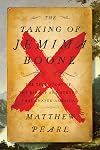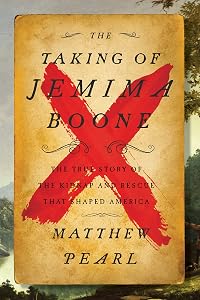
The Taking of Jemima Boone: Colonial Settlers, Tribal Nations, and the Kidnap That Shaped America
by Matthew Pearl 
On This Page
Description
In his first work of narrative nonfiction, Matthew Pearl, bestselling author of acclaimed novel The Dante Club, explores the little-known true story of the kidnapping of legendary pioneer Daniel Boone's daughter and the dramatic aftermath that rippled across the nation.On a quiet midsummer day in 1776, weeks after the signing of the Declaration of Independence, thirteen-year-old Jemima Boone and her friends Betsy and Fanny Callaway disappear near the Kentucky settlement of Boonesboro, the show more echoes of their faraway screams lingering on the air.
A Cherokee-Shawnee raiding party has taken the girls as the latest salvo in the blood feud between American Indians and the colonial settlers who have decimated native lands and resources. Hanging Maw, the raiders' leader, recognizes one of the captives as Jemima Boone, daughter of Kentucky's most influential pioneers, and realizes she could be a valuable pawn in the battle to drive the colonists out of the contested Kentucky territory for good.
With Daniel Boone and his posse in pursuit, Hanging Maw devises a plan that could ultimately bring greater peace both to the tribes and the colonists. But after the girls find clever ways to create a trail of clues, the raiding party is ambushed by Boone and the rescuers in a battle with reverberations that nobody could predict. As Matthew Pearl reveals, the exciting story of Jemima Boone's kidnapping vividly illuminates the early days of America's westward expansion, and the violent and tragic clashes across cultural lines that ensue.
In this enthralling narrative in the tradition of Candice Millard and David Grann, Matthew Pearl unearths a forgotten and dramatic series of events from early in the Revolutionary War that opens a window into America's transition from colony to nation, with the heavy moral costs incurred amid shocking new alliances and betrayals.
Supplemental enhancement PDF accompanies the audiobook.
. show less
Tags
Recommendations





























Member Reviews
The Taking of Jemima Boone by Matthew Pearl opens by examining the incident in 1776 where a daughter of Daniel Boone and two of her friends are captured by a group of Cherokee and Shawnee Indians. This was more than just three young girls being kidnapped because of who these girls were related to. When the Indians asked if the girls were sisters, Jemima said yes, thinking that there could be an advantage to having the Indians think that all three were related to the famous Boone.
The frontier unrest was due to the settlers pushing into Kentucky, which was considered sacred ground to a number of Indian tribes. The Indians could see their land was being whittled away as once the white people claimed the land, they immediately drove the show more Indians out. There were atrocities committed by both sides and the bitterness between white and Indian had been going on for years. This was at the time of the Revolutionary War and Daniel Boone was an important person on the frontier. He personally led a group to make the first settlement in Kentucky, and had the respect of other pioneers and the ear of important people in Washington. Hanging Maw, the leader of the raiding party, was pleased with this capture as he felt they could use these girls as leverage. His plan backfired, however, as Boone and his men caught up to the Indians, rescued the girls and killed a couple of the Indians. One of the Indians killed was the son of the famous war chief, Blackfish, and so the back and forth animosity continued on.
The author uses this incident to launch his account of how Daniel Boone, his fort entitled Boonesboro and the rest of the frontier settlements survived the next few years when they were fighting not only the Indians but the British who saw these frontiers as easy targets. Diplomacy and peace talks were thrown out and paranoia ran deep on all sides. The Taking of Jemima Boone is written in a knowledgeable and interesting manner. The author obviously did a lot of research and presents his facts in an engrossing manner which made for an exciting read. show less
The frontier unrest was due to the settlers pushing into Kentucky, which was considered sacred ground to a number of Indian tribes. The Indians could see their land was being whittled away as once the white people claimed the land, they immediately drove the show more Indians out. There were atrocities committed by both sides and the bitterness between white and Indian had been going on for years. This was at the time of the Revolutionary War and Daniel Boone was an important person on the frontier. He personally led a group to make the first settlement in Kentucky, and had the respect of other pioneers and the ear of important people in Washington. Hanging Maw, the leader of the raiding party, was pleased with this capture as he felt they could use these girls as leverage. His plan backfired, however, as Boone and his men caught up to the Indians, rescued the girls and killed a couple of the Indians. One of the Indians killed was the son of the famous war chief, Blackfish, and so the back and forth animosity continued on.
The author uses this incident to launch his account of how Daniel Boone, his fort entitled Boonesboro and the rest of the frontier settlements survived the next few years when they were fighting not only the Indians but the British who saw these frontiers as easy targets. Diplomacy and peace talks were thrown out and paranoia ran deep on all sides. The Taking of Jemima Boone is written in a knowledgeable and interesting manner. The author obviously did a lot of research and presents his facts in an engrossing manner which made for an exciting read. show less
A well written and easy reading account of the abduction of Daniel Boone's daughter and subsequent siege of Boonesboro. The author is not a specialist, hence many of his conclusions are at best speculative. Still, the storyline is presented in an interesting way that will appeal to readers.
One cannot generalize when it comes to the positions taken by the colonists, or the British and their Native American allies. All ultimately did what they believed served their best interests.
Nonetheless, the author inexplicably applies an apologetic gloss to Native American behavior and comes to some surprisingly unsubstantiated conclusions. One of the most glaring was his opinion that Shawnee chief Blackfish's goal in the siege of Boonesborough was show more to create a union of colonists and Native Americans living in peace and harmony. The record as to Blackfish is incredibly sparse, hence this is far more about the author's ideology than history. show less
One cannot generalize when it comes to the positions taken by the colonists, or the British and their Native American allies. All ultimately did what they believed served their best interests.
Nonetheless, the author inexplicably applies an apologetic gloss to Native American behavior and comes to some surprisingly unsubstantiated conclusions. One of the most glaring was his opinion that Shawnee chief Blackfish's goal in the siege of Boonesborough was show more to create a union of colonists and Native Americans living in peace and harmony. The record as to Blackfish is incredibly sparse, hence this is far more about the author's ideology than history. show less
In 1764, my sixth-great-grandparents were murdered and scalped. The story is told how eight natives led by a white man came into the Shenandoah Valley to rob settlers, who were Swiss Brethren. After they killed my ancestors, the raiders pursued the children, killing one in a pear tree, another in the middle of Tom’s Brook, and kidnapping three (or four). Of those kidnapped, the youngest boy, who was ill, and the girl(s), were killed because they could not keep up. The oldest child, Michael, was taken to Ohio where he lived with the natives for three years before he was returned in a prisoner exchange.
My ancestor’s experiences were not unique. Thousands of colonists were attacked and taken. Hundreds assimilated into native culture. show more Some escaped and other were traded back to the colonists. But, it was news to me to learn that Daniel Boone’s daughter had been captured by natives, and that Boone himself had been taken and adopted as the son of a chief.
The Taking of Jemima Boone is the first book of narrative nonfiction by Matthew Pearl. I have enjoyed his historical mystery novels with literary themes. Now, I can attest that Pearl’s nonfiction is just as entertaining and just as riveting.
The capture of Jemima Boone and how her father and others tracked and battled the kidnappers, killing several, began a cycle of revenge. One of the natives Boone killed was the son of a chief who in a later battle took Boone hostage and adopted him as his son. The father of one of the other kidnapped girls vied for control of Boonesboro, later telling a false narrative of the rescue and even accusing Boone of treason.
Boone bonded with his native family, who forgave him when he finally escaped; they understood his desire to see his family, and hoped he would return with them. Boone’s ability to find non-violent ways of solving problems and his connection with the natives is impressive, especially when most colonists preferred immediate, violent action when it came to the natives.
Settlers encroached on native hunting grounds, often illegally according to treaties between the British and the native tribes. But the colonists were also breaking away from Britain and the tribes had to take sides. The Shawnees, Seneca, Cherokee, and other tribes allied with the British, entrenched in their stronghold at Ft. Detroit, and were tasked to destroy Boonesboro, which threatened to allow colonists a western stronghold.
In the book I met Simon Girty, a colonist who, along with his brothers, was kidnapped by natives when a teenager. He became an interpreter, his alliance shifting to the British during the war, which gave him a dreadful reputation. Some histories claim he was the one who led the murder of my ancestors. But, in 1764, Girty had just been released from captivity and reunited with his mother and brothers.
Boone was taken captive along with 28 fellow Boonesboro men on a salt-making expedition. He argued that he and his men be kept alive as war prisoners. Simon Girty’s brothers were there and voted for mercy, “a stance contradicting the notorious, near-demonic reputation the Girtys had developed among settlers.” Simon Girty was unable to save another white man who was brutally tortured and killed.
Boone not only had to content with the British and the native tribes wanting to destroy Boonesboro, internal conflicts between him and other settlers simmered and brewed. Boone’s leadership was under attack on all sides.
Pearl’s book is a wonderful narrative history. The personal stories of Jemima and Daniel Boone are the backbone of the book, a way for readers to connect to the history.
I received a free egalley from the publisher though NetGalley. My review is fair and unbiased. show less
My ancestor’s experiences were not unique. Thousands of colonists were attacked and taken. Hundreds assimilated into native culture. show more Some escaped and other were traded back to the colonists. But, it was news to me to learn that Daniel Boone’s daughter had been captured by natives, and that Boone himself had been taken and adopted as the son of a chief.
The Taking of Jemima Boone is the first book of narrative nonfiction by Matthew Pearl. I have enjoyed his historical mystery novels with literary themes. Now, I can attest that Pearl’s nonfiction is just as entertaining and just as riveting.
The capture of Jemima Boone and how her father and others tracked and battled the kidnappers, killing several, began a cycle of revenge. One of the natives Boone killed was the son of a chief who in a later battle took Boone hostage and adopted him as his son. The father of one of the other kidnapped girls vied for control of Boonesboro, later telling a false narrative of the rescue and even accusing Boone of treason.
Boone bonded with his native family, who forgave him when he finally escaped; they understood his desire to see his family, and hoped he would return with them. Boone’s ability to find non-violent ways of solving problems and his connection with the natives is impressive, especially when most colonists preferred immediate, violent action when it came to the natives.
Settlers encroached on native hunting grounds, often illegally according to treaties between the British and the native tribes. But the colonists were also breaking away from Britain and the tribes had to take sides. The Shawnees, Seneca, Cherokee, and other tribes allied with the British, entrenched in their stronghold at Ft. Detroit, and were tasked to destroy Boonesboro, which threatened to allow colonists a western stronghold.
In the book I met Simon Girty, a colonist who, along with his brothers, was kidnapped by natives when a teenager. He became an interpreter, his alliance shifting to the British during the war, which gave him a dreadful reputation. Some histories claim he was the one who led the murder of my ancestors. But, in 1764, Girty had just been released from captivity and reunited with his mother and brothers.
Boone was taken captive along with 28 fellow Boonesboro men on a salt-making expedition. He argued that he and his men be kept alive as war prisoners. Simon Girty’s brothers were there and voted for mercy, “a stance contradicting the notorious, near-demonic reputation the Girtys had developed among settlers.” Simon Girty was unable to save another white man who was brutally tortured and killed.
Boone not only had to content with the British and the native tribes wanting to destroy Boonesboro, internal conflicts between him and other settlers simmered and brewed. Boone’s leadership was under attack on all sides.
Pearl’s book is a wonderful narrative history. The personal stories of Jemima and Daniel Boone are the backbone of the book, a way for readers to connect to the history.
I received a free egalley from the publisher though NetGalley. My review is fair and unbiased. show less
This is a first rate story very well written, and from first rate research. The title falls a bit short in that much of the book's emphasis is actually on Jemima's father, Daniel Boone, a fascinating real life character in the history of the young United States. I have an in law that is a documented direct descendant of Daniel Boone and after he read this (I insisted that he do so) he said that much of this was familiar to him as it was part of his family's folklore. A lot of insight into the frontier in the 18th century and the conflict and cooperation between the white settlers and the native tribes, with individuals like Daniel Boone bridging the gap. Imminently readable and relevant, and highly recommended. Near the top of my list show more to reread someday soon. So many books, so little time show less
The back cover blurb describes author Matthew Pearl as a novelist, with this book as his first venture into non-fiction. I found it pretty interesting. The gist of the situation is an event from 1776; Jemima Boone, the 13-year-old daughter of frontiersman Daniel Boone, was kidnapped/abducted/captured along with two of her girlfriends by a war party of mixed Cherokee and Shawnee. Boone organized a rescue party; the natives were ambushed (and some were killed) and Jemima and friends Betsy and Fanny Callaway were returned home safely. The capture and rescue take up only the first quarter or so of the book; the rest is a discussion of the multi-way politics between Native Americans, colonial governments, the British authorities, and show more rebellious settlers. I was particularly intrigued by the observation that the white settlers in Kentucky and the native Shawnee and Cherokee could be vicious, cruel enemies one day, engaged in a watchful “cold war” the next day, and valued trading partners and friends the day after that - and none of the parties involved found this situation remarkable. I’m reminded of a similar situation described in Lewis and Clark Among the Indians, where the Corps of Discovery was confused by similar complicated politics among the Hidatsa, Mandan, and Lakota.
An easy read, and quite enlightening. A genealogical chart of the participants. No maps, which is a handicap when trying to keep track of the movements of the various parties. No bibliography but references are incorporated into the endnotes. show less
An easy read, and quite enlightening. A genealogical chart of the participants. No maps, which is a handicap when trying to keep track of the movements of the various parties. No bibliography but references are incorporated into the endnotes. show less
In his latest book, the New York Times bestselling author Matthew Pearl takes on the story of the kidnapping and rescue of Jemima, the daughter of Daniel Boone. He crafts a well told tale. Pearl then builds on his story to show its importance to the westward expansion of the budding United States. In that he may have overplayed his hand.
This is Pearl’s first foray into nonfiction. He is best known as the author of a set of historical mysteries, with names like The Dante Club and The Last Dickens. I admit I’ve not read any of them, though now that I’ve read this book I’m tempted.
In 1776, ten days after the signing of the Declaration of Independence, Jemima Boone and two of her girl friends were kidnapped by the Cherokee chief show more Hanging Maw and several of his Shawnee followers. Boone and several men from Boonesboro set out in pursuit. They stole upon the kidnappers and rescued the girls, killing two of the Indians.
What followed was a tangled set of events. Indian attacks increased on Boonesboro. Eventually, Boone and several of the men were captured. A weakened Boonesboro nearly fell to a siege by British-supported Indians, but somewhat survived.
It is here that Pearl builds his case that the survival of Boonesboro was an important turning point for the westward expansion of the newly independent United States. This thesis was strongly challenged by Peter Couzzens in his review in the Wall Street Journal.
Couzzens is the author of Tecumseh and the Prophet: The Shawnee Brothers Who Defied a Nation, a history that overlaps Pearl’s in timeframe and characters. He’s also a multi-award winning historical author so his concerns have some weight. As a reader of both Pearl’s and Couzzens’ books, I can say that I benefited by having read Tecumseh and the Prophet before I dove into the Pearl book. (My review of Couzzens’ book is here.)
Setting aside any concern about historical import, I find that Pearl has put together a compelling narrative. As he points out, the story of the kidnapping of Jemima Boone was a fascination in young America, and was retold in books a number of times. It even served as the inspiration for James Fenimore Cooper’s Last of the Mohicans in 1826.
All of those earlier tellings romanticized both the kidnapped (clever but helpless girls) and their kidnappers (noble savages). Pearl takes it upon himself to use his book as a corrective, and to peel back the layers to show what most likely happened. And he did a great job with that.
I listened to the audiobook version with narration by Jeremy Arthur, who has done several audiobook narrations. His calm and clear tone worked well with this story.
One other thing about this book. As published, it carried the subtitle “Colonial Settlers, Tribal Nations, and the Kidnap that Shaped America”. Somewhere along the way that changed to “The True Story of the Kidnap and Rescue That Shaped America”. I haven’t been able to discover why, but I think the new subtitle better fits the book.
Anyone interested in early American westward expansion, or American relations with Indian nations on the frontier will be interested in this story. I give The Taking of Jemima Boone Four Stars ⭐⭐⭐⭐. show less
This is Pearl’s first foray into nonfiction. He is best known as the author of a set of historical mysteries, with names like The Dante Club and The Last Dickens. I admit I’ve not read any of them, though now that I’ve read this book I’m tempted.
In 1776, ten days after the signing of the Declaration of Independence, Jemima Boone and two of her girl friends were kidnapped by the Cherokee chief show more Hanging Maw and several of his Shawnee followers. Boone and several men from Boonesboro set out in pursuit. They stole upon the kidnappers and rescued the girls, killing two of the Indians.
What followed was a tangled set of events. Indian attacks increased on Boonesboro. Eventually, Boone and several of the men were captured. A weakened Boonesboro nearly fell to a siege by British-supported Indians, but somewhat survived.
It is here that Pearl builds his case that the survival of Boonesboro was an important turning point for the westward expansion of the newly independent United States. This thesis was strongly challenged by Peter Couzzens in his review in the Wall Street Journal.
Couzzens is the author of Tecumseh and the Prophet: The Shawnee Brothers Who Defied a Nation, a history that overlaps Pearl’s in timeframe and characters. He’s also a multi-award winning historical author so his concerns have some weight. As a reader of both Pearl’s and Couzzens’ books, I can say that I benefited by having read Tecumseh and the Prophet before I dove into the Pearl book. (My review of Couzzens’ book is here.)
Setting aside any concern about historical import, I find that Pearl has put together a compelling narrative. As he points out, the story of the kidnapping of Jemima Boone was a fascination in young America, and was retold in books a number of times. It even served as the inspiration for James Fenimore Cooper’s Last of the Mohicans in 1826.
All of those earlier tellings romanticized both the kidnapped (clever but helpless girls) and their kidnappers (noble savages). Pearl takes it upon himself to use his book as a corrective, and to peel back the layers to show what most likely happened. And he did a great job with that.
I listened to the audiobook version with narration by Jeremy Arthur, who has done several audiobook narrations. His calm and clear tone worked well with this story.
One other thing about this book. As published, it carried the subtitle “Colonial Settlers, Tribal Nations, and the Kidnap that Shaped America”. Somewhere along the way that changed to “The True Story of the Kidnap and Rescue That Shaped America”. I haven’t been able to discover why, but I think the new subtitle better fits the book.
Anyone interested in early American westward expansion, or American relations with Indian nations on the frontier will be interested in this story. I give The Taking of Jemima Boone Four Stars ⭐⭐⭐⭐. show less
I didn't know what to expect when I pulled this book off the library shelves. I read the first couple of pages, liked the prose, and said, why not? Turns out this was a great decision. Author Matthew Pearl writes the story of Jemima Boone's abduction by Indians and the consequences thereof with great care, giving a decent picture of the complicated politics and relationships between England, the newly formed United States, the Indian Nation and the American Revolution. An interesting and refreshing retelling of old folklore about the great pioneer, Daniel Boone.
Members
- Recently Added By
Lists

True Crime
156 works; 1 member

Top Five Books of 2023
767 works; 317 members
Author Information

14+ Works 14,381 Members
Matthew Pearl received a degree in English and American Literature from Harvard University in 1997 and a law degree from Yale Law School in 2000. He writes novels including The Dante Club, The Poe Shadow, and The Last Dickens. He has also taught literature and creative writing at Harvard University and Emerson College. (Bowker Author Biography)
Matthew Pearl is a LibraryThing Author, an author who lists their personal library on LibraryThing.
Common Knowledge
- People/Characters
- Jemima Boone
Classifications
Statistics
- Members
- 263
- Popularity
- 123,014
- Reviews
- 15
- Rating
- (3.82)
- Languages
- English
- Media
- Paper, Audiobook, Ebook
- ISBNs
- 9
- ASINs
- 2