On This Page
Description
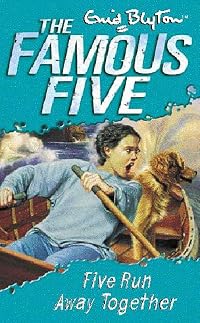
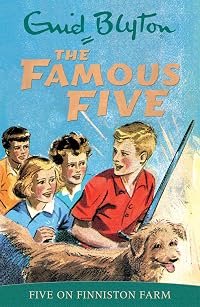
Who's been on George's island? And what is locked in the mysterious trunk hidden on Kirrin Island? The Famous Five think they're on the trail of smugglers - until they hear a child scream.Tags
Recommendations









Member Reviews
Five Run Away Together by Enid Blyton is a captivating tale that takes readers on a thrilling adventure with the beloved characters of the Famous Five series. As the fourth installment in the series, this book delves deeper into the lives and relationships of Julian, Dick, Anne, George, and their loyal companion, Timmy the dog.
Blyton's writing is, as always, engaging and accessible, making it easy for readers of all ages to immerse themselves in the story. The narrative moves at a brisk pace, with a series of intriguing events and mysteries that keep the reader hooked until the very end.
One of the standout aspects of this book is the well-developed characters. Blyton has a talent for crafting multi-dimensional personalities, and the show more dynamics between the four children and Timmy are particularly compelling. The contrast between the practical, level-headed Julian and the feisty, independent-minded George is especially well-drawn, and their interactions often serve as the driving force behind the plot. However, the book is not without its flaws.
Blyton's portrayal of the working-class characters, such as the cook Mrs. Stick and her son Edgar, can be seen as stereotypical and somewhat problematic from a modern perspective. Additionally, the book's resolution, while satisfying, can feel a bit too neatly tied up, leaving little room for deeper exploration of the underlying themes. Despite these minor criticisms, "Five Run Away Together" remains a delightful and engaging read that will appeal to fans of the Famous Five series and children's adventure stories in general.
Blyton's ability to craft a captivating and immersive narrative, coupled with the enduring appeal of the characters, make this book a timeless classic that continues to enchant readers of all ages. show less
Blyton's writing is, as always, engaging and accessible, making it easy for readers of all ages to immerse themselves in the story. The narrative moves at a brisk pace, with a series of intriguing events and mysteries that keep the reader hooked until the very end.
One of the standout aspects of this book is the well-developed characters. Blyton has a talent for crafting multi-dimensional personalities, and the show more dynamics between the four children and Timmy are particularly compelling. The contrast between the practical, level-headed Julian and the feisty, independent-minded George is especially well-drawn, and their interactions often serve as the driving force behind the plot. However, the book is not without its flaws.
Blyton's portrayal of the working-class characters, such as the cook Mrs. Stick and her son Edgar, can be seen as stereotypical and somewhat problematic from a modern perspective. Additionally, the book's resolution, while satisfying, can feel a bit too neatly tied up, leaving little room for deeper exploration of the underlying themes. Despite these minor criticisms, "Five Run Away Together" remains a delightful and engaging read that will appeal to fans of the Famous Five series and children's adventure stories in general.
Blyton's ability to craft a captivating and immersive narrative, coupled with the enduring appeal of the characters, make this book a timeless classic that continues to enchant readers of all ages. show less
In the third book in the series the children go back to Kirrin Cottage for the summer holidays. Unfortunately, their regular cook is ill (another convenient illness) and George's parents have hired another cook to help them out while the children are there. In yet another triumph of the Kirrin Human Resources department, they hired the evil Mrs. Stick, with her horrid son Edgar in tow, and also her unpleasant dog Tinker (aka Stinker) and later her equally up to no good husband.
Then Aunt Fanny, who is ill (of course), gets worse and has to be rushed off to hospital, with Quentin accompanying her (for once he puts the family crisis above his work). The man may be too absorbed in his work, and also eccentric, irascible and clueless, but he show more does love his family. George, for some strange reason, is not allowed to visit her. Home alone with the Sticks, the children are subjected to very hostile treatment from them. They almost have to get into fights to get adequate food, and they try to poison Timmy.
Finally, they decide to run away to Kirrin island and live there on their own until George's parents come back. Of course, they'll find a great adventure there.
In these books, as much as the adventure I enjoy the slice of life part at the beginning. The five have so much fun together and visit such interesting locations that my imagination was captured when I read these as a boy, and even now as an adult those descriptions are excellent mind candy. Here, however, this first part is unpleasant, with the children being treated as enemies in their own house by the nasty Sticks. Come to think of it, the build-up of the previous book (Five Go Adventuring Again) had also an unpleasant component, with George's feud with Mr. Roland. Here, the situation is much more openly unpleasant, though, and there are no adult relatives to keep things from going too far. Also, the conflict her is not no emotionally-charged like in the previous book. Julian raises up to the challenge, with Tim's help, and he constantly stands up to the Sticks. At one point he is reluctant to do so, and he reflects that he is not afraid of the Sticks, but he is just tired of the unpleasant confrontations.
In this series, it will certainly not be the last time Julian has to stand up to hostile adults, and he usually adopts a very calm and adult tone to talk to them. In this book he does so for the first time in the series. Good thing that he did, because otherwise his siblings and cousin would have gone without adequate food. However, perhaps he has not perfected the technique yet. Instead of just reminding Mrs. Stick of her duties and what the consequences would be if she neglected them, I had the impression that he sometimes riled up the Sticks more than strictly necessary. Perhaps not the smartest strategy, but I can't really blame him. They were on their own home, so why should they let these people walk all over them? Thankfully he had Tim to provide physical protection, or things could have become very nasty.
All in all the Sticks made life miserable for the children, and thus I was missing the joy that these books have. Fortunately things improved a lot once they ran off to the island. They had a great time there, and I enjoyed it with them.
Finally, in the last part of the novel, they have to fight a gang of people they believed to be smugglers using the island as base, but who are later discovered to be kidnappers. And they turned out to be the Sticks! Great as it was to see the Sticks get their comeuppance, I have to admit that the plot was a bit contrived at this point. How likely is it that the Sticks of all people were the ones doing their criminal activities on Kirrin Island? And what kind of criminal operation was that anyway? Why did they need a ship delivering a pack with dolls on the wreck near the island in the middle of the night? Wouldn't it be easier for the Sticks to bring what they needed with them in their boat? And why did Mrs. Stick take a job as a cook while she was taking part in a kidnapping scheme that had nothing to do with Kirrin Cottage?
In spite of these questions, the adventure part was very good and thrilling, even if the villains were a bit too bumbling. I really loved the hidden cave they found and used as their headquarters. With that secure shelter, they always had the upper hand against the Sticks, who never quite knew what was going on.
Some random thoughts:
George planned to run away to the island alone, so that the others could go home instead of spending such an unpleasant holiday with the Sticks. It's clear that in spite of liking her cousins she had not yet assumed that they were a team, and that they could face any difficulties better when they were together.
The five gave as much as they received. More, actually. We never feel sorry for the Sticks, not even for their stupid and cowardly son Edgar, because they are the ones who started it by being incredibly nasty towards the children. However, listening to the audiobook as an adult I felt sorry for their dog, (S)Tinker, who doesn't seem to do much to deserve being persecuted by Tim, other than being generally unpleasant and belonging to the Sticks. This is a children's book, and it's a common technique to amuse young readers by having bad things happen to the bad guys, without taking much effort to discriminate how much each character deserves to be labelled "bad". It's similar to how in the Harry Potter books Hagrid gives Dudley a pig tail, when the one who deserved it was his father Vernon (well, Dudley probably deserved it to some extent for his behavior towards Harry in the past, but Hagrid did not know that).
On the other hand, it was quite nice of the children to invite the little girl they rescued to spend a few days with them in the island.
George showed great restraint with Edgar. At one point she mentions that she doesn't respond to his insults because she doesn't want Mrs. Stick to leave and therefore leave George's mother without help. show less
Then Aunt Fanny, who is ill (of course), gets worse and has to be rushed off to hospital, with Quentin accompanying her (for once he puts the family crisis above his work). The man may be too absorbed in his work, and also eccentric, irascible and clueless, but he show more does love his family. George, for some strange reason, is not allowed to visit her. Home alone with the Sticks, the children are subjected to very hostile treatment from them. They almost have to get into fights to get adequate food, and they try to poison Timmy.
Finally, they decide to run away to Kirrin island and live there on their own until George's parents come back. Of course, they'll find a great adventure there.
In these books, as much as the adventure I enjoy the slice of life part at the beginning. The five have so much fun together and visit such interesting locations that my imagination was captured when I read these as a boy, and even now as an adult those descriptions are excellent mind candy. Here, however, this first part is unpleasant, with the children being treated as enemies in their own house by the nasty Sticks. Come to think of it, the build-up of the previous book (Five Go Adventuring Again) had also an unpleasant component, with George's feud with Mr. Roland. Here, the situation is much more openly unpleasant, though, and there are no adult relatives to keep things from going too far. Also, the conflict her is not no emotionally-charged like in the previous book. Julian raises up to the challenge, with Tim's help, and he constantly stands up to the Sticks. At one point he is reluctant to do so, and he reflects that he is not afraid of the Sticks, but he is just tired of the unpleasant confrontations.
In this series, it will certainly not be the last time Julian has to stand up to hostile adults, and he usually adopts a very calm and adult tone to talk to them. In this book he does so for the first time in the series. Good thing that he did, because otherwise his siblings and cousin would have gone without adequate food. However, perhaps he has not perfected the technique yet. Instead of just reminding Mrs. Stick of her duties and what the consequences would be if she neglected them, I had the impression that he sometimes riled up the Sticks more than strictly necessary. Perhaps not the smartest strategy, but I can't really blame him. They were on their own home, so why should they let these people walk all over them? Thankfully he had Tim to provide physical protection, or things could have become very nasty.
All in all the Sticks made life miserable for the children, and thus I was missing the joy that these books have. Fortunately things improved a lot once they ran off to the island. They had a great time there, and I enjoyed it with them.
Finally, in the last part of the novel, they have to fight a gang of people they believed to be smugglers using the island as base, but who are later discovered to be kidnappers. And they turned out to be the Sticks! Great as it was to see the Sticks get their comeuppance, I have to admit that the plot was a bit contrived at this point. How likely is it that the Sticks of all people were the ones doing their criminal activities on Kirrin Island? And what kind of criminal operation was that anyway? Why did they need a ship delivering a pack with dolls on the wreck near the island in the middle of the night? Wouldn't it be easier for the Sticks to bring what they needed with them in their boat? And why did Mrs. Stick take a job as a cook while she was taking part in a kidnapping scheme that had nothing to do with Kirrin Cottage?
In spite of these questions, the adventure part was very good and thrilling, even if the villains were a bit too bumbling. I really loved the hidden cave they found and used as their headquarters. With that secure shelter, they always had the upper hand against the Sticks, who never quite knew what was going on.
Some random thoughts:
George planned to run away to the island alone, so that the others could go home instead of spending such an unpleasant holiday with the Sticks. It's clear that in spite of liking her cousins she had not yet assumed that they were a team, and that they could face any difficulties better when they were together.
The five gave as much as they received. More, actually. We never feel sorry for the Sticks, not even for their stupid and cowardly son Edgar, because they are the ones who started it by being incredibly nasty towards the children. However, listening to the audiobook as an adult I felt sorry for their dog, (S)Tinker, who doesn't seem to do much to deserve being persecuted by Tim, other than being generally unpleasant and belonging to the Sticks. This is a children's book, and it's a common technique to amuse young readers by having bad things happen to the bad guys, without taking much effort to discriminate how much each character deserves to be labelled "bad". It's similar to how in the Harry Potter books Hagrid gives Dudley a pig tail, when the one who deserved it was his father Vernon (well, Dudley probably deserved it to some extent for his behavior towards Harry in the past, but Hagrid did not know that).
On the other hand, it was quite nice of the children to invite the little girl they rescued to spend a few days with them in the island.
George showed great restraint with Edgar. At one point she mentions that she doesn't respond to his insults because she doesn't want Mrs. Stick to leave and therefore leave George's mother without help. show less
It was meant to be. At long last the unwanted thing happened. I got swayed by the review of one user here and consequently I couldn't enjoy The Famous Five book for what it is. Among the four kids, it was Julian's demeanor that spoiled the fun. I immediately noticed how bossy and slightly mean he was. He wouldn't say anything without cussing Anne or someone other than her. I found the entire adventure boring and even the tinned stuff they were having on the island didn't look yummy to me. It's the end of an era. I may either take another Famous Five book on the rebound, or take a break from the series. It's not the end of the world, and I'm not sad at all, but such a day, maybe, was bound to arrive.
The third adventure of The Famous Five. This group of kids is becoming a group of justice agents as Blyton bring us new stories. It's been a year since the time of their first adventure. The group is shown as really solid.
Julian is more mature and soon the others will be too. Anne is representing this view of girls as housewives but mixed with a girl who wants to experience from adventures, so not bad at all. Wonder how George's feelings about being a girl will change.
It's kind of incredible how we are presented to a group of kids that manage to live in an island by themselves. Or how they manage to carry such a lot of things to survive in a boat.
A final message when they hope Edgar could find another way in life far from the bad things show more he learned and suffered from his parents it's very nice wish for people to change. show less
Julian is more mature and soon the others will be too. Anne is representing this view of girls as housewives but mixed with a girl who wants to experience from adventures, so not bad at all. Wonder how George's feelings about being a girl will change.
It's kind of incredible how we are presented to a group of kids that manage to live in an island by themselves. Or how they manage to carry such a lot of things to survive in a boat.
A final message when they hope Edgar could find another way in life far from the bad things show more he learned and suffered from his parents it's very nice wish for people to change. show less
I dropped a star because of the way the Famous Five treated Edgar and Tinker the dog.
Mucho mejor que el anterior, y aquí Quintín hasta me ha caído bien.
Those Sticks reminded me of the Malfoys. Edgar is literary Draco.
Members
- Recently Added By
Lists

Read the book and saw the movie
1,170 works; 195 members

Books We Loved As Children
610 works; 254 members

Books With Complete Sentence Titles
501 works; 17 members
Author Information

2,544+ Works 111,891 Members
Enid Blyton, 1897 - November 28, 1968 Enid Blyton was born in London in 1897. She was educated in a private school and thought that she would become a musician until she realized that writing was her passion. She attended Ipswich High School where she trained to become a kindergarten teacher and eventually opened her own school for infants. show more Blyton's first poem was published in 1917, entitled "Have You-" which appeared in Nash's Magazine. In 1922, her first book of verses was published, entitled "Child Whispers." In 1926 she accepted a position editing the children's magazine "Sunny Stories" as well as writing the column "Teachers World." Blyton's first full length children's book was published din 1938 and was titled "The Secret Island." After working on the column for years, Blyton quit "Teachers World" in 1945 and also ended her stint as editor of "Sunny Stories" seven years later. In 1953 she started her own children's magazine called "The Edith Blyton Magazine" which featured stories about her characters and news on the clubs formed around them. Her most famous stories were those of the "Famous Five" The Magazine closed in 1959. In the 50's and 60's Blyton was criticized for the language in her book, for being to simple, but some 300 are still in print today. Blyton has published over 600 books in the course of her career. Enid Blyton died in her sleep on November 28, 1968. She was 71 years old. show less
Some Editions
Awards and Honors
Notable Lists
Series

Belongs to Publisher Series
Pop-serien (503)
Work Relationships
Is contained in
Common Knowledge
- Canonical title
- Five Run Away Together
- Original title
- Five Run Away Together
- Original publication date
- 1944
- People/Characters
- Julian Kirrin; Dick Kirrin; Anne Kirrin; George Kirrin; Timmy
- Important places
- Kirrin Island
- Related movies
- Five Run Away Together (1979 | IMDb); Five Run Away Together (1996 | IMDb)
- First words
- "George dear, do settle down and do something," said George's Mother.
- Last words
- (Click to show. Warning: May contain spoilers.)They really do deserve it!
Classifications
- Genres
- Children's Books, Fiction and Literature, Kids
- DDC/MDS
- 823.912 — Literature & rhetoric English & Old English literatures English fiction 1900- 1901-1999 1901-1945
- LCC
- PZ7 .B629 — Language and Literature Fiction and juvenile belles lettres Fiction and juvenile belles lettres Juvenile belles lettres
- BISAC
Statistics
- Members
- 1,734
- Popularity
- 12,801
- Reviews
- 14
- Rating
- (3.82)
- Languages
- 19 — Catalan, Czech, Danish, Dutch, English, Finnish, French, German, Greek, Icelandic, Indonesian, Italian, Maltese, Norwegian (Bokmål), Norwegian, Spanish, Swedish, Ukrainian, Portuguese (Portugal)
- Media
- Paper, Audiobook, Ebook
- ISBNs
- 87
- ASINs
- 42