On This Page
Description
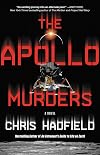
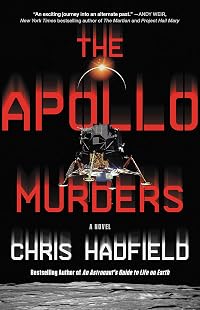
From New York Times bestselling author and astronaut Chris Hadfield comes this exceptional thriller and "exciting journey" into the dark heart of the Cold War and the space race (Andy Weir, author of The Martian and Project Hail Mary).1973: a final, top-secret mission to the Moon. Three astronauts in a tiny spaceship, a quarter million miles from home. A quarter million miles from help.
NASA is about to launch Apollo 18. While the mission has been billed as a scientific one, flight show more controller Kazimieras "Kaz" Zemeckis knows there is a darker objective. Intelligence has discovered a secret Soviet space station spying on America, and Apollo 18 may be the only chance to stop it.
But even as Kaz races to keep the NASA crew one step ahead of their Russian rivals, a deadly accident reveals that not everyone involved is quite who they were thought to be. With political stakes stretched to the breaking point, the White House and the Kremlin can only watch as their astronauts collide on the lunar surface, far beyond the reach of law or rescue.
Full of the fascinating technical detail that fans of The Martian loved, and reminiscent of the thrilling claustrophobia, twists, and tension of The Hunt for Red October, The Apollo Murders is a high-stakes thriller unlike any other. Chris Hadfield captures the fierce G-forces of launch, the frozen loneliness of space, and the fear of holding on to the outside of a spacecraft orbiting the Earth at 17,000 miles per hour as only someone who has experienced all of these things in real life can.
Strap in and count down for the ride of a lifetime.
"Packed with cosmic actionâ?¦ Featuring undercover spies, scheming Russians and psychopathic murderers, sometimes all at once, it teems with authoritative details." â??The New York Times
â??Nail-biting . . . I couldnâ??t put it down.â? â??James Cameron, writer and director of Avatar and Titanic
â??Not to be missed.â? â??Frederick Forsyth, author of The Day of the Jackal
â??An explosive thriller by a writer who has actually been to space . . . Strap in for the ride!â? â??Gregg Hur show less
Tags
Recommendations


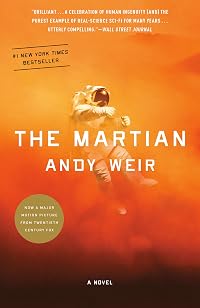
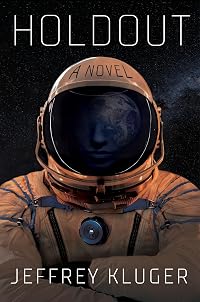
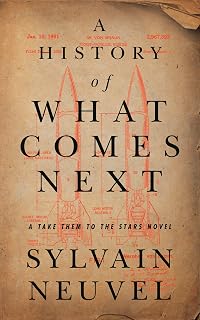

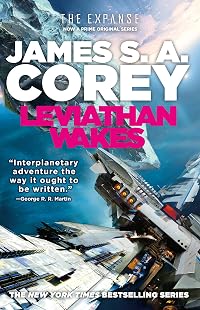








Member Recommendations
by anonymous user
Member Reviews
After Homer Hickam's excursion into fiction, I was a bit leery of NASA guys writing fiction. I now regret this, having waited too long to read Chris Hadfield's space thriller. Can't call it a mystery because the chief suspect is just so obvious from the get-go (once you know the first death is a murder; no thanks to the title for that spoiler), but the story is, literally, a wild ride and I enjoyed it greatly. The reviewers seem to break down into two groups: the people who think all the how-space-flight-works verbiage is tedious and the space geeks who think it's the best thing ever. I'm firmly in the second group. None of the NASA press releases ever told us how the first-stage engines are ice coated because the liquid oxygen is so show more cold they frost over in the Florida humidity, but that detail and a hundred others give verisimilitude to the narrative. This is useful when suspension of disbelief is necessary (at more than one point, the mission really should have been aborted; you have to think, well somebody wants one last Apollo mission and the spy info badly enough to be willing to gamble with the astronauts' lives -- this definitely includes the astronauts and most of the career NASA guys) and when the spy action stuff begins.
Update 2025: After reading Adam Higginbotham's nonfiction historical narrative entitled Challenger, I now know more than I ever wanted to know about how impatient NASA bureaucrats are all too willing to regard the odds with unwarranted optimism and launch missions which should really be scrubbed. I now think that not aborting a mission that has major problems is not a flight of fantasy on Hadfield's part, but an accurate reflection of the NASA ethos from the earliest days of Apollo right through the Shuttle era. Inside information, in fact, from a man who was there.
A surprising amount of the incredible stuff in the story is factual. Chris Hadfield's end notes include the Soviet space station armed with a machine gun that exploded and fell from orbit a few days after launch -- TRUE, and the pistol-packing cosmonauts --TRUE. Space cowboys FTW! Hadfield himself had sidearms training in preparation for flying a Soyuz.
It's really the best kind of historical fiction, seamlessly fitting an Apollo mission that *could* have happened into the matrix of historical events. show less
Update 2025: After reading Adam Higginbotham's nonfiction historical narrative entitled Challenger, I now know more than I ever wanted to know about how impatient NASA bureaucrats are all too willing to regard the odds with unwarranted optimism and launch missions which should really be scrubbed. I now think that not aborting a mission that has major problems is not a flight of fantasy on Hadfield's part, but an accurate reflection of the NASA ethos from the earliest days of Apollo right through the Shuttle era. Inside information, in fact, from a man who was there.
A surprising amount of the incredible stuff in the story is factual. Chris Hadfield's end notes include the Soviet space station armed with a machine gun that exploded and fell from orbit a few days after launch -- TRUE, and the pistol-packing cosmonauts --TRUE. Space cowboys FTW! Hadfield himself had sidearms training in preparation for flying a Soyuz.
It's really the best kind of historical fiction, seamlessly fitting an Apollo mission that *could* have happened into the matrix of historical events. show less
Astronaut and Commander of the International Space Station, Canadian Chris Hadfield keeps the reader right there in the moment, whether in the spacecraft or on the moon. Gripping and full of suspense, this is the ultimate adventure with murder thrown in. I had heard this was full of technical details that has put me off reading it for a year, but it turns out this will be one of my favourite books of the year. Those details could only have come from someone who has experienced it all himself. He spares no scientific aspect and yet managed to keep my attention without pause.
The Apollo 18 and 19 missions were scrapped because of financial problems so Hadfield used Apollo 18 for his fictional mission of 1973 creating an alternative past show more and an utterly captivating story. He includes real life characters that also provide an authenticity to this Cold War era novel that details a mission to collect geological samples from the moon and take out Almaz, a Russian spy satellite, on the way. The satellite surprisingly turns out to have cosmonauts aboard (the real one was unmanned) one of whom is able to cling onto Apollo and is successfully brought aboard. Sounds incredible but the feat is taken from real life and Hadfield’s own experiences. A stunning blend of fact and fiction. He obligingly provides an afterword with a summary of elements and characters that were real. show less
The Apollo 18 and 19 missions were scrapped because of financial problems so Hadfield used Apollo 18 for his fictional mission of 1973 creating an alternative past show more and an utterly captivating story. He includes real life characters that also provide an authenticity to this Cold War era novel that details a mission to collect geological samples from the moon and take out Almaz, a Russian spy satellite, on the way. The satellite surprisingly turns out to have cosmonauts aboard (the real one was unmanned) one of whom is able to cling onto Apollo and is successfully brought aboard. Sounds incredible but the feat is taken from real life and Hadfield’s own experiences. A stunning blend of fact and fiction. He obligingly provides an afterword with a summary of elements and characters that were real. show less
I was wavering between a 3.5 and a 4 for this book. I did love the attention to detail on space and physics and flight (it’s a bit like The Martian, but no equations), and in a spooky bit of coincidence some of those details proved useful for settling a debate at work. I also really appreciated the inclusion of actual Russian for some of the dialogue (with immediate translation), the author’s note explaining what was real and what was not, and the fact that although there was a budding romance, there were no sex scenes! I am very much Team Pan Away and Fade to Black and Give the Characters Their Privacy. The main reason for my wavering is the fact that I personally have been really struggling to read long hardcovers these days, and show more although a sequel is planned, I’ll wait and see what it’s about before reading it (although let’s be honest, I probably will).
Content warning for an eye injury in the prologue -- I am REALLY squeamish about eye stuff, so I had to read that part rather quickly. show less
Content warning for an eye injury in the prologue -- I am REALLY squeamish about eye stuff, so I had to read that part rather quickly. show less
This is a murder mystery that's also an alternate history about the late Apollo program and the Cold War.
We start with an Apollo mission that's a departure from our own history. Apollo 18 was planned, and planned as a fully military mission, but canceled due to both budgetary and political reasons. In this story, Apollo 18 escapes cancelation, and is focused on checking out the site on the Moon that an unmanned Soviet Moon rover has been investigating. Kazimieras "Kaz" Zemeckis, a test pilot and astronaut eliminated from space launches after an in-flight bird collision costs him an eye, is appointed as flight controller for Apollo 18, responsible for the safety of the crew from Mission Control. But once he thinks he's settled in and show more well connected with all the crew, several unsettling changes occur.
First, US intelligence has made the alarming discovery that the Soviets have launched a space station, with the same basic purpose as the (canceled) US Military Orbital Laboratory (MOL)--taking high quality photographs for military intelligence purposes. And as they gather more information about the quality of the photographic and telescopic equipment on this Soviet space station, the plans for Apollo 18 are changed. The intelligence shows that the station won't be manned yet, so there's no reason not to take the opportunity to disable it. Apollo 18 is going to be stripped down as far as possible without completely canceling the original mission, launched at a different angle than planned, and rendezvous with the Soviet MOL-equivalent. At a minimum, they will thoroughly photograph it; if possible, they will disable it.
Then they'll be launched toward the Moon, and the reduced version of their original mission, which is to find out why the Soviet Moon rover is exploring that particular area and what they've found, and if possible disable that, too. This will mean fewer Moon walks, but also a previously unplanned space walk.
The other alarming change is that the Apollo 18 mission commander, Ted, and I'm sorry, listening to the audiobook I didn't retain his last name, is killed in an apparent helicopter accident. But what caused the accident? An intense investigation begins, but meanwhile, the Apollo 18 mission needs a new commander.
The choice falls on the logical person, Chad Miller, the commander of the backup crew. This is deemed to be less disruptive than replacing the entire crew at what is painfully close to the last minute.
Miller is a midwestern farm boy, and it's the early 1970s. He's got more of a temper than Ted had, but he's very capable and gets the job done. We learn, when he and Kaz talk about their backgrounds and Kaz reveals that his family are Lithuanian Jews who escaped just before the Nazis arrived to wipe out most of the Jewish community there, that Miller is a bit of an antisemite. It's no surprise when we also learn, due to the command module commander, Michael (possibly Edshail, but another last name I didn't get reliably due to listening to the audiobook), is the first black astronaut to go into space.. The third member of the crew is Luke Hemming (I'm almost sure of that name), and despite the irritants, they're all going to be professional about it, right?
Once we are into space, we have vomiting, the unpleasant discovery that the Soviet space station is manned after all, brawls in space, deaths, an unexpected rearrangement of the crews (really, I can't say any more than that), and more unexpected discoveries on the Moon.
Meanwhile, on Earth, Kaz is cooperating with local police, NASA, and military authorities in investigating the death of the original mission commander. It's discovered to be sabotage, and they have to look at the people with both opportunity and at least the potential for motives. The more information he gathers, the more Kaz suspects that on of the astronauts on Apollo 18 isn't who he seems to be.
This is a very nicely done murder mystery, spy thriller, and utterly convincing alternate history of the early 1970s space program and Cold War. Hadfield obviously knows the space program, and has done his research on both the space program and world politics of the period. I found the characters interesting and convincing, and the story very solid.
Recommended.
I bought this audiobook. show less
We start with an Apollo mission that's a departure from our own history. Apollo 18 was planned, and planned as a fully military mission, but canceled due to both budgetary and political reasons. In this story, Apollo 18 escapes cancelation, and is focused on checking out the site on the Moon that an unmanned Soviet Moon rover has been investigating. Kazimieras "Kaz" Zemeckis, a test pilot and astronaut eliminated from space launches after an in-flight bird collision costs him an eye, is appointed as flight controller for Apollo 18, responsible for the safety of the crew from Mission Control. But once he thinks he's settled in and show more well connected with all the crew, several unsettling changes occur.
First, US intelligence has made the alarming discovery that the Soviets have launched a space station, with the same basic purpose as the (canceled) US Military Orbital Laboratory (MOL)--taking high quality photographs for military intelligence purposes. And as they gather more information about the quality of the photographic and telescopic equipment on this Soviet space station, the plans for Apollo 18 are changed. The intelligence shows that the station won't be manned yet, so there's no reason not to take the opportunity to disable it. Apollo 18 is going to be stripped down as far as possible without completely canceling the original mission, launched at a different angle than planned, and rendezvous with the Soviet MOL-equivalent. At a minimum, they will thoroughly photograph it; if possible, they will disable it.
Then they'll be launched toward the Moon, and the reduced version of their original mission, which is to find out why the Soviet Moon rover is exploring that particular area and what they've found, and if possible disable that, too. This will mean fewer Moon walks, but also a previously unplanned space walk.
The other alarming change is that the Apollo 18 mission commander, Ted, and I'm sorry, listening to the audiobook I didn't retain his last name, is killed in an apparent helicopter accident. But what caused the accident? An intense investigation begins, but meanwhile, the Apollo 18 mission needs a new commander.
The choice falls on the logical person, Chad Miller, the commander of the backup crew. This is deemed to be less disruptive than replacing the entire crew at what is painfully close to the last minute.
Miller is a midwestern farm boy, and it's the early 1970s. He's got more of a temper than Ted had, but he's very capable and gets the job done. We learn, when he and Kaz talk about their backgrounds and Kaz reveals that his family are Lithuanian Jews who escaped just before the Nazis arrived to wipe out most of the Jewish community there, that Miller is a bit of an antisemite. It's no surprise when we also learn, due to the command module commander, Michael (possibly Edshail, but another last name I didn't get reliably due to listening to the audiobook), is the first black astronaut to go into space.. The third member of the crew is Luke Hemming (I'm almost sure of that name), and despite the irritants, they're all going to be professional about it, right?
Once we are into space, we have vomiting, the unpleasant discovery that the Soviet space station is manned after all, brawls in space, deaths, an unexpected rearrangement of the crews (really, I can't say any more than that), and more unexpected discoveries on the Moon.
Meanwhile, on Earth, Kaz is cooperating with local police, NASA, and military authorities in investigating the death of the original mission commander. It's discovered to be sabotage, and they have to look at the people with both opportunity and at least the potential for motives. The more information he gathers, the more Kaz suspects that on of the astronauts on Apollo 18 isn't who he seems to be.
This is a very nicely done murder mystery, spy thriller, and utterly convincing alternate history of the early 1970s space program and Cold War. Hadfield obviously knows the space program, and has done his research on both the space program and world politics of the period. I found the characters interesting and convincing, and the story very solid.
Recommended.
I bought this audiobook. show less
The Apollo Murders is a believable, compelling mystery told by one of the world's most accomplished astronauts. After reading, I felt like I knew a bit more about the dangers and complexities of space travel. Adding murder and political intrigue was just the icing on the cake. This book could have become bogged down with minutiae, but the science and space operations are described with just enough detail to allow a "regular" Earthbound citizen to easily understand. And even though the Moon is a quarter of a million miles away, Hadfield's story remains accessible; a real page-turner. I'm glad I took the ride.
Takes Off at Page 141!
Review of the Random House Canada hardcover edition (October 2021)
The Apollo Murders is quite a great alternative history techno-thriller with a lot of its elements (and even several of its characters) drawn from reality. Its one downside is that the first 140 pages (30% of the book) are somewhat dull and may cause some to give up before the action really takes off. And it definitely does at page 141 when the fictional Apollo 18 lifts off for its journey to the moon in an alternative 1973 where the Apollo lunar landings program did not end with Apollo 17.
Even though the identify of the key villain is telegraphed quite early, there are plenty of twists and turns which make for a suspenseful and tense lunar show more expedition. Too much plot exposition would be spoilerish, but let's say that the opposition is not only the cosmonauts and equipment of the Russian space program, but that there is something like an 'inside man' on the Apollo mission.
All of these elements are well handled by first time thriller writer Chris Hadfield, former pilot and International Space Station astronaut who worked with both NASA Space Shuttle and the Russian SOYUZ programs and therefore has actual first hand experience in space missions, although not in actual moon landings. Hadfield delivers the necessary amount of techno-gab, but not to the extent that it became distracting.
The early parts of the book could almost have been dropped, except that they did introduce most of the characters for the rest. But parts describing where someone lives, eats, flies a Cessna, starts a relationship etc. had absolutely no tie-in to what follows and didn't provide any actual character development at all. As with Chekhov's gun, if you have a character with one glass eye that knows how to fly a Cessna plane, that talent should be called upon later in the book, or the audience will perceive it as just filler.
Still, I think Hadfield could make a further career out of techno thrillers based on this outing and the end of the book does perhaps hint that a sequel could be forthcoming.
Trivia and Links
Chris Hadfield participates in a remote book release event in September 2021 which you can watch on YouTube here. show less
Review of the Random House Canada hardcover edition (October 2021)
The Apollo Murders is quite a great alternative history techno-thriller with a lot of its elements (and even several of its characters) drawn from reality. Its one downside is that the first 140 pages (30% of the book) are somewhat dull and may cause some to give up before the action really takes off. And it definitely does at page 141 when the fictional Apollo 18 lifts off for its journey to the moon in an alternative 1973 where the Apollo lunar landings program did not end with Apollo 17.
Even though the identify of the key villain is telegraphed quite early, there are plenty of twists and turns which make for a suspenseful and tense lunar show more expedition. Too much plot exposition would be spoilerish, but let's say that the opposition is not only the cosmonauts and equipment of the Russian space program, but that there is something like an 'inside man' on the Apollo mission.
All of these elements are well handled by first time thriller writer Chris Hadfield, former pilot and International Space Station astronaut who worked with both NASA Space Shuttle and the Russian SOYUZ programs and therefore has actual first hand experience in space missions, although not in actual moon landings. Hadfield delivers the necessary amount of techno-gab, but not to the extent that it became distracting.
The early parts of the book could almost have been dropped, except that they did introduce most of the characters for the rest. But parts describing where someone lives, eats, flies a Cessna, starts a relationship etc. had absolutely no tie-in to what follows and didn't provide any actual character development at all. As with Chekhov's gun, if you have a character with one glass eye that knows how to fly a Cessna plane, that talent should be called upon later in the book, or the audience will perceive it as just filler.
Still, I think Hadfield could make a further career out of techno thrillers based on this outing and the end of the book does perhaps hint that a sequel could be forthcoming.
Trivia and Links
Chris Hadfield participates in a remote book release event in September 2021 which you can watch on YouTube here. show less
This is a fascinating mystery, set in the 1970s. It evokes the American space program with wonderful realism. This follows Apollo 18 towards the moon. Note that in our world, Apollo 17 was the last mission to actually land there. So while I recognized many of the names - Alan Shepherd, Gene Kranz, etc., the crew for this thriller was fictional.
One little detail brought home to me how much a particular part of the world has changed since then. At one point, the subject was photos taken in space and how one had to return the film to earth to see those pictures. Photos now are transmitted digitally in a downlink. I think of the James Webb telescope, and how it wouldn't be possible to see those wonders if we'd had to send back physical, show more exposed film. A small detail, but a telling one. Google tells me that the first digital cameras were in 1975. We know that pictures were transmitted from the moon as Armstrong stepped on, because I watched it. But references here in the book to film, and sending photos and film to the earth with parachutes …. Just brings home how much has changed, even from then.
And yet - today, Sept 24, 2023 - a package parachuted to earth from the OSIRIS-REx spacecraft, with rubble/regolith dug up from the Bennu Asteroid. As film drops were formerly made from orbit, we are still physically returning items to earth from orbit for analysis here. The book and the event resonated in my mind.
Hadfield does a stunning job evoking what it feels like to train for, and go into, outer space. His experiences as an astronaut help him bring that front and center. He is also a skilled storyteller. Highly recommended, particularly to those who want to be immersed in the experience of spaceflight. show less
One little detail brought home to me how much a particular part of the world has changed since then. At one point, the subject was photos taken in space and how one had to return the film to earth to see those pictures. Photos now are transmitted digitally in a downlink. I think of the James Webb telescope, and how it wouldn't be possible to see those wonders if we'd had to send back physical, show more exposed film. A small detail, but a telling one. Google tells me that the first digital cameras were in 1975. We know that pictures were transmitted from the moon as Armstrong stepped on, because I watched it. But references here in the book to film, and sending photos and film to the earth with parachutes …. Just brings home how much has changed, even from then.
And yet - today, Sept 24, 2023 - a package parachuted to earth from the OSIRIS-REx spacecraft, with rubble/regolith dug up from the Bennu Asteroid. As film drops were formerly made from orbit, we are still physically returning items to earth from orbit for analysis here. The book and the event resonated in my mind.
Hadfield does a stunning job evoking what it feels like to train for, and go into, outer space. His experiences as an astronaut help him bring that front and center. He is also a skilled storyteller. Highly recommended, particularly to those who want to be immersed in the experience of spaceflight. show less
Members
- Recently Added By
Lists

Top Five Books of 2022
736 works; 272 members

Globe and Mail | Canadian Fiction: Jan. 29, 2022
10 works; 2 members

Globe and Mail | Canadian Fiction: December 3, 2022
10 works; 1 member
Globe and Mail | Canadian Fiction: November 26, 2022
10 works; 1 member

Globe and Mail | Canadian Fiction: December 17, 2022
10 works; 1 member
Globe and Mail | Canadian Fiction: December 10, 2022
10 works; 1 member
Globe and Mail | Canadian Fiction: December 24, 2022
10 works; 1 member
Globe and Mail | Canadian Fiction: November 19, 2022
10 works; 1 member
Globe and Mail | Canadian Fiction: Feb. 5, 2022
10 works; 2 members
Globe and Mail | Canadian Fiction: Jan. 8, 2022
10 works; 2 members

Globe and Mail | Canadian Fiction: November 12, 2022
10 works; 1 member

Globe and Mail | Canadian Fiction: Dec. 11, 2021
10 works; 2 members

Globe and Mail | Canadian Fiction: Oct. 30, 2021
10 works; 1 member
Globe and Mail | Canadian Fiction: Oct. 23, 2021
10 works; 1 member
Globe and Mail | Canadian Fiction: Nov. 6, 2021
10 works; 1 member
Globe and Mail | Canadian Fiction: Dec. 25, 2021
10 works; 1 member
Globe and Mail | Canadian Fiction: Dec. 18, 2021
10 works; 1 member
Globe and Mail | Canadian Fiction: Nov. 27, 2021
10 works; 1 member
Globe and Mail | Canadian Fiction: Nov. 20, 2021
10 works; 1 member
Globe and Mail | Canadian Fiction: Dec. 4, 2021
10 works; 1 member
Globe and Mail | Canadian Fiction: Nov. 13, 2021
10 works; 1 member
Globe and Mail | Canadian Fiction: Jan. 15, 2022
10 works; 2 members
Globe and Mail | Canadian Fiction: Jan. 22, 2022
10 works; 2 members

Books Read in 2022
5,168 works; 114 members

Ranking
66 works; 1 member

Books Read in 2024
4,623 works; 126 members

Globe and Mail | Canadian Fiction: November 23, 2024
10 works; 1 member

Globe and Mail | Canadian Fiction: June 14, 2025
10 works; 1 member
Author Information

10+ Works 5,022 Members
Chris Hadfield was the top graduate of the U.S. Air Force test pilot school in 1988 and U.S. Navy test pilot of the year in 1991. He was selected to be an astronaut in 1992. In May 2013, he returned to Earth after serving as Commander of the International Space Station for the third time. (Bowker Author Biography)
Awards and Honors
Awards
Distinctions
Notable Lists
Series

Common Knowledge
- Canonical title
- The Apollo Murders
Classifications
Statistics
- Members
- 907
- Popularity
- 29,617
- Reviews
- 26
- Rating
- (3.68)
- Languages
- 6 — Dutch, English, Finnish, French, German, Italian
- Media
- Paper, Audiobook, Ebook
- ISBNs
- 26
- ASINs
- 7