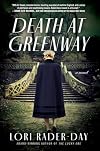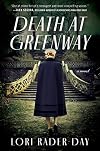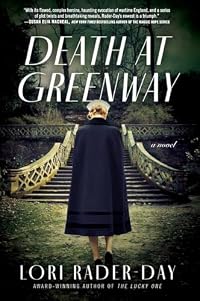
Death at Greenway
by Lori Rader-Day
On This Page
Description
"Bridey Kelly has come to Greenway House-the beloved holiday home of Agatha Christie-in disgrace. A terrible mistake at St. Prisca's Hospital in London has led to her dismissal as a nurse trainee, and her only chance for redemption is a position in the countryside caring for children evacuated to safety from the Blitz. Greenway is a beautiful home full of riddles: wondrous curios not to be touched, restrictions on rooms not to be entered, and a generous library, filled with books about show more murder. The biggest mystery might be the other nurse, Gigi, who is like no one Bridey has ever met. Chasing ten young children through the winding paths of the estate grounds might have soothed Bridey's anxieties and grief-if Greenway were not situated so near the English Channel and the rising aggressions of the war. When a body washes ashore near the estate, Bridey is horrified to realize this is not a victim of war, but of a brutal killing. As the local villagers look among themselves, Bridey and Gigi discover they each harbor dangerous secrets about what has led them to Greenway. With a mystery writer's home as their unsettling backdrop, the young women must unravel the truth before their safe haven becomes a place of death . . "-- show lessTags
Recommendations




































Member Reviews
Bridget Kelly is a young nursing student living in London with her family. She's eager to help with the war effort, but a mistake at work puts her nursing career in danger. She's given a way out; an offer to help care for a group of children being evacuated from London. Arriving at the train station, she discovers that all the children are under five, two are infants and the other nurse is also somehow named Bridget Kelly and doesn't seem to know anything about nursing or childcare. And the Devon coast is less serene than expected. Not only is there something odd about the other nurse, but there seems to be too many mysterious deaths in the village.
Rader-Day is one of the rare authors who clearly do the research but use what they show more learned so carefully, that it never feels like she is telling us what she learned. The result is a story deeply set in a place and a time that feels authentic. Bridget is a wonderful character because she fits so perfectly into this setting. She's almost invisible to others, especially those who imagine themselves her betters. Rader-Day also narrates the novel from the points of view of other characters, from that of the housekeeper, to the voice of one of the young evacuees, and makes each voice distinct. I usually like a little more oomph in my crime novels, but as a gentle historical novel about the British home front, this one was very enjoyable. show less
Rader-Day is one of the rare authors who clearly do the research but use what they show more learned so carefully, that it never feels like she is telling us what she learned. The result is a story deeply set in a place and a time that feels authentic. Bridget is a wonderful character because she fits so perfectly into this setting. She's almost invisible to others, especially those who imagine themselves her betters. Rader-Day also narrates the novel from the points of view of other characters, from that of the housekeeper, to the voice of one of the young evacuees, and makes each voice distinct. I usually like a little more oomph in my crime novels, but as a gentle historical novel about the British home front, this one was very enjoyable. show less
Death at Greenway is an evocation of time and place, a character study, more than a mystery. The story does have multiple points of view, but it is mainly told by Bridey Kelly, the young woman with a tragic past who only wants to save lives. Greenway House may belong to Agatha Christie, and her presence is indeed felt in her holiday home, but she is very seldom seen in residence. This story has nothing to do with her and everything to do with the house's other inhabitants.
Greenway House is shrouded in mystery. So many of the people Bridey comes in contact with seem to be hiding something. Gigi, with her lacy knickers and long polished fingernails, is like no nurse Bridey has ever seen, and it's maddening how she gets away with doing show more very little work and sneaking out of the house at night. The more readers come in contact with the characters, the more the suspense and unease build. It's quickly learned that being away from the bombs falling nightly in London does not mean these people are safe. As the days, weeks, and months pass, think location, location, location, and some of the puzzle pieces may start falling into place.
There are some wonderful scenes in Death at Greenway, some of them heartbreaking. Mrs. Arbuthnot telling off a suspicious villager. The Wrens with their signal flags. Cecilia Poole and little Sam. And the acknowledgments and notes at the back are not to be missed. Does Bridey ever find out just what was going on around Greenway House? Yes, but the journey she takes to overcome her past is often more interesting than the mystery. Lori Rader-Day's characters will be inhabiting the dark, furtive corners of my mind for some time to come.
(Review copy courtesy of the publisher and Net Galley) show less
Greenway House is shrouded in mystery. So many of the people Bridey comes in contact with seem to be hiding something. Gigi, with her lacy knickers and long polished fingernails, is like no nurse Bridey has ever seen, and it's maddening how she gets away with doing show more very little work and sneaking out of the house at night. The more readers come in contact with the characters, the more the suspense and unease build. It's quickly learned that being away from the bombs falling nightly in London does not mean these people are safe. As the days, weeks, and months pass, think location, location, location, and some of the puzzle pieces may start falling into place.
There are some wonderful scenes in Death at Greenway, some of them heartbreaking. Mrs. Arbuthnot telling off a suspicious villager. The Wrens with their signal flags. Cecilia Poole and little Sam. And the acknowledgments and notes at the back are not to be missed. Does Bridey ever find out just what was going on around Greenway House? Yes, but the journey she takes to overcome her past is often more interesting than the mystery. Lori Rader-Day's characters will be inhabiting the dark, furtive corners of my mind for some time to come.
(Review copy courtesy of the publisher and Net Galley) show less
Wow! This was deserving of more than 5 amazing stars!! The novel is an immersive, far-reaching story of murder and revenge set at Agatha Christie's real-life country home during World War II. Author Lori Rader-Day researched facts, included the existing locations and many actual people of the time to craft a moving, engrossing murder mystery that I couldn't put down. This was a cleverly and beautifully written, well-thought out, realistically emotional, and incredibly awesome story of nurse-trainee Bridey Kelly, trying to make peace with her past in hopes of finding her place in a broken world.
Some disappointed readers were expecting a story including Agatha Christie, but be forewarned that she is barely in this novel though Rader-Day show more was surely influenced by her, as one of the world's best mystery novelists. I loved the multiple layers of this story, the mood of suspicion and mystery, the various characters (who was friend or foe?), the grief of loss, the dangerous secrets of war. I highly recommend this memorable novel. show less
Some disappointed readers were expecting a story including Agatha Christie, but be forewarned that she is barely in this novel though Rader-Day show more was surely influenced by her, as one of the world's best mystery novelists. I loved the multiple layers of this story, the mood of suspicion and mystery, the various characters (who was friend or foe?), the grief of loss, the dangerous secrets of war. I highly recommend this memorable novel. show less
Bridget Kelly, a nineteen-year-old nurse-in-training, has been dismissed from a London hospital, probably an unusual occurrence to begin with. Worse, this is April 1941, wartime, and with nurses in such short supply, you just know Bridget must have messed up horribly. In her parting words, the nurse matron has harangued Bridget for coldness, arrogance, inability to concentrate, and more besides. Whew.
But Matron has given her one last chance: to accompany a group of young children to Devon, where they’re to be evacuated for the war’s duration, presumably safe from the bombs hitting London daily. The country house that will be their billet belongs to Agatha Christie, a fact of no consequence to Bridget, who doesn’t read stories — show more they hit her in the gut, literally.
Rather, she’s wondering how to manage ten children, a chore that scares her, and for which she thinks she has no aptitude. Meanwhile, she’s reeling from the deaths of her mother and younger siblings from a German bomb, so the sight of any child can be dangerous for her.
When she first sets eyes on her charges-to-be at the train station, her heart sinks, because she has imagined older children, easier to care for. But Bridget has one hope, a fellow nurse to share the load — until that nurse, who claims also to be named Bridget Kelly, doesn’t seem to know the first thing about children, the human body, or caring for anyone else’s needs. For that matter, as the first Bridget discovers, few people or things she runs across are as they seem. No sooner have they arrived in Devon than she has her doubts about the house staff, the people leading the evacuation, and the local characters, whose intense suspicion of outsiders may have a darker side.
Her skepticism is often warranted, but as Matron’s criticisms ring repeatedly in her ears, you begin to wonder just what was going on there. For instance, is Bridget really arrogant? Hardly; she’s too self-effacing by half. She only seems withdrawn, because when circumstances call for intense emotion, her post-traumatic stress kicks in, manifesting itself as the aforementioned hits to the gut. And that, of course, she can’t reveal.
But that’s only for starters. As she tries to settle in, an intruder or two stalks the property, precious food supplies go missing, and, eventually, a dead body washes up on shore. Connected events, or coincidental?
Mysteries and thrillers generally go by the moniker of plot-driven, but not Death at Greenway. This one’s character all the way, and it’s masterful. You get the nurses, the staff, the neighbors, the atmosphere, the house, the PTSD, and they all move the story. Aside from Bridget and her nursing colleague, I single out the local doctor, who’s too handsome by half and sensitive to feelings but somehow off, and an artist living on the property who’s got a battleship-sized sense of entitlement.
Rader-Day peels back layer upon layer of mystery and misunderstanding. If the narrative proceeds more gradually than in other mysteries — the dead body, for instance, doesn’t show up until page 115 – the tension nevertheless keeps you riveted.
How? The author shows you Bridget beneath the skin and the fear, isolation, and resentment everyone breathes with each inhalation, which marks them and makes for potent drama. I admire that kind of storytelling, which doesn’t need a man with a gun to raise the stakes. This narrative may seem “quiet” for a mystery, to use a publishing buzzword that no two people define the same way. Gentle reader, don’t be deterred.
I’ve also never read as gripping or accurate a fictional description of post-traumatic stress, unless it was in Daniel Mason’s fine novel, The Winter Soldier — and he’s a psychiatrist. Moreover, Rader-Day captures the underside of Britain’s so-called finest hour, portraying less-than-heroic behaviors, reminiscent of Lissa Evans’s novels, though without the irony or humor. Here in Devon, they’re playing for keeps.
For those who like Agatha Christie — I don’t particularly — the setting will appeal as well. And just in case you’re thinking from what I’ve said that the mystery must take second place to the characterization and somehow muddle its way through, let me assure you that the plot goes through as many twists and turns as the seaside Devon roadways.
Death at Greenway is a fine mystery and a brilliant re-creation of the British home front, worth your time in both respects. show less
But Matron has given her one last chance: to accompany a group of young children to Devon, where they’re to be evacuated for the war’s duration, presumably safe from the bombs hitting London daily. The country house that will be their billet belongs to Agatha Christie, a fact of no consequence to Bridget, who doesn’t read stories — show more they hit her in the gut, literally.
Rather, she’s wondering how to manage ten children, a chore that scares her, and for which she thinks she has no aptitude. Meanwhile, she’s reeling from the deaths of her mother and younger siblings from a German bomb, so the sight of any child can be dangerous for her.
When she first sets eyes on her charges-to-be at the train station, her heart sinks, because she has imagined older children, easier to care for. But Bridget has one hope, a fellow nurse to share the load — until that nurse, who claims also to be named Bridget Kelly, doesn’t seem to know the first thing about children, the human body, or caring for anyone else’s needs. For that matter, as the first Bridget discovers, few people or things she runs across are as they seem. No sooner have they arrived in Devon than she has her doubts about the house staff, the people leading the evacuation, and the local characters, whose intense suspicion of outsiders may have a darker side.
Her skepticism is often warranted, but as Matron’s criticisms ring repeatedly in her ears, you begin to wonder just what was going on there. For instance, is Bridget really arrogant? Hardly; she’s too self-effacing by half. She only seems withdrawn, because when circumstances call for intense emotion, her post-traumatic stress kicks in, manifesting itself as the aforementioned hits to the gut. And that, of course, she can’t reveal.
But that’s only for starters. As she tries to settle in, an intruder or two stalks the property, precious food supplies go missing, and, eventually, a dead body washes up on shore. Connected events, or coincidental?
Mysteries and thrillers generally go by the moniker of plot-driven, but not Death at Greenway. This one’s character all the way, and it’s masterful. You get the nurses, the staff, the neighbors, the atmosphere, the house, the PTSD, and they all move the story. Aside from Bridget and her nursing colleague, I single out the local doctor, who’s too handsome by half and sensitive to feelings but somehow off, and an artist living on the property who’s got a battleship-sized sense of entitlement.
Rader-Day peels back layer upon layer of mystery and misunderstanding. If the narrative proceeds more gradually than in other mysteries — the dead body, for instance, doesn’t show up until page 115 – the tension nevertheless keeps you riveted.
How? The author shows you Bridget beneath the skin and the fear, isolation, and resentment everyone breathes with each inhalation, which marks them and makes for potent drama. I admire that kind of storytelling, which doesn’t need a man with a gun to raise the stakes. This narrative may seem “quiet” for a mystery, to use a publishing buzzword that no two people define the same way. Gentle reader, don’t be deterred.
I’ve also never read as gripping or accurate a fictional description of post-traumatic stress, unless it was in Daniel Mason’s fine novel, The Winter Soldier — and he’s a psychiatrist. Moreover, Rader-Day captures the underside of Britain’s so-called finest hour, portraying less-than-heroic behaviors, reminiscent of Lissa Evans’s novels, though without the irony or humor. Here in Devon, they’re playing for keeps.
For those who like Agatha Christie — I don’t particularly — the setting will appeal as well. And just in case you’re thinking from what I’ve said that the mystery must take second place to the characterization and somehow muddle its way through, let me assure you that the plot goes through as many twists and turns as the seaside Devon roadways.
Death at Greenway is a fine mystery and a brilliant re-creation of the British home front, worth your time in both respects. show less
The publisher's promo materials describe Death at Greenway as "a captivating suspense novel about nurses during World War II who come to Agatha Christie’s holiday estate to care for evacuated children, but when a body is discovered nearby, the idyllic setting becomes host to a deadly mystery.... Bridey and Gigi [the nurses] discover they each harbor dangerous secrets about what has led them to Greenway. With a mystery writer’s home as their unsettling backdrop, the young women must unravel the truth before their safe haven becomes a place of death."
Well... yes and no. Death at Greenway isn't your standard suspense novel. It's much more the story of Bridey's coming into her own: as a nurse and as an individual. Gigi plays a show more significant role, but it's really Bridey's book. Bridey and Gigi aren't working to "unravel the truth before their safe haven becomes a place of death." They're trying to figure out who they are, where they fit in this world at war, and where they'll fit in a post-war world.
So, Death at Greenway wasn't the novel I was expecting, but it was quite a good read all the same. Bridey is an interesting character, the sole survivor of a fire that killed her mother and siblings. Her working-class background adds to the challenge of trying to become a nurse. Basically, Bridey feels she deserves nothing and is determined to build close bonds with no one.
There's also death at Greenway and an on-again-off-again bit of amateur investigation, but this is a novel for readers of WWII and (dare I say it?) women's fiction, not for fans of suspense, who might well enjoy Death at Greenway, but will find the suspense only occasional.
I received a free electronic review copy of this title from the publisher via Edelweiss; the opinions are my own. show less
Well... yes and no. Death at Greenway isn't your standard suspense novel. It's much more the story of Bridey's coming into her own: as a nurse and as an individual. Gigi plays a show more significant role, but it's really Bridey's book. Bridey and Gigi aren't working to "unravel the truth before their safe haven becomes a place of death." They're trying to figure out who they are, where they fit in this world at war, and where they'll fit in a post-war world.
So, Death at Greenway wasn't the novel I was expecting, but it was quite a good read all the same. Bridey is an interesting character, the sole survivor of a fire that killed her mother and siblings. Her working-class background adds to the challenge of trying to become a nurse. Basically, Bridey feels she deserves nothing and is determined to build close bonds with no one.
There's also death at Greenway and an on-again-off-again bit of amateur investigation, but this is a novel for readers of WWII and (dare I say it?) women's fiction, not for fans of suspense, who might well enjoy Death at Greenway, but will find the suspense only occasional.
I received a free electronic review copy of this title from the publisher via Edelweiss; the opinions are my own. show less
Nurse trainee Bridget Kelly (Bridey) blames herself for a mistake made at a hospital. Faced with few choices, she signs on as a nurse for evacuated children. This war nursery is headed to Greenway, home of Agatha Christie. On the train, she meets the other nurse, inexplicably also named Bridget Kelly, as they get to know their charges and the Arbuthnots, the ones who spearheaded these ten babes evacuation. There are a lot of short chapters from varying viewpoints, and it took me a bit to get into it. However, once I got going, the bits of historical research were very well done. The home front and those left behind after young English boys are shot down, sometimes over their own country, were very well described within the townspeople. show more Ration books, lack of fresh food and other niceties show the true hardship of those even living in the country. And war nurseries were real--all these charges were five and under and Rader-Day has an interesting bit at the back of the book relating the memories of a real evacuated child and how she thought her parents had come to adopt her, because she didn't remember them. show less
Rader-Day has taken a bit of historical trivia - Agatha Christie's home housed a group of evacuees, children removed from London (and their parents) and given shelter in the countryside, here tended by two nurses who aren't exactly what they purport to be. One, Bridey, has been dismissed during her training because she took unauthorized action for a patient. The other, Gigi, is a tantalizing mystery. Who is this woman? She certainly isn't a nurse.
Agatha Christie herself makes only a cameo appearance in the book, which is an in-depth historical novel with a bit of mystery to it. Yes, there's a murder, and yes, Bridey wants to find out what actually happened. The pacing, however, is more languorous than suspenseful, while Rader-Day show more develops her characters and deepens the depiction of a particular time and place. It's an interesting departure for the author, who has clearly immersed herself in the moment and in the emotional life of woman traumatized by losing her family in a bombing and doing her best not to feel too much. And not really succeeding, since Rader-Day definitely probes here characters' emotional lives. show less
Agatha Christie herself makes only a cameo appearance in the book, which is an in-depth historical novel with a bit of mystery to it. Yes, there's a murder, and yes, Bridey wants to find out what actually happened. The pacing, however, is more languorous than suspenseful, while Rader-Day show more develops her characters and deepens the depiction of a particular time and place. It's an interesting departure for the author, who has clearly immersed herself in the moment and in the emotional life of woman traumatized by losing her family in a bombing and doing her best not to feel too much. And not really succeeding, since Rader-Day definitely probes here characters' emotional lives. show less
Members
- Recently Added By
Lists

Fiction: Crime, Detective, Mystery
350 works; 3 members
Author Information

8+ Works 1,180 Members
Lori Rader-Day has published fiction in numerous publications including TimeOut Chicago, Southern Indiana Review, Crab Orchard Review, Good Housekeeping, and The Madison Review, which awarded her the 2008 Chris O'Malley Prize in Fiction. She teaches mystery writing at Story Studio Chicago/North Shore. Her first novel, The Black Hour, was published show more in 2014. (Bowker Author Biography) show less
Awards and Honors
Common Knowledge
- Canonical title
- Death at Greenway
- Dedication
- For the ten 'vacs of Greenway:
Doreen, Maureen, Beryl, Pamela, Tina, Edward,
and the others whose names we might yet learn,
and to all those who have cared for and kept Greenway
With special thanks to ... (show all)the National Trust
and the staff and volunteers of Greenway House - First words
- The mistress of the house was at work on the mayonnaise when the kitchen wireless began to speak of war.
- Last words
- (Click to show. Warning: May contain spoilers.)They were going to be such good friends.
- Blurbers
- Cleeves, Ann; Paretsky, Sara; Bayard, Louis; Gudenkauf, Heather
Classifications
Statistics
- Members
- 234
- Popularity
- 136,791
- Reviews
- 15
- Rating
- (3.48)
- Languages
- English
- Media
- Paper, Audiobook, Ebook
- ISBNs
- 11
- ASINs
- 3