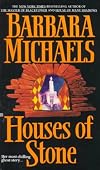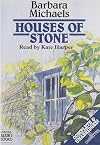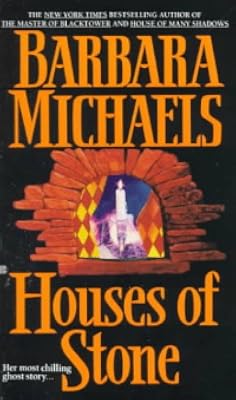
Houses of Stone
by Barbara Michaels
On This Page
Description
It is a find of inestimable value for Karen Holloway. The battered manuscript she holds in her hand-written in the nineteenth century and bearing the mysterious attribution "Ismene"-could prove a boon to the eager young English professor's career. But Karen's search for the author's true identity is carrying her into the gray shadows of the past, to places fraught with danger and terror. For the deeper she delves into Ismene's strange tale of gothic horror, the more she is haunted by the show more suspicion that the long-dead author was writing the truth . . . and that even now she is guiding Karen's investigation, leading her to terrible secrets hidden behind the cold walls of houses of stone. show lessTags
Recommendations

















Member Reviews
Houses of Stone manages--don't ask me how-- to simultaneously be a critique, homage, and spoof of the gothic novel.
Karen is a professor of English literature specializing in romantic/feminist literature of the 19th century who stumbles upon an incredible manuscript: the first draft of a gothic novel by an unknown female author. Karen follows the trail of the mysterious author to a plantation home in Virginia, where as she investigates the sinister atmosphere and gloomy house, she begins to take on the role of a gothic heroine. The story alternates between atmospheric and hilarious as Michaels pulls out all the tropes--burning buildings, crazy relatives locked up in the attic, being buried alive, swooning heroines, heroes fighting for show more their lady's honor, etc. The fun comes from the characters' genre-savvy bewilderment as they wander around in a modern version of Mysteries of Udolpho.
Karen really isn't my favorite heroine. She is unnecessarily prickly and dependent, alternating needy whining with snapping at her friends for perceived condescension. But then, I don't like gothic novels, and Karen alternately plays the role of the romantic heroine, admiring reader, and critic of the genre. I don't really like the Byronic love interests of the tale either, who are stereotypically dark, sinister, and handsome. The only saving grace here is Bill Myer, who, as a professor of literature, is amusingly genre-savvy. From the first moment things start getting supernatural, he starts pulling out plummy lines from the classics in an amused, sardonic fashion. From that point forward, it's difficult to tell whether he is feeling like a Byronic hero and voicing his thoughts, or simply making the statements he believes are apropos to him in his role of gothic hero.
I loved the well-drawn side characters: the gutsy, pragmatic Peggy and the ditsy Joan, as well as the incidental villains and comedic relief. However, perhaps the best part of the book for me was the knowledge I gained about the history of the genre and the historiography of women's literature over time, including pithy and rather appallingly chauvanistic comments made by various critics that appear at the start of each chapter. Although I am not a fan of gothic fiction and detest the Brontes, I found Michaels' analysis of her to be very interesting. It almost makes me want to reread them. But not quite. One thing that always bothered me about Barbara Michaels is that she totally underestimates Jane Austen. She calls Austen "demure" and says she only made one protest about the male-dominated field of literature. It's as if she's never read Austen, who continually makes scathing commentary about sexism. Since the Brontes hated Austen and made lots of nasty (jealous) comments about her, I think people tend to choose sides, and Peters ended up on the Bronte side. A pity, though.
Overall, although I found the main protagonist unendearing, the book is a lot of fun and very educational. I am not as fond of this one as many of the other Barbara Michaels stories and most of the stories published under her other soubriquet of [a:Elizabeth Peters|16549|Elizabeth Peters|http://photo.goodreads.com/authors/1232144920p2/16549.jpg]. However, Houses of Stone gives Michaels a wonderful opportunity to discuss a topic dear to her heart: female voices in literature and the tendency to entomb them in a house of stone. show less
Karen is a professor of English literature specializing in romantic/feminist literature of the 19th century who stumbles upon an incredible manuscript: the first draft of a gothic novel by an unknown female author. Karen follows the trail of the mysterious author to a plantation home in Virginia, where as she investigates the sinister atmosphere and gloomy house, she begins to take on the role of a gothic heroine. The story alternates between atmospheric and hilarious as Michaels pulls out all the tropes--burning buildings, crazy relatives locked up in the attic, being buried alive, swooning heroines, heroes fighting for show more their lady's honor, etc. The fun comes from the characters' genre-savvy bewilderment as they wander around in a modern version of Mysteries of Udolpho.
Karen really isn't my favorite heroine. She is unnecessarily prickly and dependent, alternating needy whining with snapping at her friends for perceived condescension. But then, I don't like gothic novels, and Karen alternately plays the role of the romantic heroine, admiring reader, and critic of the genre. I don't really like the Byronic love interests of the tale either, who are stereotypically dark, sinister, and handsome. The only saving grace here is Bill Myer, who, as a professor of literature, is amusingly genre-savvy. From the first moment things start getting supernatural, he starts pulling out plummy lines from the classics in an amused, sardonic fashion. From that point forward, it's difficult to tell whether he is feeling like a Byronic hero and voicing his thoughts, or simply making the statements he believes are apropos to him in his role of gothic hero.
I loved the well-drawn side characters: the gutsy, pragmatic Peggy and the ditsy Joan, as well as the incidental villains and comedic relief. However, perhaps the best part of the book for me was the knowledge I gained about the history of the genre and the historiography of women's literature over time, including pithy and rather appallingly chauvanistic comments made by various critics that appear at the start of each chapter. Although I am not a fan of gothic fiction and detest the Brontes, I found Michaels' analysis of her to be very interesting. It almost makes me want to reread them. But not quite. One thing that always bothered me about Barbara Michaels is that she totally underestimates Jane Austen. She calls Austen "demure" and says she only made one protest about the male-dominated field of literature. It's as if she's never read Austen, who continually makes scathing commentary about sexism. Since the Brontes hated Austen and made lots of nasty (jealous) comments about her, I think people tend to choose sides, and Peters ended up on the Bronte side. A pity, though.
Overall, although I found the main protagonist unendearing, the book is a lot of fun and very educational. I am not as fond of this one as many of the other Barbara Michaels stories and most of the stories published under her other soubriquet of [a:Elizabeth Peters|16549|Elizabeth Peters|http://photo.goodreads.com/authors/1232144920p2/16549.jpg]. However, Houses of Stone gives Michaels a wonderful opportunity to discuss a topic dear to her heart: female voices in literature and the tendency to entomb them in a house of stone. show less
Michaels delivers a poor-man's Posession with Houses of Stone, and I mean that in the best possible way. This has everything I like in a light read: crumbling mansions, literary references, buried documents, near-murders and very old bones. If you like This Kind of Thing (and I do) this is Very Good at This Kind of Thing. If you don't (like This Kind of Thing, that is) I suggest reading a different book.
I'm not sure what to make of this book. It's a much longer, slower-paced book than most of Barbara Michaels' body of work. It's also a lot meatier and it reads very much like Michaels had a couple of agendas when she wrote it, among them feminism, history and archeology, and the origins of the gothic novel. Anyone familiar with Barbara Michaels knows she was qualified on all fronts.
Unfortunately, though she did redeem herself about 75% of the way through, I never really warmed to the MC, Karen. In fact it took me that long to remember her name, though I could have rattled off a list of all the secondary players without a problem. For most of the book she's so ardently 'feminist' that she is paranoid and distrustful of literally every show more word that comes out of anyone's mouth. Her best friend Peggy spends much of the first half of the book apologising to her for perceived slights. I put the word feminism in quotes before because Karen equates being a feminist with having that mistrustful chip on her shoulder, when in reality that chip has more to do with her own perception of herself and how she is always 'handled' by others. It's no coincidence that the point at which she started letting go of all her resentment was the same one at which I started to like her.
Houses of Stone is a story of a story within a story within a story, and though there are suspicious and mysterious events that happen from start to finish, it never really had that typical build up of tension inherent to mysteries or suspense. There was a climax of sorts, but honestly it sort of felt tacked on so the paranormal aspect of the book could be wrapped up. The heart of this book is about the research involved when an important, previously unknown text is discovered. With a tad of romance, intrigue and deception.
For me, Peggy made this book. I loved her competent, no-nonsense attitude and Ioved how comfortable in herself she was, and therefore how unstoppable a force. She kept me reading long after I'd have gotten fed up with Karen; a fortunate thing, since I'd have missed a good story otherwise.
I read this as a buddy read with Linda Hilton and Moonlight Reader and also for the Gothic Square for Halloween Bingo. show less
Unfortunately, though she did redeem herself about 75% of the way through, I never really warmed to the MC, Karen. In fact it took me that long to remember her name, though I could have rattled off a list of all the secondary players without a problem. For most of the book she's so ardently 'feminist' that she is paranoid and distrustful of literally every show more word that comes out of anyone's mouth. Her best friend Peggy spends much of the first half of the book apologising to her for perceived slights. I put the word feminism in quotes before because Karen equates being a feminist with having that mistrustful chip on her shoulder, when in reality that chip has more to do with her own perception of herself and how she is always 'handled' by others. It's no coincidence that the point at which she started letting go of all her resentment was the same one at which I started to like her.
Houses of Stone is a story of a story within a story within a story, and though there are suspicious and mysterious events that happen from start to finish, it never really had that typical build up of tension inherent to mysteries or suspense. There was a climax of sorts, but honestly it sort of felt tacked on so the paranormal aspect of the book could be wrapped up. The heart of this book is about the research involved when an important, previously unknown text is discovered. With a tad of romance, intrigue and deception.
For me, Peggy made this book. I loved her competent, no-nonsense attitude and Ioved how comfortable in herself she was, and therefore how unstoppable a force. She kept me reading long after I'd have gotten fed up with Karen; a fortunate thing, since I'd have missed a good story otherwise.
I read this as a buddy read with Linda Hilton and Moonlight Reader and also for the Gothic Square for Halloween Bingo. show less
Barbara Michaels wrote 'Houses of Stone' in the 90's, but it is centered and driven by a newly discovered unpublished novel written in the early 19th Century by an unknown author named Ismene. English professor Karen Holloway acquires the manuscript against the competition of other academics.
She seeks answers to the author's identity and the story in a two hundred year old mansion in the Tidewater region of the South. Threats, accidents, threats of violence, and a restless ghost complicate her search for the answers. Very gothic and well done!
She seeks answers to the author's identity and the story in a two hundred year old mansion in the Tidewater region of the South. Threats, accidents, threats of violence, and a restless ghost complicate her search for the answers. Very gothic and well done!
Gothic romance is a fun genre for me and this book proved to be a good one by Michaels. As an English lit major, I enjoyed the background story and had met those professors, I am sure. Houses of Stone certainly does show its 1990s roots, but as long as you remember there aren't cell phones and ubiquitous access to the internet, it is easy to sink into the story. I sort of wish that the "found novel" really existed as I think I would have enjoyed it.
There are enough plot twists to keep me going, from love interests to dastardly deeds. I think an important quotation from the book is "A house of stone can be either a refuge or a prison." Reading the book lets you see both sides of the story.
If you like romantic suspense, I suspect you'll show more like this book. show less
There are enough plot twists to keep me going, from love interests to dastardly deeds. I think an important quotation from the book is "A house of stone can be either a refuge or a prison." Reading the book lets you see both sides of the story.
If you like romantic suspense, I suspect you'll show more like this book. show less
3.5 stars-Enjoyed the book but thought the ending was rushed. The rest of the story went at a a nice pace and then it was like Michaels woke up & said oops my deadline is today & just threw the ending together in a couple pages. The fast batch job at the end just didnt flow with the easy pace of the rest of the book.
If someone had written a book just for me, this would be it. When I finished reading it the first time, I went back to the beginning and started it all over. Old houses, old books, wonderful stuff.
Members
- Recently Added By
Author Information

99+ Works 73,003 Members
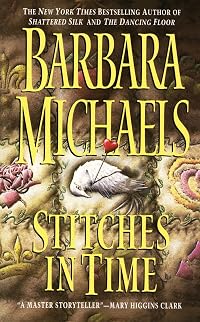
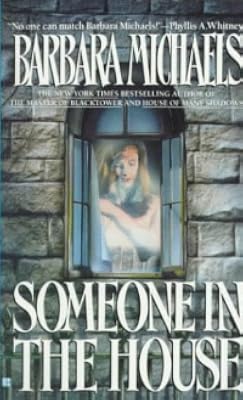
Barbara Mertz was born on September 29, 1927 in Astoria, Illinois. She received a bachelor's degree in 1947, a master's degree in 1950 and doctorate in Egyptology in 1952 from the University of Chicago. She wrote a few books using her real name including Temples, Tombs and Hieroglyphs (1964), Red Land, Black Land (1966), and Two Thousand Years in show more Rome (1968). She also wrote under the pen names Barbara Michaels and Elizabeth Peters. She made her fiction debut, The Master of Blacktower, under the name Barbara Michaels in 1966. She wrote over two dozen novels using this pen name including Sons of the Wolf, Someone in the House, Vanish with the Rose, Dancing Floor, and Other Worlds. Her debut novel under the pen name Elizabeth Peters was The Jackal's Head in 1968. She also wrote the Amelia Peabody series and Vicky Bliss Mystery series using this name. She died on August 8, 2013 at the age of 85. (Bowker Author Biography) show less
Some Editions
Work Relationships
Common Knowledge
- Canonical title
- Houses of Stone
- Original title
- Houses of Stone
- Alternate titles*
- Das Haus der bösen Ahnungen
- Original publication date
- 1993
- People/Characters
- Karen Holloway; Peggy Finneyfrock; Ismene
- Important places
- Virginia, USA
- Epigraph
- Literature is not the business of a woman's life, and it cannot be.
Letter from SOUTHEY to CHARLOTTE BRONTË, 1837 - Dedication
- This one, especially, is for Kristen.
- First words
- If only Simon weren't such a practical joker!
- Quotations
- A house of stone can be either a refuge or a prison.
I prefer horror to be more delicate—a frisson, a suggestion, instead of a catalog of disgusting details. The whisper from an invisible throat, the shadow where there is no object to cast it, a sudden breath of cold air in a... (show all) warm room.
The friendly, intimate ambience Simon had created was partially responsible, but the books themselves had an almost physical effect upon her. What they represented was little short of a miracle—contact, as direct as any spi... (show all)ritualist medium could claim, with minds long dead. - Last words
- (Click to show. Warning: May contain spoilers.)They were the most charming pair of King Charles spaniels Karen had ever seen.
*Some information comes from Common Knowledge in other languages. Click "Edit" for more information.
Classifications
Statistics
- Members
- 637
- Popularity
- 45,291
- Reviews
- 9
- Rating
- (3.62)
- Languages
- Chinese, simplified, English, Finnish, German
- Media
- Paper, Audiobook, Ebook
- ISBNs
- 18
- ASINs
- 4