On This Page
Description
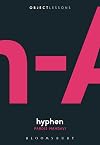
"Object Lessons is a series of short, beautifully designed books about the hidden lives of ordinary things. To hyphenate or not to hyphenate has been a central point of controversy since before the imprinting of the first Gutenberg Bible. And yet, the hyphen has persisted, bringing and bridging new words and concepts. Hyphen follows the story of the hyphen from antiquity ? "Hyphen? is derived from an ancient Greek word meaning ?to tie together? ? to the present, but also uncovers the show more politics of the hyphen and the role it plays in creating identities. The journey of this humble piece of connective punctuation reveals the quiet power of an orthographic concept to speak to the travails of hyphenated individuals all over the world. Hyphen is ultimately a compelling story about the powerful ways that language and identity intertwine. Mahdavi ? herself a hyphenated Iranian-American ? weaves in her own experiences struggling to find her own sense of self amidst feelings of betwixt and between. We meet three other individuals who are each on a similar journey and watch as they find a way to embrace the space of the hyphen ? rejecting the false choice of trying to fit into previously prescribed identities. Through their stories, we collectively consider how belonging only serves to fulfill the failures of troubled states, regimes, or institutions and offer possibilities to navigate, articulate, and empower new identities. Object Lessons is published in partnership with an essay series in The Atlantic."-- show lessTags
Recommendations





















Member Reviews
I didn't mind the grammar lesson (though if you've read Eats Shoots & Leaves you already know the story of the hyphen to which Mahdavi adds very little). I frankly enjoyed her personal reflections. But the stories of her students. Oof. They felt hollow and fake. They must be composites rather than true deidentified individuals. I felt like I was taking workplace sensitivity training rather than learning a real person's experience and reflections. Not recommended.
Hyphen by Pardis Mahdavi is another welcome addition to the Object Lessons series, both offering a bit of the history of the hyphen as both punctuation and social/political object.
First, a little about the series for those unfamiliar. The object under review is not simply presented as a dry historical object, it is contextualized, usually over time and particularly for what it represents in contemporary times. These aren't about the objects in a narrow sense and without context, which some seem to want. These are personalized as well as historical accounts, and usually where these two meet.
Toward that end, Mahdavi does a nice job of presenting some history interspersed with both her story and that of several other people for whom the show more hyphen, as used and abused currently, has helped form their views on personhood.
The structure is not as straightforward as some might like but there is structure. Guttenberg's family issues as well as political and religious affiliations during the time he helped make the hyphen into what we now understand it to be is presented in juxtaposition to contemporary issues of family and societal divisions, real or imagined. No, connections are not explicitly made, Mahdavi probably assumes too much from some of her readers that they will see the connections as well as appreciate the history.
While the book does focus on the United States since that is where she teaches and lives, the issues are much broader than that. You'd have to be amazingly entitled and (undeservedly) privileged to think that hyphenated citizenship isn't also a big issue in the UK. If theemoronic wants links to many articles, columns and essays, I'll be happy to share them. or, if within his limited abilities, do a simple Google search. Or, even less likely, learn about your fellow citizens that might not look just like you. But, based on his persistent whining in reviews, that won't happen.
Back to the book, most people tend to think of the hyphen as either joining or separating when it in fact serves either purpose at times. In the political realm, for over a century those who want and need to scapegoat people have thought of it as dividing and also as privileging whatever side they want to scapegoat.
In the more orthographic aspect, the hyphen also often serves as a temporary space saver between what were two separate words before, over time, they become one non-hyphenated word.
I would recommend this to those who like to read and understand how simple "objects" can, both historically and contemporaneously, be both basic tools and divisive social and political weapons. I wouldn't recommend this for those who get whiny every time material addresses those different from them.
Reviewed from a copy made available by the publisher via NetGalley. show less
First, a little about the series for those unfamiliar. The object under review is not simply presented as a dry historical object, it is contextualized, usually over time and particularly for what it represents in contemporary times. These aren't about the objects in a narrow sense and without context, which some seem to want. These are personalized as well as historical accounts, and usually where these two meet.
Toward that end, Mahdavi does a nice job of presenting some history interspersed with both her story and that of several other people for whom the show more hyphen, as used and abused currently, has helped form their views on personhood.
The structure is not as straightforward as some might like but there is structure. Guttenberg's family issues as well as political and religious affiliations during the time he helped make the hyphen into what we now understand it to be is presented in juxtaposition to contemporary issues of family and societal divisions, real or imagined. No, connections are not explicitly made, Mahdavi probably assumes too much from some of her readers that they will see the connections as well as appreciate the history.
While the book does focus on the United States since that is where she teaches and lives, the issues are much broader than that. You'd have to be amazingly entitled and (undeservedly) privileged to think that hyphenated citizenship isn't also a big issue in the UK. If theemoronic wants links to many articles, columns and essays, I'll be happy to share them. or, if within his limited abilities, do a simple Google search. Or, even less likely, learn about your fellow citizens that might not look just like you. But, based on his persistent whining in reviews, that won't happen.
Back to the book, most people tend to think of the hyphen as either joining or separating when it in fact serves either purpose at times. In the political realm, for over a century those who want and need to scapegoat people have thought of it as dividing and also as privileging whatever side they want to scapegoat.
In the more orthographic aspect, the hyphen also often serves as a temporary space saver between what were two separate words before, over time, they become one non-hyphenated word.
I would recommend this to those who like to read and understand how simple "objects" can, both historically and contemporaneously, be both basic tools and divisive social and political weapons. I wouldn't recommend this for those who get whiny every time material addresses those different from them.
Reviewed from a copy made available by the publisher via NetGalley. show less
Fascinating history of the hyphen. Who knew it could be so political. Quick, excellent read.
While I certainly agree with Mahdavi's politics and found the historical chapters mildly interesting, the case studies sounded totally made up and as wooden as workplace sensitivity training dramatizations. Her personal stories were more compelling but much too brief and not enough to save this short book. Too bad.
Ratings
Members
- Recently Added By
Lists

Writing
81 works; 1 member
Author Information
9 Works 115 Members
Pardis Mahdavi is Associate Professor and Chair of Anthropology at Pomon College. She is the author of Passionate Uprisings: Iran's Sexual Revolution (Stanford, 2008) and Gridlock: Labor, Migration, and Human Trafficking in Dubai (Stanford, 2011). She has been a Woodrow Wilson Center Fellow and a Google Ideas Fellow.
Series

Common Knowledge
- Canonical title
- Hyphen
Classifications
- Genres
- Nonfiction, Philosophy, General Nonfiction, Literature Studies and Criticism, Art & Design
- DDC/MDS
- 155.2 — Philosophy & psychology Psychology Differential and developmental psychology Individual Psychology
- LCC
- P301.5 .P86 — Language and Literature Philology. Linguistics Language. Linguistic theory. Comparative grammar Style. Composition. Rhetoric
- BISAC
Statistics
- Members
- 23
- Popularity
- 1,150,806
- Reviews
- 4
- Rating
- (3.25)
- Languages
- English
- Media
- Paper, Ebook
- ISBNs
- 4