
White Skin, Black Fuel: On the Danger of Fossil Fascism
by Andreas Malm, The Zetkin Collective (Author)
On This Page
Description
"This is the first study of the far right's role in the climate crisis, presenting an eye-opening sweep of a novel political constellation, revealing its deep historical roots"--Tags
Recommendations


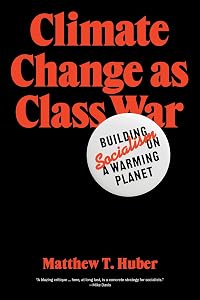


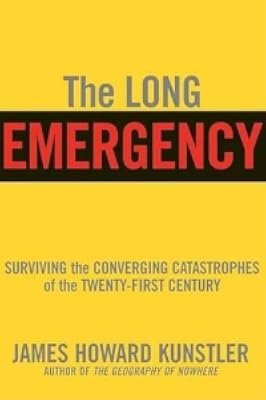


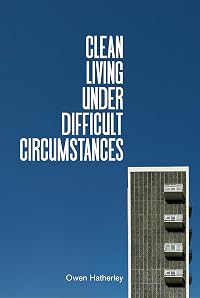

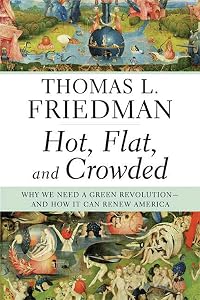















Member Recommendations
Member Reviews
My mental health must be improving if I can get through a whole Andreas Malm book. (In late 2020 I gave up 52 pages into [b:Corona, Climate, Chronic Emergency: War Communism in the Twenty-First Century|54619224|Corona, Climate, Chronic Emergency War Communism in the Twenty-First Century|Andreas Malm|https://i.gr-assets.com/images/S/compressed.photo.goodreads.com/books/1595822734l/54619224._SY75_.jpg|85217012] as it made me feel ill. That still languishes unread on the bookshelf.) [b:White Skin, Black Fuel: On the Danger of Fossil Fascism|56708410|White Skin, Black Fuel On the Danger of Fossil Fascism|Andreas Malm|https://i.gr-assets.com/images/S/compressed.photo.goodreads.com/books/1623412638l/56708410._SY75_.jpg|88659555] is an show more investigation of the linkages between the far right and climate change, covering a great deal of contemporary and historical ground. Part 1 discusses a series of national case studies of 21st century far right politicians in Europe, North America, and South America and their policy positions/public statements on climate change. Part 2 seeks a theory to explain these positions by exploring the entwined histories of fascism, racism, and fossil fuel dependence. Anyone alarmed by resurgent fascism and the climate emergency will find the book both informative and deeply depressing. I got through it by reading about 80 pages at a time, stopping when it gave me an anxiety stomach ache and alternating with light(ish) fiction. It was worth the trouble, although I do sometimes think I'd be happier without a relentless desire to try and understand what's wrong with the world. I do not think that ignorance is bliss, but being deeply afraid of climate collapse certainly isn't much fun.
[b:White Skin, Black Fuel: On the Danger of Fossil Fascism|56708410|White Skin, Black Fuel On the Danger of Fossil Fascism|Andreas Malm|https://i.gr-assets.com/images/S/compressed.photo.goodreads.com/books/1623412638l/56708410._SY75_.jpg|88659555] demolishes hopeful illusions about climate change, for instance the argument (which I was taught as a undergraduate) that it can be solved by global treaty because that worked for the hole in the ozone layer:
As CFCs are also greenhouse gases, I've read somewhere (probably [b:Kyoto2: How to Manage the Global Greenhouse|3710206|Kyoto2 How to Manage the Global Greenhouse|Oliver Tickell|https://i.gr-assets.com/images/S/compressed.photo.goodreads.com/books/1315673368l/3710206._SY75_.jpg|3753769]) that the Montreal Protocol did more to reduce greenhouse gas emissions than the Kyoto Protocol, which set voluntary targets for greenhouse emissions mitigation that were ignored. To set the scene, there is a brief and uncompromising synopsis of fossil fuel companies discrediting climate change (cf [b:The Discovery of Global Warming|78687|The Discovery of Global Warming (New Histories of Science, Technology, and Medicine)|Spencer R. Weart|https://i.gr-assets.com/images/S/compressed.photo.goodreads.com/books/1388356090l/78687._SY75_.jpg|75979] and [b:Losing Earth: A Recent History|41940347|Losing Earth A Recent History|Nathaniel Rich|https://i.gr-assets.com/images/S/compressed.photo.goodreads.com/books/1555104282l/41940347._SY75_.jpg|65424935]).
The substance of the book is then concerned with how the far right acts as a means by which fossil fuel companies continue to resist action to mitigate climate change. As the climate becomes increasingly unstable, with more and more occurrences of extreme weather, this denial and resistance has doubled down. While I'd already observed this somewhat with Trump, Bolsonaro, and useless Tory governments in the UK, seeing it laid out in great detail here hit hard. I hadn't realised what inroads the far right has made across much of mainland Europe, notably Finland and Denmark. The exhaustive descriptions of islamophobic, racist, and anti-environment policies and pronouncements are intensely depressing reading. The sheer fucking stupidity of these becomes overwhelming at times.
The only interesting variety is provided by occasional elements of eco-fascism, which I did not realise France's Front Nationale had dabbled in. These usually combine harking back to a prelapsarian 'natural' past with blunt force racist 'concern' that non-white people are having too many children. The British example given is [a:Paul Kingsnorth|406864|Paul Kingsnorth|https://images.gr-assets.com/authors/1507092300p2/406864.jpg]. While I found his essay collection [b:Confessions of a Recovering Environmentalist and Other Essays|31450661|Confessions of a Recovering Environmentalist and Other Essays|Paul Kingsnorth|https://i.gr-assets.com/images/S/compressed.photo.goodreads.com/books/1483077976l/31450661._SX50_.jpg|52153539] highly thought-provoking, many of the thoughts weren't positive. I noted in my review that the essay Rescuing the English made me very angry, as it's anti-immigrant green nationalism couched in pretty language. Every use of 'English people' actually means 'white English people'. [b:White Skin, Black Fuel: On the Danger of Fossil Fascism|56708410|White Skin, Black Fuel On the Danger of Fossil Fascism|Andreas Malm|https://i.gr-assets.com/images/S/compressed.photo.goodreads.com/books/1623412638l/56708410._SY75_.jpg|88659555] also makes this point and characterises Kingnorth and 'his ilk' as the 'highbrow (or perhaps we should say middlebrow)' face of far right green nationalism.
The second section begins with a few chapters on the historical context of fascism and fossil fuel dependence. These ask what conditions enabled fascism to rise in the 20th century and whether they are happening again:
As a student and for many years after, I believed that incremental government policy could and would reduce greenhouse gas emissions and avoid runaway climate change. I lost this comforting belief between 2010 and 2016, which I talked about when reviewing [b:This Is Not A Drill: An Extinction Rebellion Handbook|45308227|This Is Not A Drill An Extinction Rebellion Handbook|Extinction Rebellion|https://i.gr-assets.com/images/S/compressed.photo.goodreads.com/books/1559314992l/45308227._SY75_.jpg|70036425]. The fact is that global carbon dioxide emissions keep rising rapidly and the longer this continues for the more severe any mitigation would need to be to avoid civilisation-ending rises in temperatures:
It seems extraordinary now to consider that the UK Climate Change Act 2008, which committed the country to cut emissions by 80% between 1990 level by 2050, was passed with support from all major parties including the Conservatives. Admittedly it's a toothless target with no real enforcement, but these days the Tories hate wind turbines, fuel tax, water quality standards, and any other environmental policies. Back then they were in opposition, led by David Cameron, and the years of austerity, brexit, and new depths of anti-immigrant racism were still to come. So I have definitely observed this intensified antagonism here in GB.
The only moment of anything like levity comes about in the section about right wing fear of 'cultural marxism', a conspiracy theory that sometimes includes the detail of Theodor Adorno writing all of The Beatles' lyrics. Impressive if true! On the other hand, there are many paragraphs in [b:White Skin, Black Fuel: On the Danger of Fossil Fascism|56708410|White Skin, Black Fuel On the Danger of Fossil Fascism|Andreas Malm|https://i.gr-assets.com/images/S/compressed.photo.goodreads.com/books/1623412638l/56708410._SY75_.jpg|88659555] that are so devastating that it's very difficult to get on with your day after reading them. For example, chapter 9 builds the argument that even when the far right doesn't deny climate change, it doesn't care about it because only non-white people in other countries will be affected by it. Thus the policy priority is to close borders to those suffering the ravages of climate change, while continuing with business as usual:
There isn't much to say about that, other than it makes me glad I don't have children and want to weep for the children of others.
Andreas Malm's excellent earlier book [b:Fossil Capital: The Rise of Steam Power and the Roots of Global Warming|25614450|Fossil Capital The Rise of Steam Power and the Roots of Global Warming|Andreas Malm|https://i.gr-assets.com/images/S/compressed.photo.goodreads.com/books/1449996772l/25614450._SY75_.jpg|44301257] recounts how steam power became dominant in Britain during the industrial revolution. In that Malm mentions a sequel tentatively titled 'Fossil Empire' that would extend his analysis beyond Britain, to the forcible export of industrial capitalism and steam power across the world. That book hasn't materialised, as the current state of climate change politics understandably proved more urgent, but elements of it are clearly present in [b:White Skin, Black Fuel: On the Danger of Fossil Fascism|56708410|White Skin, Black Fuel On the Danger of Fossil Fascism|Andreas Malm|https://i.gr-assets.com/images/S/compressed.photo.goodreads.com/books/1623412638l/56708410._SY75_.jpg|88659555]:
I also appreciated an analysis of how car dependence links into fossil fuel dependence and the far right, which took me right back to my PhD thesis. In that, I argued that reducing car ownership is key to reducing carbon emissions from transport, due to pernicious impact both at an individual and social level. Consequently this made me feel a certain amount of vindication:
Of course car dependence requires a vast network of public infrastructure that is built and maintained at huge public expense, but this is simply taken for granted as the motorist's entitlement!
Any involvement with The Beatles notwithstanding, Adorno is treated as a particularly useful philosopher for our current times, because his observations of encroaching fascism have unsettling relevance today:
[b:White Skin, Black Fuel: On the Danger of Fossil Fascism|56708410|White Skin, Black Fuel On the Danger of Fossil Fascism|Andreas Malm|https://i.gr-assets.com/images/S/compressed.photo.goodreads.com/books/1623412638l/56708410._SY75_.jpg|88659555] was published in 2021 and includes a postscript reflecting on 2020, which begins, 'One of the first political casualties of the Covid-19 pandemic was the climate movement.' This is not a book to read if you want to feel comfortable about current politics and daily life. It relentlessly strips away any illusion that the rise of the far right and the climate crisis are unrelated phenomena that won't worsen together. While this is not an invitation to despair rather than resistance, it is a lot to process. If necessary, I suggest reading or watching something that takes you away from the horrors of reality both during and after. Nonetheless, I do not regret reading it as a means of making some sense of what's preventing action on climate change. Certainly not a lack of scientific evidence or technological solutions; in essence it's a political choice to prioritise current shareholder returns over the survival of the human race. As that choice looks more and more insane, it is defended with greater and greater virulence. Generative AI is bound to worsen the reliability of information online, so it seems the political divide increasingly boils down to whether you are more afraid of reality (e.g. environmental breakdown) or of lies (e.g. Europe being taken over by Muslims). Positive visions of the future are sparse on both sides, but I'd still prefer to face reality in all its grimness than be manipulated by self-serving untrue garbage. Building a positive future requires acknowledgement of the world as it actually is. show less
[b:White Skin, Black Fuel: On the Danger of Fossil Fascism|56708410|White Skin, Black Fuel On the Danger of Fossil Fascism|Andreas Malm|https://i.gr-assets.com/images/S/compressed.photo.goodreads.com/books/1623412638l/56708410._SY75_.jpg|88659555] demolishes hopeful illusions about climate change, for instance the argument (which I was taught as a undergraduate) that it can be solved by global treaty because that worked for the hole in the ozone layer:
Fossil fuels are the universal substratum for the production of surplus-value - not a material for this or that specific product, as bauxite for aluminium or oranges for juice, but a type of energy utilised across the spectrum of commodity production. It is this special status of fossil fuels in the total metabolism of capital that comes into view in the climate crisis. Conversely, we could say that the problem of ozone depletion was relatively easily managed because there did not exist any primitive accumulation of chlorofluorocarbon capital with which the rest of capital lived in symbiosis, and hence no capitalist class fraction with the capacity to sabotage the Montreal Protocol enacted in 1989.
As CFCs are also greenhouse gases, I've read somewhere (probably [b:Kyoto2: How to Manage the Global Greenhouse|3710206|Kyoto2 How to Manage the Global Greenhouse|Oliver Tickell|https://i.gr-assets.com/images/S/compressed.photo.goodreads.com/books/1315673368l/3710206._SY75_.jpg|3753769]) that the Montreal Protocol did more to reduce greenhouse gas emissions than the Kyoto Protocol, which set voluntary targets for greenhouse emissions mitigation that were ignored. To set the scene, there is a brief and uncompromising synopsis of fossil fuel companies discrediting climate change (cf [b:The Discovery of Global Warming|78687|The Discovery of Global Warming (New Histories of Science, Technology, and Medicine)|Spencer R. Weart|https://i.gr-assets.com/images/S/compressed.photo.goodreads.com/books/1388356090l/78687._SY75_.jpg|75979] and [b:Losing Earth: A Recent History|41940347|Losing Earth A Recent History|Nathaniel Rich|https://i.gr-assets.com/images/S/compressed.photo.goodreads.com/books/1555104282l/41940347._SY75_.jpg|65424935]).
The layman's impression of a debate between researchers who believed in global warming and those who disputed it was completely manufactured by the class faction that knew, before almost anyone else, that there was no reason to have such a debate, any more than one over heliocentrism or the laws of thermodynamics. The debate was a vicious trick, the denial but a tactic. Some of the early reports might have been buried deep in desks and archives, but the knowledge was updated and the duplicity renewed on a regular basis. Exxon, for instance, spoke with a consistently forked tongue over the years, saying one thing in internal documents and something entirely different in advertorials and other PR material.
The substance of the book is then concerned with how the far right acts as a means by which fossil fuel companies continue to resist action to mitigate climate change. As the climate becomes increasingly unstable, with more and more occurrences of extreme weather, this denial and resistance has doubled down. While I'd already observed this somewhat with Trump, Bolsonaro, and useless Tory governments in the UK, seeing it laid out in great detail here hit hard. I hadn't realised what inroads the far right has made across much of mainland Europe, notably Finland and Denmark. The exhaustive descriptions of islamophobic, racist, and anti-environment policies and pronouncements are intensely depressing reading. The sheer fucking stupidity of these becomes overwhelming at times.
The only interesting variety is provided by occasional elements of eco-fascism, which I did not realise France's Front Nationale had dabbled in. These usually combine harking back to a prelapsarian 'natural' past with blunt force racist 'concern' that non-white people are having too many children. The British example given is [a:Paul Kingsnorth|406864|Paul Kingsnorth|https://images.gr-assets.com/authors/1507092300p2/406864.jpg]. While I found his essay collection [b:Confessions of a Recovering Environmentalist and Other Essays|31450661|Confessions of a Recovering Environmentalist and Other Essays|Paul Kingsnorth|https://i.gr-assets.com/images/S/compressed.photo.goodreads.com/books/1483077976l/31450661._SX50_.jpg|52153539] highly thought-provoking, many of the thoughts weren't positive. I noted in my review that the essay Rescuing the English made me very angry, as it's anti-immigrant green nationalism couched in pretty language. Every use of 'English people' actually means 'white English people'. [b:White Skin, Black Fuel: On the Danger of Fossil Fascism|56708410|White Skin, Black Fuel On the Danger of Fossil Fascism|Andreas Malm|https://i.gr-assets.com/images/S/compressed.photo.goodreads.com/books/1623412638l/56708410._SY75_.jpg|88659555] also makes this point and characterises Kingnorth and 'his ilk' as the 'highbrow (or perhaps we should say middlebrow)' face of far right green nationalism.
The second section begins with a few chapters on the historical context of fascism and fossil fuel dependence. These ask what conditions enabled fascism to rise in the 20th century and whether they are happening again:
For anyone concerned with the possible reappearance of fascism, it follows that 'the key question becomes: what kind of crisis calls this politics to the agenda?'
But no crisis has ever induced fascism through automatic causation, just as no ingredients bakes themselves into a bread. Someone is always running the bakery. Paxton highlights the fact that both Mussolini and Hitler came into office by order of traditional power-holders. Both men were invited to rule by the legitimate representatives of their respective states - King Victor Emmanuel III in October 1922, President Von Hindenburg in January 1933 - who acted out a shared resolve among their dominant classes to bank on fascist forces as the best way out of the impasse. Both Il Duce and the Fuhrer had taken a previous stab at seizing power on their own - the former in the election campaign of 1919, the latter in the Beer Hall Putsch in 1923 - and failed abysmally. Their route to government passed through an alliance with the existing establishment. [...]
Such analysis should not be mistaken for a facile view of fascism as the string doll of big capital, designed by it and moving as it did. Keen observers from Zetkin onwards recognised fascism as a mass movement in its own right, with an authentic following - even among some proletarian strata - and a winning nationalist zeal irreducible to the needs of any dominant class fraction. It was never the first choice of a king or president. Rather it served as a last resort, to which official powerbrokers and bourgeois layers turned in an hour of desperate need. [...]
The second condition of the existence of fascism was the willingness of sections of the dominant class to call upon the fascists to relieve the crisis. Fascism, then, was not for ordinary times.
As a student and for many years after, I believed that incremental government policy could and would reduce greenhouse gas emissions and avoid runaway climate change. I lost this comforting belief between 2010 and 2016, which I talked about when reviewing [b:This Is Not A Drill: An Extinction Rebellion Handbook|45308227|This Is Not A Drill An Extinction Rebellion Handbook|Extinction Rebellion|https://i.gr-assets.com/images/S/compressed.photo.goodreads.com/books/1559314992l/45308227._SY75_.jpg|70036425]. The fact is that global carbon dioxide emissions keep rising rapidly and the longer this continues for the more severe any mitigation would need to be to avoid civilisation-ending rises in temperatures:
Anderson laid it down: every postponement of the 'day of reckoning' has intensified the contradiction between capital accumulation and the life-support systems of the earth. Every additional gigatonne of carbon sent into the atmosphere makes half measures less viable. Every moment of stalling mitigation has ensured that if it ever commences, it will have to exercise the highest degree of control over the material conditions of life - first of all, over the privileged minority wasting the resources on which all others depend, notably the carbon sink of the atmosphere. [...]
The development of climate politics seems to obey a law of polarisation: the higher the temperatures, the more acute the antagonism between a left that alone stands ready to pick up the instruments for alleviating the crisis and a right that, for that very reason, refuses to contemplate it. A recursive cycle has been rolling for some time. Every year of inaction necessitates more revolutionary action the next; every threat of such action - if only of a hypothetical, tautological character - strengthens the conviction that this is a plot by the left.
It seems extraordinary now to consider that the UK Climate Change Act 2008, which committed the country to cut emissions by 80% between 1990 level by 2050, was passed with support from all major parties including the Conservatives. Admittedly it's a toothless target with no real enforcement, but these days the Tories hate wind turbines, fuel tax, water quality standards, and any other environmental policies. Back then they were in opposition, led by David Cameron, and the years of austerity, brexit, and new depths of anti-immigrant racism were still to come. So I have definitely observed this intensified antagonism here in GB.
The only moment of anything like levity comes about in the section about right wing fear of 'cultural marxism', a conspiracy theory that sometimes includes the detail of Theodor Adorno writing all of The Beatles' lyrics. Impressive if true! On the other hand, there are many paragraphs in [b:White Skin, Black Fuel: On the Danger of Fossil Fascism|56708410|White Skin, Black Fuel On the Danger of Fossil Fascism|Andreas Malm|https://i.gr-assets.com/images/S/compressed.photo.goodreads.com/books/1623412638l/56708410._SY75_.jpg|88659555] that are so devastating that it's very difficult to get on with your day after reading them. For example, chapter 9 builds the argument that even when the far right doesn't deny climate change, it doesn't care about it because only non-white people in other countries will be affected by it. Thus the policy priority is to close borders to those suffering the ravages of climate change, while continuing with business as usual:
The logic appears robust. In a world where black and brown lives matter little, and where global warming first destroys such lives, then it will not be a matter of great concern. But if there is indeed a real effect of this kind - it's a problem for non-white trash, so let's keep burning - we would expect it to be most powerful in the early stages of warming, up to, say, 2°C, whereas at very late stages, at 6°C and 8°C and beyond, it would presumably wane with the differentials in vulnerability. At 10°C, the blondest Swedes will be reduced to cinders too. In other words, the effect would be most politically efficacious precisely in the window of time when mitigation could make the largest difference. Everyone will be in the same furnace and see their shared destiny only when it's far too late to do anything about it.
There isn't much to say about that, other than it makes me glad I don't have children and want to weep for the children of others.
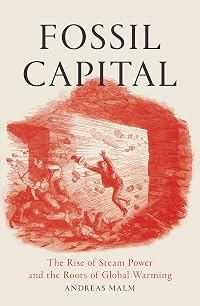
Andreas Malm's excellent earlier book [b:Fossil Capital: The Rise of Steam Power and the Roots of Global Warming|25614450|Fossil Capital The Rise of Steam Power and the Roots of Global Warming|Andreas Malm|https://i.gr-assets.com/images/S/compressed.photo.goodreads.com/books/1449996772l/25614450._SY75_.jpg|44301257] recounts how steam power became dominant in Britain during the industrial revolution. In that Malm mentions a sequel tentatively titled 'Fossil Empire' that would extend his analysis beyond Britain, to the forcible export of industrial capitalism and steam power across the world. That book hasn't materialised, as the current state of climate change politics understandably proved more urgent, but elements of it are clearly present in [b:White Skin, Black Fuel: On the Danger of Fossil Fascism|56708410|White Skin, Black Fuel On the Danger of Fossil Fascism|Andreas Malm|https://i.gr-assets.com/images/S/compressed.photo.goodreads.com/books/1623412638l/56708410._SY75_.jpg|88659555]:
But it could also be hypothesised that the articulation of energy and race that developed over the nineteenth century, in the most primary levels of modern capitalism, sedimented an association between whiteness and fossil fuels that wells up like magma in a time of climate breakdown. Certain defenders of such fuels might feel, on some level, questioned not only as burners but more specifically as white people, who for so long have had their tap-root of riches in the bowels of the planet. One can hear some of this association echoing in one of the boilerplates of white supremacy, in the US in particular: whites should be proud for having invented the modern world.
I also appreciated an analysis of how car dependence links into fossil fuel dependence and the far right, which took me right back to my PhD thesis. In that, I argued that reducing car ownership is key to reducing carbon emissions from transport, due to pernicious impact both at an individual and social level. Consequently this made me feel a certain amount of vindication:
The motorist wants to be left alone, preferably have the road to himself as he speeds forth. 'We are now, truly,' Mitchell writes, continuing the SUV-owners anthem, 'the liberal, autonomous subject. We own ourselves and no one can intrude upon us without our permission.' The car, in other words, exudes the ideology most detrimental to any efforts to cut emissions - an ideology of form as much as content, abiding no rationing or accommodation of foreign others.
Of course car dependence requires a vast network of public infrastructure that is built and maintained at huge public expense, but this is simply taken for granted as the motorist's entitlement!
Any involvement with The Beatles notwithstanding, Adorno is treated as a particularly useful philosopher for our current times, because his observations of encroaching fascism have unsettling relevance today:
Among the messages in a bottle that Adorno sent out like an armada, this one is not the least disconcerting: the break with reality is caused by reality itself and then reacts back upon it. Under the conditions of a fossil economy, the rational thing to do is to turn on the coal stove, take the car to work, fly to Thailand for a holiday, buy some shares in an oil company. The totality is irrational. It cannot adjust to the reality it produces and so breaks off from it, one way or another, in a flight that inevitably sweeps up individuals too. 'People are inevitably as irrational as the world in which they live.' [...] We can particularise this diagnosis and say that after the onset of the climate crisis, the reproduction of fossil capital as such secretes ideologies of denial and other irrational pathologies.
[b:White Skin, Black Fuel: On the Danger of Fossil Fascism|56708410|White Skin, Black Fuel On the Danger of Fossil Fascism|Andreas Malm|https://i.gr-assets.com/images/S/compressed.photo.goodreads.com/books/1623412638l/56708410._SY75_.jpg|88659555] was published in 2021 and includes a postscript reflecting on 2020, which begins, 'One of the first political casualties of the Covid-19 pandemic was the climate movement.' This is not a book to read if you want to feel comfortable about current politics and daily life. It relentlessly strips away any illusion that the rise of the far right and the climate crisis are unrelated phenomena that won't worsen together. While this is not an invitation to despair rather than resistance, it is a lot to process. If necessary, I suggest reading or watching something that takes you away from the horrors of reality both during and after. Nonetheless, I do not regret reading it as a means of making some sense of what's preventing action on climate change. Certainly not a lack of scientific evidence or technological solutions; in essence it's a political choice to prioritise current shareholder returns over the survival of the human race. As that choice looks more and more insane, it is defended with greater and greater virulence. Generative AI is bound to worsen the reliability of information online, so it seems the political divide increasingly boils down to whether you are more afraid of reality (e.g. environmental breakdown) or of lies (e.g. Europe being taken over by Muslims). Positive visions of the future are sparse on both sides, but I'd still prefer to face reality in all its grimness than be manipulated by self-serving untrue garbage. Building a positive future requires acknowledgement of the world as it actually is. show less
Andreas Malm and the Zetkin Collective - [White Skin, Black Fuel: on the danger of Fossil fascism].
As I am reading my latest book on the imminent dangers of a climate catastrophe, the rain is battering down on the skylight window above my desk. It has been raining in heavy bursts for the last four days and when I was out walking yesterday the fields down in the valley were sodden with water. Today the region is on an orange warning to the dangers of flooding and there is no doubt that the local rivers will burst their banks again. We have reached the stage now where it is not a question of whether there will be flooding, but now, how often it will occur?
Andreas Malm is a Swedish author and an associate professor of human ecology and show more sits on the editorial board of the academic journal Historical Materialism and has been described as an original thinker on the subject of climate change. His political stance is decidedly left wing with the weight of the history of fascist movements sitting heavily on his shoulders. His premise in White Skin, Black Fuel is that there is an historical link between the petrol chemical industries and racist politics. He refers to this as fossil fascism. The idea that the burners of fossil fuel will continue to burn their way to the destruction of the planet by exploiting prejudices against migrant populations and climate denialism. According to Malm it is a tactic that has an historical precedent in the fascist movements in Germany and Italy after the first world war. We can witness history repeating itself today with the rise of right wing political movements that have succeeded in electing Trump in America, Jair Bolsonaro in Brazil, Andrzej Duda in Poland and the UK's Brexit government. Malm comes up with his own definition of fascism and it is interesting to consider how closely these political movements resemble his ideas:
"fascism is a politics of palingenetic ultranationalism that comes to the fore in a conjuncture of deep crisis, and if leading sections of the dominant class throw their weight behind it and hand it power, there ensues an exceptional regime of systematic violence against those identified as enemies of the nation."
Much of the book is a history lesson, a history lesson according to Malm that walks the reader through the story of imperialism: the discovery of coal and oil that powered the might of industrial nations and enabled them to dominate and subjugate much of the southern hemisphere. This is a fascinating story, but feels at times like a thesis written to prove an academic point. I think the links between fossil burning industry, right wing politicians and their resort to fascist policies are there in plain sight, however the historical linkage even if proven adds minimally to the important questions that face the world today; one of which is how are we to divest the power of the fossil fuel extractors from their influence over governments. Malm's book certainly enables us to recognise the enemy (the fossil fascists) and to understand the methods at its disposal to protect its interests. His own ideas from his historical perpective are that: capitalism, not human beings are changing the climate; industrialisation itself is less of a problem than the fossil system that powers it. The overwhelming focus on climate activism must be on dismantling fossil infrastructure.
Malm asks; why do so many parties and politicians of the far right traffic in climate denialism and he refers to the various stages of climate denial based on the ideas of Stanley Cohen's book ['States of Denial: knowing about atrocities and suffering]. His three stages of denial are:
If someone asserts that a bad thing does not happen and is not true, her denial is literal; if she accepts that it happens but gives it a lower degree of meaning – rewriting the event, obfuscating the effect, exculpating the perpetrator – it is interpretive. But the most insidious form is perhaps the third. Here the facts and gravity of the matter are accepted, but not acted upon. Knowledge is not an issue. The harm is fully acknowledged, but the obligation to intervene is suppressed through one cognitive technique or other.
On a personal level he uses an anecdote:
Imagine that your neighbour beats his wife badly every Saturday. Each Sunday morning, you wake up and think: what a wonderful neighbourhood this is, peaceful and prosperous, a blessing to live in! If someone asks whether you heard strange sounds yesterday evening, you shake your head vigorously. Or you might respond that some couples behave that way, fighting it out with fists and tableware – it is just one way of conducting an argument. They seem happy enough when he’s not drunk. Or you might recognise to yourself and others that there is grave violence inflicted on that woman and it ought to stop, but then you go about your daily life, month after month, and you listen to the muffled cries without acting – or perhaps you slip in the business card of a therapist through the letter slot, or talk to another neighbour who is also content just talking about the matter, and even if the assaults continue and you glimpse the woman in a state of physical collapse, you imagine that you have done your part.
Malm's thoughts on this are that right wing political leaders today who started out as literal deniers, have moved on to stage two and even stage three. Certainly the publicity emerging from the large petroleum companies Exxon Mobil or BP for example will highlight how they are combating climate change, a phrase now used for much of this would be greenwashing and therefore the third stage of denial.
The final section of the book entitled "Death at the Steering Wheel" is bristling with ideas and attempts to draw the various strands of the book together. This is not a book to instruct the reader as to what they can do to challenge climate change, although there is a section on activism and what is being done at the moment. It is a book that attempts to sketch in an historical perspective, to provide an understanding of the connections between right wing politics, an imperialist past and fascist policies that will blame and then attempt to eradicate the "citizens of nowhere"
Andreas Malm would seem to be the guiding hand behind this book, but it will I presume have contributions from the Zetkin collective, which probably accounts for my impression that the books lacks a little structure. The final section however focuses the readers attention on the difficulties facing those who say: we must act now. There is still much public support to keep the fossil fuel status quo and I know this from my own experience as I can hardly get the people around me to talk about it. I say to them: forget about the anti-vaxxers what you should really be concerned about is the climate deniers, in what ever form they take.
The rain has stopped at last, but the people in the valley are flooded. I am fortunate to live on a hill. However the house is old and it rained so hard the water poured in underneath the front door and flooded the hall. 4.5 stars. show less
As I am reading my latest book on the imminent dangers of a climate catastrophe, the rain is battering down on the skylight window above my desk. It has been raining in heavy bursts for the last four days and when I was out walking yesterday the fields down in the valley were sodden with water. Today the region is on an orange warning to the dangers of flooding and there is no doubt that the local rivers will burst their banks again. We have reached the stage now where it is not a question of whether there will be flooding, but now, how often it will occur?
Andreas Malm is a Swedish author and an associate professor of human ecology and show more sits on the editorial board of the academic journal Historical Materialism and has been described as an original thinker on the subject of climate change. His political stance is decidedly left wing with the weight of the history of fascist movements sitting heavily on his shoulders. His premise in White Skin, Black Fuel is that there is an historical link between the petrol chemical industries and racist politics. He refers to this as fossil fascism. The idea that the burners of fossil fuel will continue to burn their way to the destruction of the planet by exploiting prejudices against migrant populations and climate denialism. According to Malm it is a tactic that has an historical precedent in the fascist movements in Germany and Italy after the first world war. We can witness history repeating itself today with the rise of right wing political movements that have succeeded in electing Trump in America, Jair Bolsonaro in Brazil, Andrzej Duda in Poland and the UK's Brexit government. Malm comes up with his own definition of fascism and it is interesting to consider how closely these political movements resemble his ideas:
"fascism is a politics of palingenetic ultranationalism that comes to the fore in a conjuncture of deep crisis, and if leading sections of the dominant class throw their weight behind it and hand it power, there ensues an exceptional regime of systematic violence against those identified as enemies of the nation."
Much of the book is a history lesson, a history lesson according to Malm that walks the reader through the story of imperialism: the discovery of coal and oil that powered the might of industrial nations and enabled them to dominate and subjugate much of the southern hemisphere. This is a fascinating story, but feels at times like a thesis written to prove an academic point. I think the links between fossil burning industry, right wing politicians and their resort to fascist policies are there in plain sight, however the historical linkage even if proven adds minimally to the important questions that face the world today; one of which is how are we to divest the power of the fossil fuel extractors from their influence over governments. Malm's book certainly enables us to recognise the enemy (the fossil fascists) and to understand the methods at its disposal to protect its interests. His own ideas from his historical perpective are that: capitalism, not human beings are changing the climate; industrialisation itself is less of a problem than the fossil system that powers it. The overwhelming focus on climate activism must be on dismantling fossil infrastructure.
Malm asks; why do so many parties and politicians of the far right traffic in climate denialism and he refers to the various stages of climate denial based on the ideas of Stanley Cohen's book ['States of Denial: knowing about atrocities and suffering]. His three stages of denial are:
If someone asserts that a bad thing does not happen and is not true, her denial is literal; if she accepts that it happens but gives it a lower degree of meaning – rewriting the event, obfuscating the effect, exculpating the perpetrator – it is interpretive. But the most insidious form is perhaps the third. Here the facts and gravity of the matter are accepted, but not acted upon. Knowledge is not an issue. The harm is fully acknowledged, but the obligation to intervene is suppressed through one cognitive technique or other.
On a personal level he uses an anecdote:
Imagine that your neighbour beats his wife badly every Saturday. Each Sunday morning, you wake up and think: what a wonderful neighbourhood this is, peaceful and prosperous, a blessing to live in! If someone asks whether you heard strange sounds yesterday evening, you shake your head vigorously. Or you might respond that some couples behave that way, fighting it out with fists and tableware – it is just one way of conducting an argument. They seem happy enough when he’s not drunk. Or you might recognise to yourself and others that there is grave violence inflicted on that woman and it ought to stop, but then you go about your daily life, month after month, and you listen to the muffled cries without acting – or perhaps you slip in the business card of a therapist through the letter slot, or talk to another neighbour who is also content just talking about the matter, and even if the assaults continue and you glimpse the woman in a state of physical collapse, you imagine that you have done your part.
Malm's thoughts on this are that right wing political leaders today who started out as literal deniers, have moved on to stage two and even stage three. Certainly the publicity emerging from the large petroleum companies Exxon Mobil or BP for example will highlight how they are combating climate change, a phrase now used for much of this would be greenwashing and therefore the third stage of denial.
The final section of the book entitled "Death at the Steering Wheel" is bristling with ideas and attempts to draw the various strands of the book together. This is not a book to instruct the reader as to what they can do to challenge climate change, although there is a section on activism and what is being done at the moment. It is a book that attempts to sketch in an historical perspective, to provide an understanding of the connections between right wing politics, an imperialist past and fascist policies that will blame and then attempt to eradicate the "citizens of nowhere"
Andreas Malm would seem to be the guiding hand behind this book, but it will I presume have contributions from the Zetkin collective, which probably accounts for my impression that the books lacks a little structure. The final section however focuses the readers attention on the difficulties facing those who say: we must act now. There is still much public support to keep the fossil fuel status quo and I know this from my own experience as I can hardly get the people around me to talk about it. I say to them: forget about the anti-vaxxers what you should really be concerned about is the climate deniers, in what ever form they take.
The rain has stopped at last, but the people in the valley are flooded. I am fortunate to live on a hill. However the house is old and it rained so hard the water poured in underneath the front door and flooded the hall. 4.5 stars. show less
Ratings
Members
- Recently Added By
Lists

Top Five Books of 2021
604 works; 180 members
Author Information

25+ Works 1,576 Members
Andreas Malm is a scholar of Human Ecology and author of among other books, Fossil Capital and The Progress of this Storm. The Zetkin Collective is a group of scholars, activists and students researching the political ecology of the far right.
Common Knowledge
- Original publication date
- 2021
- First words
- In 2014, the party then known as the True Finns published a cartoon featuring a black man.
- Blurbers
- Eley, Geoff; Daggett, Cara; Seymour, Richard
- Original language
- English
Classifications
Statistics
- Members
- 116
- Popularity
- 280,564
- Reviews
- 2
- Rating
- (4.07)
- Languages
- Danish, English
- Media
- Paper, Ebook
- ISBNs
- 4
- ASINs
- 2