
Mixed Magics
by Diana Wynne Jones
The Chronicles of Chrestomanci: Publication (Collections and Selections — story collection 4-6 & 8), The Chronicles of Chrestomanci: Chronological (Collections and Selections — story collection 4-5 & 8-9)
On This Page
Description
Dapper, debonair, and wise, the great enchanter Chrestomanci has nine lives and a strong personality as well as strong magic. That personality reverberates in each of these four dazzling stories. A warlock tries to escape Chrestomanci's justice by fleeing to another world-with hilarious results. Cat Chant and Tonino Montana reluctantly join forces when Chrestomanci sends them on a visit that turns suddenly dangerous. The youngest best-selling dreamer needs Chrestomanci's help when she finds show more she can't dream anymore. And as the gods of an ever-so-orderly world try to destroy the young Sage of Dissolution, Chrestomanci lends a hand. Like Chrestomanci himself, acclaimed author Diana Wynne Jones has a graceful flair, which sparkles in the remarkable wit, imagination, and intelligence of these fast-paced tales. show lessTags
Recommendations
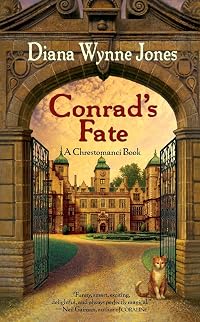
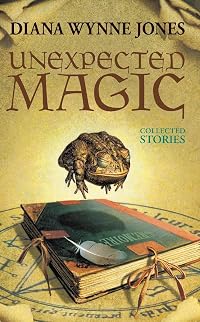
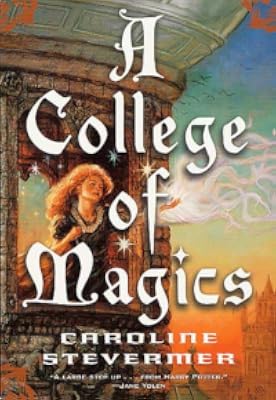


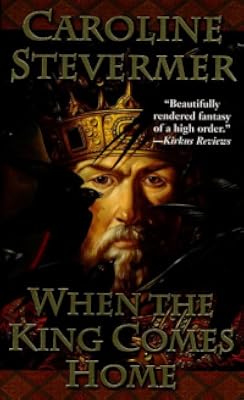
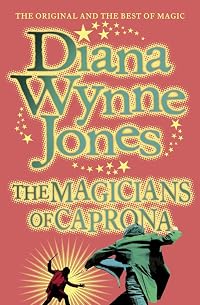

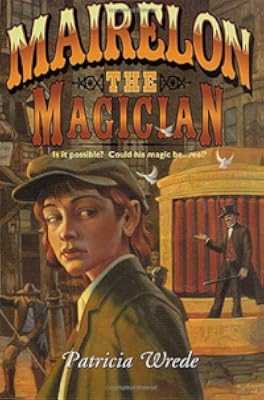




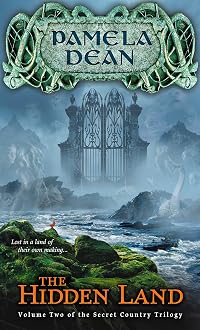

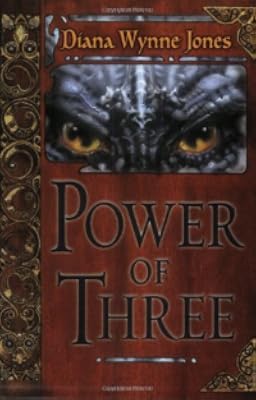

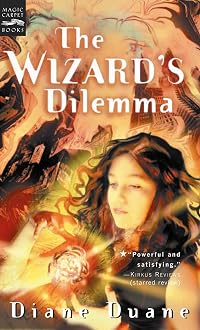
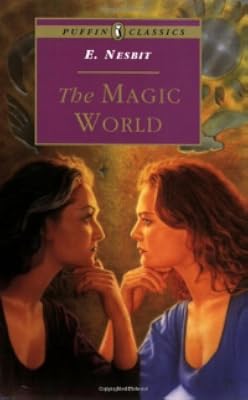

Member Recommendations
ed.pendragon Collections of short stories and novellas by the award-winning fantasy writer
Member Reviews
Publishers and booksellers think they know their market when it comes to the fantasy novels of Diana Wynne Jones and her ilk: young readers aged 9 to 12 or, at a pinch, young adult or teens for her more ‘difficult’ novels. This despite the fact that her fans range upwards in age to other adult fantasy writers, filmmakers, academics (and not just in the literary field — I knew a professor of sociology who rated her highly as a writer) and, of course, bloggers of all ages. Those who treat books merely as commodities — and there’s no denying that the publishing business exists to be commercially successful — often fail to recognise the reach of an author’s readership except when (as, say, with Philip Pullman and J K Rowling) show more it becomes as plain as the noses on their faces; they then respond with ‘adult’ editions, which sport less garish covers to go on genre shelves — or even under General Fiction — and receive notices in the review sections of broadsheet newspapers.
This long preamble (and it gets longer, I’m afraid) is a prelude to lauding this collection of light fiction, short stories related by Jones and also related to each other by common themes. These themes include the premise that magic works but must be regulated, as all power must surely be, by a government-appointed ombudsman with the authority to intervene when that power is misused. (No faceless bureaucrat this, by the way, but an eccentric yet efficient enchanter with the title of Chrestomanci.) Another theme, touched on by a couple of stories, is that moving to another place will rarely be a solution to your problems if you don’t fundamentally change yourself. A third overarching theme is the act of creation — is what the artist conceives or the thinker imagines purely abstract, or does it ever exist in any concrete sense? Powerful thoughts, these, to exercise any mind let alone the young minds of the predetermined market. And there is now another conundrum to consider before the review proper begins.
There are two main modes of thought regarding reading a sequence of novels where dates of publication and internal chronology don’t coincide. One is to read them by date of publication, which can lead to confusion, the other is to adhere to chronological order, which can ruin later plot surprises and character revelations. (Famously The Chronicles of Narnia, the C S Lewis’ fantasy books published in one volume, has been criticised by fans for adopting the timeline approach.) Or you can read them in an order of your own choosing, or according to whenever you manage to acquire individual titles.
The same dilemma can apply to the late Diana Wynne Jones’ Chrestomanci series. As books were successively published the time frames shifted so that fans might initially be confused, whereas newcomers might accept each title as a puzzling standalone. One solution to the dilemma could be to read them all first in publication order, and then re-read them in chronological order for pleasure (or for review, as I’m doing now). Another reader might devise an entirely different re-reading sequence according to personal preference, and Jones herself suggested a reading order with only two titles stipulated at the beginning.
All of the books are linked by the figure of Chrestomanci, who may be a main focus of the story, make a fleeting appearance or function as a deus ex machina, setting things to rights. (Imagine him as a tall, dark and handsome Sherlock Holmes in dressing gown and top hat.) I’ve already looked at five novels, beginning with The Lives of Christopher Chant (1988) and Conrad’s Fate (2005), both set in Chrestomanci’s youth. Next came Charmed Life (1977), when he appeared as his idiosyncratic adult self, followed by The Magicians of Caprona (1980) and, probably, Witch Week (1982).
With Mixed Magics we immediately run into a problem which will upset both parties intent on their particular order of reading. Mixed Magics is in fact a collection of short stories, some verging on novellas, published at different times over a period of nearly two decades. ‘The Sage of Theare’ was first published in 1982, and then re-appeared with ‘Warlock at the Wheel’ in 1984 before its 2000 outing here in Mixed Magics. ‘Carol Oneir’s Hundredth Dream’ was first published in 1986, while ‘Stealer of Souls’ re-appeared as a standalone for World Book Day 2002, two years after this collection. With this convoluted timeline of inter-related stories newcomers to the Chrestomanci series might experience slight confusion on occasion, but as with much of Diana Wynne Jones’ output my advice would be to go with the flow. Here I deal with the stories in published order rather than in the order presented in Mixed Magics, with comments on how they fit in with the series’ timeline.
The Sage of Theare (1982)
‘The Sage of Theare’ started because I remembered, or thought I remembered, a story by Borges being read on the radio, in which a scholar arduously tracked down a learned man but never quite found him. I started having dreams about it — strange circular dreams in a strange city where gods took a hand — and the dream person never found the wise man he was looking for. In order to exorcise the dreams, I wrote the story.
This is quite the strangest of the Chrestomanci stories. It involves “a world called Theare in which Heaven was very well organised”, with a pantheon very reminiscent of Ancient Greek goddesses and gods. Many years ago I wrote the music for a school musical called Thera, where an updated Greek pantheon interacted with mortals. Quite obviously I chose this name because there was an actual island called Thera (modern Santorini) which, devastated three thousand years ago by a volcanic explosion, may have inspired aspects of the Atlantis story. I also chose it because it was an anagram of Earth, underlying the satirical nature of much of the production. This reasoning may also partly account for Jones’ Theare, where she indulges in some philosophical musings of a satirical nature: for example, the young protagonist, Thasper, has a eureka moment looking into a shaving mirror: The gods need human beings in order to be gods! Would they exist if people didn’t believe in them? Would the world dissolve into nothingness if the gods twinkled out of existence? The volcanic island of Thera may also be referenced by Jones in the recurring images of buildings in flames and mentions of water-dragons, the two elements of fire and water that suggest the contradictory nature of Theare itself.
Thasper’s search for the Sage of Dissolution is very Borgesian. The process is very much the looking for geographical patterns, as in ‘Death and the Compass’; the circular images (the sphere Thasper is contained in, the Half Moon Inn, the pattern made by house fire locations) also hint at Borges’ obsession with labyrinths (as in ‘The Circular Ruins’); while the unknown Borges story which inspired Jones in the first place must surely be ‘The Approach to Al-Mu’tasim’. In this fiction an Islamic student traipses across India searching for a mystic known as Al-Mu’tasim who he hopes will have the answers to his questions. Unlike the student, Thasper can’t achieve enlightenment without help; he needs Chrestomanci because the gods are clumsily trying to circumvent their own prophecy concerning the young man, which may end in the destruction of their world.
Warlock at the Wheel (1984)
‘The Sage of Theare’ spreads over a period of some twenty-two years, its denouement taking place no earlier than the events in Charmed Life since it involves the brief appearance of Eric ‘Cat’ Chant. ’Warlock at the Wheel’ is also set after the same novel, the climax of which involved many magic users losing their magic powers. Here Jones is in humorous mood, with the Willing Warlock (who appeared in Charmed Life) desperately trying to regain his magic by reverting to his criminal ways. Crime, as we are always told, doesn’t pay, no more so than in the Warlock’s case, and his fruitless search for money and motorcars on his own world and in one resembling ours is told with a light touch and even some malicious glee. A lively child and a rather large dog feature, as does Kathusa, Chrestomanci’s agent on our world.
Carol Oneir’s Hundredth Dream (1986)
Jones must have had an obsession with travelling fairs. They appear at the climaxes of Eight Days of Luke (1975) and Fire and Hemlock (1985), and one appears here too. As well as the obvious excitements and experiences of the fairground she must have relished the elements of make-believe and illusion that they incorporate, elements that story-telling epitomises. But Jones again uses a sense of fun to make serious points in this tale.
Carol’s father knew Chrestomanci when they were boys at school, and calls in on Chrestomanci on holiday in the South of France to solve a problem with his daughter. The little madam has been hugely profiting, with the aid of her ambitious mother, from her ability to not only dream to order but to make those dreams manifest in saleable products (precursors of the memory-retaining Pensieve familiar from the Harry Potter universe). The problem is that she is unable to produce her hundredth dream so now Chrestomanci is expected to find a solution. Curiously, he discovers that it’s a question of industrial relations, the revelation taking place in that fairground setting. As with the gods that humans create in their own image, are the figures we conjure up out of our dreams incorporeal or do they exist in reality? Do they have free will and can they act independently? In this metafiction Jones uses dream narratives to comment on the nature of the storytelling process and whether the teller tells the tales or tales issue unbidden from us.
I always wondered about Carol’s surname. It looked vaguely Irish, almost like O’Neil, and I’ve seen commentaries that even present it as though it was Irish. Of course it’s Jones playing with words again: from a Greek root, the surname appears as an element in the Oneirocritica, a treatise on the interpretation of dreams by the 2nd-century author Artemidorus.
Stealer of Souls (2000)
A young Italian, Tonino Montana, makes a brief appearance at the end of ‘Carol Oneir’s Hundredth Dream’. We first met him in The Magicians of Caprona, and the last we heard of him he was coming to be a pupil at Chrestomanci Castle somewhere in southern England. We now hear what happened when he was first introduced to Chrestomanci’s extended family after the events in Caprona, just before Carol Oneir comes into the picture. Due to a series of unfortunate circumstances Chrestomanci’s nephew Cat is put in charge of looking after Tonino, and it’s clear he’s unhappy about no longer being the youngest in the entourage. Cat’s despatched with Tonino to the aged Gabriel de Witt, previous holder of the Chrestomanci office. Gabriel is also a nine-lifed enchanter, but his lives are leaving him one by one, and he’s fearful of one Neville Spiderman. (I’m sure Jones conjured this name from Neville Spearman, publishers of books on reincarnation and spiritualism as well as flying saucers and the occult in general.) He is right to be fearful of Spiderman because when Tonino and Cat set off on their return journey they are kidnapped and locked in a cellar full of junk and cobwebs.
What has happened to Gabriel’s ‘lives’ or souls and what have they to do with Neville Spiderman? Will it involve reincarnation of a sort and the occult? We soon find out as horror and humour succeed one another. I liked the way those lost souls were depicted — very dreamlike in a way — and I was amused to find that Jones ended the story with the promise of a villa holiday in the South of France, which is just where 'Carol Oneir’s Hundredth Dream' ends and which itself ends the collection.
* * *
I seem to have spent an inordinate amount of space on what appear to be slight and amusing children’s stories, but I make no apology for it. As I understand it, Johan Huizinga postulated in Homo Ludens that ‘play’ preceded and produced culture rather than that play is a function of culture. You might think that the fun and games Jones exhibits in her books are a frothy by-product of our culture; I would argue instead that the ideas she so entertainingly plays around with — about greed, antisocial behaviours, a lust for absolute power, the capacity to believe that our creations are our masters — are what help to sustain our human culture. Fun, in other words, is a serious business. And it’s not just for kids.
http://wp.me/s2oNj1-magics show less
This long preamble (and it gets longer, I’m afraid) is a prelude to lauding this collection of light fiction, short stories related by Jones and also related to each other by common themes. These themes include the premise that magic works but must be regulated, as all power must surely be, by a government-appointed ombudsman with the authority to intervene when that power is misused. (No faceless bureaucrat this, by the way, but an eccentric yet efficient enchanter with the title of Chrestomanci.) Another theme, touched on by a couple of stories, is that moving to another place will rarely be a solution to your problems if you don’t fundamentally change yourself. A third overarching theme is the act of creation — is what the artist conceives or the thinker imagines purely abstract, or does it ever exist in any concrete sense? Powerful thoughts, these, to exercise any mind let alone the young minds of the predetermined market. And there is now another conundrum to consider before the review proper begins.
There are two main modes of thought regarding reading a sequence of novels where dates of publication and internal chronology don’t coincide. One is to read them by date of publication, which can lead to confusion, the other is to adhere to chronological order, which can ruin later plot surprises and character revelations. (Famously The Chronicles of Narnia, the C S Lewis’ fantasy books published in one volume, has been criticised by fans for adopting the timeline approach.) Or you can read them in an order of your own choosing, or according to whenever you manage to acquire individual titles.
The same dilemma can apply to the late Diana Wynne Jones’ Chrestomanci series. As books were successively published the time frames shifted so that fans might initially be confused, whereas newcomers might accept each title as a puzzling standalone. One solution to the dilemma could be to read them all first in publication order, and then re-read them in chronological order for pleasure (or for review, as I’m doing now). Another reader might devise an entirely different re-reading sequence according to personal preference, and Jones herself suggested a reading order with only two titles stipulated at the beginning.
All of the books are linked by the figure of Chrestomanci, who may be a main focus of the story, make a fleeting appearance or function as a deus ex machina, setting things to rights. (Imagine him as a tall, dark and handsome Sherlock Holmes in dressing gown and top hat.) I’ve already looked at five novels, beginning with The Lives of Christopher Chant (1988) and Conrad’s Fate (2005), both set in Chrestomanci’s youth. Next came Charmed Life (1977), when he appeared as his idiosyncratic adult self, followed by The Magicians of Caprona (1980) and, probably, Witch Week (1982).
With Mixed Magics we immediately run into a problem which will upset both parties intent on their particular order of reading. Mixed Magics is in fact a collection of short stories, some verging on novellas, published at different times over a period of nearly two decades. ‘The Sage of Theare’ was first published in 1982, and then re-appeared with ‘Warlock at the Wheel’ in 1984 before its 2000 outing here in Mixed Magics. ‘Carol Oneir’s Hundredth Dream’ was first published in 1986, while ‘Stealer of Souls’ re-appeared as a standalone for World Book Day 2002, two years after this collection. With this convoluted timeline of inter-related stories newcomers to the Chrestomanci series might experience slight confusion on occasion, but as with much of Diana Wynne Jones’ output my advice would be to go with the flow. Here I deal with the stories in published order rather than in the order presented in Mixed Magics, with comments on how they fit in with the series’ timeline.
The Sage of Theare (1982)
‘The Sage of Theare’ started because I remembered, or thought I remembered, a story by Borges being read on the radio, in which a scholar arduously tracked down a learned man but never quite found him. I started having dreams about it — strange circular dreams in a strange city where gods took a hand — and the dream person never found the wise man he was looking for. In order to exorcise the dreams, I wrote the story.
This is quite the strangest of the Chrestomanci stories. It involves “a world called Theare in which Heaven was very well organised”, with a pantheon very reminiscent of Ancient Greek goddesses and gods. Many years ago I wrote the music for a school musical called Thera, where an updated Greek pantheon interacted with mortals. Quite obviously I chose this name because there was an actual island called Thera (modern Santorini) which, devastated three thousand years ago by a volcanic explosion, may have inspired aspects of the Atlantis story. I also chose it because it was an anagram of Earth, underlying the satirical nature of much of the production. This reasoning may also partly account for Jones’ Theare, where she indulges in some philosophical musings of a satirical nature: for example, the young protagonist, Thasper, has a eureka moment looking into a shaving mirror: The gods need human beings in order to be gods! Would they exist if people didn’t believe in them? Would the world dissolve into nothingness if the gods twinkled out of existence? The volcanic island of Thera may also be referenced by Jones in the recurring images of buildings in flames and mentions of water-dragons, the two elements of fire and water that suggest the contradictory nature of Theare itself.
Thasper’s search for the Sage of Dissolution is very Borgesian. The process is very much the looking for geographical patterns, as in ‘Death and the Compass’; the circular images (the sphere Thasper is contained in, the Half Moon Inn, the pattern made by house fire locations) also hint at Borges’ obsession with labyrinths (as in ‘The Circular Ruins’); while the unknown Borges story which inspired Jones in the first place must surely be ‘The Approach to Al-Mu’tasim’. In this fiction an Islamic student traipses across India searching for a mystic known as Al-Mu’tasim who he hopes will have the answers to his questions. Unlike the student, Thasper can’t achieve enlightenment without help; he needs Chrestomanci because the gods are clumsily trying to circumvent their own prophecy concerning the young man, which may end in the destruction of their world.
Warlock at the Wheel (1984)
‘The Sage of Theare’ spreads over a period of some twenty-two years, its denouement taking place no earlier than the events in Charmed Life since it involves the brief appearance of Eric ‘Cat’ Chant. ’Warlock at the Wheel’ is also set after the same novel, the climax of which involved many magic users losing their magic powers. Here Jones is in humorous mood, with the Willing Warlock (who appeared in Charmed Life) desperately trying to regain his magic by reverting to his criminal ways. Crime, as we are always told, doesn’t pay, no more so than in the Warlock’s case, and his fruitless search for money and motorcars on his own world and in one resembling ours is told with a light touch and even some malicious glee. A lively child and a rather large dog feature, as does Kathusa, Chrestomanci’s agent on our world.
Carol Oneir’s Hundredth Dream (1986)
Jones must have had an obsession with travelling fairs. They appear at the climaxes of Eight Days of Luke (1975) and Fire and Hemlock (1985), and one appears here too. As well as the obvious excitements and experiences of the fairground she must have relished the elements of make-believe and illusion that they incorporate, elements that story-telling epitomises. But Jones again uses a sense of fun to make serious points in this tale.
Carol’s father knew Chrestomanci when they were boys at school, and calls in on Chrestomanci on holiday in the South of France to solve a problem with his daughter. The little madam has been hugely profiting, with the aid of her ambitious mother, from her ability to not only dream to order but to make those dreams manifest in saleable products (precursors of the memory-retaining Pensieve familiar from the Harry Potter universe). The problem is that she is unable to produce her hundredth dream so now Chrestomanci is expected to find a solution. Curiously, he discovers that it’s a question of industrial relations, the revelation taking place in that fairground setting. As with the gods that humans create in their own image, are the figures we conjure up out of our dreams incorporeal or do they exist in reality? Do they have free will and can they act independently? In this metafiction Jones uses dream narratives to comment on the nature of the storytelling process and whether the teller tells the tales or tales issue unbidden from us.
I always wondered about Carol’s surname. It looked vaguely Irish, almost like O’Neil, and I’ve seen commentaries that even present it as though it was Irish. Of course it’s Jones playing with words again: from a Greek root, the surname appears as an element in the Oneirocritica, a treatise on the interpretation of dreams by the 2nd-century author Artemidorus.
Stealer of Souls (2000)
A young Italian, Tonino Montana, makes a brief appearance at the end of ‘Carol Oneir’s Hundredth Dream’. We first met him in The Magicians of Caprona, and the last we heard of him he was coming to be a pupil at Chrestomanci Castle somewhere in southern England. We now hear what happened when he was first introduced to Chrestomanci’s extended family after the events in Caprona, just before Carol Oneir comes into the picture. Due to a series of unfortunate circumstances Chrestomanci’s nephew Cat is put in charge of looking after Tonino, and it’s clear he’s unhappy about no longer being the youngest in the entourage. Cat’s despatched with Tonino to the aged Gabriel de Witt, previous holder of the Chrestomanci office. Gabriel is also a nine-lifed enchanter, but his lives are leaving him one by one, and he’s fearful of one Neville Spiderman. (I’m sure Jones conjured this name from Neville Spearman, publishers of books on reincarnation and spiritualism as well as flying saucers and the occult in general.) He is right to be fearful of Spiderman because when Tonino and Cat set off on their return journey they are kidnapped and locked in a cellar full of junk and cobwebs.
What has happened to Gabriel’s ‘lives’ or souls and what have they to do with Neville Spiderman? Will it involve reincarnation of a sort and the occult? We soon find out as horror and humour succeed one another. I liked the way those lost souls were depicted — very dreamlike in a way — and I was amused to find that Jones ended the story with the promise of a villa holiday in the South of France, which is just where 'Carol Oneir’s Hundredth Dream' ends and which itself ends the collection.
* * *
I seem to have spent an inordinate amount of space on what appear to be slight and amusing children’s stories, but I make no apology for it. As I understand it, Johan Huizinga postulated in Homo Ludens that ‘play’ preceded and produced culture rather than that play is a function of culture. You might think that the fun and games Jones exhibits in her books are a frothy by-product of our culture; I would argue instead that the ideas she so entertainingly plays around with — about greed, antisocial behaviours, a lust for absolute power, the capacity to believe that our creations are our masters — are what help to sustain our human culture. Fun, in other words, is a serious business. And it’s not just for kids.
http://wp.me/s2oNj1-magics show less
A collection of four short stories by the late great DWJ, all related to her Chrestomanci wizardry novels. The first, Warlock at the Wheel, is pretty standalone although it concerns a character who appeared in Charmed Life, and is the one I least enjoyed. An unsuccessful wizard who lost his powers in that novel turns to crime and learns that the old adage about not working with children and animals is true. I found it a bit 'cutesy' and predictable.
Stealer of Souls is firmly set in the Chrestomanci world and stars Cat, the boy who is understudy to be the next Chrestomanci (it is a role taken on by the most powerful wizard, who happens to have nine lives and who polices the other magical workers). Cat finds it difficult to cope with the show more arrival of an Italian boy, Tonino, whose magic takes the form of augmenting that of others, and who is patently homesick. (Tonino was introduced in another Jones' novel, The Magicians of Caprona.) Tonino has taken Cat's place in the hierarchy at Chrestomanci Castle and the experience brings out the worst in Cat who wonders if he is going to grow up to be an evil enchanter, but then he meets the real thing when the two boys are kidnapped, and he learns some life lessons in the process. This is an interesting story from beginning to end, with a lot of inventiveness, especially the sequence when the two boys are forced to clean up a filthy basement (having been bespelled into forgetting their own magical abilities which would help them escape). Very vivid and a satisfying conclusion. The best story in the collection in my opinion.
In Carol Oneir's Hundredth Dream the eponymous Carol is sent to Chrestomanci as her last hope because she is unable to produce the hundredth in a series of lucid dreams which have been recorded and sold to great profit, giving her family a lifestyle her mother is desperate to cling onto. Carol initially comes over as a bit of a spoilt brat, having always been the centre of attention, but she learns there are others to consider and that sometimes it's necessary to develop along your own path even if this means disappointing the mercenary dreams of a parent. On another level, the story deals with the theme of creativity and whether a dreamer's (writer's) characters have an independent life of their own.
Finally, The Sage of Theare is a story I've read before (Hecate's Cauldron, an anthology of women writers), and it 'came back' as I read it. It is quite an odd story and begins in Theare, a world where everything is very controlled and rule-bound under the rulership of a pantheon of gods reminiscent of the Greek ones. The sun god, who also deals with prophecy, warns that a child has been born who will set everything upside down by questioning everything; this will trigger Dissolution, destroying the gods and granting humanity freewill. The gods set about trying to circumvent the prophecy, but in doing so set in train a series of events in which Chrestomanci eventually becomes embroiled. Anyone who enjoys time paradoxes will like this one; it's an OK read for me, but I wondered if DWJ ever meant to return to this world given a throw-away line - an invisible dragon tells the main character Thasper, "I'll see you again".
Anyway, an easy, short, page-turning read. Nothing too challenging, but Stealer of Souls is the best of the bunch and has the added bonus for anyone familiar with some of the other Chrestomanci books of giving us another tale of Cat and Tonino. That story was a 4-star for me, but with the other stories being not quite so enjoyable, I've awarded 3 stars overall. show less
Stealer of Souls is firmly set in the Chrestomanci world and stars Cat, the boy who is understudy to be the next Chrestomanci (it is a role taken on by the most powerful wizard, who happens to have nine lives and who polices the other magical workers). Cat finds it difficult to cope with the show more arrival of an Italian boy, Tonino, whose magic takes the form of augmenting that of others, and who is patently homesick. (Tonino was introduced in another Jones' novel, The Magicians of Caprona.) Tonino has taken Cat's place in the hierarchy at Chrestomanci Castle and the experience brings out the worst in Cat who wonders if he is going to grow up to be an evil enchanter, but then he meets the real thing when the two boys are kidnapped, and he learns some life lessons in the process. This is an interesting story from beginning to end, with a lot of inventiveness, especially the sequence when the two boys are forced to clean up a filthy basement (having been bespelled into forgetting their own magical abilities which would help them escape). Very vivid and a satisfying conclusion. The best story in the collection in my opinion.
In Carol Oneir's Hundredth Dream the eponymous Carol is sent to Chrestomanci as her last hope because she is unable to produce the hundredth in a series of lucid dreams which have been recorded and sold to great profit, giving her family a lifestyle her mother is desperate to cling onto. Carol initially comes over as a bit of a spoilt brat, having always been the centre of attention, but she learns there are others to consider and that sometimes it's necessary to develop along your own path even if this means disappointing the mercenary dreams of a parent. On another level, the story deals with the theme of creativity and whether a dreamer's (writer's) characters have an independent life of their own.
Finally, The Sage of Theare is a story I've read before (Hecate's Cauldron, an anthology of women writers), and it 'came back' as I read it. It is quite an odd story and begins in Theare, a world where everything is very controlled and rule-bound under the rulership of a pantheon of gods reminiscent of the Greek ones. The sun god, who also deals with prophecy, warns that a child has been born who will set everything upside down by questioning everything; this will trigger Dissolution, destroying the gods and granting humanity freewill. The gods set about trying to circumvent the prophecy, but in doing so set in train a series of events in which Chrestomanci eventually becomes embroiled. Anyone who enjoys time paradoxes will like this one; it's an OK read for me, but I wondered if DWJ ever meant to return to this world given a throw-away line
Anyway, an easy, short, page-turning read. Nothing too challenging, but Stealer of Souls is the best of the bunch and has the added bonus for anyone familiar with some of the other Chrestomanci books of giving us another tale of Cat and Tonino. That story was a 4-star for me, but with the other stories being not quite so enjoyable, I've awarded 3 stars overall. show less
These--especially the first three stories--are made of everything that's good about the Chrestomanci novels. Lots of fun to visit with the characters again (and I'm generally a longform rather than short story person, so I was a little surprised to find them so thoroughly enjoyable).
First short story ("Warlock at the Wheel") was predictable but made me laugh out loud nonetheless. "Stealer of Souls" is somewhat fun, bringing together Gabriel de Witt, Cat, Tonino, and Chrestomanci-Chris.
As always, I love Diana Wynne Jones. This is a collection of stories that take place within the Chrestomanci universe at various points throughout the series. I really liked saving this for last since it was a nice to re-visit various characters and was a fun finale.
It’s a quick read and all of the stories are great, though I especially enjoyed “Stealer of Souls” since Magicians of Caprona was my favorite of the series, and Tonino is in that story. However, there weren’t any un-enjoyable stories in this collection for me.
Definitely stay away from this if it’s your first time reading any Chrestomanci books–this is for people who’ve already read much of the series, since there’s very little setup; you’re already supposed show more to know the gist of the worldbuilding and who’s who. But, if you have read the series and are a fan, this is well worth the read and I highly recommend it!
Also posted on Purple People Readers. show less
It’s a quick read and all of the stories are great, though I especially enjoyed “Stealer of Souls” since Magicians of Caprona was my favorite of the series, and Tonino is in that story. However, there weren’t any un-enjoyable stories in this collection for me.
Definitely stay away from this if it’s your first time reading any Chrestomanci books–this is for people who’ve already read much of the series, since there’s very little setup; you’re already supposed show more to know the gist of the worldbuilding and who’s who. But, if you have read the series and are a fan, this is well worth the read and I highly recommend it!
Also posted on Purple People Readers. show less
Four fun stories in the Chrestomanci series. I had read "The Sage of Theare" before most of the other Chrestomanci books. It's still an odd duck. Warlock at the Wheel is one of her slapstick stories. OK but I've never gotten even a chuckle out of that sort of thing. Stealer of Souls is classic Chrestomanci, with menace and magic, starring Cat and Tonino. Carol Oneir's Hundredth Dream is different, a bit slight, but interesting.
Recommended for DWJ fans but not as a first Chrestomanci book.
Recommended for DWJ fans but not as a first Chrestomanci book.
The story of the Willing Warlock seemed like a filler episode. It was a pleasure to meet Cat and Tonino again. The last story, Sage of Theare, felt like Ted Chiang for young adults.
(Is anyone else thinking about how Chrestomanci and The Doctor both have several lives, and are often called upon to maintain/restore the balance of the universe and help beings in other worlds and times?)
(Is anyone else thinking about how Chrestomanci and The Doctor both have several lives, and are often called upon to maintain/restore the balance of the universe and help beings in other worlds and times?)
Members
- Recently Added By
Lists

Favourite books by Diana Wynne Jones
35 works; 3 members
Author Information

112+ Works 80,418 Members
Diana Wynne Jones was born in London on August 16, 1934. In 1953, she began school at St. Anne's College Oxford and attended lectures by J. R. R. Tolkien and C. S. Lewis. After graduation, she created plays for children that were performed at the London Arts Theatre. Her first book was published in 1973. She wrote over 40 books during her lifetime show more including Dark Lord of Derkholm, Earwig and the Witch, and the Chrestomanci series. She won numerous awards including the Guardian Award for Children's Books in 1977 for Charmed Life, the Boston Globe-Horn Book Award in 1984 for Archer's Goon, the Mythopeic Award in 1999, the Karl Edward Wagner Award in 1999, and the Life Achievement Award from the World Fantasy Organization in 2007. Her book Howl's Moving Castle was adapted into an animated film by director Hayao Miyazaki, and the film was nominated for an Academy Award for Best Animated Feature. She died from lung cancer on March 26, 2011 at the age of 76. (Bowker Author Biography) show less
Some Editions
Awards and Honors
Awards
Series


Work Relationships
Is contained in
Common Knowledge
- Canonical title
- Mixed Magics
- Original publication date
- 2000
- People/Characters
- Chrestomanci; The Willing Warlock; Eric Chant (Cat Chant); Tonino Montana; Gabriel de Witt; Neville Spiderman (show all 8); Carol O'Neir; The Sage of Theare
- First words
- The Willing Warlock was a born loser.
- Last words
- (Click to show. Warning: May contain spoilers.)Find out and let me know, there's a good chap.
- Original language
- English
Classifications
- Genres
- Fiction and Literature, Fantasy, Kids, Tween
- DDC/MDS
- 823.914 — Literature & rhetoric English & Old English literatures English fiction 1900- 1901-1999 1945-1999
- LCC
- PZ7 .J684 .M — Language and Literature Fiction and juvenile belles lettres Fiction and juvenile belles lettres Juvenile belles lettres
- BISAC
Statistics
- Members
- 1,333
- Popularity
- 18,009
- Reviews
- 24
- Rating
- (3.70)
- Languages
- 5 — English, German, Indonesian, Portuguese, Russian
- Media
- Paper, Audiobook, Ebook
- ISBNs
- 26
- ASINs
- 8