On This Page
Description
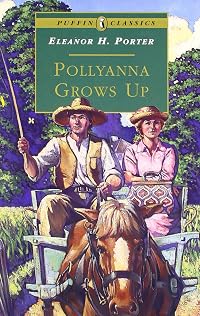
Pollyanna Grows Up is the first sequel to Pollyanna, and the only one written by Porter herself. Numerous following sequels have been written by various authors. Pollyanna's crippling spinal injury has been cured, and she begins to teach a new town the "glad game". She makes many friends and two of her childhood friends, Jimmy and Jamie, court her. Jimmy is an energetic, healthy young architect and Jamie is a crippled literary genius. Jimmy also discovers secrets of his past..
Tags
Recommendations






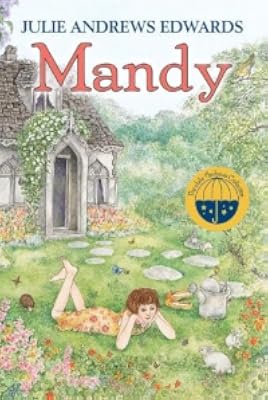
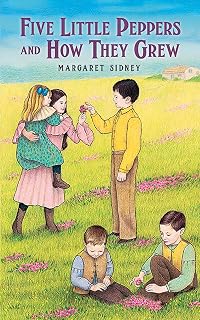
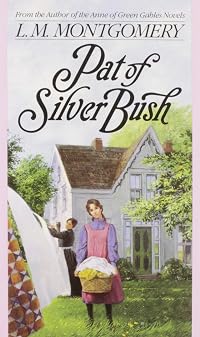
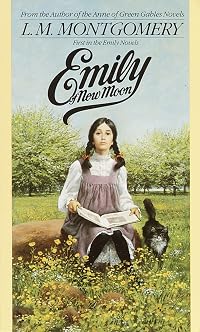


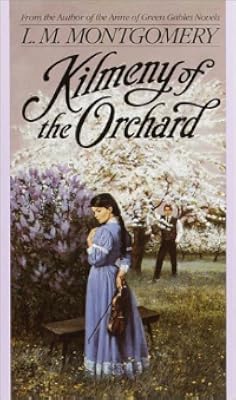
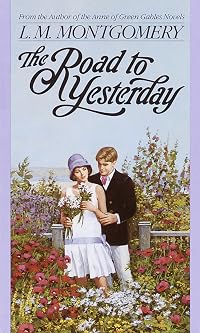

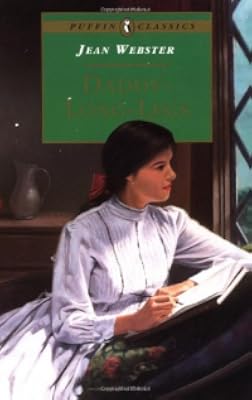

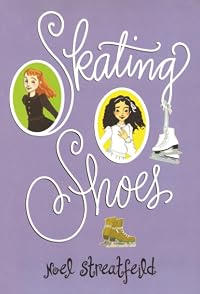





Member Recommendations

Member Reviews
Alguém deveria ter dito para essa senhoira Porter que o tratamento dado a crianças já não serve para as meninas-moças... se bem que ainda encontramos muito dessas senhoiras por aí, tratando mesmo adultos assim. Resumindo, se você lê uma coisa quando criança e depois cresce e a memória afetiva desse objeto não cresceu junto com você, então a experiência foi realmente indigesta.
Remember how bad Miss Billy Married was? So actually I didn’t read the famous one, Pollyanna, in 2014 for my round up of 1914, just this sequel. Polyanna is an inspirational little orphan girl who has been cured of some kind of disability, and has been sent to cheer up a bitter old rich lady. Polyanna is continually playing “the Glad Game,” where no matter what kind of horrible thing has just happened, she will find something to be grateful for. This drives everyone totally bonkers, obviously, but eventually they all swallow the Kool Aid and become incredibly cheerful in the face of life’s adversity. Polyanna is mono-maniacally focused on her Game, so that she comes across as a bit unhinged. A sign of trauma?
Polyanna finds an show more orphan boy with a disability for the bitter old rich lady to adopt. The lady thinks he might be her missing nephew but she can’t be sure; however, she decides she loves him either way.
Then we fast forward ten or twelve years and our author is presented with a problem. It’s cute (maybe) to have a child constantly playing the Glad Game, but in an adult it would be insufferable. Eleanor Porter actually does a pretty good job of turning Polyanna into a semi-normal human being, considering the situation Porter had created for herself.
Now the book gets a little bit fun, as a few love triangles develop, with many comical misunderstandings about who’s in love with whom, à la Three’s Company. There’s a part that’s really bizarre where Polyanna is almost gored by a wild boar (I think I’ve got this right.) But the one who really suffers from this mishap is the orphan boy with the disability, now also all grown up, because he was unable to rescue her, and he makes a big production out of it. Like many children’s book authors of this era, Porter really has a bee in her bonnet about disability. In the end, everything is sorted out—the orphans all come into their rightful inheritance and everyone is paired off with the right person. show less
Polyanna finds an show more orphan boy with a disability for the bitter old rich lady to adopt. The lady thinks he might be her missing nephew but she can’t be sure; however, she decides she loves him either way.
Then we fast forward ten or twelve years and our author is presented with a problem. It’s cute (maybe) to have a child constantly playing the Glad Game, but in an adult it would be insufferable. Eleanor Porter actually does a pretty good job of turning Polyanna into a semi-normal human being, considering the situation Porter had created for herself.
Now the book gets a little bit fun, as a few love triangles develop, with many comical misunderstandings about who’s in love with whom, à la Three’s Company. There’s a part that’s really bizarre where Polyanna is almost gored by a wild boar (I think I’ve got this right.) But the one who really suffers from this mishap is the orphan boy with the disability, now also all grown up, because he was unable to rescue her, and he makes a big production out of it. Like many children’s book authors of this era, Porter really has a bee in her bonnet about disability. In the end, everything is sorted out—
In 1915, Eleanor Porter published a sequel to her bestseller Pollyanna. It seems that in Pollyanna grows up she wanted to retain the elements that made the original book so successful, while overhauling the story with many new elements and characters.
Overall, the plot of Pollyanna grows up seems very contrived. Towards the end of the original Pollyanna, the little girl had managed, single-handed, to turn a whole, gloomy community to happiness. Therefore, in Pollyanna grows up, the tonic of Pollyanna's infectuous optimism, must be sprinkled over a new set of gloomy characters, which she encounters on a visit, replacement of characters who die off and boarders moving into her home. Many plot situations are the inverse of elements from the show more original story. The story feels contrived and lacking the spontaneity of the first volume.
Although supposedly Pollyanna grows up to about the age of 20 by the end of the story, her behaviour and mindset remain largely characterised by the naivete and childishness of the original novel. The suggestion that old Mr Pendleton, aged 70 or thereabouts, might marry her, seems very peculiar.
Both volume one, Pollyanna, and volume two, Pollyanna grows up, end in a low key. Towards the end of Pollyanna, the main character is hit by a car (probably still a novelty in 1913), and by the end of Pollyanna grows up, the character Jimmy Bean is troubled by his lowly class background.
As in the original novel, Eleanor Porter, makes the oblique suggestion that people should not think too much about money, and that losing all one's money, can never be the worst thing to happen in one's life (p. 376).
While the original Pollyanna was a bestseller and inspired many people, the word Pollyanna has slipped into the language with a negative connotation as an excessively or blindly optimistic person while pol·ly·an·na·ish has come to mean unreasonably or illogically optimistic.
These negative connotations may suggest that there is a limit to how much optimism the reader can stomach. show less
Overall, the plot of Pollyanna grows up seems very contrived. Towards the end of the original Pollyanna, the little girl had managed, single-handed, to turn a whole, gloomy community to happiness. Therefore, in Pollyanna grows up, the tonic of Pollyanna's infectuous optimism, must be sprinkled over a new set of gloomy characters, which she encounters on a visit, replacement of characters who die off and boarders moving into her home. Many plot situations are the inverse of elements from the show more original story. The story feels contrived and lacking the spontaneity of the first volume.
Although supposedly Pollyanna grows up to about the age of 20 by the end of the story, her behaviour and mindset remain largely characterised by the naivete and childishness of the original novel. The suggestion that old Mr Pendleton, aged 70 or thereabouts, might marry her, seems very peculiar.
Both volume one, Pollyanna, and volume two, Pollyanna grows up, end in a low key. Towards the end of Pollyanna, the main character is hit by a car (probably still a novelty in 1913), and by the end of Pollyanna grows up, the character Jimmy Bean is troubled by his lowly class background.
As in the original novel, Eleanor Porter, makes the oblique suggestion that people should not think too much about money, and that losing all one's money, can never be the worst thing to happen in one's life (p. 376).
While the original Pollyanna was a bestseller and inspired many people, the word Pollyanna has slipped into the language with a negative connotation as an excessively or blindly optimistic person while pol·ly·an·na·ish has come to mean unreasonably or illogically optimistic.
These negative connotations may suggest that there is a limit to how much optimism the reader can stomach. show less
I have to say that I didn't find Pollyanna as charming in this novel. Although Ms. Porter attempts to show that Pollyanna has become more aware of her effect on people, she comes across as unforgivably naive about the conflicting feelings of adults at a time when she is actually experiencing those feelings. And all the romantic confusions were silly. No real people would be so blind. The impact of Pollyanna's "glad game" loses it's power in this followup. Too bad.
Her crippled legs cured, Pollyanna takes her glad heart to cheer new friends in Boston before travelling to Europe with Aunt Polly and Dr chilton. But growing up brings sorrows as well as joys, and when she returns after six years, with Dr Chilton dead and Aunt Polly fallen on hard times, even Pollyanna has trouble maintaining her usual cheerful outlook.
Ummm. I was going to rate this a touch less severely, but the second half of this book was supremely uncomfortable and mainly consisted of all the characters convincing themselves and each other that everyone else was in love with someone scandalously older or younger. In the end, everyone was matched up into (mostly) age-appropriate relationships, but I am forced to deduct a star for the cringe.
As a child I loved Pollyanna it was one of those movies that I think my parents had to buy six or seven times because I had worn out the VHS completely. I never knew that there was a second Pollyanna and although I have read a lot of books I had never read the first one either. So I sat on my journey at a time I needed to be glad. The recent storms took my lights out this past weekend so it was a good thing my Kindle was fully charged and waking up to 100 degree weather at 5 am you find that Pollyanna gives you something to be glad about.
Enough about me and on to the book. The first part was brilliant, a recreation of the first book with a different touch and a slightly different story. As Pollyanna, sets out to help another person who again believes that they are oblivious to Pollyanna's charms you see the girl she is and the woman you hope that she will become. I also find it cute that she finds "Jamie" and "Sadie" (who eventually fall in love) a home with Mrs. Carew. As Mrs. Carew is pining over her lost nephew Jamie the story falls together brilliantly. The sad thing is that because the "Jamie" and Mrs. Carew's Jamie may not be the same person there is always a bit of doubt on whether Mrs. Carew will love her new Jamie if she finds out that he is not the old Jamie.
The second part of the book is what leaves me not giving the book five stars. There is something disturbing about the second half and I still even two days after reading the book have not figured it out. Pollyanna and Jimmy Bean-Pendleton fall in love, Mr. Pendleton falls in love with Mrs. Carew, and Sadie and Jamie fall in love. Jimmy Bean-Pendleton is the real Jamie and poor Mrs. Polly just lost her husband and has fallen on bad times because of some bad investments. The first book left me in tears this book only made me mad. Why the author chose to make Mrs. Polly a new woman of sorrow is beyond me I had honestly come to adore her after the first book. Too bad this was never a movie I may have fell in love with it also. show less
Enough about me and on to the book. The first part was brilliant, a recreation of the first book with a different touch and a slightly different story. As Pollyanna, sets out to help another person who
The second part of the book is what leaves me not giving the book five stars. There is something disturbing about the second half and I still even two days after reading the book have not figured it out. Pollyanna and Jimmy Bean-Pendleton fall in love, Mr. Pendleton falls in love with Mrs. Carew, and Sadie and Jamie fall in love. Jimmy Bean-Pendleton is the real Jamie and poor Mrs. Polly just lost her husband and has fallen on bad times because of some bad investments. The first book left me in tears this book only made me mad. Why the author chose to make Mrs. Polly a new woman of sorrow is beyond me I had honestly come to adore her after the first book. Too bad this was never a movie I may have fell in love with it also.
Members
- Recently Added By
Lists

First published in 1915
87 works; 11 members

Publisher's Weekly Bestsellers Part I - 1895-1939
399 works; 8 members

Children's Literature 1900 - 1950 in order
413 works; 8 members

Books Read in 2025
4,128 works; 98 members
Author Information

50+ Works 9,421 Members
Author Eleanor H. Porter was born in Littleton, New Hampshire on December 19, 1868. Before becoming a writer, she trained as a singer at the New England Conservatory of Music in Boston. She wrote numerous short stories, children's literature, and adult novels including Miss Billy; Miss Billy's Decision; Miss Billy - Married; Pollyanna; Pollyanna show more Grows Up; Just David; Dawn; and Little Pardner. She died on May 21, 1920. (Bowker Author Biography) show less
Some Editions
Awards and Honors
Distinctions
Series

Belongs to Publisher Series
Corticelli [Mursia] (173)
Work Relationships
Common Knowledge
- Canonical title
- Pollyanna Grows Up
- Original title
- Pollyanna Grows
- Original publication date
- 1915
- People/Characters*
- Pollyanna; Jimmy Bean; Zia Polly; Ruth Carew; John Pendelton; Jamie Carew (show all 7); Sadie Dean
- Important places*
- Boston, Massachusetts, USA
- Dedication
- To My Cousin Walter
- First words
- Della Wetherby tripped up the somewhat imposing steps of her sister's Commonwealth Avenue home and pressed an energetic finger against the electric-bell button.
- Last words
- (Click to show. Warning: May contain spoilers.)'I'm sure it will,' sighed Pollyanna, with shining eyes of confidence.
- Original language*
- Inglese
*Some information comes from Common Knowledge in other languages. Click "Edit" for more information.
Classifications
- Genres
- Children's Books, Fiction and Literature, Kids, Tween
- DDC/MDS
- 813.52 — Literature & rhetoric American literature in English American fiction in English 1900-1999 1900-1945
- LCC
- PZ3 .P8306 — Language and Literature Fiction and juvenile belles lettres Fiction and juvenile belles lettres Fiction in English
- BISAC
Statistics
- Members
- 1,187
- Popularity
- 21,104
- Reviews
- 20
- Rating
- (3.52)
- Languages
- 16 — Albanian, Czech, English, French, Greek, Hungarian, Italian, Latvian, Norwegian (Bokmål), Norwegian, Polish, Romanian, Russian, Spanish, Swedish, Portuguese (Portugal)
- Media
- Paper, Audiobook, Ebook
- ISBNs
- 139
- UPCs
- 1
- ASINs
- 54