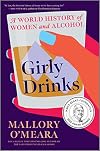
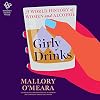
Girly Drinks: A World History of Women and Alcohol
by Mallory O'Meara
On This Page
Description
"At last, the feminist history of booze we've been waiting for!" —Amy Stewart, author of The Drunken BotanistFrom Los Angeles Times bestselling author Mallory O'Meara comes a lively and engrossing feminist history of women drinking through the ages
Strawberry daiquiris. Skinny martinis. Vodka sodas with lime. These are the cocktails that come in sleek-stemmed glasses, bright colors and fruity flavors—these are the Girly Drinks.
From the earliest days of civilization, alcohol has been at show more the center of social rituals and cultures worldwide. But when exactly did drinking become a gendered act? And why have bars long been considered "places for men" when, without women, they might not even exist?
With whip-smart insight and boundless curiosity, Girly Drinks unveils an entire untold history of the female distillers, drinkers and brewers who have played a vital role in the creation and consumption of alcohol, from ancient Sumerian beer goddess Ninkasi to iconic 1920s bartender Ada Coleman. Filling a crucial gap in culinary history, O'Meara dismantles the long-standing patriarchal traditions at the heart of these very drinking cultures, in the hope that readers everywhere can look to each celebrated woman in this book—and proudly have what she's having.
. show less
Tags
Recommendations


























Member Reviews
I actually learned a lot from this book and not just about women and booze - I learned a lot about the history of alcohol and was super intrigued throughout the whole book. Mallory O'Meara does an excellent job of giving readers the history of women and booze while also highlighting some extremely influential women along the way. There were so many interesting tid bits about how alcohol was made - where customs and laws came from - and of course - how women got the short end of the stick time and time again. Women do not get nearly enough credit for their impact and are even now still overshadowed by their male counterpoints. I think this book is important for anyone who likes learning about history and drinking. A fun and extremely show more enlightening read! show less
I loved this book. I’m not a drinker, but it doesn’t matter because the history here (covering thousands of years of alcohol) and amazing women make this a perfectly engaging read (or listen in my case). The history is so much fun (minus the rampant misogyny of course—men still suck and pretty much always have), and I loved learning so many new-to-me stories such as how much Hildegarde of Bingen was into brewing (and drinking) beer.
Also shoutout to Susan W. who apparently was a cocktail aficionado without me realizing it. In December of 1997, she introduced us to a Cosmopolitan in Rochester, New York, at a Christmas party. So when I turned 21 in January of 1998 the next month, I had to explain to the bartender at a piano bar in show more Asheville, North Carolina, how to make it (because he’d never heard of it). In my memories I assumed Susan heard about it from SatC, but apparently it wasn’t introduced there (and to the mainstream world) until 1999. My only pre-trend accomplishment in my life. show less
Also shoutout to Susan W. who apparently was a cocktail aficionado without me realizing it. In December of 1997, she introduced us to a Cosmopolitan in Rochester, New York, at a Christmas party. So when I turned 21 in January of 1998 the next month, I had to explain to the bartender at a piano bar in show more Asheville, North Carolina, how to make it (because he’d never heard of it). In my memories I assumed Susan heard about it from SatC, but apparently it wasn’t introduced there (and to the mainstream world) until 1999. My only pre-trend accomplishment in my life. show less
This detailed and comprehensive book sets out to uncover the often-erased history of women and alcohol. The author was inspired to pursue writing this book when she couldn't find a book on the topic anywhere. All the history books about alcohol relegated women to odd footnotes or ignored them entirely.
To her surprise, she found that women have had influential roles in all aspects of alcohol creation from time immemorial. In fact, brewing beer and distilling liquor was traditionally a woman's job as it fell into the domestic sphere. Alcohol only became a "man's job" once it became profitable. In fact, a woman's relationship with alcohol is a good litmus test for a society's overall treatment of women.
This book is fascinating, funny, show more and accessible for anyone. The author's voice is clear and easy to read. I greatly enjoyed this read! show less
To her surprise, she found that women have had influential roles in all aspects of alcohol creation from time immemorial. In fact, brewing beer and distilling liquor was traditionally a woman's job as it fell into the domestic sphere. Alcohol only became a "man's job" once it became profitable. In fact, a woman's relationship with alcohol is a good litmus test for a society's overall treatment of women.
This book is fascinating, funny, show more and accessible for anyone. The author's voice is clear and easy to read. I greatly enjoyed this read! show less
So, this book wanted to take me on a journey, covering thousands of years, to explore the overlooked contributions of women in the history of alcohol – brewing, distilling, selling, serving, consuming, in different eras and cultures. Challenging patriarchal narratives is a pretty good idea, right?
“Who decided that drinking was a gendered act?”. and “Why is marking a drink feminine a bad thing in the first place?” Let’s dig in, I said.
We start with the first primates and ancient Mesopotamia, while the last chapters deal with modern times. There are lots of fascinating anecdotes and historical facts: the women of Mesopotamia who brewed beer and managed large-scale alcohol production; Hildegard von Bingen, a medieval nun who show more was the first to write about beer scientifically; the beginnings of gendering of alcohol seem to originate from the Code of Hammurabi (nice girls don’t go to taverns, it said, or something to that effect); the laws of the early Roman Empire that prohibited women from drinking. This is all both enlightening and infuriating. Also, the pattern through the ages seems to be as follows: women have a good and profitable thing going here, they are getting independent; patriarchy panics and takes it all.
O’Meara’s ambitious scope works against the book, though. There are frequent jumps between different stories. It felt rushed and jarring and pulled me out of the book. Some things that the author chooses to focus on, such as Prohibition, bar culture, and cocktails in the US were not very interesting to me (imo, of course). Meanwhile, we breezed through topics that I find more intriguing, such as the sake-makers of Japan or how the colonial and patriarchal structures intertwine when colonizers try to control indigenous women’s brewing.
The tone can sometimes come across as condescending, especially when the author assumes that her readers lack knowledge because “they went to American schools”. Sweeping statements like “Good riddance to Greco-Roman culture and its watery wine” feel out of place, they annoy and distract.
The last few chapters, which focus on modern-day female master blenders, brewers, and cocktail makers, don’t feel like a narrative any more, they are more like a list of accomplishments in a CV. They were a chore to read and I was impatient to finish. It’s a shame, because these women are pretty amazing.
I did learn lots of new things, so I can be satisfied with that. show less
“Who decided that drinking was a gendered act?”. and “Why is marking a drink feminine a bad thing in the first place?” Let’s dig in, I said.
We start with the first primates and ancient Mesopotamia, while the last chapters deal with modern times. There are lots of fascinating anecdotes and historical facts: the women of Mesopotamia who brewed beer and managed large-scale alcohol production; Hildegard von Bingen, a medieval nun who show more was the first to write about beer scientifically; the beginnings of gendering of alcohol seem to originate from the Code of Hammurabi (nice girls don’t go to taverns, it said, or something to that effect); the laws of the early Roman Empire that prohibited women from drinking. This is all both enlightening and infuriating. Also, the pattern through the ages seems to be as follows: women have a good and profitable thing going here, they are getting independent; patriarchy panics and takes it all.
O’Meara’s ambitious scope works against the book, though. There are frequent jumps between different stories. It felt rushed and jarring and pulled me out of the book. Some things that the author chooses to focus on, such as Prohibition, bar culture, and cocktails in the US were not very interesting to me (imo, of course). Meanwhile, we breezed through topics that I find more intriguing, such as the sake-makers of Japan or how the colonial and patriarchal structures intertwine when colonizers try to control indigenous women’s brewing.
The tone can sometimes come across as condescending, especially when the author assumes that her readers lack knowledge because “they went to American schools”. Sweeping statements like “Good riddance to Greco-Roman culture and its watery wine” feel out of place, they annoy and distract.
The last few chapters, which focus on modern-day female master blenders, brewers, and cocktail makers, don’t feel like a narrative any more, they are more like a list of accomplishments in a CV. They were a chore to read and I was impatient to finish. It’s a shame, because these women are pretty amazing.
I did learn lots of new things, so I can be satisfied with that. show less
Who knew! Those were the first words that came to my mind when I finished reading O’Meara’s smart, original, and completely absorbing book exploring the story of how women were originally in charge of the production and distribution of alcohol, and how eventually denied this role due to patriarchy and thus mostly written out of history.
An engaging blend of mystery, history, and appealing wily influential women across different continents, cultures, and countries makes for an informative, accessible, and plain fascinating read!
I appreciated the journey from the beginnings of the business of alcohol to the present time when women are once again asserting and gaining the long overdue recognition being in the forefront in the business show more of alcohol.
I recommend this book to those who are interested in women’s history, the business of alcohol, or just occasionally enjoy an alcoholic drink! show less
An engaging blend of mystery, history, and appealing wily influential women across different continents, cultures, and countries makes for an informative, accessible, and plain fascinating read!
I appreciated the journey from the beginnings of the business of alcohol to the present time when women are once again asserting and gaining the long overdue recognition being in the forefront in the business show more of alcohol.
I recommend this book to those who are interested in women’s history, the business of alcohol, or just occasionally enjoy an alcoholic drink! show less
This book was an epic read! In short, it goes through the history of “girly” drinks but once you get to reading, it’s so much more. The author’s sarcasm and wit are a highlight throughout the book. There were many times I found myself laughing at a story that the author had included. The Prohibition chapter was my favorite but overall this is one of the best nonfiction books I’ve read this year. If you like alcohol and history, I highly recommend this book!
A fascinating history of how women have been integral to the use and role of alcohol in human (and pre-human) society.
Members
- Recently Added By
Published Reviews
In this enlightening and entertaining survey of women and alcohol, feminist and very funny author O’Meara takes readers on a dipsomaniacal journey through numerous cultures ... O’Meara deftly blends in equal measures of social history, gossip, and solid research, and adds enjoyable footnotes. The final take-away is that despite male interference, ranging from sanctimonious condemnation of show more women who drink in public to harsh punishments...women have discovered, invented, advanced, championed, and celebrated alcohol. show less
added by Lemeritus
Her subjects range from the 12th-century Benedictine mother superior who realized hops could keep beer fresh, to Catherine the Great, who convinced soldiers to overthrow her husband by promising them vodka. Throughout, O’Meara uses what might seem lighthearted trivia to build spot-on social critique: “The double standard that drinking women face is deeply rooted in male anxieties about... show more women acting like people, not property.” Elegantly woven into each cheeky chapter is rigorous historical context; a profile of the 19th-century widow who popularized Champagne, for instance, also educates readers on cocktail culture in the United States before dovetailing with the story of Japanese sake revolutionary Tatsu’uma Kiyo. O’Meara glides easily from the 17th-century pulquerias of Mexico to the feminine “fern bars” of the 1970s, making sure not to forget the queen of girly drinks: the Cosmopolitan. Provoking both thought and laughter, this serves as bracing refreshment from a master textual mixologist. show less
added by Lemeritus
Author Information

5+ Works 790 Members
Awards and Honors
Common Knowledge
- Original publication date
- 2021
- People/Characters
- Mary Frith; Li Qingdao; Ada Coleman; Gertrude Lythgoe; Lucha Reyes; Cora Irene "Sunny" Sund (show all 14); Bessie Williamson; Joy Spence; Julie Reiner; Apiwe Nxusani-Mawela; Catherine the Great; Cleopatra VII; Hildegard von Bingen; Barbe-Nichole Clicquot-Ponsardin
- Epigraph
- Don't try me nobody, cause you will never win
I'll fight the army, navy, just me an' my gin
—Bessie Smith
"...it went straight down into my stomach like a sword swallowers' sword and made me feel powerful and godlike."
—Sylvia Plath
"Comfortable shoes and a strong drink—
what more could a girl need?"
—Woman wearing a green dress in the bathroom of the Strange Brew Tavern, Manchester, New Hampshire, 2013 - Dedication
- For Lauren, who, upon hearing me complain that there wasn't a written history of women drinking, told me to write it.
- First words
- Skinny margaritas.
- Quotations
- The double standard that drinking women face is deeply rooted in male anxieties about control and their fear of women acting like people, not property.
Before there was bourbon, before there was beer, before there was wine, there was bad fruit.
Regardless of what you think of her, thousands of years after her death, you know who Cleopatra is.
While not universal in Egypt, it was much more common for girls to be educated there than in Greece. Along with being able to drink, Egyptian women could make their own marriages, inherit wealth, hold property independently a... (show all)nd get divorced. They did not have to submit to their husbands’ control.
Traits that would be prized in Egyptian women, such as being strong-minded and bold, were reviled in Roman women. In Rome, women who didn’t stay sober, contain their opinions and desires, and tamp down their sexuality were ... (show all)abhorred.
The women who did join in the convivium were also not drinking the wine that the men were. They were drinking something called passum, a wine made from raisins. It was a sweeter wine and had a lower alcohol content. Passum wa... (show all)s the world’s first girly drink.
Cleopatra was everything a drinking woman represents to the patriarchy: both male fear and fantasy in one. Men want women uninhibited, but only when they can control them. Men will tolerate a drinking woman only if her inhibi... (show all)tion is in service to them.
Anyone who didn’t speak Greek sounded like they were saying bar bar bar, and so the term barbarian developed.
Beer is so nourishing that medieval villagers drank it mostly for sustenance. Each meal, including breakfast, was accompanied by a weak beer.
Medieval ale smelled musty and had an astringent flavor. Horseradish was a particularly popular flavoring, if that says anything about how rough medieval ale tasted.
When saké was first brewed in Japan, it was called kuchikami, meaning chewing in the mouth.
Whether it meant building a business, bolstering her power in the community or just feeding her children, brewing was the only trade a woman in medieval Europe could count on. It was the best way to earn a living with the too... (show all)ls in her own kitchen.
Eight hundred years ago, it was part of an alewife’s job to both control men’s drinking and deal with their behavior. Drunken creeps predate ice cubes, indoor plumbing and even little bowls of salty snacks as an alehouse ... (show all)fixture.
Alewives had a very particular look. These women often wore tall, sometimes pointed hats in order to distinguish themselves and stand out in a crowded marketplace. The ale stakes that advertised their product were essentially... (show all) brooms—long sticks with a bundle of twigs tied to the end. They brewed their ale in large cauldrons. You might even see a cat or two hunting around the grain for mice. Sound familiar?
Women running alehouses were depicted as temptresses who lured godly men to sin.
Alewives were shown burning in hell more than any other type of tradesperson.
A bride-to-be brewed a bunch of ale and threw a big party in the hopes that lots of friends, family and neighbors would attend and give her enough money to fund the wedding and help establish her future household. Sound like ... (show all)a bridal shower? This is where we get the word bridal. It comes from bride-ale. A bride-ale shower.
What scientists called aqua vitae became French eau de vie, Scandinavian aquavit, Russian vodka and Gaelic usquebaugh, shortened to usky or whiskie.
The good news for women was that distillation offered a way to fill the economic void that brewing left behind. Spirits now had a high market demand and could easily be made in a kitchen with a minimum amount of training and ... (show all)equipment. The bad news for women was that distilling became another way to mark a woman as a witch.
Most illegal whisky makers worked at night, when the smoke from the fires beneath the stills was hidden. This is why illegal whisky became known as moonshine
Alcohol legislation has always been about so much more than just moderating drinking and preventing drunkenness. It’s about controlling people: who is allowed to drink and where. It’s about stifling threats to authority a... (show all)nd forcing certain types of people, poor people especially, and poor or native women especially, into certain types of approved behavior. It’s about who can partake in this industry and make money off it.
Irish and Scottish women were so good at distilling that they were as in demand as American mail-order brides. Men in America paid for women to move from Ireland or Scotland, marry them and make whiskey.
Laws and regulations that restricted native alcohol culture for the sake of morality or propriety or public safety were usually just poorly disguised oppression—misogyny and racism wearing glasses and a silly mustache.
Alcohol was a medical panacea, often the only available and accessible painkiller for those who could not afford to see a doctor. Even if a woman could afford to see a doctor, alcohol was probably what he would prescribe.
Yes, women were part of the temperance movements that were happening all over the world. But most of the women that were rallying for the end of alcohol were upper-class women. The lack of middle-or lower-class female support... (show all) became one of the movement’s biggest problems.
The phrase the real McCoy comes from the satisfaction that his customers had knowing that the booze they received was real whiskey, not nasty industrial alcohol mixed with artificial coloring in a moldy bathtub somewhere.
If men could no longer gender the space where they drank, they started gendering what they drank.
She is considered a tragic figure, while many notable male singers and artists who had close associations with alcohol are remembered with admiration and respect. Ernest Hemingway’s famous drinking (there’s even a daiquir... (show all)i named after him) is glamorized, even though he also died by suicide. He’s romanticized, as if he died from an excess of manliness.
The lawsuit was in rough shape until a brilliant legal counsel at the Women’s Rights Project at the American Civil Liberties Union offered some assistance. It was a woman named Ruth Bader Ginsburg, future Supreme Court just... (show all)ice herself. She wrote to the lawyer on the case, saying that she was “delighted to see the Supreme Court is interested in beer drinkers.” With Ginsburg’s help, the case was argued successfully. The Supreme Court ruled that the Oklahoma law made unconstitutional gender classifications. With this ruling, a new standard for review in gender discrimination cases was set. Next time you have a beer, raise your glass to RBG.
Dr. Noble was a sensory specialist with a PhD in food science from the University of Massachusetts Amherst, and she wanted to change the way people described wine. Before her, wine was described in extremely vague and mislead... (show all)ing terms. Some wines were feminine and some were masculine. What does masculine wine taste like? Sweaty tube socks? Old Spice?
Dr. Noble wanted to fix it by creating a food-based lexicon of wine. Her aroma wheel featured twelve basic categories, including Nutty, Fruity, Spicy, Floral and Woody.
Women had been drinking in their kitchens for nearly a thousand years by then, but now it was on display for the whole world to see. Julia Child showed people that it was normal.
She’s a cool girl because she likes guy stuff, not girly stuff. She’s sexy and tough because she’s drinking a man drink, not a girly drink.
...what’s called aspirational drinking. The idea is that if a man drinks a certain brand of whiskey, a cool, sexy woman will want to drink it with him. What’s extra frustrating is that many women bought into this idea, th... (show all)at cool drinks and girly drinks were mutually exclusive categories of beverages.
Hoffman-La Roche did not, however, launch a Don’t Assault Women, You Pieces of Garbage! campaign to go along with the Watch Your Drink! campaign. The responsibility of preventing date rape was placed on women’s shoulders.
Bartenders eventually devised a special code to keep their female customers safe. Any mention of angels or Angela meant a customer was in trouble or she suspected someone drugged her drink. If a customer ordered an angel’s ... (show all)shot, it was a call for help from the bartender. A woman who ordered an angel’s shot neat was asking for the bartender to escort her to her car. An angel’s shot with ice meant she was asking for a taxi or ride service to be called. An angel’s shot with lime meant that the bartender should call the police.
America was not able to square itself with a woman’s right to be intoxicated and not be assaulted. - Last words
- (Click to show. Warning: May contain spoilers.)Cheers!
- Blurbers
- Stewart, Amy; Oswalt, Patton; Wondrich, David; Hurt, Jeanette
- Original language
- English
- Canonical DDC/MDS
- 362.292082; 394.13082
- Canonical LCC
- HV5137
Classifications
- Genres
- General Nonfiction, History, Nonfiction, Food & Cooking, Sexuality and Gender Studies
- DDC/MDS
- 362.292082 — Social sciences Social problems and social services Social problems of and services to groups of people Mental illness Substance abuse
- LCC
- HV5137 — Social sciences Social pathology. Social and public welfare. Criminology Social pathology. Social and public welfare. Alcoholism. Intemperance. Temperance reform
- BISAC
Statistics
- Members
- 210
- Popularity
- 154,770
- Reviews
- 8
- Rating
- (3.99)
- Languages
- English
- Media
- Paper, Audiobook, Ebook
- ISBNs
- 10
- ASINs
- 2