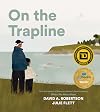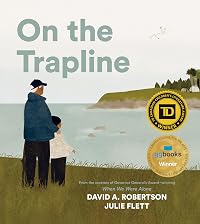
On the Trapline
by David A. Robertson (Author), Julie Flett (Illustrator)
On This Page
Description
A picture book celebrating Indigenous culture and traditions. The Governor General Award-winning team behind When We Were Alone shares a story that honors our connections to our past and our grandfathers and fathers. A boy and Moshom, his grandpa, take a trip together to visit a place of great meaning to Moshom. A trapline is where people hunt and live off the land, and it was where Moshom grew up. As they embark on their northern journey, the child repeatedly asks his grandfather, "Is this show more your trapline?" Along the way, the boy finds himself imagining what life was like two generations ago -- a life that appears to be both different from and similar to his life now. This is a heartfelt story about memory, imagination and intergenerational connection that perfectly captures the experience of a young child's wonder as he is introduced to places and stories that hold meaning for his family.--Amazon. show lessTags
Recommendations



Member Reviews
A boy and Moshom, his grandpa, take a trip together to visit a place of great meaning to Moshom. A trapline is where people hunt and live off the land, and it was where Moshom grew up. As they embark on their northern journey, the child repeatedly asks his grandfather, "Is this your trapline?" Along the way, the boy finds himself imagining what life was like two generations ago -- a life that appears to be both different from and similar to his life now. This is a heartfelt story about memory, imagination and intergenerational connection that perfectly captures the experience of a young child's wonder as he is introduced to places and stories that hold meaning for his family.
Father's Day gift prompted by a radio interview with the author & illustrator. The link to contemporary indigenous communities was enough to purchase, I think. I enjoyed the illustrations, and understated references to culture and folkways. The theme of generational friendship is evocative in much the same understated way, meaningful to both family and community.
My wife and I are celebrating our 30th wedding anniversary by reading picture books aloud to each other. (2 of 5)
A Cree boy bonds with his grandfather as they visit the ancestral land where the old man lived by trapping and fishing with his family when he was a child.
The words and art are simple and straightforward while still being a heartwarming and emotional reflection on what has been lost and what remains.
A Cree boy bonds with his grandfather as they visit the ancestral land where the old man lived by trapping and fishing with his family when he was a child.
The words and art are simple and straightforward while still being a heartwarming and emotional reflection on what has been lost and what remains.
A boy and Moshom, his grandpa, take a trip together to visit a place of great meaning to Moshom. A trapline is where people hunt and live off the land, and it was where Moshom grew up. As they embark on their northern journey, the child repeatedly asks his grandfather, "Is this your trapline?" Along the way, the boy finds himself imagining what life was like two generations ago -- a life that appears to be both different from and similar to his life now. This is a heartfelt story about memory, imagination and intergenerational connection that perfectly captures the experience of a young child's wonder as he is introduced to places and stories that hold meaning for his family.
ASwampy Cree grandfather shows his grandson what it means to be connected to family and the land.
Moshom takes his grandson, the narrator, on a long journey to visit his boyhood home. He wants his grandson to see his family’s trapline, “where people hunt animals and live off the land.” To get there, they fly on a plane and go to a small house beside a big lake. “This is where we lived after we left the trapline.” They walk through a forest and see an old school building. “Most of the kids only spoke Cree, but at the school all of us had to talk and learn in English.” They travel in a small motorboat to an island, where “Moshom’s eyes light up.” He says, “That’s my trapline.” There are beaver dams and eagles and show more rock paintings. Moshom tells how everyone “slept in one big tent, so they could keep warm at night,” how even the youngest children had chores, and everyone shared the work. He tells how they caught muskrats, ate the meat, and sold the pelts “to buy…things you couldn’t get on the trapline.” Before leaving the island, the boy holds Moshom’s hand. His grandpa is quiet. “Kiskisiw means ‘he remembers.’ ” Swampy Cree words and their definitions conclude each page, summing up its themes. Robertson’s text is as spare as Flett’s artwork, leaving plenty of space for readers to feel the emotions evoked by both. (This book was reviewed digitally.)
The illustrations’ muted colors and the poetic rhythm of the words slow the world down for remembering. (author’s note, illustrator’s note, glossary) (Picture book. 5-10)
-Kirkus Review show less
Moshom takes his grandson, the narrator, on a long journey to visit his boyhood home. He wants his grandson to see his family’s trapline, “where people hunt animals and live off the land.” To get there, they fly on a plane and go to a small house beside a big lake. “This is where we lived after we left the trapline.” They walk through a forest and see an old school building. “Most of the kids only spoke Cree, but at the school all of us had to talk and learn in English.” They travel in a small motorboat to an island, where “Moshom’s eyes light up.” He says, “That’s my trapline.” There are beaver dams and eagles and show more rock paintings. Moshom tells how everyone “slept in one big tent, so they could keep warm at night,” how even the youngest children had chores, and everyone shared the work. He tells how they caught muskrats, ate the meat, and sold the pelts “to buy…things you couldn’t get on the trapline.” Before leaving the island, the boy holds Moshom’s hand. His grandpa is quiet. “Kiskisiw means ‘he remembers.’ ” Swampy Cree words and their definitions conclude each page, summing up its themes. Robertson’s text is as spare as Flett’s artwork, leaving plenty of space for readers to feel the emotions evoked by both. (This book was reviewed digitally.)
The illustrations’ muted colors and the poetic rhythm of the words slow the world down for remembering. (author’s note, illustrator’s note, glossary) (Picture book. 5-10)
-Kirkus Review show less
This winning combination of the writer and illustrator who portray the rich life of the Cree Nation in Northern Canada.
The author is a member of the Norway house Cree Nation and lives in Winnipeg, Manitoba. The illustrator is a Swampy Cree and a Red River metis author, both and illustrator and artist, she shares her heritage rich in the respect and love of nature and family.
In this book, a young boy travels with his grandfather to the northern wilderness of Canada where they visit the land where many previous years, the grandfather lived. To get there they must take a plane ride, walk on heavily forested paths, then travel on a small motorboat before reaching their final destination.
As they travel, the boys father tells of his young show more life, attending school after living on the secluded Trapline. The family shared a tent in the bitter cold winter where they all could stay warm. When they arrive at their destination, the conversation continues to describe hunting and fishing for food, eating the maskrat meat while selling the pelts to obtain supplies that were not available where they lived.
The boy came away with a tremendous respect for his grandfather and the way of life that was simple and beautiful. show less
The author is a member of the Norway house Cree Nation and lives in Winnipeg, Manitoba. The illustrator is a Swampy Cree and a Red River metis author, both and illustrator and artist, she shares her heritage rich in the respect and love of nature and family.
In this book, a young boy travels with his grandfather to the northern wilderness of Canada where they visit the land where many previous years, the grandfather lived. To get there they must take a plane ride, walk on heavily forested paths, then travel on a small motorboat before reaching their final destination.
As they travel, the boys father tells of his young show more life, attending school after living on the secluded Trapline. The family shared a tent in the bitter cold winter where they all could stay warm. When they arrive at their destination, the conversation continues to describe hunting and fishing for food, eating the maskrat meat while selling the pelts to obtain supplies that were not available where they lived.
The boy came away with a tremendous respect for his grandfather and the way of life that was simple and beautiful. show less
A boy and his grandfather (or moshom) travel north to rediscover the moshom's trapline. It creates a connection between the two and offes a beautiful description of the grandfather's life in an earler time. Beautifully told and illustrated. Nearly every page provides a Swampy Cree word to learn. Good for ages 6+.
Members
- Recently Added By
Lists

SYES Library Wishlist
1,080 works; 4 members

Children's Picture Books
188 works; 1 member
Author Information


All Editions
Awards and Honors
Awards
Distinctions
Notable Lists
Common Knowledge
- Original publication date
- 2021
- Important places
- Canada
- Dedication
- Kisākihitin, Dad. You are home. - DAR
Kinanāskomitin, Dad, for the love and the sweetgrass. In loving memory, Clarence Flett, Swampy Cree, Red River Métis (1936-2019) - JF - First words
- I'm on my way up north because Moshom, my grandpa, is taking me to his trapline.
- Last words
- (Click to show. Warning: May contain spoilers.)"Yes," I say. "I can see it too."
- Original language
- English
Classifications
- Genres
- Picture Books, Children's Books
- DDC/MDS
- 819.3 — Literature & rhetoric American literature in English American literatures in English not requiring local emphasis English literature from the United States
- LCC
- PZ7.1 .R63 — Language and Literature Fiction and juvenile belles lettres Fiction and juvenile belles lettres Juvenile belles lettres
- BISAC
Statistics
- Members
- 177
- Popularity
- 185,392
- Reviews
- 11
- Rating
- (4.26)
- Languages
- English, French
- Media
- Paper, Ebook
- ISBNs
- 4