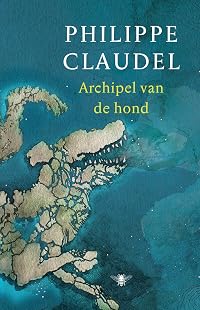
Archipel van de hond
by Philippe Claudel
On This Page
Description
"The Dog Islands are a small, isolated cluster of islands in the Mediterranean - so called because together, when viewed from above, they form the shape of a dog, twisting and baring its teeth against a brilliant blue sea. One of the only inhabited islands (the one that takes the place of one of the dog's teeth) is dominated by a gently smoking volcano, fringed by black volcanic beaches and under the iron rule of the heads of community who are loath to let any outside influence disrupt the show more quiet way of life on the island. Then one morning, an old woman comes across three bodies that have washed up with the tide: three young black men, who have apparently drowned in their attempt to cross the sea. The initial reaction of the island community is that this tragedy must be covered up, lest any association with the drownings damages the island's tourism industry ... But the island's deliberate isolation from the realities of the world cannot last for long, and when a visiting detective arrives on the island and starts asking awkward questions, it becomes clear that the deaths of these three men indicate something far more sinister and deeply rotten lying at the heart of this godforsaken fragment of sea-bound land"-- show lessTags
Recommendations
























Member Reviews
A Volcanic Constellation
Translated by Euan Cameron
Read by: Nicholas Guy Smith
Length: 6 hrs and 7 mins
Seven people discover the washed-up bodies of three black men on the shores of a dog-shaped island in the southern Mediterranean.
In the centre of the island is a semi-dormant volcano which gushes out putrid fumes when it’s angry. It’s like a god, warning the humans on the island of their wrong-doing, and embodying the ever-present menace that is the book’s background atmosphere.
Of the seven people who discovered the bodies only four are significan in this parable of the heartlessness of humanity. The three insignificant islanders are an elderly woman who first notices the bodies - the observer, and the workers - two nondescripts show more who do the work of hiding the bodies under the direction of the other four.
The four are the island’s mayor, priest, doctor and school teacher. Why do they need to hide the bodies? It’s a matter of self-interest for all but the teacher, who objects both to the bodies being hidden, and to the inhumane method by which they are disposed.
The teacher decides to find out where the three black men came from, and why they died. He’s met with opposition from the mayor, the doctor and the priest. When he persists he’s the subject of vilification, and false information is spread about him. The volcano’s activity accelerates.
After being falsely accused of rape, teacher is imprisoned by the mayor and dies in custody as a result of neglect. The volcano rumbles.
The teacher’s wife and children leave the island. But all is not well for the for the mayor et al who have to account for themselves to an outsider who arrives on the island presenting himself as an inspector. The mayor, the doctor and the priest all lie to the inspector who knows the truth but doesn’t care. The story unravels.
The parable presents no real mystery. We all know of bodies being washed-up on the shores of Mediterranean islands. We’ve seen the photos and read the news reports. We know about human-trafficking. And it’s obvious that the mayor, the doctor and the priest are at a minimum, complicit in the deaths of the three black men and the white teacher.
As the mouth of the dog constellation spews out putrid fumes we are not surprised. And it is this, the fact that we are not surprised, that shows that Claudel has succeeded in telling us so vividly what we really already know, but who like the priest, the doctor and the mayor, prefer to hide from.
Highly recommended show less
Translated by Euan Cameron
Read by: Nicholas Guy Smith
Length: 6 hrs and 7 mins
Seven people discover the washed-up bodies of three black men on the shores of a dog-shaped island in the southern Mediterranean.
In the centre of the island is a semi-dormant volcano which gushes out putrid fumes when it’s angry. It’s like a god, warning the humans on the island of their wrong-doing, and embodying the ever-present menace that is the book’s background atmosphere.
Of the seven people who discovered the bodies only four are significan in this parable of the heartlessness of humanity. The three insignificant islanders are an elderly woman who first notices the bodies - the observer, and the workers - two nondescripts show more who do the work of hiding the bodies under the direction of the other four.
The four are the island’s mayor, priest, doctor and school teacher. Why do they need to hide the bodies? It’s a matter of self-interest for all but the teacher, who objects both to the bodies being hidden, and to the inhumane method by which they are disposed.
The teacher decides to find out where the three black men came from, and why they died. He’s met with opposition from the mayor, the doctor and the priest. When he persists he’s the subject of vilification, and false information is spread about him. The volcano’s activity accelerates.
After being falsely accused of rape, teacher is imprisoned by the mayor and dies in custody as a result of neglect. The volcano rumbles.
The teacher’s wife and children leave the island. But all is not well for the for the mayor et al who have to account for themselves to an outsider who arrives on the island presenting himself as an inspector. The mayor, the doctor and the priest all lie to the inspector who knows the truth but doesn’t care. The story unravels.
The parable presents no real mystery. We all know of bodies being washed-up on the shores of Mediterranean islands. We’ve seen the photos and read the news reports. We know about human-trafficking. And it’s obvious that the mayor, the doctor and the priest are at a minimum, complicit in the deaths of the three black men and the white teacher.
As the mouth of the dog constellation spews out putrid fumes we are not surprised. And it is this, the fact that we are not surprised, that shows that Claudel has succeeded in telling us so vividly what we really already know, but who like the priest, the doctor and the mayor, prefer to hide from.
Highly recommended show less
Claudel is very good at parables and this, like many others he has written, fits that definition: “a short fictitious narrative of something which might really occur in life or nature, by means of which a moral is drawn.” Claudel has an extraordinary talent for telling what at first seems to be an uncomplicated story only to have the reader suddenly realize how layered, how subtle, and how impossibly complex that “simple” story truly is; tug on any one element and the entire edifice shakes. Nothing is unrelated. The bodies of three black men wash up on the shore of an isolated island in the Mediterranean. The small group of villagers who learn of this fact decide to dispose of the bodies, hoping to bury whatever secrets the men show more had with their bodies. Of course, it can’t work. The bodies aren’t discovered; they don’t need to be. The villagers themselves create mayhem unintentionally. Claudel is an absolute master of the chilling—not “chilling” as in causing you to be scared but “chilling” as in creating a fear for the future of us all. The characters are or could be Everyman; each embodying an aspect of our shared humanity--mostly by simply showing what we may all be capable of. We read along, recognizing, criticizing, even condemning the faults and flaws of the characters until suddenly it dawns on us: that’s us. show less
The publisher's blurb sets us up thinking that this is an ordinary story. It is not. It is an allegory in which the island is a microcosm of group isolation and the (basically) kharmic debt we must all pay for out Not In My Back Yard actions. The volcano with it's presence and growing stench are the indicators. Or maybe it's the *Superintendent* with his attitude that "everybody lies and life is a farce*. If you're looking for a little escapist reading, this isn't it. But if you want to be real, it is.
I appreciated it very much.
I requested and received a free ebook copy (translated to English from the French by Euan Cameron) from Little, Brown and Company via NetGalley. Thank you.
I appreciated it very much.
I requested and received a free ebook copy (translated to English from the French by Euan Cameron) from Little, Brown and Company via NetGalley. Thank you.
Found in the mystery section of the library, and while not strictly a mystery there are elements of one. The prose is amazing, it wraps around you like a warm, suffocating heat. You can smell and hear and feel everything in this story.
Court et dense roman qui, sur fond de l’immigration clandestine par la mer, nous fait découvrir l’horreur d’une humanité rancie à travers ses peurs, ses turpitudes, sa cupidité, ses mensonges, sa méchanceté… excellent !
El archipiélago del Perro dista mucho de ser un lugar paradisíaco. Situado en el Mediterráneo menos turístico, a unas decenas de millas de la costa africana, es un enclave aislado del mundo donde los habitantes entierran a sus muertos de pie por falta de espacio. Una tierra dura, famosa por sus fuentes de agua caliente y sus paisajes, y dominada por el Brau, un volcán que lleva milenios vomitando lava y escorias fértiles. La pesca y la agricultura son la forma de subsistencia de sus moradores, que sueñan con hacerse ricos con la probable construcción de un complejo termal financiado por un consorcio internacional. Sin embargo, un lunes de septiembre, el mar arroja a la orilla los cadáveres de tres jóvenes negros, un suceso que show more desencadena un agrio debate entre las personas con mando y poder en la isla, que discuten acaloradamente si dar una sepultura digna a los cuerpos u ocultarlos para evitar el escándalo. Una porfía que irá enconándose hasta romper el sosiego colectivo y transformar a esta pacífica gente en una turbamulta descontrolada capaz de provocar su propia aniquilación.
Con un ritmo narrativo raudo y sostenido al servicio de una parábola sobre la crisis migratoria, Claudel ha escrito una novela audaz y provocadora que nos arranca de nuestra molicie y nos invita a rebelarnos ante la ignominia colectiva. show less
Con un ritmo narrativo raudo y sostenido al servicio de una parábola sobre la crisis migratoria, Claudel ha escrito una novela audaz y provocadora que nos arranca de nuestra molicie y nos invita a rebelarnos ante la ignominia colectiva. show less
Mar 27, 2019Spanish
Très beau et court roman qui m’a rappelé le magnifique Rapport de Brodeck. Trois cadavres de jeunes noirs échouent sur la plage d'une île paisible de l'Archipel du Chien ; une petite île de pêcheurs et d'agriculteurs peuplée d'une poignée d'individus qui se connaissent tous. Révéler la présence de ces malheureux migrants risquerait de compromettre un projet d'hôtel thermal censé raviver l'économie. Le Maire et le Docteur décident d'escamoter les corps. Il y a ceux qui acceptent de se taire et ceux qui s'insurgent. Ceux qui ont une conscience, et ceux qui en ont peu, voire pas du tout... Pendant ce temps, une odeur, à peine perceptible d'abord, puis de plus en plus prégnante, envahit l'île...
Au travers de ce village show more et de ses habitants face à la découverte de trois cadavres de jeunes émigrés noirs , c’est toute notre lâcheté, notre refus de voir, notre volonté de ne pas savoir, notre capacité si facile à faire le mal afin de sauver notre tranquillité et nos petites vies, que dénonce Philippe Claudel.
« Le métier de ces hommes (les politiques) est de parler tout le temps, de parler et de ne jamais écouter qui leur parle, de ne jamais d’arrêter de parler, de vivre dans la parole, même la plus creuse et qui devient un bruit inepte et enjôleur, le chant moderne des Sirènes » p57
« C’était toujours pareil avec les hommes qui ont étudié. (…) si le monde tournait si mal c’est la faute aux hommes (..) empêtrés d’idéaux et de bonté, qui cherchent jusqu’à l’obsession l’explication du pourquoi du comment, qui se persuadent de connaître le juste et l’injuste, le bien et le mal, et croient que les frontières entre les deux versants ressemblent au tranchant d’un couteau, alors que l’expérience et le bon sens enseignent que ces frontières n’existent pas, qu’elles ne sont qu’une convention, une invention des hommes, une façon de simplifier ce qui est complexe et de trouver le sommeil » p68
« Vous ne m’avez guère aidé hier soir - le Docteur avait haussé les épaules - vous êtes pourtant intelligent. Je comptais sur vous. Et je suis certain que vous êtes un homme non. Je suis surtout un homme lâche, lui avait-il répondu. Un homme lâche ? Avait repris, songeur, l’Instituteur. C’est presque un pléonasme non ? Avait conclut le Docteur » p221 show less
Au travers de ce village show more et de ses habitants face à la découverte de trois cadavres de jeunes émigrés noirs , c’est toute notre lâcheté, notre refus de voir, notre volonté de ne pas savoir, notre capacité si facile à faire le mal afin de sauver notre tranquillité et nos petites vies, que dénonce Philippe Claudel.
« Le métier de ces hommes (les politiques) est de parler tout le temps, de parler et de ne jamais écouter qui leur parle, de ne jamais d’arrêter de parler, de vivre dans la parole, même la plus creuse et qui devient un bruit inepte et enjôleur, le chant moderne des Sirènes » p57
« C’était toujours pareil avec les hommes qui ont étudié. (…) si le monde tournait si mal c’est la faute aux hommes (..) empêtrés d’idéaux et de bonté, qui cherchent jusqu’à l’obsession l’explication du pourquoi du comment, qui se persuadent de connaître le juste et l’injuste, le bien et le mal, et croient que les frontières entre les deux versants ressemblent au tranchant d’un couteau, alors que l’expérience et le bon sens enseignent que ces frontières n’existent pas, qu’elles ne sont qu’une convention, une invention des hommes, une façon de simplifier ce qui est complexe et de trouver le sommeil » p68
« Vous ne m’avez guère aidé hier soir - le Docteur avait haussé les épaules - vous êtes pourtant intelligent. Je comptais sur vous. Et je suis certain que vous êtes un homme non. Je suis surtout un homme lâche, lui avait-il répondu. Un homme lâche ? Avait repris, songeur, l’Instituteur. C’est presque un pléonasme non ? Avait conclut le Docteur » p221 show less
Aug 23, 2021 (Edited)French
Members
- Recently Added By
Author Information

49+ Works 4,802 Members
Common Knowledge
- Canonical title*
- L'Archipel du Chien
- Alternate titles*
- L'Archipel du Chien
- Original publication date
- 2018
- Original language*
- Français
*Some information comes from Common Knowledge in other languages. Click "Edit" for more information.
Classifications
Statistics
- Members
- 148
- Popularity
- 221,770
- Reviews
- 9
- Rating
- (3.85)
- Languages
- 6 — Catalan, Dutch, English, French, Portuguese, Spanish
- Media
- Paper, Audiobook, Ebook
- ISBNs
- 18
- ASINs
- 6