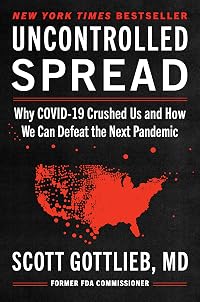
Uncontrolled Spread: Why COVID-19 Crushed Us and How We Can Defeat the Next Pandemic
by Scott Gottlieb
On This Page
Description
NEW YORK TIMES BESTSELLERPhysician and former FDA commissioner Scott Gottlieb asks: Has America's COVID-19 catastrophe taught us anything?
In Uncontrolled Spread, he shows how the coronavirus and its variants were able to trounce America's pandemic preparations, and he outlines the steps that must be taken to protect against the next outbreak. As the pandemic unfolded, Gottlieb was in regular contact with all the key players in Congress, the Trump administration, and the drug and diagnostic show more industries. He provides an inside account of how level after level of American government crumbled as the COVID-19 crisis advanced.
A system-wide failure across government institutions left the nation blind to the threat, and unable to mount an effective response. We'd prepared for the wrong virus. We failed to identify the contagion early enough and became overly reliant on costly and sometimes divisive tactics that couldn't fully slow the spread. We never considered asymptomatic transmission and we assumed people would follow public health guidance. Key bureaucracies like the CDC were hidebound and outmatched. Weak political leadership aggravated these woes. We didn't view a public health disaster as a threat to our national security.
Many of the woes sprung from the CDC, which has very little real-time reporting capability to inform us of Covid's twists and turns or assess our defenses. The agency lacked an operational capacity and mindset to mobilize the kind of national response that was needed. To guard against future pandemic risks, we must remake the CDC and properly equip it to better confront crises. We must also get our intelligence services more engaged in the global public health mission, to gather information and uncover emerging risks before they hit our shores so we can head them off. For this role, our clandestine agencies have tools and capabilities that the CDC lacks.
Uncontrolled Spread argues we must fix our systems and prepare for a deadlier coronavirus variant, a flu pandemic, or whatever else nature — or those wishing us harm — may threaten us with. Gottlieb outlines policies and investments that are essential to prepare the United States and the world for future threats.
. show less
Tags
Recommendations



Member Reviews
I found almost nothing when I went looking for contemporary books about the 1918-1920 influenza pandemic. This contrasts sharply with the aftermath of the 2019-2023 SARS-CoV-2 pandemic. Both were highly transmissible respiratory illnesses that cut global swathes of destruction; but where we’re still arguing about COVID-19, our ancestors seem to have silently buried their dead without a backward look. I don’t know if that’s healthy; but given how many of us seem stuck looking backward at our own tragicomic response, perhaps there’s some virtue in quietly cutting your losses and moving forward.
The only reason I see to look backward is if you’re trying to move forward in a better way, and that’s what Scott Gottlieb means to do show more in “Uncontrolled Spread.” Gottlieb, the longest serving FDA commissioner of President Donald Trump’s first term, was one of the handful of voices I curated for myself during the pandemic. I trusted him for careful and science-based information in a media space that resembled a hall of carnival mirrors more than it did a marketplace of ideas. I’m happy to report that he handles his postmortem of a pandemic with the same rationality that earned my trust back then.
One of Gottlieb’s virtues is that he doesn’t bring a partisan axe to the grinding. He served as an advisor for President Trump’s 2016 campaign, and resigned his FDA post in early 2019 on good enough terms that Trump consulted him more than once during the pandemic. For these reasons, when Gottlieb does choose to criticize the federal response generally or President Trump’s uneven handling specifically, the reader can rest secure in the fact that Gottlieb isn’t trying to score points for his team. He just wants us to do better next time — and there will be a next time.
I can summarize the main reform Gottlieb wants in three words: information, information, information. This isn’t his only concern, of course. For instance, he’d like to see rotating stocks of basic equipment such as masks and ventilators in hardened and decentralized government warehouses; he’d like to see sustained investment in hot manufacturing and distribution capability; and he’d like to see supply chains of critical medical systems reshored to the United States so we don’t find ourselves unable to field such simple things as the cheek swabs which, shockingly, were only available during COVID from a single Italian company already overwhelmed by Lombardy’s collapse.
All that said, the one thing that, more than any other, led to needless deaths and damaged lives was lack of information. First, the Chinese government’s addiction to secrecy put the whole planet on the back foot. In flagrant disregard of conventions to which it was signatory, Beijing deflected and denied until the virus had broken containment and swarmed the rest of the world. Later, Russia would mount a disinformation campaign against Pfizer’s mRNA vaccine to damage confidence in it and drive consumers to its own Sputnik V vaccine. Any pandemic response that assumes good faith from third parties is on thin ice.
Second, American institutional weaknesses — most notably the CDC’s myopic defense of its turf even as it spectacularly fumbled a role it wasn’t built to fill — meant we could not field the sort of testing that might have penned the virus up in a relatively few hot spots. Lack of reliable field tests left us trapped in the dark for crucial months, and what stopgap measures we took assumed that COVID would act like influenza. We were slow to adjust to a disease that doesn’t work like a flu. We all sanitized our groceries and stood an arbitrary six feet apart, neither of which accomplished anything; but argued over effective measures such as masking and mitigating for poorly ventilated indoor spaces.
We faced a datapocalypse due to a late start, diagnostic blindness, and reluctance to abandon the wrong plan. By the time we overcame these deficiencies, the virus was everywhere, social and political capital were exhausted, and the informational vacuum had been colonized by cranks and opportunists. When the cavalry finally arrived in the form of Operation Warp Speed and mRNA vaccines, the damage was done. Trust in public health was gone, and I still see the effects of this in the social media posts of friends who will likely never trust anyone other than the conspiracists and pill-pushers who helped them feel secure when our top-line leaders proved woefully unprepared for catastrophe.
This book is often a disheartening and aggravating read, but I find two bright spots. First, proposals such as Gottlieb’s exist. COVID-19 didn’t need to happen the way it did, and the next pandemic doesn’t need to go this badly. The plans we had to combat a flu epidemic arose from President George W. Bush’s initiative after he read John M. Barry’s “The Great Influenza,” and the next generation of planning can just as easily benefit from books such as “Uncontrolled Spread.” As long as we’re looking backward to look forward, there is hope.
The second bright spot is in that difference between us and our ancestors of 1918-1920. I suspect one reason they published so little introspection into their pandemic was that there was little they could do about it. The cause of influenza was unknown and the technology did not exist to fight it. Our case a century hence is different: we dissect and argue because we know we can do something about it. We have the technology. We have the tools. We can be ready if we want to be ready, and if we’re willing to set aside partisan prejudice and learn the lessons. The only question is whether the books published after the next pandemic will be an account of lessons learned or of lessons learned all over again. show less
The only reason I see to look backward is if you’re trying to move forward in a better way, and that’s what Scott Gottlieb means to do show more in “Uncontrolled Spread.” Gottlieb, the longest serving FDA commissioner of President Donald Trump’s first term, was one of the handful of voices I curated for myself during the pandemic. I trusted him for careful and science-based information in a media space that resembled a hall of carnival mirrors more than it did a marketplace of ideas. I’m happy to report that he handles his postmortem of a pandemic with the same rationality that earned my trust back then.
One of Gottlieb’s virtues is that he doesn’t bring a partisan axe to the grinding. He served as an advisor for President Trump’s 2016 campaign, and resigned his FDA post in early 2019 on good enough terms that Trump consulted him more than once during the pandemic. For these reasons, when Gottlieb does choose to criticize the federal response generally or President Trump’s uneven handling specifically, the reader can rest secure in the fact that Gottlieb isn’t trying to score points for his team. He just wants us to do better next time — and there will be a next time.
I can summarize the main reform Gottlieb wants in three words: information, information, information. This isn’t his only concern, of course. For instance, he’d like to see rotating stocks of basic equipment such as masks and ventilators in hardened and decentralized government warehouses; he’d like to see sustained investment in hot manufacturing and distribution capability; and he’d like to see supply chains of critical medical systems reshored to the United States so we don’t find ourselves unable to field such simple things as the cheek swabs which, shockingly, were only available during COVID from a single Italian company already overwhelmed by Lombardy’s collapse.
All that said, the one thing that, more than any other, led to needless deaths and damaged lives was lack of information. First, the Chinese government’s addiction to secrecy put the whole planet on the back foot. In flagrant disregard of conventions to which it was signatory, Beijing deflected and denied until the virus had broken containment and swarmed the rest of the world. Later, Russia would mount a disinformation campaign against Pfizer’s mRNA vaccine to damage confidence in it and drive consumers to its own Sputnik V vaccine. Any pandemic response that assumes good faith from third parties is on thin ice.
Second, American institutional weaknesses — most notably the CDC’s myopic defense of its turf even as it spectacularly fumbled a role it wasn’t built to fill — meant we could not field the sort of testing that might have penned the virus up in a relatively few hot spots. Lack of reliable field tests left us trapped in the dark for crucial months, and what stopgap measures we took assumed that COVID would act like influenza. We were slow to adjust to a disease that doesn’t work like a flu. We all sanitized our groceries and stood an arbitrary six feet apart, neither of which accomplished anything; but argued over effective measures such as masking and mitigating for poorly ventilated indoor spaces.
We faced a datapocalypse due to a late start, diagnostic blindness, and reluctance to abandon the wrong plan. By the time we overcame these deficiencies, the virus was everywhere, social and political capital were exhausted, and the informational vacuum had been colonized by cranks and opportunists. When the cavalry finally arrived in the form of Operation Warp Speed and mRNA vaccines, the damage was done. Trust in public health was gone, and I still see the effects of this in the social media posts of friends who will likely never trust anyone other than the conspiracists and pill-pushers who helped them feel secure when our top-line leaders proved woefully unprepared for catastrophe.
This book is often a disheartening and aggravating read, but I find two bright spots. First, proposals such as Gottlieb’s exist. COVID-19 didn’t need to happen the way it did, and the next pandemic doesn’t need to go this badly. The plans we had to combat a flu epidemic arose from President George W. Bush’s initiative after he read John M. Barry’s “The Great Influenza,” and the next generation of planning can just as easily benefit from books such as “Uncontrolled Spread.” As long as we’re looking backward to look forward, there is hope.
The second bright spot is in that difference between us and our ancestors of 1918-1920. I suspect one reason they published so little introspection into their pandemic was that there was little they could do about it. The cause of influenza was unknown and the technology did not exist to fight it. Our case a century hence is different: we dissect and argue because we know we can do something about it. We have the technology. We have the tools. We can be ready if we want to be ready, and if we’re willing to set aside partisan prejudice and learn the lessons. The only question is whether the books published after the next pandemic will be an account of lessons learned or of lessons learned all over again. show less
Note the subtitle: Why COVID-19 Crushed Us and How We Can Defeat the Next Pandemic. I don’t want to be too hard on Gottlieb, Commissioner of the FDA during the Trump administration from 2017-2019. His constructive aim is to use what we learned during COVID-19 to outline steps that might prevent or mitigate the next pandemic. This is a noble goal, especially given that however much we may wish it were otherwise, that monstrosity is necessarily coming. Gottlieb dutifully relates his particular account of the failings of the system, all familiar and fair.
His account stands not fundamentally in the service of history. For Gottlieb, the disaster animates a series of practical proposals, ideas widely held within the mainstream virology and show more public health communities. These are important and necessary suggestions which deserve a broad and visible hearing: viewing health and emerging diseases as a national security issue (global, right Dr Gottlieb?); creating and funding permanent reserves in our capacity for the production of health supplies, including equipment and testing capability; improving surveillance including the use of cutting edge genomic tools to do so. Lastly, expecting that international cooperation in early reporting may be limited, given the disincentives involved.
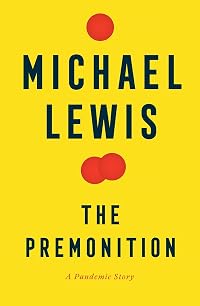
But Uncontrolled Spread is unsurprisingly restrained and understated when it comes to the CDC and its shortcomings. The introduction explicitly states this is not a book about politics. Gottlieb argues that many of the same systems failures would have occurred no matter who was in charge. Possibly, though a partial truth at best. I will not recount Trump’s many actions and statements, public and private, that contest this interpretation. I can’t help but wonder whether Gottlieb is still so involved in the political world of US public health that he is unwilling to be too harsh on colleagues or former colleagues. The same might be said for his careful language regarding the handling of the pandemic by the Trump Administration. In contrast he fervently holds China’s feet to the fire for their delay in full early disclosure, even as US intelligence nonetheless warned the Administration of a worrisome outbreak in China as early as November 2019. And even as the protagonists of The Premonition were able to calculate with remarkable precision the coming events in January 2020 from public sources alone.
There will no doubt be a wave of attempts to reckon with what just happened to the US and the world as we emerge from the worst pandemic in a hundred years. The two books I have paired here crystalize an essential piece of what that reckoning requires. What good are policy recommendations without a direct and open assessment of the failures that such recommendations aim to correct? Without clearly confronting the failures and malfeasance in the national response, policy blandly lacks the requisite sense of urgency and incisiveness.
We ought to start by acknowledging the unmitigated disaster that might have been reduced. How many of the more than one million direct deaths, losses that will weigh forever on loved ones and on the nation, might have been avoided with a conscientious and vigilant response?
Uncontrolled Spread falls short in assessing responsibility. In fairness, it is a constructive book that tries hard not to offend. But offense should be the least concern in favor of honesty, and Gottlieb misses major parts of the failing. Generously, it’s a first attempt at transforming the global tragedy of COVID-19 into actionable measures for better protecting the country and the planet from the inevitable. In that sense, it’s a thoughtful and useful effort. Let us hope we remember our history and take action, rather than adopting the usual strategy of being destined to repeat it. show less
His account stands not fundamentally in the service of history. For Gottlieb, the disaster animates a series of practical proposals, ideas widely held within the mainstream virology and show more public health communities. These are important and necessary suggestions which deserve a broad and visible hearing: viewing health and emerging diseases as a national security issue (global, right Dr Gottlieb?); creating and funding permanent reserves in our capacity for the production of health supplies, including equipment and testing capability; improving surveillance including the use of cutting edge genomic tools to do so. Lastly, expecting that international cooperation in early reporting may be limited, given the disincentives involved.
But Uncontrolled Spread is unsurprisingly restrained and understated when it comes to the CDC and its shortcomings. The introduction explicitly states this is not a book about politics. Gottlieb argues that many of the same systems failures would have occurred no matter who was in charge. Possibly, though a partial truth at best. I will not recount Trump’s many actions and statements, public and private, that contest this interpretation. I can’t help but wonder whether Gottlieb is still so involved in the political world of US public health that he is unwilling to be too harsh on colleagues or former colleagues. The same might be said for his careful language regarding the handling of the pandemic by the Trump Administration. In contrast he fervently holds China’s feet to the fire for their delay in full early disclosure, even as US intelligence nonetheless warned the Administration of a worrisome outbreak in China as early as November 2019. And even as the protagonists of The Premonition were able to calculate with remarkable precision the coming events in January 2020 from public sources alone.
There will no doubt be a wave of attempts to reckon with what just happened to the US and the world as we emerge from the worst pandemic in a hundred years. The two books I have paired here crystalize an essential piece of what that reckoning requires. What good are policy recommendations without a direct and open assessment of the failures that such recommendations aim to correct? Without clearly confronting the failures and malfeasance in the national response, policy blandly lacks the requisite sense of urgency and incisiveness.
We ought to start by acknowledging the unmitigated disaster that might have been reduced. How many of the more than one million direct deaths, losses that will weigh forever on loved ones and on the nation, might have been avoided with a conscientious and vigilant response?
Uncontrolled Spread falls short in assessing responsibility. In fairness, it is a constructive book that tries hard not to offend. But offense should be the least concern in favor of honesty, and Gottlieb misses major parts of the failing. Generously, it’s a first attempt at transforming the global tragedy of COVID-19 into actionable measures for better protecting the country and the planet from the inevitable. In that sense, it’s a thoughtful and useful effort. Let us hope we remember our history and take action, rather than adopting the usual strategy of being destined to repeat it. show less
Maybe if you really, really want to know the details behind the COVID pandemic response, you might read the whole book. I didn't. It's 15.5 hours long and very technical. The jargon is pretty well explained, but it takes awhile. This book could use a condensed version, more free of medical was-was. DNF but it rates more than one star, so I gave it two.
Ratings
Members
- Recently Added By
Lists

Best History Books about Epidemics
27 works; 24 members

Top Five Books of 2021
604 works; 181 members
Author Information
2 Works 94 Members
Common Knowledge
- Original publication date
- 2021-09
- Important places
- United States of America
- Important events
- COVID-19 pandemic
Classifications
- Genres
- Nonfiction, General Nonfiction, Science & Nature
- DDC/MDS
- 362.1962 — Society, government, & culture Social problems and social services Social Welfare People with physical illnesses Services to people with specific conditions Diseases Respiratory system
- LCC
- RA644 .C67 .G67 — Medicine Public aspects of medicine Public aspects of medicine Public health. Hygiene. Preventive medicine Disease (Communicable and noninfectious) and public
- BISAC
Statistics
- Members
- 93
- Popularity
- 346,439
- Reviews
- 3
- Rating
- (3.79)
- Languages
- English
- Media
- Paper, Audiobook, Ebook
- ISBNs
- 7
- ASINs
- 2