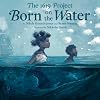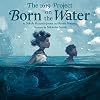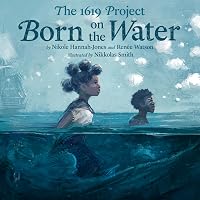
The 1619 Project: Born on the Water
by Nikole Hannah-Jones, Nikkolas Smith (Illustrator), Renée Watson
On This Page
Description
Stymied by her unfinished family tree assignment for school, a young girl seeks Grandma's counsel and learns about her ancestors, the consequences of slavery, and the history of Black resistance in the United States.Tags
Recommendations




Member Reviews
"A celebration of Black Americans for young readers, derived from Hannah-Jones’ 1619 Project.
Told in a series of poems that create a narrative, the story opens with a young Black girl given a school assignment to trace her ancestry. Despondent, she tells her grandmother about her shame at being unable to complete the assignment. Grandma then tells the story of their ancestors. Refreshingly, that story starts pre-enslavement, in West Central Africa: “Their story does not begin / with whips and chains. / They had a home, a place, a land, / a beginning. / … / Before they were enslaved, they were / free.” Several spreads are dedicated to celebrating the ancestors’ language, skilled hands, sharp minds, joyful hearts, and amazing show more dancing. When enslavement enters the narrative, authors and illustrator strike a balance between presenting an honest picture and consideration for young readers. Smith’s evocative, vibrant art is full of emotion and motion. Colors and images speak volumes, while characters are portrayed with dignity, even in the worst circumstances. A significant portion of the story focuses on this period and how the ancestors survived and made a home in the United States. Poems “Resistance” and “Legacy” round out the narrative until reaching a conclusion for the character the book opened with in “Pride.” Compression of 400-plus years of history leads to some oversimplification, but overall it is a tremendous achievement.(This book was reviewed digitally.)
A gift to Black Americans and everyone else who reads it. (authors' note, illustrator's note) (Picture book/poetry. 5-8)" show less
Told in a series of poems that create a narrative, the story opens with a young Black girl given a school assignment to trace her ancestry. Despondent, she tells her grandmother about her shame at being unable to complete the assignment. Grandma then tells the story of their ancestors. Refreshingly, that story starts pre-enslavement, in West Central Africa: “Their story does not begin / with whips and chains. / They had a home, a place, a land, / a beginning. / … / Before they were enslaved, they were / free.” Several spreads are dedicated to celebrating the ancestors’ language, skilled hands, sharp minds, joyful hearts, and amazing show more dancing. When enslavement enters the narrative, authors and illustrator strike a balance between presenting an honest picture and consideration for young readers. Smith’s evocative, vibrant art is full of emotion and motion. Colors and images speak volumes, while characters are portrayed with dignity, even in the worst circumstances. A significant portion of the story focuses on this period and how the ancestors survived and made a home in the United States. Poems “Resistance” and “Legacy” round out the narrative until reaching a conclusion for the character the book opened with in “Pride.” Compression of 400-plus years of history leads to some oversimplification, but overall it is a tremendous achievement.(This book was reviewed digitally.)
A gift to Black Americans and everyone else who reads it. (authors' note, illustrator's note) (Picture book/poetry. 5-8)" show less
"A celebration of Black Americans for young readers, derived from Hannah-Jones’ 1619 Project.
Told in a series of poems that create a narrative, the story opens with a young Black girl given a school assignment to trace her ancestry. Despondent, she tells her grandmother about her shame at being unable to complete the assignment. Grandma then tells the story of their ancestors. Refreshingly, that story starts pre-enslavement, in West Central Africa: “Their story does not begin / with whips and chains. / They had a home, a place, a land, / a beginning. / … / Before they were enslaved, they were / free.” Several spreads are dedicated to celebrating the ancestors’ language, skilled hands, sharp minds, joyful hearts, and amazing show more dancing. When enslavement enters the narrative, authors and illustrator strike a balance between presenting an honest picture and consideration for young readers. Smith’s evocative, vibrant art is full of emotion and motion. Colors and images speak volumes, while characters are portrayed with dignity, even in the worst circumstances. A significant portion of the story focuses on this period and how the ancestors survived and made a home in the United States. Poems “Resistance” and “Legacy” round out the narrative until reaching a conclusion for the character the book opened with in “Pride.” Compression of 400-plus years of history leads to some oversimplification, but overall it is a tremendous achievement.(This book was reviewed digitally.)
A gift to Black Americans and everyone else who reads it. (authors' note, illustrator's note) (Picture book/poetry. 5-8)"
-Kirkus Review show less
Told in a series of poems that create a narrative, the story opens with a young Black girl given a school assignment to trace her ancestry. Despondent, she tells her grandmother about her shame at being unable to complete the assignment. Grandma then tells the story of their ancestors. Refreshingly, that story starts pre-enslavement, in West Central Africa: “Their story does not begin / with whips and chains. / They had a home, a place, a land, / a beginning. / … / Before they were enslaved, they were / free.” Several spreads are dedicated to celebrating the ancestors’ language, skilled hands, sharp minds, joyful hearts, and amazing show more dancing. When enslavement enters the narrative, authors and illustrator strike a balance between presenting an honest picture and consideration for young readers. Smith’s evocative, vibrant art is full of emotion and motion. Colors and images speak volumes, while characters are portrayed with dignity, even in the worst circumstances. A significant portion of the story focuses on this period and how the ancestors survived and made a home in the United States. Poems “Resistance” and “Legacy” round out the narrative until reaching a conclusion for the character the book opened with in “Pride.” Compression of 400-plus years of history leads to some oversimplification, but overall it is a tremendous achievement.(This book was reviewed digitally.)
A gift to Black Americans and everyone else who reads it. (authors' note, illustrator's note) (Picture book/poetry. 5-8)"
-Kirkus Review show less
"A celebration of Black Americans for young readers, derived from Hannah-Jones’ 1619 Project.
Told in a series of poems that create a narrative, the story opens with a young Black girl given a school assignment to trace her ancestry. Despondent, she tells her grandmother about her shame at being unable to complete the assignment. Grandma then tells the story of their ancestors. Refreshingly, that story starts pre-enslavement, in West Central Africa: “Their story does not begin / with whips and chains. / They had a home, a place, a land, / a beginning. / … / Before they were enslaved, they were / free.” Several spreads are dedicated to celebrating the ancestors’ language, skilled hands, sharp minds, joyful hearts, and amazing show more dancing. When enslavement enters the narrative, authors and illustrator strike a balance between presenting an honest picture and consideration for young readers. Smith’s evocative, vibrant art is full of emotion and motion. Colors and images speak volumes, while characters are portrayed with dignity, even in the worst circumstances. A significant portion of the story focuses on this period and how the ancestors survived and made a home in the United States. Poems “Resistance” and “Legacy” round out the narrative until reaching a conclusion for the character the book opened with in “Pride.” Compression of 400-plus years of history leads to some oversimplification, but overall it is a tremendous achievement.(This book was reviewed digitally.)
A gift to Black Americans and everyone else who reads it. (authors' note, illustrator's note) (Picture book/poetry. 5-8)"
-Kirkus Review show less
Told in a series of poems that create a narrative, the story opens with a young Black girl given a school assignment to trace her ancestry. Despondent, she tells her grandmother about her shame at being unable to complete the assignment. Grandma then tells the story of their ancestors. Refreshingly, that story starts pre-enslavement, in West Central Africa: “Their story does not begin / with whips and chains. / They had a home, a place, a land, / a beginning. / … / Before they were enslaved, they were / free.” Several spreads are dedicated to celebrating the ancestors’ language, skilled hands, sharp minds, joyful hearts, and amazing show more dancing. When enslavement enters the narrative, authors and illustrator strike a balance between presenting an honest picture and consideration for young readers. Smith’s evocative, vibrant art is full of emotion and motion. Colors and images speak volumes, while characters are portrayed with dignity, even in the worst circumstances. A significant portion of the story focuses on this period and how the ancestors survived and made a home in the United States. Poems “Resistance” and “Legacy” round out the narrative until reaching a conclusion for the character the book opened with in “Pride.” Compression of 400-plus years of history leads to some oversimplification, but overall it is a tremendous achievement.(This book was reviewed digitally.)
A gift to Black Americans and everyone else who reads it. (authors' note, illustrator's note) (Picture book/poetry. 5-8)"
-Kirkus Review show less
Born on the Water is a beautiful book! The illustrations capture the content, tone, and emotions of the poetry so well. I thought the introduction to slavery and its trauma is honest, but sensitive to young readers. The accurate portrayal of the West African societies from which slaves were kidnapped gives all young readers, but especially young African American readers, an important context for those captured into slavery and the cultural influences seen among enslaved people in the United States and their descendants. This book also celebrates the determination, strength, and resilience of African Americans to create new lives out of such tragedy. Both authors note that they want African American readers to come away empowered and to show more reflect about their roots -- reading this book is a wonderful way to start such reflection.
I also see this book as important resource for teachers to use in the classroom, offering all students to reflect on the consequences of slavery in the United States, Black resistance and civil rights, and what it means to call oneself "American". show less
I also see this book as important resource for teachers to use in the classroom, offering all students to reflect on the consequences of slavery in the United States, Black resistance and civil rights, and what it means to call oneself "American". show less
The transition between "And They Danced" to "Stolen" to " is amazing. The colorful page to a blue and black to a red and black one truly conveys the emotional turmoil. I'm interested on why the illustrator decided to leave a dash of green. Plus, as the author mentions, it is not an immigration story. My favorite page is the last one, where she draws the US flag to show that her ancestors built this county so she is able to take pride in the fact that she is from here. I loved the illustrations
This book is a retelling of the traditional narrative of the slave trade, told in verse and accompanied by glorious and dramatic illustrations. While this is aimed for readers in grades 2 through 5, I absolutely loved it! I stopped at every page to look deeper into the pictures.
I appreciate how intense yet open and honest this book is. It's heartbreaking, uplifting, and inspiring all at the same time!
I appreciate how intense yet open and honest this book is. It's heartbreaking, uplifting, and inspiring all at the same time!
A young student receives a family tree assignment in school, but she can only trace back three generations. Grandma gathers the whole family, and the student learns that 400 years ago, in 1619, their ancestors were stolen and brought to America by white slave traders.
But before that, they had a home, a land, a language. She learns how the people said to be born on the water survived.
But before that, they had a home, a land, a language. She learns how the people said to be born on the water survived.
Members
- Recently Added By
Lists

VBL Picturebooks
110 works; 1 member

SYES Library Wishlist
1,080 works; 4 members

Children's Picture Books
188 works; 1 member
Author Information

7+ Works 3,314 Members

24+ Works 6,399 Members
Awards and Honors
Awards
Distinctions
Notable Lists
Work Relationships
Common Knowledge
- Canonical title
- The 1619 Project: Born on the Water
- Original publication date
- 2021
- People/Characters
- Anthony Tucker (slave); Isabella Tucker (slave); William Tucker (son of Anthony and Isabella Tucker); William Tucker (slave owner); Mary Tucker (slave owner)
- Important places
- Ndongo; Virginia, USA
- Dedication
- For Najya - N.H.J.
For Caleb & Nehemiah - R.W.
To my son, Zion. May you continue on the path of bravery and brilliance that your ancestors have laid before you. - N.S. - First words
- My teacher gives us an assignment. "Who are you?" she asks. "Trace your roots. Draw a flag that represents your ancestral land."
- Last words
- (Click to show. Warning: May contain spoilers.)The next day, I go to school, pull out my red crayon, my blue, and my white. I draw the stars and I draw the stripes of the flag of the country that my ancestors built, that my grandma and grandpa built, that I will help build, too.
And I am not ashamed. I know what my story is, where I am from,
where I begin . . . - Original language
- English
Classifications
Statistics
- Members
- 714
- Popularity
- 39,815
- Reviews
- 33
- Rating
- (4.55)
- Languages
- English, Spanish
- Media
- Paper, Audiobook, Ebook
- ISBNs
- 8
- ASINs
- 3