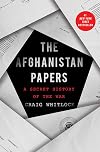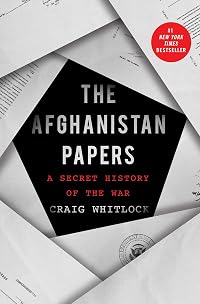
The Afghanistan Papers: A Secret History of the War
by Craig Whitlock
On This Page
Description
The groundbreaking investigative story of how three successive presidents and their military commanders deceived the public year after year about the longest war in American history by Washington Post reporter Craig Whitlock, a three-time Pulitzer Prize finalist. Unlike the wars in Vietnam and Iraq, the US invasion of Afghanistan in 2001 had near-unanimous public support. At first, the goals were straightforward and clear: to defeat al-Qaeda and prevent a repeat of 9/11. Yet soon after the show more United States and its allies removed the Taliban from power, the mission veered off course and US officials lost sight of their original objectives. Distracted by the war in Iraq, the US military became mired in an unwinnable guerrilla conflict in a country it did not understand. But no president wanted to admit failure, especially in a war that began as a just cause. Instead, the Bush, Obama, and Trump administrations sent more and more troops to Afghanistan and repeatedly said they were making progress, even though they knew there was no realistic prospect for an outright victory. Just as the Pentagon Papers changed the public's understanding of Vietnam, The Afghanistan Papers contains startling revelation after revelation from people who played a direct role in the war, from leaders in the White House and the Pentagon to soldiers and aid workers on the front lines. In unvarnished language, they admit that the US government's strategies were a mess, that the nation-building project was a colossal failure, and that drugs and corruption gained a stranglehold over their allies in the Afghan government. All told, the account is based on interviews with more than 1,000 people who knew that the US government was presenting a distorted, and sometimes entirely fabricated, version of the facts on the ground. Documents unearthed by The Washington Post reveal that President Bush didn't know the name of his Afghanistan war commander and didn't want to make time to meet with him. Secretary of Defense Donald Rumsfeld admitted he had "no visibility into who the bad guys are." His successor, Robert Gates, said: "We didn't know jack shit about al-Qaeda." The Afghanistan Papers is a shocking account that will supercharge a long overdue reckoning over what went wrong and forever change the way the conflict is remembered. - Publisher. show lessTags
Recommendations


Member Reviews
There is nothing in this book to cheer about. I didn't know whether to read it with interest or throw it across the room.
Larry Matthews, The Washington Independent Review of Books
I agree with Matthews. While Washington Post investigative reporter Craig Whitlock provides the reader with an eye-opening and alarming analysis of America's twenty-year war in Afghanistan, it's a frustrating and, at times, exasperating read.
Whitlock uses a wide array of sources to document this expose. These include the Lessons Learned Project, a database of hundreds of interviews compiled by the federal office of Special Inspector for Afghanistan Reconstruction, and private memos of Donald Rumsfeld.
According to Whitlock, the war began as a response to 9/11. show more Its goal was to find and punish al-Qaeda. However, Bush administration bureaucrats conflated the Taliban with al-Qaeda, and the mission shifted to dismantling the Taliban and nation-building.
Whitlock believes that American hubris and lack of understanding of Afghani history and culture were crucial to America's failure. Afghanistan is a decentralized society governed by clans.
The bureaucrats of the Bush Administration tried to rebuild the Afghan nation by superimposing the centralized structures of the U.S. government.
The recruitment and training of the Afghani military stood out as a case in point. Military bureaucrats failed to realize the impact of long-term poverty and war on Afghani education. As a result, many of the recruits lacked basic literacy and numeracy skills, yet the military attempted to train them using power-point presentations. They also failed to build on many of the recruits' skills developed through years of fighting.
The Afghanistan Papers chronicles the bungles, missteps, and misunderstandings of the Bush, Obama, and Trump administrations in Afghanistan. The book is well written, impressively researched, and thoroughly depressing. I recommend it if you want to get a deeper understanding of all that went wrong. show less
Larry Matthews, The Washington Independent Review of Books
I agree with Matthews. While Washington Post investigative reporter Craig Whitlock provides the reader with an eye-opening and alarming analysis of America's twenty-year war in Afghanistan, it's a frustrating and, at times, exasperating read.
Whitlock uses a wide array of sources to document this expose. These include the Lessons Learned Project, a database of hundreds of interviews compiled by the federal office of Special Inspector for Afghanistan Reconstruction, and private memos of Donald Rumsfeld.
According to Whitlock, the war began as a response to 9/11. show more Its goal was to find and punish al-Qaeda. However, Bush administration bureaucrats conflated the Taliban with al-Qaeda, and the mission shifted to dismantling the Taliban and nation-building.
Whitlock believes that American hubris and lack of understanding of Afghani history and culture were crucial to America's failure. Afghanistan is a decentralized society governed by clans.
The bureaucrats of the Bush Administration tried to rebuild the Afghan nation by superimposing the centralized structures of the U.S. government.
The recruitment and training of the Afghani military stood out as a case in point. Military bureaucrats failed to realize the impact of long-term poverty and war on Afghani education. As a result, many of the recruits lacked basic literacy and numeracy skills, yet the military attempted to train them using power-point presentations. They also failed to build on many of the recruits' skills developed through years of fighting.
The Afghanistan Papers chronicles the bungles, missteps, and misunderstandings of the Bush, Obama, and Trump administrations in Afghanistan. The book is well written, impressively researched, and thoroughly depressing. I recommend it if you want to get a deeper understanding of all that went wrong. show less
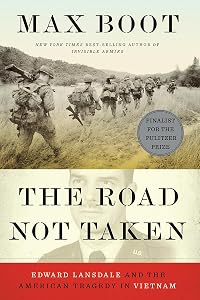
Very well researched, organized and written summary of all that has gone wrong with the US led war in Afghanistan, starting with the bone-headed decisions of the Bush-Cheney administration at the very beginning of the action. A very poor use of our military and our intelligence capabilities. How many times must the US repeat these mistakes, affecting millions of people and countless billions of dollars, with no positive outcome ever within sight. I thought we learned these lessons in Vietnam, but apparently not. Anyone who has ever read about what Edward Lansdale accomplished in the Philippines after WW II would know that it is possible to counter and neutralize an enemy threat without the waste and destruction. Enough said.
Culled from “lessons learned” interviews with military and diplomatic folks, this is a catalog of repeated bad decisions, with billions of dollars and thousands of lives lost for essentially no purpose but to strengthen corruption in Afghanistan. It’s hard to be hopeful that things could have been much better even if we hadn’t jumped into a distracting war with Iraq, but maybe the waste would have been a little bit less.
Overall, I find this to be an excellent book. For one, Craig Whitlock divided the 20 years into several sections, each of which dealt with a separate phase of the war. This made it easy to follow the narrative.
Also, I give Craig Whitlock full marks for organizing the material efficiently, and for writing in such an engaging style.
Clearly, the Americans went in without a game plan. I don't think they have a game plan even now, as they pulled out.
Why the 4-stars? For all its good points, Craig's book is aimed at one thing - proving the Americans did not have a strategy. While this may be entirely true, a balanced book would have pointed out the good parts of the American strategy and operations.
Also, I give Craig Whitlock full marks for organizing the material efficiently, and for writing in such an engaging style.
Clearly, the Americans went in without a game plan. I don't think they have a game plan even now, as they pulled out.
Why the 4-stars? For all its good points, Craig's book is aimed at one thing - proving the Americans did not have a strategy. While this may be entirely true, a balanced book would have pointed out the good parts of the American strategy and operations.
I finished this book on the heels of another book which was an autobiography of U.S. Congressman Ruben Gallego and his experiences in the Iraq war. The similarities are sobering and chilling in that in both wars, U.S. leaders misrepresented and lied about the ongoing progress (or lack thereof) in the war, and their reluctance to pull troops out rather than losing thousands of American lives in unwinnable conflicts -- a failure to define the objective for withdrawal.
This book was due to the concerted effort of the Washington Post to obtain, in some cases by court order, documents and interviews with participants of the Afghanistan war. It is remarkable in showing the denial and incompetence of our military and political leaders when show more communicating to the American public. The book is highly recommended as a definitive look at this war and the mistakes we hope will never be made again. show less
This book was due to the concerted effort of the Washington Post to obtain, in some cases by court order, documents and interviews with participants of the Afghanistan war. It is remarkable in showing the denial and incompetence of our military and political leaders when show more communicating to the American public. The book is highly recommended as a definitive look at this war and the mistakes we hope will never be made again. show less
The scope of this book is limited, in the sense that it specifically covers just the United States involvement in Afghanistan, but it is so comprehensive while still concise that it deserves top marks for its efforts. Admittedly, the author had a couple massive but key resources to help him focus broadly but still very deeply into his subject. I have read several books touching on Afghanistan and specifically of America's involvement in it, and this would be one of my top choices for the less informed. My first choice would be, Tamin Ansary's book, Games Without Rules: The Often Interrupted History of Afghanistan, which covers the long and unique history of Afghanistan as the target of empire after empire. It helps explain the morass show more that seems so obvious into which the United States would get itself in Afghanistan. A second choice would be Anand Gopal's book, No Good Men Among the Living: America, the Taliban, and the War through Afghan Eyes, because it so intimately captures the daily life of the Afghanistans and their involvement with the occupying military coalition. This book serves as a great end to the set. Having said that, regardless of your political position, I predict it will make you nauseated reading about the decades of wasted U.S. taxpayer money. It should certainly help you better understand what Biden faced when he decided to withdraw the U.S. from Afghanistan. Highly recommended. show less
Timely, well-written, engaging, if quite depressing. Great bit of investigative journalism and shows how fraught with issues the whole war was. Ends a bit abruptly and would have liked more of a closing with discussion of the Biden withdrawal -- but book was written before the withdrawal issues -- perhaps Whitlock will write an amended second addition with some discussion of the withdrawal.
Members
- Recently Added By
Lists

Evan's Wish List
86 works; 2 members

Washington Post The 10 Best Books of 2021
10 works; 1 member

Islam & the Middle East
127 works; 1 member
Author Information
3 Works 479 Members
Awards and Honors
Distinctions
Notable Lists
Common Knowledge
- Original publication date
- 2021-08
- Epigraph
- Only a free and unrestrained press can effectively expose deception in government. And paramount among the responsibilities of a free press is the duty to prevent any part of government from deceiving the people and sending ... (show all)them off to distant lands to die of foreign fevers and foreign shot and shell.
- Supreme Court Justice Hugo L. Black, in his concurring opinion in New York Times Co. v. United States, also known as the Pentagon Papers case, June 30, 1971. In a 6-3 decision, the Court ruled that the U.S. government could not block The New York Times or The Washington Post from publishing the Defense Department's secret history of the Vietnam War. - Dedication
- For Jenny and Kyle, with love and admiration
- First words
- (Foreword) Two weeks after the 9/11 attacks, as the United States girded for war in Afghanistan, a reporter asked Defense Secretary Donald Rumsfeld a straightforward question: Would U.S. officials lie to the news media about ... (show all)military operations in order to mislead the enemy?
Marine One, the white-topped presidential helicopter, made a gentle landing on the perfectly clipped grass of the Virginia Military Institute's Parade Ground around 10 a.m. on April 17, 2002, a hot and sunny spring morning in... (show all) the Shenandoah valley. - Last words
- (Click to show. Warning: May contain spoilers.)"Hard to believe," he murmured. "Look at them all."
- Blurbers
- Bowman, Tom; Coll, Steve; Starr, Barbara; Chandrasekaran, Rajiv; Maurer, Kevin
- Original language
- English US
Classifications
Statistics
- Members
- 421
- Popularity
- 73,425
- Reviews
- 13
- Rating
- (4.25)
- Languages
- 5 — English, Finnish, German, Italian, Spanish
- Media
- Paper, Audiobook, Ebook
- ISBNs
- 13
- ASINs
- 5