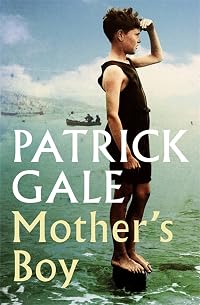
Mother's Boy
by Patrick Gale
On This Page
Description
Laura, an impoverished Cornish girl, meets her husband when they are both in service in Teignmouth in 1916. They have a baby, Charles, but Laura's husband returns home from the trenches a damaged man, already ill with the tuberculosis that will soon leave her a widow. In a small, class-obsessed town she raises her boy alone, working as a laundress, and gradually becomes aware that he is some kind of genius. As an intensely private young man, Charles signs up for the navy with the new rank of show more coder. His escape from the tight, gossipy confines of Launceston to the colour and violence of war sees him blossom as he experiences not only the possibility of death, but the constant danger of a love that is as clandestine as his work. show lessTags
Recommendations















Member Reviews
Patrick Gale puts the relationship between Charles Causley and his mother at the centre of this loosely biographical novel. Apart from Charles's war-service, they lived together for the whole of their joint lives. Charles's father Charlie was gassed in the First World War and died in the early 1920s.
Laura is the main viewpoint character throughout most of the book, building up our idea of Charles as an intensely private person we can only see from outside. Gale makes her into a very convincing, sympathetic character. In 19th and early 20th century England, "His mother takes in washing" was pretty much the most socially damning thing you could say about someone: laundry work was considered demeaning and humiliating, the last step on the show more downward ladder before you got to prostitution or the workhouse. But Gale treats Laura more in the way that Zola writes about Gervaise in L'Assommoir, as a self-confident and hardworking professional who has mastered a difficult skill and provides an important service for her clients. She is even allowed to be proud of the high-quality work she does for Launceston's only house of ill repute and to get the best of a snooty churchwarden who isn't happy about the altar-cloths going in the same tub as Ma Treloar's stained sheets.
Charles has to be in the foreground for the wartime chapters, of course, as we follow his naval service as a coder, a job that Gale wants us to see as at least a metaphor for his later work as a poet, if not the thing that actually triggered him into taking his writing in that direction. There's no real evidence one way or the other about Causley's love-life, although there are plenty of ambiguous hints in the poems. Gale uses the freedom he has as a writer of fiction and some slim documentary clues (a letter, and the poem "Angel Hill") to give him a couple of wartime romances with other sailors. Whether or not they really happened in that way, they work in the context of the novel, and they help to give it a bit of shape and create a well-defined ending at the point in 1948 when Causley has settled into his new career as a primary-school teacher and is beginning to publish his first poems.
A very enjoyable and satisfying novel, which I somehow ended up reading the whole of in three sittings (and it's not a short book). So the cover blurb that says "unputdownable" must be fairly near the mark... show less
Laura is the main viewpoint character throughout most of the book, building up our idea of Charles as an intensely private person we can only see from outside. Gale makes her into a very convincing, sympathetic character. In 19th and early 20th century England, "His mother takes in washing" was pretty much the most socially damning thing you could say about someone: laundry work was considered demeaning and humiliating, the last step on the show more downward ladder before you got to prostitution or the workhouse. But Gale treats Laura more in the way that Zola writes about Gervaise in L'Assommoir, as a self-confident and hardworking professional who has mastered a difficult skill and provides an important service for her clients. She is even allowed to be proud of the high-quality work she does for Launceston's only house of ill repute and to get the best of a snooty churchwarden who isn't happy about the altar-cloths going in the same tub as Ma Treloar's stained sheets.
Charles has to be in the foreground for the wartime chapters, of course, as we follow his naval service as a coder, a job that Gale wants us to see as at least a metaphor for his later work as a poet, if not the thing that actually triggered him into taking his writing in that direction. There's no real evidence one way or the other about Causley's love-life, although there are plenty of ambiguous hints in the poems. Gale uses the freedom he has as a writer of fiction and some slim documentary clues (a letter, and the poem "Angel Hill") to give him a couple of wartime romances with other sailors. Whether or not they really happened in that way, they work in the context of the novel, and they help to give it a bit of shape and create a well-defined ending at the point in 1948 when Causley has settled into his new career as a primary-school teacher and is beginning to publish his first poems.
A very enjoyable and satisfying novel, which I somehow ended up reading the whole of in three sittings (and it's not a short book). So the cover blurb that says "unputdownable" must be fairly near the mark... show less
This loosely biographical novel about the poet Charles Causley and his mother, Laura conjures up a corner of Britain from 1914 to 1948. Charles' father, Charlie, dies early in the novel when Charles is seven, after being injured in the First World War. Laura is a strong character and Gale writes her sensitively, showing a hard working and self-confident woman who was proud of her laundry abilities and housekeeping and independent, never remarrying and bringing up her son on her income from washing. Laura is the triumph of the novel, shown as a caring and open-minded woman. Charles Causley was a private person and this comes through in the book but, as a novel, Gale imagines a private life for Charles as a teenager and when he is away in show more the navy during the Second World War. Gale says that the the Causley trustees wanted Charles' homosexuality to be included in the novel. Causley said he didn't need to write an autobiography as everything was somewhere in his poems. Patrick Gale uses what is known about Charles' life to weave a story, as well as the poems, but it felt hard to make him rounded and I had glimpses of Causley, rather than a full picture. show less
The first couple of chapters were putting me off. Almost “Mills and Boon” romance in the making. Once Charles is born and we follow his story I enjoyed it, as I always do with Patrick Gale.
Based on the life of real life Cornish poet Charles Causley (which I did not know until the end of the book), it is a tale of a sensitive gay boy finding his way in the world from post WW1 to active service in WW2..
Based on the life of real life Cornish poet Charles Causley (which I did not know until the end of the book), it is a tale of a sensitive gay boy finding his way in the world from post WW1 to active service in WW2..
Another fine novel from Patrick Gale, the fictionalisation of the early life of poet Charles Causley, and his mother. Captures perfectly the era, and personality of it’s characters. As ever, I love the tone of his work, and now need to track down some of Causley's poetry, I think I may have some in anthologies.
This novelised semi biography of the Cornish poet Charles Causley is a soft and perhaps too gentle a read. The poet is a real person - 1917-2003 - and at one time was almost the Poet Laurate. The novel imagines the growing up of the boy Charles from the raw facts of his life; his mother Laura of the lower working class - a practical girl in service, of no nonsense, who marries a handsome gentle chap who signs up for WWI, Charles the son is conceived in one of the father’s home leaves, exhausted from the trenches at the front. War over he returns gassed and with tuberculosis. The author reveals a tremendous amount of agapē (unconditional love) within the family. The father dies when Charles is seven – or five.
The mother Laura has show more become a washerwoman, like her mother. Her son shows early intelligence and sensitivity. For all her poverty, the mother, Laura’ works hard and provides. There is much dignity and love and care – and friendship and honesty with her siblings and the people whose clothes she launders. Charles’s intelligence has him top of the class and then off to Grammar School – sometimes at the mercy of the bovver boys. Being homosexual was something in the early 20th century that boys who were such had little clue about – it, or models to follow. Patrick Gale, the novelist, lets this quality float about and we the reader know a wee bit more about Charles than Charles did of himself.
As his father did Charles goes off to war - as a coder with the Navy. His service is very interesting as background to a life. Unfortunately, we don’t get enough of Charles’s introspection nor of his coming to know, understand, or act on his sexuality and loving. The novelist, perhaps, like the poet probably was, is too coy. The novelist has a get out in that he is not writing pure fiction and Charles Causley – celebrated though he became in literature circles the world over - rejected writing an autobiography – an exposé. “It’s all in the poems”, he is reputed as saying.
Some poems have been added to the text but the reader will have to go elsewhere to find out the real stuff about Charles Causley -- if such exists.
The novel is sweet and with that, disappointing. show less
The mother Laura has show more become a washerwoman, like her mother. Her son shows early intelligence and sensitivity. For all her poverty, the mother, Laura’ works hard and provides. There is much dignity and love and care – and friendship and honesty with her siblings and the people whose clothes she launders. Charles’s intelligence has him top of the class and then off to Grammar School – sometimes at the mercy of the bovver boys. Being homosexual was something in the early 20th century that boys who were such had little clue about – it, or models to follow. Patrick Gale, the novelist, lets this quality float about and we the reader know a wee bit more about Charles than Charles did of himself.
As his father did Charles goes off to war - as a coder with the Navy. His service is very interesting as background to a life. Unfortunately, we don’t get enough of Charles’s introspection nor of his coming to know, understand, or act on his sexuality and loving. The novelist, perhaps, like the poet probably was, is too coy. The novelist has a get out in that he is not writing pure fiction and Charles Causley – celebrated though he became in literature circles the world over - rejected writing an autobiography – an exposé. “It’s all in the poems”, he is reputed as saying.
Some poems have been added to the text but the reader will have to go elsewhere to find out the real stuff about Charles Causley -- if such exists.
The novel is sweet and with that, disappointing. show less
There are typical Patrick Gale themes in this novel, from its Cornwall location to the mother-son relationship: Laura works hard to raise Charles alone after the death of her husband when Charles is young, and expects him to do his share when he's finished school at 16. War takes him away but at the end of it, he returns and seems to close the door to a life outside his home with her and his work.
A fictionalised biography of Cornish poet Charles Causely, born at the end of WW1 and who was a Royal Navy coder during WW2. Gives an insight into the hard life in rural Cornwall during the 1920s and the sacrifices his mother had to make after her husband died from the effects of a WW1 mustard gas exposure.
Members
- Recently Added By
Lists

Books Read in 2023
5,638 works; 147 members

Maybe This Year? Books to Look Forward To
412 works; 9 members

Lives of the Poets (and Philosophers)
110 works; 5 members
Author Information

31+ Works 4,459 Members
Patrick Gale was born in 1962 on the Isle of Wight. He is a British novelist He was educated at The Pilgrims' School, the choir school for both Winchester Cathedral and Winchester College, then at Winchester College itself and at New College, University of Oxford. Following university he had a range of jobs while he sang for the London show more Philharmonic Choir and wrote his first novel, The Aerodynamics of Pork while working as a waiter in an all-night restaurant. His works include: Ease, Kansas in August, Little Bits of Baby and A Place Called Winter. (Bowker Author Biography) show less
Common Knowledge
- Canonical title
- Mother's Boy
- People/Characters
- Charles Causley; Laura Causley
- Important places
- Launceston, Cornwall, England, UK; Skegness, Lincolnshire, England, UK; Gibraltar; Valetta, Malta
Classifications
Statistics
- Members
- 104
- Popularity
- 311,860
- Reviews
- 7
- Rating
- (4.02)
- Languages
- English
- Media
- Paper, Audiobook, Ebook
- ISBNs
- 5
- ASINs
- 4