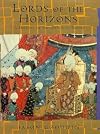
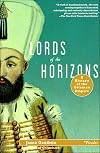
Lords of the Horizons: A History of the Ottoman Empire
by Jason Goodwin 
On This Page
Description
"A work of dazzling rare coming together of historical scholarship and curiosity about distant places with luminous writing." --The New York Times Book Review Since the Turks first shattered the glory of the French crusaders in 1396, the Ottoman Empire has exerted a long, strong pull on Western minds. For six hundred years, the Empire swelled and declined. Islamic, martial, civilized, and tolerant, in three centuries it advanced from the dusty foothills of Anatolia to rule on the Danube and show more the Nile; at the Empire's height, Indian rajahs and the kings of France beseeched its aid. For the next three hundred years the Empire seemed ready to collapse, a prodigy of survival and decay. Early in the twentieth century it fell. In this dazzling evocation of its power, Jason Goodwin explores how the Ottomans rose and how, against all odds, they lingered on. In the process he unfolds a sequence of mysteries, triumphs, treasures, and terrors unknown to most American readers. This was a place where pillows spoke and birds were fed in the snow; where time itself unfolded at a different rate and clocks were banned; where sounds were different, and even the hyacinths too strong to sniff. Dramatic and passionate, comic and gruesome, Lords of the Horizons is a history, a travel book, and a vision of a lost world all in one. show lessTags
Recommendations
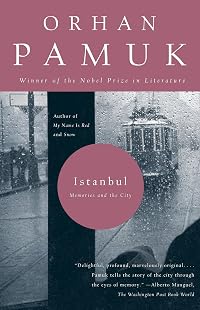
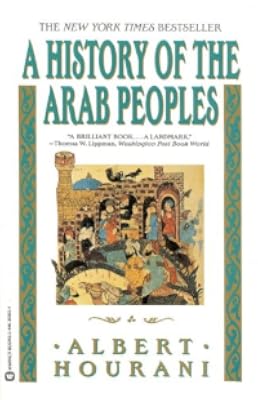
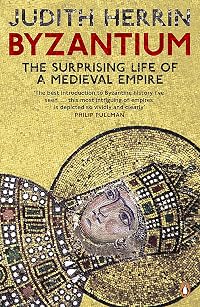
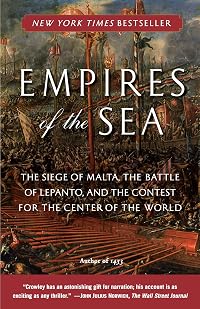
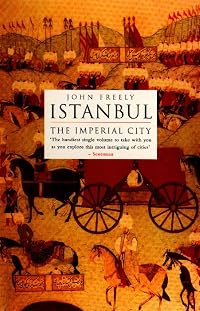
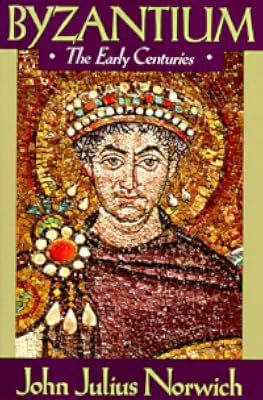
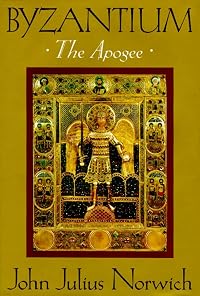

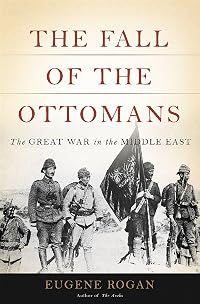


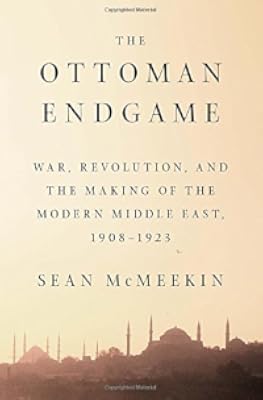

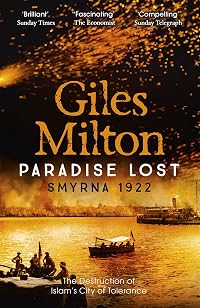
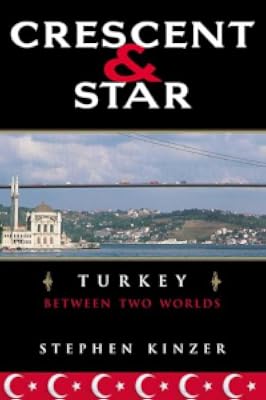

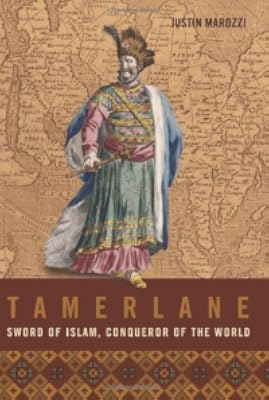
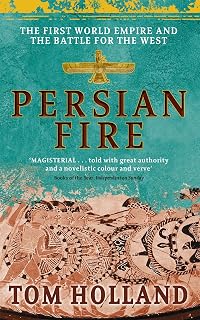
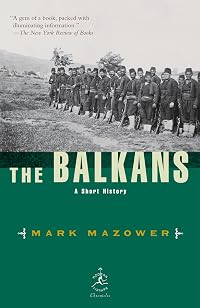
Member Recommendations
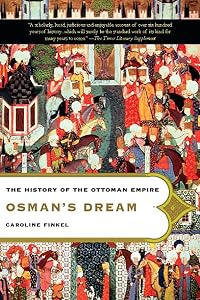
AndreasJ Finkel's book is a more scholarly and in-depth look at the same subject suitable for those who want to pursue the subject further.
Member Reviews
Goodwin covers the history of the Ottomans from Osman through the last Sultan. He alternates between a lively narrative of events, often focused on a major figure (e.g., Mehmet the Conqueror) or event, and social history focused on customs and everyday life in the empire. His treatment is rooted in the primary sources (Ogier de Busbecq, Sir Paul Rycaut, Evliya Çelebi, etc.) which he frequently quotes at length. Like Herodotus and Livy, he understands that history is, above all, telling a good story well. My only complaint is that Goodwin does not always provide enough information to follow up on the quoted sources.
My previous acquaintance with Ottoman history was always from the perspective of the Byzantines, medieval and modern show more Greeks, and the European powers. It is very enlightening to read about it with a focus on the Ottomans. A good book to read with coffee and croisssants! show less
My previous acquaintance with Ottoman history was always from the perspective of the Byzantines, medieval and modern show more Greeks, and the European powers. It is very enlightening to read about it with a focus on the Ottomans. A good book to read with coffee and croisssants! show less
Not intended as a rigorous, scholarly history, the book is a bit disorganized and repetitive in places. That said, Goodwin does with wit and an appreciation for the weird and exotic detail convey the strange and brutal world of the Ottoman sultans and the rich cultural milieu of the eastern Mediterranean over which the Turks ruled for almost 500 years. I enjoyed it.
If you're looking for a well-ordered and rigorous history of the Ottoman Empire, this isn't it. If you're looking for anecdotal tales that give a sense of the Ottoman Empire from its foundations on the steppes of Asia to its demise in the early 20th century, this might not be a bad choice.
Goodwin weaves together an extended string of vignettes, almost entirely from the Western perspective, about the sultans, grand viziers, pashas and many who opposed or attempted to take advantage of them. They are, by turns, informative, amusing, appalling or all three, and the end result is something that feels almost novel-like, rather than a history tome. Some stories provide some actual understanding of the Empire. For example, we learn that show more government officials were all slaves and could not bequeath anything to their children (who were born as free citizens), thus preventing political dynasties (other than the sultan, of course). Others were simply historically colorful: "Barbarossa did not have a red beard at all, but lifted the name from his elder brother, who had been a promising pirate himself before his death."
In the end, I felt I came out with some sense of—if not a great deal of analytical insight into—what made the Empire work during its centuries of expansion and what caused it to crumble from within during its long decline.
Three things keep the book from being well-recommended by me. First, it's a bit hard to follow at times. Goodwin certainly doesn't follow a linear chronology, nor is he particularly good about making sure you make the same leap he does when he suddenly changes whom he's referring to in mid-paragraph. This leads to a few moments of confusion requiring the reader to back up and follow along again.
Second, it's a trifle repetitious. I found myself saying, "Didn't I learn that a while ago?" at several places through the book.
Third…maps!! Why a book that has a rather large number of "he moved here, while that guy moved there" in it doesn't have any maps to speak of is absolutely beyond me. There's one poorly-printed map that shows a couple country boundaries and a few capital cities. It really detracted from the reading experience and…alone…cost this a half star.
In conclusion, a book I'd recommend if you go into it with appropriate expectations, but not one I'd recommend as a prime source to anyone looking to study the Ottoman Empire. show less
Goodwin weaves together an extended string of vignettes, almost entirely from the Western perspective, about the sultans, grand viziers, pashas and many who opposed or attempted to take advantage of them. They are, by turns, informative, amusing, appalling or all three, and the end result is something that feels almost novel-like, rather than a history tome. Some stories provide some actual understanding of the Empire. For example, we learn that show more government officials were all slaves and could not bequeath anything to their children (who were born as free citizens), thus preventing political dynasties (other than the sultan, of course). Others were simply historically colorful: "Barbarossa did not have a red beard at all, but lifted the name from his elder brother, who had been a promising pirate himself before his death."
In the end, I felt I came out with some sense of—if not a great deal of analytical insight into—what made the Empire work during its centuries of expansion and what caused it to crumble from within during its long decline.
Three things keep the book from being well-recommended by me. First, it's a bit hard to follow at times. Goodwin certainly doesn't follow a linear chronology, nor is he particularly good about making sure you make the same leap he does when he suddenly changes whom he's referring to in mid-paragraph. This leads to a few moments of confusion requiring the reader to back up and follow along again.
Second, it's a trifle repetitious. I found myself saying, "Didn't I learn that a while ago?" at several places through the book.
Third…maps!! Why a book that has a rather large number of "he moved here, while that guy moved there" in it doesn't have any maps to speak of is absolutely beyond me. There's one poorly-printed map that shows a couple country boundaries and a few capital cities. It really detracted from the reading experience and…alone…cost this a half star.
In conclusion, a book I'd recommend if you go into it with appropriate expectations, but not one I'd recommend as a prime source to anyone looking to study the Ottoman Empire. show less
A good overview of an overlooked empire. While this is not a long history, the author nevertheless delves into the psyche of the Ottomans, giving the reader a picture into the Ottoman army, their cities, and the imperial family. This book provides a good overview of why the Ottomans rose in power, threatening Europe, and why they slowly declined over the centuries, their empire discriminating until little remained. Fascinating and a good introduction to Ottoman history.
There is nothing more difficult to take in hand, more perilous to conduct, or more uncertain in its success, than to take the lead in the introduction of a new order of things . Machiavelli
Of course Niccolo also said that conquering the Ottomans would be most difficult, but afterwards rather easy to hold or occupy. It is good being glib. I violated my latest reading plan over the holiday weekend.
Ottomans did not, on the whole, engage in trade; they worked in administration; their minorities, Greeks, Jews and Armenians, seperated from them by a gulf of culture and sympathy, traditionally looked after the money side.
Jason Goodwin has provided us with a sprawling popular history, one surveying an empire which stretched across three show more continents for around 600 hundred years and conducted its affairs in a likely two dozen languages. The matter is presented in a predictably uneven manner. The text is both compelling and insightful as the reader gauges the expansion and retraction of the House of Osman. The Ottoman core principles contributed almost solely to conquest. The reality of an increasing population and the ravages of time forced and exacerbated its fatal contradictions. Is it me, did anyone else know the origins of the croissant extend from the Siege of Vienna? I did not and remain unsure what I think about all that. I'm a bagel fellow by trade. show less
Of course Niccolo also said that conquering the Ottomans would be most difficult, but afterwards rather easy to hold or occupy. It is good being glib. I violated my latest reading plan over the holiday weekend.
Ottomans did not, on the whole, engage in trade; they worked in administration; their minorities, Greeks, Jews and Armenians, seperated from them by a gulf of culture and sympathy, traditionally looked after the money side.
Jason Goodwin has provided us with a sprawling popular history, one surveying an empire which stretched across three show more continents for around 600 hundred years and conducted its affairs in a likely two dozen languages. The matter is presented in a predictably uneven manner. The text is both compelling and insightful as the reader gauges the expansion and retraction of the House of Osman. The Ottoman core principles contributed almost solely to conquest. The reality of an increasing population and the ravages of time forced and exacerbated its fatal contradictions. Is it me, did anyone else know the origins of the croissant extend from the Siege of Vienna? I did not and remain unsure what I think about all that. I'm a bagel fellow by trade. show less
A hoot! The author manages to write several hundred pages of Ottoman history, without mentioning a single (well, perhaps a single) Ottoman (or even Islamic) source. Nor does he show much familiarity with Modern Turkish, Ottoman, Persian or Arabic.
What you do get is a multitude of anecdotes by various westerners about the Ottoman Empire, from the earliest days to the Victorian age, mostly taken at face value. In fact, the book should be titled 'Western views on the Ottoman Empire', rather than a history.
Jason Goodwin writes an entertaining story, and it is a very good read, but if you want serious history, go elsewhere.
What you do get is a multitude of anecdotes by various westerners about the Ottoman Empire, from the earliest days to the Victorian age, mostly taken at face value. In fact, the book should be titled 'Western views on the Ottoman Empire', rather than a history.
Jason Goodwin writes an entertaining story, and it is a very good read, but if you want serious history, go elsewhere.
Joy's review: The rise, the very long malaise, and the fall of the Ottoman Empire. So much in here that I had no idea of since we mostly learn European history in school. Goodwin writes well and organizes the book around themes rather than in strict chronology. His focus is on culture, business, customs, and how the empire was organized. For me, this makes for much more interesting reading than describing which sultan did what. A very worthwhile book.
Members
- Recently Added By
Lists

Europe
205 works; 6 members

Global Reads: Books Set in the Middle East and North Africa
50 works; 8 members
Author Information

17 Works 4,804 Members
A historian, journalist and travel writer, Jason Goodwin lives in West Sussex, England, with his wife and two sons. His first book, The Gunpowder Gardens, was short-listed for the Thomas Cook Award; his second, On Foot to the Golden Horn, received the John Llewellyn Rhys Prize in 1993.
Jason Goodwin is a LibraryThing Author, an author who lists their personal library on LibraryThing.
Awards and Honors
Distinctions
Common Knowledge
- Original title
- Lords of the Horizons: A History of the Ottoman Empire
- Original publication date
- 1998
- Important places
- Ottoman Empire; Istanbul, Turkey; Sofia, Bulgaria; Bucharest, Romania; Budapest, Hungary; Bursa, Turkey (show all 9); Ankara, Turkey; Alexandria, Egypt; Cairo, Egypt (as Kairo, Egypt)
- Epigraph
- These songs will not be to everyone's taste, for there is little variation among them, all of them contain the same words, such as: hero, knight, horseman, galley, slave, serpent, dragon, wolf, lion, falcon, eagle, falcon's n... (show all)est and sword, sabres, lances, Kraljevic, Kobilic, Zdrinovic, necklets, medallions, decrees, heads chopped off, slaves carried away, etc. May those who find them pleasing sing them; may those who do not, go off to sleep.
Andrija Kacic-Miosic,
The Pleasant Conversation of the Slavic People,
Venice, 1756 - First words
- At the back of the Bayezit Mosque in Istanbul, close to the walls of the Great Bazaar, stands the ruins of an old Byzantine chapel.
- Last words
- (Click to show. Warning: May contain spoilers.)And this time they never tried to swim back.
Classifications
- Genres
- History, Nonfiction, General Nonfiction, Religion & Spirituality
- DDC/MDS
- 956.1015 — History & geography History of Asia Middle East Asia: Turkey, Iraq, Syria, Lebanon, Israel, Jordan Turkey (Anatolia) Ottoman Empire 16th century
- LCC
- DR486 .G66 — History of Europe, Asia, Africa and Oceania Balkan Peninsula History of Balkan Peninsula Turkey History By period 1281/1453-1789. Fall of Constantinople, 1453
- BISAC
Statistics
- Members
- 995
- Popularity
- 26,269
- Reviews
- 25
- Rating
- (3.34)
- Languages
- 5 — English, Italian, Spanish, Swedish, Turkish
- Media
- Paper, Audiobook, Ebook
- ISBNs
- 15
- ASINs
- 6