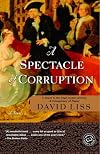
On This Page
Description
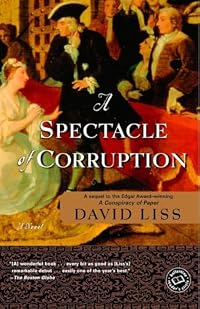
Benjamin Weaver, the quick-witted pugilist turned private investigator, returns in David Liss’s sequel to the Edgar Award–winning novel, A Conspiracy of Paper.“[A] wonderful book . . . every bit as good as [Liss’s] remarkable debut . . . easily one of the year’s best.”—The Boston Globe
Moments after his conviction for a murder he did not commit, at a trial presided over by a judge determined to find him guilty, Benjamin Weaver is accosted by a stranger who cunningly slips a show more lockpick and a file into his hands. In an instant he understands two things: Someone wants him to hang—and another equally mysterious agent is determined to see him free. After a daring escape from eighteenth-century London’s most notorious prison, Weaver must face another challenge: to prove himself innocent when the corrupt courts have shown they care nothing for justice. Unable to show his face in public, Weaver pursues his inquiry disguised as a wealthy merchant seeking to involve himself in the contentious world of politics. Desperately navigating a labyrinth of schemers, crime lords, assassins, and spies, Weaver learns that in an election year, little is what it seems and the truth comes at a staggeringly high cost.
Praise for A Spectacle of Corruption
“[A] rousing sequel of historical, intellectual suspense. ”—San Antonio Express-News
“Liss is a superb writer who evokes the squalor of London with Hogarthian gusto.”—People
“In Benjamin Weaver, Mr. Liss has created a multifaceted character and a wonderful narrator.”—The New York Sun. show less
Tags
Recommendations








Member Reviews
This is my third Liss novel, but only my first Benjamin Weaver novel. Yeah, I know it’s the middle of the series, but I received the 3rd installment as an ARC recently and since I wanted to familiarize myself with the character before reading it, I chose the 2nd as it was the most readily available. I have since acquired the first which I will read once I’m done with the third. Yeah, I’m a rebel that way.
In general, I knew what to expect from my first two Liss novels (The Coffee Trader & The Wh8isky Rebels); a plot revolving around actual financial/political events and accurate historical detail. I also thought I’d get an engaging, albeit flawed, narrator to bring me through the story and I certainly did.
It was hard, at first, show more to separate Benjamin Weaver from Ethan Saunders (the hero of The Whiskey Rebels). I don’t know why the two were so tangled in my brain, but eventually Benjamin’s personality solidified and I didn’t have any further thoughts about Ethan Saunders.
Ben’s big flaw is hubris in my opinion. He routinely underestimates his enemies and is taken by surprise when he ought to have known better. He also assumes that his reputation as a brawler will get him out of anything or get anything out of a person. In many cases it does, but I would like to see him become a wiser man. Maybe in the next book he’ll learn not to make so many assumptions.
The plot itself is plausible and follows along a conspiracy of corruption that spans two political parties and the social strata alike. Nothing is really new in the world of politics; power and wealth control all just as fear and greed keep those without the former chasing after them. Votes are bought. Voters are cajoled, threatened, brutalized. Politicians are corrupt and for sale. Politicians are men without attachment to their principals. As I said, nothing’s changed.
The writing was excellent, but I found this one less compelling than The Whiskey Rebels. Maybe because that one was framed with two viewpoints that were slightly skewed in terms of time period. That kept me guessing as to how they’d eventually tie together, and a fresh perspective kept me from letting my attention wander. Not that I was bored with A Spectacle of Corruption; I just wasn’t as compelled as I was with TWR. Maybe it was the American aspect that helped engage me with that one.
The women are drawn with competence, but little depth. I think that’s due to their peripheral nature in this tale though. Miriam/Mary annoyed the hell out of me, while I found myself liking Grace Dogmill and hope we see her again. Ditch Miriam while you can, Ben, she’s no friend to you. show less
In general, I knew what to expect from my first two Liss novels (The Coffee Trader & The Wh8isky Rebels); a plot revolving around actual financial/political events and accurate historical detail. I also thought I’d get an engaging, albeit flawed, narrator to bring me through the story and I certainly did.
It was hard, at first, show more to separate Benjamin Weaver from Ethan Saunders (the hero of The Whiskey Rebels). I don’t know why the two were so tangled in my brain, but eventually Benjamin’s personality solidified and I didn’t have any further thoughts about Ethan Saunders.
Ben’s big flaw is hubris in my opinion. He routinely underestimates his enemies and is taken by surprise when he ought to have known better. He also assumes that his reputation as a brawler will get him out of anything or get anything out of a person. In many cases it does, but I would like to see him become a wiser man. Maybe in the next book he’ll learn not to make so many assumptions.
The plot itself is plausible and follows along a conspiracy of corruption that spans two political parties and the social strata alike. Nothing is really new in the world of politics; power and wealth control all just as fear and greed keep those without the former chasing after them. Votes are bought. Voters are cajoled, threatened, brutalized. Politicians are corrupt and for sale. Politicians are men without attachment to their principals. As I said, nothing’s changed.
The writing was excellent, but I found this one less compelling than The Whiskey Rebels. Maybe because that one was framed with two viewpoints that were slightly skewed in terms of time period. That kept me guessing as to how they’d eventually tie together, and a fresh perspective kept me from letting my attention wander. Not that I was bored with A Spectacle of Corruption; I just wasn’t as compelled as I was with TWR. Maybe it was the American aspect that helped engage me with that one.
The women are drawn with competence, but little depth. I think that’s due to their peripheral nature in this tale though. Miriam/Mary annoyed the hell out of me, while I found myself liking Grace Dogmill and hope we see her again. Ditch Miriam while you can, Ben, she’s no friend to you. show less
The second book in David Liss's excellent Benjamin Weaver series, "A Spectacle of Corruption" is surprisingly different from the first book in the series, "A Conspiracy of Paper." This book features some extremely far-fetched elements, but Liss is an outstanding writer and I managed to suspend disbelief. I love the character of Benjamin Weaver. He represents a definite type in mystery writing -- the handsome, charming, flawed detective. Weaver is the 18th century version of Philip Marlowe. He makes mistakes and follows red herrings, but he's smart, honest, and reliable.
"A Spectacle of Corruption" deals with an election that make our political process seem tame by comparision. The title of the book describes the nature of the election show more -- "A spectacle of corruption" (page 173): "Who has more villains? Whose villains are stronger? Who has prettier girls to kiss the voters?" Citizens of London vote early and vote often. The reader again has the benefit of Liss's meticulous research and thorough knowledge of 18th century London. His use of 18th century-like language -- complete with words that send me to the dictionary -- is readable and evocative. Liss does an excellent job of explaining the poliical complexities of 1722, which I confess I've read about before and never fully understood. Whigs, Tories, and Jacobites all share the stage. A fascinating aspect of the book is the concept of 'misdirection' -- upon which most magin tricks depend -- and the idea of 'hiding in plain sight,' Benajamin Weaver is convicted of murder early in the book, but soon escapes from prison. His sidekick Elias convinces him that he should create a persona and a disguise that are entirely unexpected. "No one is looking for you, so they will not see you. They will see what they expect to see" (page 154). Weaver accepts the arguments and spends the rest of the book in disguise, hiding in plain sight. Thus, he proceeds to solve the mystery of his conviction and, even more astonishing, his escape and the events surrounding the entire situation. The end of the book seemed a little abrupt, but the plot resolution was satisfying and completely unexpected.
One element that I missed from "A Conspiracy of Paper" was a portrayal of Jewish life in 18th century London. This book does not feature Weaver's uncle and one of the Jewish characters from that book has married and become Christian. I'm fascinated by Jewish life, so I'm hoping that Liss explores this world more fully in the next book. We'll see. show less
"A Spectacle of Corruption" deals with an election that make our political process seem tame by comparision. The title of the book describes the nature of the election show more -- "A spectacle of corruption" (page 173): "Who has more villains? Whose villains are stronger? Who has prettier girls to kiss the voters?" Citizens of London vote early and vote often. The reader again has the benefit of Liss's meticulous research and thorough knowledge of 18th century London. His use of 18th century-like language -- complete with words that send me to the dictionary -- is readable and evocative. Liss does an excellent job of explaining the poliical complexities of 1722, which I confess I've read about before and never fully understood. Whigs, Tories, and Jacobites all share the stage. A fascinating aspect of the book is the concept of 'misdirection' -- upon which most magin tricks depend -- and the idea of 'hiding in plain sight,' Benajamin Weaver is convicted of murder early in the book, but soon escapes from prison. His sidekick Elias convinces him that he should create a persona and a disguise that are entirely unexpected. "No one is looking for you, so they will not see you. They will see what they expect to see" (page 154). Weaver accepts the arguments and spends the rest of the book in disguise, hiding in plain sight. Thus, he proceeds to solve the mystery of his conviction and, even more astonishing, his escape and the events surrounding the entire situation. The end of the book seemed a little abrupt, but the plot resolution was satisfying and completely unexpected.
One element that I missed from "A Conspiracy of Paper" was a portrayal of Jewish life in 18th century London. This book does not feature Weaver's uncle and one of the Jewish characters from that book has married and become Christian. I'm fascinated by Jewish life, so I'm hoping that Liss explores this world more fully in the next book. We'll see. show less
Rating: 4* of five
The Publisher Says: Moments after his conviction for a murder he did not commit, at a trial presided over by a judge determined to find him guilty, Benjamin Weaver is accosted by a stranger who cunningly slips a lockpick and a file into his hands. In an instant he understands two things: Someone had gone to a great deal of trouble to see him condemned to hang--and another equally mysterious agent is determined to see him free.
So begins A Spectacle of Corruption, which heralds the return of Benjamin Weaver, the hero of A Conspiracy of Paper. After a daring escape from eighteenth-century London's most notorious prison, Weaver must face another challenge: how to prove himself innocent of a crime when the corrupt courts show more have already shown they want only to see him hang. To discover the truth and clear his name, he will have to understand the motivations behind a secret scheme to extort a priest, uncover double-dealings in the unrest among London's dockworkers, and expose the conspiracy that links the plot against him to the looming national election--an election with the potential to spark a revolution and topple the monarchy.
Unable to show his face in public, Weaver pursues his inquiry in the guise of a wealthy merchant who seeks to involve himself in the political scene. But he soon finds that the world of polite society and politics is filled with schemers and plotters, men who pursue riches and power--and those who seek to return the son of the deposed king to the throne. Desperately navigating a labyrinth of politicians, crime lords, assassins, and spies, Weaver learns that, in an election year, little is what it seems and the truth comes at a staggeringly high cost.
Once again, acclaimed author David Liss combines historical erudition with mystery, complex characterization, and a captivating sense of humor. A Spectacle of Corruption offers insight into our own world of political scheming, and it firmly establishes David Liss as one of the best writers of intellectual suspense at work today.
My Review: Last time we saw the Lion of Judah, aka Benjamin Weaver (né Lienzo), he had brought a species of justice to some victims of the South Sea Bubble. Now he's standing in the dock, convicted of a murder he didn't commit and facing the death penalty.
Well, there's nothing like making the stakes obvious from the get-go: Fail to solve the crime you've been convicted of and die; solve the crime and bring the political system of your homeland to its knees. Drama for *days*!
And well-done drama, if a bit crowded. Inevitably, setting stakes this high means that some smaller areas of interest (eg, the "romance") don't come to satisfying fruition. But there is more than enough good stuff here to make the less successful moments less important than the overall tale's pleasures. It's very satisfying to see a man of honor operating in that cesspit of dishonor that has always been, and seems as if it will always be, political action.
What I enjoy most about Liss's historical fiction is that it is obvious to me that he roots the action in fact while still making a cracking good yarn. He sees history as "his story," as the college-freshman joke went. And that's how I got interested in history, and it's why I find satisfaction in reading David Liss's books. show less
The Publisher Says: Moments after his conviction for a murder he did not commit, at a trial presided over by a judge determined to find him guilty, Benjamin Weaver is accosted by a stranger who cunningly slips a lockpick and a file into his hands. In an instant he understands two things: Someone had gone to a great deal of trouble to see him condemned to hang--and another equally mysterious agent is determined to see him free.
So begins A Spectacle of Corruption, which heralds the return of Benjamin Weaver, the hero of A Conspiracy of Paper. After a daring escape from eighteenth-century London's most notorious prison, Weaver must face another challenge: how to prove himself innocent of a crime when the corrupt courts show more have already shown they want only to see him hang. To discover the truth and clear his name, he will have to understand the motivations behind a secret scheme to extort a priest, uncover double-dealings in the unrest among London's dockworkers, and expose the conspiracy that links the plot against him to the looming national election--an election with the potential to spark a revolution and topple the monarchy.
Unable to show his face in public, Weaver pursues his inquiry in the guise of a wealthy merchant who seeks to involve himself in the political scene. But he soon finds that the world of polite society and politics is filled with schemers and plotters, men who pursue riches and power--and those who seek to return the son of the deposed king to the throne. Desperately navigating a labyrinth of politicians, crime lords, assassins, and spies, Weaver learns that, in an election year, little is what it seems and the truth comes at a staggeringly high cost.
Once again, acclaimed author David Liss combines historical erudition with mystery, complex characterization, and a captivating sense of humor. A Spectacle of Corruption offers insight into our own world of political scheming, and it firmly establishes David Liss as one of the best writers of intellectual suspense at work today.
My Review: Last time we saw the Lion of Judah, aka Benjamin Weaver (né Lienzo), he had brought a species of justice to some victims of the South Sea Bubble. Now he's standing in the dock, convicted of a murder he didn't commit and facing the death penalty.
Well, there's nothing like making the stakes obvious from the get-go: Fail to solve the crime you've been convicted of and die; solve the crime and bring the political system of your homeland to its knees. Drama for *days*!
And well-done drama, if a bit crowded. Inevitably, setting stakes this high means that some smaller areas of interest (eg, the "romance") don't come to satisfying fruition. But there is more than enough good stuff here to make the less successful moments less important than the overall tale's pleasures. It's very satisfying to see a man of honor operating in that cesspit of dishonor that has always been, and seems as if it will always be, political action.
What I enjoy most about Liss's historical fiction is that it is obvious to me that he roots the action in fact while still making a cracking good yarn. He sees history as "his story," as the college-freshman joke went. And that's how I got interested in history, and it's why I find satisfaction in reading David Liss's books. show less
Much can be said of the turmoil and potential for conflict that stems from elections. In fact, not a day goes by where I don't hear about some election somewhere, and how it pulls people into trying to convince, connive and manipulate. What one doesn't realize, at least here in North America, is how far and how blatant this used to go, and in that regard, David Liss's second Benjamin Weaver novel, A Spectacle of Corruption, really does stand out.
Of course, that's not the main thrust of the book. Weaver, the protagonist of A Conspiracy of Paper, starts the book on trial for killing a porter, and is soon wrongly convicted. The book, then, follows Weaver on his attempts to find out who really did it, and how he can leverage this knowledge show more into enough influence to get his name cleared.
Like the first book in the series, this one makes use of some mystery techniques - probability, among others - but it justifies them for the time well, and like the first book, most of the characters are engaging and interesting, in a complex and intricate plot that I found quite gripping. It does all get resolved fairly quickly, and there's not much of a denouement; there's also a tendency, I think, to demonize some of the characters more than necessary, but I suppose that would be common enough in the age of books that this is supposed to fit in.
Liss's style is pretty good, getting one involved in Weaver's world and in his head fairly effortlessly, and there's much to be learned, as well. I did very much enjoy this one, and will look forward to reading his next book soon. show less
Of course, that's not the main thrust of the book. Weaver, the protagonist of A Conspiracy of Paper, starts the book on trial for killing a porter, and is soon wrongly convicted. The book, then, follows Weaver on his attempts to find out who really did it, and how he can leverage this knowledge show more into enough influence to get his name cleared.
Like the first book in the series, this one makes use of some mystery techniques - probability, among others - but it justifies them for the time well, and like the first book, most of the characters are engaging and interesting, in a complex and intricate plot that I found quite gripping. It does all get resolved fairly quickly, and there's not much of a denouement; there's also a tendency, I think, to demonize some of the characters more than necessary, but I suppose that would be common enough in the age of books that this is supposed to fit in.
Liss's style is pretty good, getting one involved in Weaver's world and in his head fairly effortlessly, and there's much to be learned, as well. I did very much enjoy this one, and will look forward to reading his next book soon. show less
A Spectacle of Corruption is David Liss' sequel to the excellent A Conspiracy of Paper, and includes appearances by many of the same characters. In Spectacle, Liss ably tackles the knotty mess that was British politics in the early Hanoverian era: Whigs, Tories, Jacobite plots, rough-housing at the polls, &c. Benjamin Weaver works to clear his name of an undeserved murder conviction against the backdrop of a contested parliamentary election in which he finds himself unwillingly tangled.
I'm hard-pressed to say whether I liked this one or Conspiracy better - I think just for the excellent coverage of political intrigue this one has the edge. Both, however, make for excellent reading (as does their companion, The Coffee Trader, which I show more reviewed here). Recommended. show less
I'm hard-pressed to say whether I liked this one or Conspiracy better - I think just for the excellent coverage of political intrigue this one has the edge. Both, however, make for excellent reading (as does their companion, The Coffee Trader, which I show more reviewed here). Recommended. show less
I am tempted to say that the convolutions that the book undergoes is almost not necessary to be a good read. But those twists and turns make it complex and a much better read because of them. We open at the trial for murder, so we have one body. Again bodies accumulate along the way, and we see into the heart of hero and his longing for the woman he loves.
These ingredients make a rich story and a deep one. We have the background of the first parliamentary election under George I and a thorough discussion of Whigs, Tories and Jacobites. These all work to provide smoke to the mystery. Why is our hero on trial for the murder of a man he didn't kill. He is no saint, he has killed before, but not this man? Why does his adversary stand a show more character witness for him? Why does the judge not give him a voice during the trial?
These questions answered, one could proceed in a straight path to find the motive and the powerful figures behind the accusations. But while taking such a path, our hero finds that the path isn't straight, and it is also cluttered.
We see up close the underside of London in the early 18th century, and a feel for its politics. Corruption is at the heart of all, there being no good men to be found who want to do better for their fellow men without some flaw or other.
My gripe with this book, and the first has to do with the research the author has done on dance. He makes the case look as if couples could go to the dance floor for a private conversation. Not so. It would be a country dance where all your neighbors would hear your talk, or a minuet and then you would be on display. The description we have leads one to think of a couple held close n a waltz. Not so at the period.
So I do recommend it. It has a lot to offer. Better than many another historical mystery, thought not as good as Coffee Trader or Conspiracy of Paper. show less
These ingredients make a rich story and a deep one. We have the background of the first parliamentary election under George I and a thorough discussion of Whigs, Tories and Jacobites. These all work to provide smoke to the mystery. Why is our hero on trial for the murder of a man he didn't kill. He is no saint, he has killed before, but not this man? Why does his adversary stand a show more character witness for him? Why does the judge not give him a voice during the trial?
These questions answered, one could proceed in a straight path to find the motive and the powerful figures behind the accusations. But while taking such a path, our hero finds that the path isn't straight, and it is also cluttered.
We see up close the underside of London in the early 18th century, and a feel for its politics. Corruption is at the heart of all, there being no good men to be found who want to do better for their fellow men without some flaw or other.
My gripe with this book, and the first has to do with the research the author has done on dance. He makes the case look as if couples could go to the dance floor for a private conversation. Not so. It would be a country dance where all your neighbors would hear your talk, or a minuet and then you would be on display. The description we have leads one to think of a couple held close n a waltz. Not so at the period.
So I do recommend it. It has a lot to offer. Better than many another historical mystery, thought not as good as Coffee Trader or Conspiracy of Paper. show less
David Liss is a master of historical fiction. This book about an English election in Georgian England is chock full of interesting detail. The story is fascinating and the characters are immediately accessible.
I read The Conspiracy of Paper first and still find that Benjamin Weaver is one of my favorite all time characters. He is not overbearing and is perfectly flawed. The story waned a bit in the end, and that ending was somewhat abrupt, but overall I was not disappointed.
I read The Conspiracy of Paper first and still find that Benjamin Weaver is one of my favorite all time characters. He is not overbearing and is perfectly flawed. The story waned a bit in the end, and that ending was somewhat abrupt, but overall I was not disappointed.
Members
- Recently Added By
Published Reviews
ThingScore 25
When the Scottish writer Sir Walter Scott invented the modern historical novel in 1814, he knew what he was doing. In Waverley, which is set in the Jacobite uprising in Scotland of 1745, Scott applied to the crude manners and political antagonisms of 70 years earlier the moral insight and sentimental refinement of the Scotland of his own age. The result was unhistorical, but, in the rage for show more Waverley and its successors, from A Tale of Two Cities to War and Peace, who cared?
Writers of genre fiction also took to history to give novelty and prestige to literary formulas. Who has not read a police procedural at the court of Charlemagne or an erotic thriller set in Minoan Crete? Benjamin Weaver, the hero of A Spectacle of Corruption, soon turns out to be the hard-outside, soft-inside private investigator of the noir thrillers inserted into 1720s London: Philip Marlowe done up in a wig and buckles.
A Jewish ex-prizefighter turned professional "thieftaker," Weaver appeared in Liss's first novel, A Conspiracy of Paper. Liss took as his model Jonathan Wild, a Georgian gangster who worked both sides of the law until his execution in 1725, but gave him a modern mind and heart among the dead dogs and banknotes. In his next book, The Coffee Trader, Liss invented a great-uncle for Weaver among Sephardic merchants in the Amsterdam of the 1650s. He now returns to both Weaver and 1720s London.
The story unfolds during the election of 1722 in London's Westminster where, unusually for 18th-century England, the franchise was democratic. Amid the intrigues of Whigs and Tories, Hanoverians and Jacobites, the bribes and political violence, Weaver finds himself implicated for a murder he did not commit. All sorts of terrific things happen. Weaver is tried before an outrageously partisan judge, escapes from Newgate prison, holds an informer's head in a chamber pot, finds the love of his life turned Christian and married to a Tory politician, takes part in election riots. Yet few will prefer Spectacle to novels one and two.
The chief problem is that Liss is much less interested in ancient politics than in the revolutions in finance and commerce that formed the historical backdrops to the first two novels. Nothing dates like party antagonism, and to say that Liss doesn't really understand the primordial cleavage in English politics between Whig and Tory is no insult: Only a handful of today's Britishers do. As Jew and outsider, Weaver has the privilege of asking elementary political questions that Liss takes little trouble in answering.
Liss compensates not with his strengths, which are in character, especially women, and action, but as Raymond Chandler does, with yet another twist of plot. The unraveling of the plot requires a lot of talk, usually just one character to another. Many novelists can't write dialogue for more than two characters at a time, but Liss can, and it is a mystery why he doesn't.
The elaborate plot also requires acres of back story, which is not recommended in a book where the main narrative is already in the distant past. At one point, Weaver blurts out: "So the Tories kill him, and make it look like the Whigs killed him in an effort to harm the Tories. That is a mighty deep game." Not deep at all. Those are sentences of a kind every novelist knows and fears, and they mean: Your plot is out of your control. You must start again.
Even his London has lost some of its oddity. Liss has abandoned his Jewish milieux, and the beautiful Miriam has become the beautiful Mary. The social décor tends to the commonplace or anachronistic. Gin, tobacco smoking, labor combinations, prize fighting and cricket bats became widespread a generation or even two generations posterior to Weaver's story. Liss also uses words that originated long after the 18th century was over: echelon, perambulator, upcoming, attendee, visit with, communist, semantics. The effect is to break the spell of the book, like a stage actor dropping out of character. The question is whether Liss has settled into a sort of Weaver franchise, in which plots become more complex, action more brutal, language and morals less authentic and characters more simple, or whether he sets off again in search of the only thing a novel cannot do without, which is novelty. show less
Writers of genre fiction also took to history to give novelty and prestige to literary formulas. Who has not read a police procedural at the court of Charlemagne or an erotic thriller set in Minoan Crete? Benjamin Weaver, the hero of A Spectacle of Corruption, soon turns out to be the hard-outside, soft-inside private investigator of the noir thrillers inserted into 1720s London: Philip Marlowe done up in a wig and buckles.
A Jewish ex-prizefighter turned professional "thieftaker," Weaver appeared in Liss's first novel, A Conspiracy of Paper. Liss took as his model Jonathan Wild, a Georgian gangster who worked both sides of the law until his execution in 1725, but gave him a modern mind and heart among the dead dogs and banknotes. In his next book, The Coffee Trader, Liss invented a great-uncle for Weaver among Sephardic merchants in the Amsterdam of the 1650s. He now returns to both Weaver and 1720s London.
The story unfolds during the election of 1722 in London's Westminster where, unusually for 18th-century England, the franchise was democratic. Amid the intrigues of Whigs and Tories, Hanoverians and Jacobites, the bribes and political violence, Weaver finds himself implicated for a murder he did not commit. All sorts of terrific things happen. Weaver is tried before an outrageously partisan judge, escapes from Newgate prison, holds an informer's head in a chamber pot, finds the love of his life turned Christian and married to a Tory politician, takes part in election riots. Yet few will prefer Spectacle to novels one and two.
The chief problem is that Liss is much less interested in ancient politics than in the revolutions in finance and commerce that formed the historical backdrops to the first two novels. Nothing dates like party antagonism, and to say that Liss doesn't really understand the primordial cleavage in English politics between Whig and Tory is no insult: Only a handful of today's Britishers do. As Jew and outsider, Weaver has the privilege of asking elementary political questions that Liss takes little trouble in answering.
Liss compensates not with his strengths, which are in character, especially women, and action, but as Raymond Chandler does, with yet another twist of plot. The unraveling of the plot requires a lot of talk, usually just one character to another. Many novelists can't write dialogue for more than two characters at a time, but Liss can, and it is a mystery why he doesn't.
The elaborate plot also requires acres of back story, which is not recommended in a book where the main narrative is already in the distant past. At one point, Weaver blurts out: "So the Tories kill him, and make it look like the Whigs killed him in an effort to harm the Tories. That is a mighty deep game." Not deep at all. Those are sentences of a kind every novelist knows and fears, and they mean: Your plot is out of your control. You must start again.
Even his London has lost some of its oddity. Liss has abandoned his Jewish milieux, and the beautiful Miriam has become the beautiful Mary. The social décor tends to the commonplace or anachronistic. Gin, tobacco smoking, labor combinations, prize fighting and cricket bats became widespread a generation or even two generations posterior to Weaver's story. Liss also uses words that originated long after the 18th century was over: echelon, perambulator, upcoming, attendee, visit with, communist, semantics. The effect is to break the spell of the book, like a stage actor dropping out of character. The question is whether Liss has settled into a sort of Weaver franchise, in which plots become more complex, action more brutal, language and morals less authentic and characters more simple, or whether he sets off again in search of the only thing a novel cannot do without, which is novelty. show less
added by Bookmarque
Author Information

71+ Works 9,890 Members
David Liss was born in New Jersey in 1966. He received an B.A. from Syracuse University, an M.A. from Georgia State University, and an M.Phil from Columbia University. His debut novel, A Conspiracy of Paper (2000), won the 2001 Barry, MacAvity, and Edgar awards for Best First Novel. His other works include The Coffee Trader (2003), A Spectacle of show more Corruption (2004), The Ethical Assassin (2006), The Whiskey Rebels (2008), and The Devil's Company (2009). (Bowker Author Biography) show less
Series

Common Knowledge
- Canonical title
- A Spectacle of Corruption
- Original publication date
- 2004 (1st edition, USA) (1st edition, USA); 2006 (Italian translation) (Italian translation)
- People/Characters
- Benjamin Weaver; Griffin Melbury; Dennis Dogmill; Grace Dogmill; Miriam Lienzo (Mary Melbury); Elias Gordon (show all 10); Walter Yate; Billy Greenbill; Albert Hertcomb; John Littleton
- Important places
- London, England, UK
- First words
- Since the publication of the first volume of my memoirs, I have found myself the subject of more notoriety than I had ever known or might have anticipated.
- Last words
- (Click to show. Warning: May contain spoilers.)I could only presume that she held me responsible for the death of her husband, as she returned one of my notes with a quick scrawl indicating that she would never speak to me again.
- Disambiguation notice
- Full title (2004): A spectacle of corruption : a novel / David Liss; 2006 Italian translation has title: La fiera dei corrotti
Classifications
Statistics
- Members
- 998
- Popularity
- 26,073
- Reviews
- 18
- Rating
- (3.85)
- Languages
- 7 — Dutch, English, German, Italian, Portuguese, Russian, Spanish
- Media
- Paper, Audiobook, Ebook
- ISBNs
- 24
- ASINs
- 3