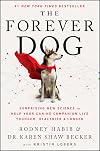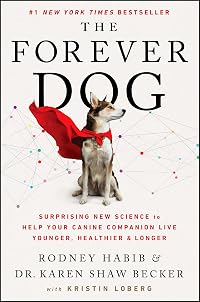
The Forever Dog: Surprising New Science to Help Your Canine Companion Live Younger, Healthier, and Longer
by Rodney Habib
On This Page
Description
In this pathbreaking guide, two of the world's most popular and trusted pet care advocates reveal new science to teach us how to delay aging and provide a long, happy, healthy life for our canine companions. Like their human counterparts, dogs have been getting sicker and dying prematurely over the past few decades. Why? Scientists are beginning to understand that the chronic diseases afflicting humans-cancer, obesity, diabetes, organ degeneration, and autoimmune disorders-also beset show more canines. As a result, our beloved companions are vexed with preventable health problems throughout much of their lives and suffer shorter life spans. Because our pets can't make health and lifestyle decisions for themselves, it's up to pet parents to make smart, science-backed choices for lasting vitality and health. The Forever Dog gives us the practical, proven tools to protect our loyal four-legged companions. Rodney Habib and Karen Becker, DVM, globetrotted (pre-pandemic) to galvanize the best wisdom from top geneticists, microbiologists, and longevity researchers; they also interviewed people whose dogs have lived into their 20s and even 30s. The result is this unprecedented and comprehensive guide, filled with surprising information, invaluable advice, and inspiring stories about dogs and the people who love them. The Forever Dog prescriptive plan focuses on diet and nutrition, movement, environmental exposures, and stress reduction, and can be tailored to the genetic predisposition of particular breeds or mixes. The authors discuss various types of food-including what the commercial manufacturers don't want us to know-and offer recipes, easy solutions, and tips for making sure our dogs obtain the nutrients they need. Habib and Dr. Becker also explore how external factors we often don't think about can greatly affect a dog's overall health and wellbeing, from everyday insults to the body and its physiology, to the role our own lifestyles and our vets' choices play. Indeed, the health equation works both ways and can travel "up the leash." Medical breakthroughs have expanded our choices for canine health-if you know what they are. This definitive dog-care guide empowers us with the knowledge we need to make wise choices, and to keep our dogs healthy and happy for years to come. show lessTags
Recommendations












Member Reviews
Sometimes hard to know what to rate a book. This book is chalk full of so much information, I wound up giving it 5 stars. But it wasn't a book I rushed to go read. Although there were some good stories of dogs that lived to very old ages, and we all want that for our dogs, it was also like eating your vegetables because it is good for you, and not because you like it so much.
This book is also on Wesley Bank's current list on his website for '100 best dog books of all time.' I don't think it fits into that classification, but worth consideration. I believe this will be the 69th book out of his current list of 100 that I have read.
I am not enough of an expert on health related stuff so others will need to give more critical analysis. I show more get it, the desire to be healthy, but hard to know how far we really need to go.
There is a fair amount of the stuff you might expect, but they put enough science into their arguments with lots of scientific terms. The book can do a good job of putting fear into factors.
I did like this blurb talking about how commercial dog good got it's start before they the book goes into how commercial dog food is usually horrible to maybe only bad.
'One upon a time, there were no dog biscuits or milk bones. Someone had to invent them, and in 1860 James Spratt was the first to manufacture a dried dog biscuit food. His qualifications—he was an electrician and lightning rod salesman from Ohio—were dubious at best. He did, however, have the slick sales skills to turn a chance observation idea into a superbly contrived fortune, appealing largely to the elite at the start. While on a business trip to England, Spratt observed street dogs eating ship hardtack, the nonperishable, cracker-like food made from processed cereals that sailors ate on long trips (and which were often filled with worms, earning the nickname “wormcastles” among soldiers who ate it during the Civil War).
The idea for commercial dog food was born. '
I also liked this bit that was something new to consider for me.
'This phenomenon—protection from allergies through exposure to an agrarian lifestyle and its inherent dirt—is sometimes called the “farm effect.” Indeed, it pays to get dirty sometimes. The dirt, to be sure, is much more than what we find under our feet out in nature. The star player in the dirt is the community of microbes found in rural and natural environments that serves an important role in protecting against pathogens, supporting metabolism, and educating the immune system so it does not develop hypersensitivities to allergens. The dirt teaches the body how to distinguish between friend and potential foe.
I like the moral of the story that proceeded that, 'Bottom line: Fewer processed carbs and more dirt are key.'
I thought I would finish with giving away bullet points related to protecting your dog from toxins. You of course should read the book for the whole story, but we can start taking steps in the right direction with some of the advice:
1. It starts with food (fresher food diets).
2. Remove plastic water bowls (ok, but my plastic one that is also a fountain was cool and the dog and cat liked it)
3. Filter your dogs water (I can do that, I get bottled water for me, duh, I should give it to Tucker too.)
4. Purge the plastic. (including looking for dog toys labeled BPA free.)
5. Remove shoes when entering your home and wipe those paws (I can do that I guess, and better for the floors.)
6. Clean up your air: minimize sources of volatile organic compounds (VOG) and other noxious chemicals.
7. Rethink outdoor lawn care. (yep, chemicals on the yard are not good for dogs and I talked with my gardener I don't want roundup used and would rather have weeds.)
8. Rethink general household goods. (I like how the book says 'Be wary of labels that say safe, nontoxic, green, natural, because these terms have no legal meaning.'
9. Consider dog hygiene (choose organic or chemical free grooming products)
10. Maintain oral health. (I know important and I will work to do better)
11. Opt for vaccine antibody titer testing (intriguing. I will ask my vet. Seems like too many vaccines may cause issues)
12. Keep noise and light pollution in check.
13. Build a proactive, wellness team. (look for local micro-retailers to help with pet health journey).
So glad I read it. I think when we all think of it, taking actions to have our pet stay healthier and stay with us longer is worth it. show less
This book is also on Wesley Bank's current list on his website for '100 best dog books of all time.' I don't think it fits into that classification, but worth consideration. I believe this will be the 69th book out of his current list of 100 that I have read.
I am not enough of an expert on health related stuff so others will need to give more critical analysis. I show more get it, the desire to be healthy, but hard to know how far we really need to go.
There is a fair amount of the stuff you might expect, but they put enough science into their arguments with lots of scientific terms. The book can do a good job of putting fear into factors.
I did like this blurb talking about how commercial dog good got it's start before they the book goes into how commercial dog food is usually horrible to maybe only bad.
'One upon a time, there were no dog biscuits or milk bones. Someone had to invent them, and in 1860 James Spratt was the first to manufacture a dried dog biscuit food. His qualifications—he was an electrician and lightning rod salesman from Ohio—were dubious at best. He did, however, have the slick sales skills to turn a chance observation idea into a superbly contrived fortune, appealing largely to the elite at the start. While on a business trip to England, Spratt observed street dogs eating ship hardtack, the nonperishable, cracker-like food made from processed cereals that sailors ate on long trips (and which were often filled with worms, earning the nickname “wormcastles” among soldiers who ate it during the Civil War).
The idea for commercial dog food was born. '
I also liked this bit that was something new to consider for me.
'This phenomenon—protection from allergies through exposure to an agrarian lifestyle and its inherent dirt—is sometimes called the “farm effect.” Indeed, it pays to get dirty sometimes. The dirt, to be sure, is much more than what we find under our feet out in nature. The star player in the dirt is the community of microbes found in rural and natural environments that serves an important role in protecting against pathogens, supporting metabolism, and educating the immune system so it does not develop hypersensitivities to allergens. The dirt teaches the body how to distinguish between friend and potential foe.
I like the moral of the story that proceeded that, 'Bottom line: Fewer processed carbs and more dirt are key.'
I thought I would finish with giving away bullet points related to protecting your dog from toxins. You of course should read the book for the whole story, but we can start taking steps in the right direction with some of the advice:
1. It starts with food (fresher food diets).
2. Remove plastic water bowls (ok, but my plastic one that is also a fountain was cool and the dog and cat liked it)
3. Filter your dogs water (I can do that, I get bottled water for me, duh, I should give it to Tucker too.)
4. Purge the plastic. (including looking for dog toys labeled BPA free.)
5. Remove shoes when entering your home and wipe those paws (I can do that I guess, and better for the floors.)
6. Clean up your air: minimize sources of volatile organic compounds (VOG) and other noxious chemicals.
7. Rethink outdoor lawn care. (yep, chemicals on the yard are not good for dogs and I talked with my gardener I don't want roundup used and would rather have weeds.)
8. Rethink general household goods. (I like how the book says 'Be wary of labels that say safe, nontoxic, green, natural, because these terms have no legal meaning.'
9. Consider dog hygiene (choose organic or chemical free grooming products)
10. Maintain oral health. (I know important and I will work to do better)
11. Opt for vaccine antibody titer testing (intriguing. I will ask my vet. Seems like too many vaccines may cause issues)
12. Keep noise and light pollution in check.
13. Build a proactive, wellness team. (look for local micro-retailers to help with pet health journey).
So glad I read it. I think when we all think of it, taking actions to have our pet stay healthier and stay with us longer is worth it. show less
Sometimes hard to know what to rate a book. This book is chalk full of so much information, I wound up giving it 5 stars. But it wasn't a book I rushed to go read. Although there were some good stories of dogs that lived to very old ages, and we all want that for our dogs, it was also like eating your vegetables because it is good for you, and not because you like it so much.
This book is also on Wesley Bank's current list on his website for '100 best dog books of all time.' I don't think it fits into that classification, but worth consideration. I believe this will be the 69th book out of his current list of 100 that I have read.
I am not enough of an expert on health related stuff so others will need to give more critical analysis. I show more get it, the desire to be healthy, but hard to know how far we really need to go.
There is a fair amount of the stuff you might expect, but they put enough science into their arguments with lots of scientific terms. The book can do a good job of putting fear into factors.
I did like this blurb talking about how commercial dog good got it's start before they the book goes into how commercial dog food is usually horrible to maybe only bad.
'One upon a time, there were no dog biscuits or milk bones. Someone had to invent them, and in 1860 James Spratt was the first to manufacture a dried dog biscuit food. His qualifications—he was an electrician and lightning rod salesman from Ohio—were dubious at best. He did, however, have the slick sales skills to turn a chance observation idea into a superbly contrived fortune, appealing largely to the elite at the start. While on a business trip to England, Spratt observed street dogs eating ship hardtack, the nonperishable, cracker-like food made from processed cereals that sailors ate on long trips (and which were often filled with worms, earning the nickname “wormcastles” among soldiers who ate it during the Civil War).
The idea for commercial dog food was born. '
I also liked this bit that was something new to consider for me.
'This phenomenon—protection from allergies through exposure to an agrarian lifestyle and its inherent dirt—is sometimes called the “farm effect.” Indeed, it pays to get dirty sometimes. The dirt, to be sure, is much more than what we find under our feet out in nature. The star player in the dirt is the community of microbes found in rural and natural environments that serves an important role in protecting against pathogens, supporting metabolism, and educating the immune system so it does not develop hypersensitivities to allergens. The dirt teaches the body how to distinguish between friend and potential foe.
I like the moral of the story that proceeded that, 'Bottom line: Fewer processed carbs and more dirt are key.'
I thought I would finish with giving away bullet points related to protecting your dog from toxins. You of course should read the book for the whole story, but we can start taking steps in the right direction with some of the advice:
1. It starts with food (fresher food diets).
2. Remove plastic water bowls (ok, but my plastic one that is also a fountain was cool and the dog and cat liked it)
3. Filter your dogs water (I can do that, I get bottled water for me, duh, I should give it to Tucker too.)
4. Purge the plastic. (including looking for dog toys labeled BPA free.)
5. Remove shoes when entering your home and wipe those paws (I can do that I guess, and better for the floors.)
6. Clean up your air: minimize sources of volatile organic compounds (VOG) and other noxious chemicals.
7. Rethink outdoor lawn care. (yep, chemicals on the yard are not good for dogs and I talked with my gardener I don't want roundup used and would rather have weeds.)
8. Rethink general household goods. (I like how the book says 'Be wary of labels that say safe, nontoxic, green, natural, because these terms have no legal meaning.'
9. Consider dog hygiene (choose organic or chemical free grooming products)
10. Maintain oral health. (I know important and I will work to do better)
11. Opt for vaccine antibody titer testing (intriguing. I will ask my vet. Seems like too many vaccines may cause issues)
12. Keep noise and light pollution in check.
13. Build a proactive, wellness team. (look for local micro-retailers to help with pet health journey).
So glad I read it. I think when we all think of it, taking actions to have our pet stay healthier and stay with us longer is worth it. show less
This book is also on Wesley Bank's current list on his website for '100 best dog books of all time.' I don't think it fits into that classification, but worth consideration. I believe this will be the 69th book out of his current list of 100 that I have read.
I am not enough of an expert on health related stuff so others will need to give more critical analysis. I show more get it, the desire to be healthy, but hard to know how far we really need to go.
There is a fair amount of the stuff you might expect, but they put enough science into their arguments with lots of scientific terms. The book can do a good job of putting fear into factors.
I did like this blurb talking about how commercial dog good got it's start before they the book goes into how commercial dog food is usually horrible to maybe only bad.
'One upon a time, there were no dog biscuits or milk bones. Someone had to invent them, and in 1860 James Spratt was the first to manufacture a dried dog biscuit food. His qualifications—he was an electrician and lightning rod salesman from Ohio—were dubious at best. He did, however, have the slick sales skills to turn a chance observation idea into a superbly contrived fortune, appealing largely to the elite at the start. While on a business trip to England, Spratt observed street dogs eating ship hardtack, the nonperishable, cracker-like food made from processed cereals that sailors ate on long trips (and which were often filled with worms, earning the nickname “wormcastles” among soldiers who ate it during the Civil War).
The idea for commercial dog food was born. '
I also liked this bit that was something new to consider for me.
'This phenomenon—protection from allergies through exposure to an agrarian lifestyle and its inherent dirt—is sometimes called the “farm effect.” Indeed, it pays to get dirty sometimes. The dirt, to be sure, is much more than what we find under our feet out in nature. The star player in the dirt is the community of microbes found in rural and natural environments that serves an important role in protecting against pathogens, supporting metabolism, and educating the immune system so it does not develop hypersensitivities to allergens. The dirt teaches the body how to distinguish between friend and potential foe.
I like the moral of the story that proceeded that, 'Bottom line: Fewer processed carbs and more dirt are key.'
I thought I would finish with giving away bullet points related to protecting your dog from toxins. You of course should read the book for the whole story, but we can start taking steps in the right direction with some of the advice:
1. It starts with food (fresher food diets).
2. Remove plastic water bowls (ok, but my plastic one that is also a fountain was cool and the dog and cat liked it)
3. Filter your dogs water (I can do that, I get bottled water for me, duh, I should give it to Tucker too.)
4. Purge the plastic. (including looking for dog toys labeled BPA free.)
5. Remove shoes when entering your home and wipe those paws (I can do that I guess, and better for the floors.)
6. Clean up your air: minimize sources of volatile organic compounds (VOG) and other noxious chemicals.
7. Rethink outdoor lawn care. (yep, chemicals on the yard are not good for dogs and I talked with my gardener I don't want roundup used and would rather have weeds.)
8. Rethink general household goods. (I like how the book says 'Be wary of labels that say safe, nontoxic, green, natural, because these terms have no legal meaning.'
9. Consider dog hygiene (choose organic or chemical free grooming products)
10. Maintain oral health. (I know important and I will work to do better)
11. Opt for vaccine antibody titer testing (intriguing. I will ask my vet. Seems like too many vaccines may cause issues)
12. Keep noise and light pollution in check.
13. Build a proactive, wellness team. (look for local micro-retailers to help with pet health journey).
So glad I read it. I think when we all think of it, taking actions to have our pet stay healthier and stay with us longer is worth it. show less
Ratings
Members
- Recently Added By
Lists

Globe and Mail | Canadian Non-Fiction: Oct. 23, 2021
9 works; 1 member

Globe and Mail | Canadian Non-Fiction: Oct. 30, 2021
10 works; 1 member

Globe and Mail | Canadian Non-Fiction: Nov. 20, 2021
10 works; 1 member
Globe and Mail | Canadian Non-Fiction: Oct. 16, 2021
10 works; 1 member

Globe and Mail | Canadian Non-Fiction: Nov. 6, 2021
9 works; 1 member

Globe and Mail | Canadian Non-Fiction: Dec. 25, 2021
9 works; 1 member
Globe and Mail | Canadian Non-Fiction: Dec. 4, 2021
10 works; 1 member
Globe and Mail | Canadian Non-Fiction: Nov. 13, 2021
10 works; 1 member
Globe and Mail | Canadian Non-Fiction: Nov. 27, 2021
10 works; 1 member
Author Information
5 Works 191 Members
Classifications
Statistics
- Members
- 131
- Popularity
- 249,469
- Reviews
- 2
- Rating
- (4.61)
- Languages
- English
- Media
- Paper, Audiobook, Ebook
- ISBNs
- 12
- ASINs
- 1