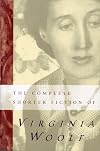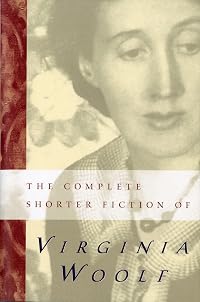
The Complete Shorter Fiction of Virginia Woolf
by Virginia Woolf
On This Page
Description
Contains forty-five selections of her short stories and sketches presented chronologically.Tags
Recommendations












Member Reviews
My favorite story in this collection is "A Society." Playing off of the premise of Aristophanes Lysistrata, the women who found this society decide that until they've determined to their satisfaction that the men of the world are holding up their end of the gender-deal by producing good works of literature, law, science, etc., they will not continue to produce and raise children. If it is the woman's duty to give birth and bring about future generations who will create good things, then these women figure it is within their rights to make certain that the men are upholding their duties. The women aren't satisfied...and they leave the society for the future generation, to figure all this out. The ironic distance of the narrative saves show more this piece from portraying the women as scatterbrained, which I think they otherwise would be.
The rest of the works included here demonstrate Woolf's development as a writer beautifully. And any lover of Mrs. Dalloway will get his or her fill of interesting party conversation. show less
The rest of the works included here demonstrate Woolf's development as a writer beautifully. And any lover of Mrs. Dalloway will get his or her fill of interesting party conversation. show less
This is an interesting, but I feel fundamentally flawed collection of short fiction by Virginia Woolf. As explained in the preface, many of her shorter works were experiments and exercises in technique, form, and composition that she would use namely to exert her skills in her novels. They feel a little unrefined and many, in my opinion, do not stand very tall or serve as great pieces in themselves. That is why I have given the collection this rating.
2.5 stars.
2.5 stars.
Does what it says on the package: this is all the shorter prose Virginia Woolf wrote, in a straight chronological order. Such a broad and unedited spread is of course an uneven read – these stories were never meant to be read back to back in this order. And there are indeed both ups and downs here. I like the ones that have that Woolf feel, like the stories that take place at Clarissa Dalloway’s party, but find it interesting that I’m more drawn to the earliest stories, or the late ones Woolf dismissed as “bread writing for the American audience”. Those are straighter, more of stories and less of tableaus or streams of consciousness.
There are some real gems in here, for sure, but for me too many of these stories are slippery, show more vague and hard to focus on. Quite a few I wouldn’t be able to give a summary of ten minutes after I finished them, even if someone held a gun to my head. This is a Woolf book for real fans and completists. If you’re only going to read three books by Virginia Woolf (which you should), this probably isn’t one of them. show less
There are some real gems in here, for sure, but for me too many of these stories are slippery, show more vague and hard to focus on. Quite a few I wouldn’t be able to give a summary of ten minutes after I finished them, even if someone held a gun to my head. This is a Woolf book for real fans and completists. If you’re only going to read three books by Virginia Woolf (which you should), this probably isn’t one of them. show less
I'm not afraid of Va Woolf. Reading her on and off for 40 years, her prose still resonants beauty, a visualness that I particularly seek when choosing to spend my free time in escape.
An essential addition to any Virginia Woolf fan, all her shorter fiction gathered together in one volume. The stories here date from 1917 - 1941 and cover a wide range of styles. Among the stories are KEW GARDENS, THE MARK ON THE WALL, LAPPIN AND LAPINOVA and A HAUNTED HOUSE.
Short or long, any fiction of Woolf is worth reading.
Reunindo pela primeira vez os contos completos de Virginia Woolf, o que inclui o inédito no Brasil "Um diálogo no monte Pentélico", e com uma nova tradução, pelo poeta Leonardo Fróes, este volume se destaca por trazer à tona a rica tessitura literária de uma das maiores autoras inglesas do século XX (1882-1941).
Sendo escritora modernista por excelência, Virginia reinventa a narrativa de forma a quase sempre fugir da descrição de uma ação linear. As falas, os pensamentos e as ações de seus personagens são reembaralhados, e distribuídos de forma original, muitas vezes imbricados às reflexões da narradora. Como no conto "Kew Gardens", por exemplo, no qual não há sequer uma ação propriamente dita, todo ele se show more passando durante uma caminhada pelos jardins públicos, preenchida por reflexões e por um olhar desviante desprezados pela narrativa tradicional, como o simples andar de um caramujo pelo chão. show less
Sendo escritora modernista por excelência, Virginia reinventa a narrativa de forma a quase sempre fugir da descrição de uma ação linear. As falas, os pensamentos e as ações de seus personagens são reembaralhados, e distribuídos de forma original, muitas vezes imbricados às reflexões da narradora. Como no conto "Kew Gardens", por exemplo, no qual não há sequer uma ação propriamente dita, todo ele se show more passando durante uma caminhada pelos jardins públicos, preenchida por reflexões e por um olhar desviante desprezados pela narrativa tradicional, como o simples andar de um caramujo pelo chão. show less
Nov 28, 2007Portuguese
Members
- Recently Added By
Author Information

649+ Works 118,963 Members
Virginia Woolf was born in London, England on January 25, 1882. She was the daughter of the prominent literary critic Leslie Stephen. Her early education was obtained at home through her parents and governesses. After death of her father in 1904, her family moved to Bloomsbury, where they formed the nucleus of the Bloomsbury Group, a circle of show more philosophers, writers, and artists. During her lifetime, she wrote both fiction and non-fiction works. Her novels included Jacob's Room, Mrs. Dalloway, To the Lighthouse, Orlando, and Between the Acts. Her non-fiction books included The Common Reader, A Room of One's Own, Three Guineas, The Captain's Death Bed and Other Essays, and The Death of the Moth and Other Essays. Having had periods of depression throughout her life and fearing a final mental breakdown from which she might not recover, Woolf drowned herself on March 28, 1941 at the age of 59. Her husband published part of her farewell letter to deny that she had taken her life because she could not face the terrible times of war. (Bowker Author Biography) show less
All Editions
Some Editions
Series
Belongs to Publisher Series
Common Knowledge
- Canonical title
- The Complete Shorter Fiction of Virginia Woolf
- Original title
- The Complete Shorter Fiction of Virginia Woolf
- Original publication date
- 1985
- First words*
- Tämän kokoelman novellit kattavat Virginia Woolfin koko kirjailijanuran.
*Some information comes from Common Knowledge in other languages. Click "Edit" for more information.
Classifications
Statistics
- Members
- 857
- Popularity
- 31,749
- Reviews
- 7
- Rating
- (3.89)
- Languages
- 9 — Dutch, English, Finnish, French, Italian, Polish, Portuguese, Spanish, Swedish
- Media
- Paper, Ebook
- ISBNs
- 29
- ASINs
- 4