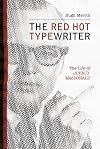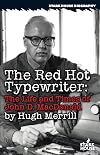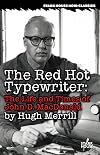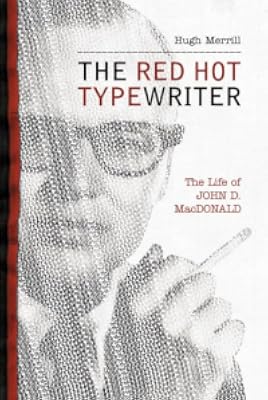
The Red Hot Typewriter: The Life and Times of John D. MacDonald
by Hugh Merrill
On This Page
Description
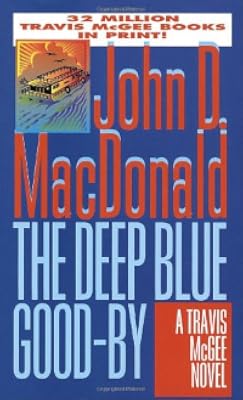
Although John D. MacDonald published seventy novels and more than five hundred short stories in his lifetime, he is remembered best for his Travis McGee series. He introduced McGee in 1964 with The Deep Blue Goodbye. With Travis McGee, MacDonald changed the pattern of the hardboiled private detectives who preceeded him. McGee has a social conscience, holds thoughtful conversations with his retired economist buddy Meyer, and worries about corporate greed, racism and the Florida ecolgoy in a show more long series whose brand recognition for the series the author cleverly advanced by inserting a color in every title. Merrill carefully builds a picture of a man who in unexpected ways epitomized the Horatio Alger sagas that comprised his strict father's secular bible. From a financially struggling childhood and a succession of drab nine-to-five occupations, MacDonald settled down to writing for a living (a lifestyle that would have horrified his father). He worked very hard and was rewarded with a more than decent livelihood. But unlike Alger's heroes, MacDonald had a lot of fun doing it. show lessTags
Recommendations
















Member Reviews
“He’s a good vehicle for relieving my own frustrations and irritations about the current scene…Travis is my mouthpiece, depending on what areas we’re talking about. Every writer is going to put into the mouths of the people he wants you to respect opinions that he thinks are respectable. It’s that simple…As long as I’m making him a hero, it would be grotesque for me to give him an opinion at which I was at odds.” — John D. MacDonald.
That comment is one of the very few insightful or illuminating things in this lackluster quasi-bio of the writer best known and remembered for the beloved Travis McGee series, a landmark in the genre. In some ways MacDonald was like a machine, cranking out stories in businesslike manner; at show more least until he was challenged by a bet, and another world opened up to him. But there’s far too little good spots in this book.
On only the second page of this thing Hugh Merrill shows me a level of obliviousness and bias that deflated me, because I knew from the second I read it that this was not going to go well. He states:
“The hardboiled style continued with Raymond Chandler in the 1940s and redefined itself in the 1950s and 1960s with the novels of Jim Thompson, Ross Macdonald and John D. MacDonald.” …. a couple of sentences later … “John D. MacDonald returned hardboiled writing to the realm of literature and pulled it from the sewer of sadism where Spillane had dragged it.”
Really? John D. and Ross Macdonald did elevate the form, that much is true. While I personally can’t stand the novels of Jim Thompson, and find them dreary and often disgusting, not even those who enjoy the fringe noir aspect of them would argue they aren’t filled with real brutality and sadism, grit stuff where he’s telling unpleasant tales from the head of psychotic sheriffs, beating men and beating women — and enjoying it in a very real — not comic book — way, and brutally raping women, who come back for more brutalization because, you know, they like it so much.
Yet according to this “journalist and academic”, a guy who has worked on political campaigns as press secretary, it’s Mickey Spillane’s Mike Hammer, who began as a comic book idea, fighting Commies and the bad guys and nasty femme fatales who were luscious but deadly, in a pulp style taken to its zenith, never meant to be literature, who dragged the hardboiled genre into the sewer of sadism? Really? As John McEnroe might say, You cannot be serious. Biased much?
I knew from the second I read that that Merrill would at some point drag Richard Prather into this thing. His name was sure to come up, since he was, like Mickey, conservative, and there was a connection to MacDonald because it wasn’t until an overzealous editor ticked Prather off, so that Prather jumped to Pocket Books and took his wildly popular Shell Scott novels with him (think Mike Hammer with tongue in cheek), that said editor filled the void by signing John D. to write a series; something up to that point, MacDonald had been reluctant to do.
I knew all that already, and it got mentioned later. But what also got mentioned (of course) was that Richard Prather was a right-winger, and oh yeah, not a very good writer. A guy whose hardboiled Shell Scott novels were so funny and so popular that Prather was only outsold in his day by Mickey Spillane, who at one time had 7 out of 10 of the all time mystery/detective bestsellers. Yet Prather wasn’t much of a writer. Really?
Merrill shoots himself in the foot when he quotes a lengthy paragraph from Richard Prather’s Shell Scott novel, The Case of the Vanishing Beauty, in order to show what a crap writer he was, and turns out, it’ll make most people who’ve never heard of Shell Scott run out and pick up one, it’s so fun to read!
In an attempt to make his point, Merrill sounds like a typical elitist lefty snob. He points out that Prather didn’t go to an Ivy League school (the horror!), or Harvard Business School (gadzooks!) as John D. had. Merrill points out that John D. was a liberal Democrat (la-de-da). Of course, this was liberal Democrat when it was Kennedy and ask not what your country can do for you, and a rising tide lifting all boats and such, not let’s have transgender reading hour for the kiddies, and if you’re holding onto traditional values, or your money, you’re evil, so being a liberal Democrat at the time was hardly the same thing.
Merrill points out that, like Mickey, Richard Prather was a blue-collar writer (gasp!), and pontificates on his blue-collar background (how earthy and disgusting!). Apparently in Merrill’s world, that’s a bad thing, you see, because the peons, they don’t know what’s good reading, those yokels with their knuckles dragging on the sidewalk as they walk. It never seems to occur to this “journalist” and teacher of such, that the same people who loved Prather and Mickey, were also capable of loving Travis McGee and the elevated pulp of John D.
That being said, and off my chest (see the opening quote by MacDonald), let me tell you, THAT isn’t even the real problem with this biography. The problem is that it’s written like an editorial on MacDonald’s. It’s told in segments, and you never get psychological understanding or contextualization for events, things McDonald said or did at certain points, and without them, he comes off as a cranky, touchy, often arrogant and snobby jerk. Yet if you have read all the Travis McGee novels, you already have a sense of him that seems opposed to the impression given by the just-the-facts journalistic approach here. Maybe with writers (again, I refer you to the opening quote) the best sense you can get of them as a human being is from reading a lot of him, and then you’ll have an impression of them. It’s not perfect by any means in its method, but it’s better than what you get here.
According to this, MacDonald hated India and Indians after being stationed there in the military. Why? What’s given is certainly not enough to justify something that jerky. John D. was supposedly in love with his wife and she with him, but he never gave her due credit for being the one to encourage him to write. Why? Just ego, or something more? We’ll never know, because Merrill either doesn’t know, or more to the point, doesn’t want to say because of the approach he’s taken. There were rumors of at least one affair, and the story related of Babs is absolutely bizarre. Did they or didn’t they? Who’s telling the truth and who’s lying? Was she a head case, or did John D. give her reason to be in love with him?
There’s sure no way to know from the events as related by Merrill, who obviously, because of how he frames it, leans toward MacDonald’s version. Was there something in the response of the husband to a letter sent to him by MacDonald, in which he says his wife had already been telling him what was going on, and that MacDonald needed to stop acting like he was God’s gift to women, because he really wasn’t Travis McGee?
Merrill implies a review Babs wrote for a book later on might’ve been her way of telling the MacDonalds what had happened, but it is just as easy to interpret that review as her applying it to herself and MacDonald and what happened — or didn’t happen. It’s all really quite bizarre, and quite tawdry. Apparently the other members of the writing group that met every Friday and observed what was going on, believed something was going on between Babs and MacDonald.
Merrill states as some kind of sign-off on the subject that Babs and her husband were divorced nine years later. So? Nine years is a long time. If this didn’t break them up, it’s entirely possible within that nine years other roadblocks arose. It’s just another loose end with no resolution because of the way Merrill frames the prior events as he writes this quasi-overview of MacDonald’s life and times.
The reader gets an impression that Merrill is writing a brief synopsis of a long life and career, with no time to give us any psychological insight or dimension that might lend understanding to MacDonald’s statements and attitude. But he sure has time to stick it to Mickey and Prather. He also gets sidetracked by the death of the pulps and Ringling Brothers building Sarasota, and Mackinlay Kantor, and Flager and Florida, and Loretta Young, whom Merrill seems to like about as much as Mickey or Prather. Why did he hate Loretta Young films, even ones for which she won awards? Of all films to cite for bad dialog, those are the ones? As a real film buff, I can say with authority that this guy doesn’t have a clue, if those are his examples of bad dialog in film.
Maybe if Merrill had left out the asides of the main article, he could have fleshed out MacDonald and filled the chasm between the very positive impression we get of him from reading his books, and the quite negative one we get of him overall from this book. And if he had done that, maybe when we reach the end of this quasi-bio and get to the final sunset, we’d feel something poignant and personal when MacDonald passes, and his wife shortly after. Instead what we feel is an overwhelming despair about growing old, and death itself, unfocused specifically on John D. MacDonald, because at this point, we’re kind of cool to him, detached, not even sure if we like him as a real human being, because in Merrill’s hands, he hasn’t been given that status.
The Red Hot Typewriter is just a very long, yet highly readable, superficial overview of a life. And because of that it fails miserably. Is the writer’s group out there still meeting, and is the late Lesley McFarlane still buying the first round every Friday, as per his will? I don’t know, and thanks to this guy, I don’t even care.
Maybe the best bio of all, is those Travis McGee books, the greatest part of his literary legacy. They were written because MacDonald had scarlet fever as a youth, and during his time immobile, he began devouring books, and for that, we can be grateful. Grateful, because he was wrong:
“I always had the secret wish that I had been born a writer…But it was on the order of wishing I had been born a seal, or an otter. I thought writers were a separate race, so marked at birth and totally aware of their gift from the beginning. I thought they were marked in some way. I worshipped writers but knew I could never be one.” show less
That comment is one of the very few insightful or illuminating things in this lackluster quasi-bio of the writer best known and remembered for the beloved Travis McGee series, a landmark in the genre. In some ways MacDonald was like a machine, cranking out stories in businesslike manner; at show more least until he was challenged by a bet, and another world opened up to him. But there’s far too little good spots in this book.
On only the second page of this thing Hugh Merrill shows me a level of obliviousness and bias that deflated me, because I knew from the second I read it that this was not going to go well. He states:
“The hardboiled style continued with Raymond Chandler in the 1940s and redefined itself in the 1950s and 1960s with the novels of Jim Thompson, Ross Macdonald and John D. MacDonald.” …. a couple of sentences later … “John D. MacDonald returned hardboiled writing to the realm of literature and pulled it from the sewer of sadism where Spillane had dragged it.”
Really? John D. and Ross Macdonald did elevate the form, that much is true. While I personally can’t stand the novels of Jim Thompson, and find them dreary and often disgusting, not even those who enjoy the fringe noir aspect of them would argue they aren’t filled with real brutality and sadism, grit stuff where he’s telling unpleasant tales from the head of psychotic sheriffs, beating men and beating women — and enjoying it in a very real — not comic book — way, and brutally raping women, who come back for more brutalization because, you know, they like it so much.
Yet according to this “journalist and academic”, a guy who has worked on political campaigns as press secretary, it’s Mickey Spillane’s Mike Hammer, who began as a comic book idea, fighting Commies and the bad guys and nasty femme fatales who were luscious but deadly, in a pulp style taken to its zenith, never meant to be literature, who dragged the hardboiled genre into the sewer of sadism? Really? As John McEnroe might say, You cannot be serious. Biased much?
I knew from the second I read that that Merrill would at some point drag Richard Prather into this thing. His name was sure to come up, since he was, like Mickey, conservative, and there was a connection to MacDonald because it wasn’t until an overzealous editor ticked Prather off, so that Prather jumped to Pocket Books and took his wildly popular Shell Scott novels with him (think Mike Hammer with tongue in cheek), that said editor filled the void by signing John D. to write a series; something up to that point, MacDonald had been reluctant to do.
I knew all that already, and it got mentioned later. But what also got mentioned (of course) was that Richard Prather was a right-winger, and oh yeah, not a very good writer. A guy whose hardboiled Shell Scott novels were so funny and so popular that Prather was only outsold in his day by Mickey Spillane, who at one time had 7 out of 10 of the all time mystery/detective bestsellers. Yet Prather wasn’t much of a writer. Really?
Merrill shoots himself in the foot when he quotes a lengthy paragraph from Richard Prather’s Shell Scott novel, The Case of the Vanishing Beauty, in order to show what a crap writer he was, and turns out, it’ll make most people who’ve never heard of Shell Scott run out and pick up one, it’s so fun to read!
In an attempt to make his point, Merrill sounds like a typical elitist lefty snob. He points out that Prather didn’t go to an Ivy League school (the horror!), or Harvard Business School (gadzooks!) as John D. had. Merrill points out that John D. was a liberal Democrat (la-de-da). Of course, this was liberal Democrat when it was Kennedy and ask not what your country can do for you, and a rising tide lifting all boats and such, not let’s have transgender reading hour for the kiddies, and if you’re holding onto traditional values, or your money, you’re evil, so being a liberal Democrat at the time was hardly the same thing.
Merrill points out that, like Mickey, Richard Prather was a blue-collar writer (gasp!), and pontificates on his blue-collar background (how earthy and disgusting!). Apparently in Merrill’s world, that’s a bad thing, you see, because the peons, they don’t know what’s good reading, those yokels with their knuckles dragging on the sidewalk as they walk. It never seems to occur to this “journalist” and teacher of such, that the same people who loved Prather and Mickey, were also capable of loving Travis McGee and the elevated pulp of John D.
That being said, and off my chest (see the opening quote by MacDonald), let me tell you, THAT isn’t even the real problem with this biography. The problem is that it’s written like an editorial on MacDonald’s. It’s told in segments, and you never get psychological understanding or contextualization for events, things McDonald said or did at certain points, and without them, he comes off as a cranky, touchy, often arrogant and snobby jerk. Yet if you have read all the Travis McGee novels, you already have a sense of him that seems opposed to the impression given by the just-the-facts journalistic approach here. Maybe with writers (again, I refer you to the opening quote) the best sense you can get of them as a human being is from reading a lot of him, and then you’ll have an impression of them. It’s not perfect by any means in its method, but it’s better than what you get here.
According to this, MacDonald hated India and Indians after being stationed there in the military. Why? What’s given is certainly not enough to justify something that jerky. John D. was supposedly in love with his wife and she with him, but he never gave her due credit for being the one to encourage him to write. Why? Just ego, or something more? We’ll never know, because Merrill either doesn’t know, or more to the point, doesn’t want to say because of the approach he’s taken. There were rumors of at least one affair, and the story related of Babs is absolutely bizarre. Did they or didn’t they? Who’s telling the truth and who’s lying? Was she a head case, or did John D. give her reason to be in love with him?
There’s sure no way to know from the events as related by Merrill, who obviously, because of how he frames it, leans toward MacDonald’s version. Was there something in the response of the husband to a letter sent to him by MacDonald, in which he says his wife had already been telling him what was going on, and that MacDonald needed to stop acting like he was God’s gift to women, because he really wasn’t Travis McGee?
Merrill implies a review Babs wrote for a book later on might’ve been her way of telling the MacDonalds what had happened, but it is just as easy to interpret that review as her applying it to herself and MacDonald and what happened — or didn’t happen. It’s all really quite bizarre, and quite tawdry. Apparently the other members of the writing group that met every Friday and observed what was going on, believed something was going on between Babs and MacDonald.
Merrill states as some kind of sign-off on the subject that Babs and her husband were divorced nine years later. So? Nine years is a long time. If this didn’t break them up, it’s entirely possible within that nine years other roadblocks arose. It’s just another loose end with no resolution because of the way Merrill frames the prior events as he writes this quasi-overview of MacDonald’s life and times.
The reader gets an impression that Merrill is writing a brief synopsis of a long life and career, with no time to give us any psychological insight or dimension that might lend understanding to MacDonald’s statements and attitude. But he sure has time to stick it to Mickey and Prather. He also gets sidetracked by the death of the pulps and Ringling Brothers building Sarasota, and Mackinlay Kantor, and Flager and Florida, and Loretta Young, whom Merrill seems to like about as much as Mickey or Prather. Why did he hate Loretta Young films, even ones for which she won awards? Of all films to cite for bad dialog, those are the ones? As a real film buff, I can say with authority that this guy doesn’t have a clue, if those are his examples of bad dialog in film.
Maybe if Merrill had left out the asides of the main article, he could have fleshed out MacDonald and filled the chasm between the very positive impression we get of him from reading his books, and the quite negative one we get of him overall from this book. And if he had done that, maybe when we reach the end of this quasi-bio and get to the final sunset, we’d feel something poignant and personal when MacDonald passes, and his wife shortly after. Instead what we feel is an overwhelming despair about growing old, and death itself, unfocused specifically on John D. MacDonald, because at this point, we’re kind of cool to him, detached, not even sure if we like him as a real human being, because in Merrill’s hands, he hasn’t been given that status.
The Red Hot Typewriter is just a very long, yet highly readable, superficial overview of a life. And because of that it fails miserably. Is the writer’s group out there still meeting, and is the late Lesley McFarlane still buying the first round every Friday, as per his will? I don’t know, and thanks to this guy, I don’t even care.
Maybe the best bio of all, is those Travis McGee books, the greatest part of his literary legacy. They were written because MacDonald had scarlet fever as a youth, and during his time immobile, he began devouring books, and for that, we can be grateful. Grateful, because he was wrong:
“I always had the secret wish that I had been born a writer…But it was on the order of wishing I had been born a seal, or an otter. I thought writers were a separate race, so marked at birth and totally aware of their gift from the beginning. I thought they were marked in some way. I worshipped writers but knew I could never be one.” show less
A biography of John D Macdonald a prolific author of crime and suspense novels. I was interested to read it because I wanted to get an insight into the life of an author like Macdonald who was able to sit down in front of his typewriter and just write: 8 hours a day, which must have been just like turning up to the office. He wrote at a time before computers put this facility in the hands of many more people. One wonders where he got his inspiration, where he got his ideas to write so many books: well over 60, plus many more short stories. The book is not able to give much information on the inner workings of Macdonald's mind, but it does a good job in explaining the situation of a person who wanted to earn his living from writing.
The show more biography follows his life in chronological order. It tells of his education, his restlessness, but finally his award of an MBA at Harvard university in 1939. He had got married in 1937 and with a family to support, needed to earn a living by his writing, hence his discipline of sitting down in front of his typewriter to churn out and send off his short stories to the pulp magazines. There were many more magazines in the crime/detective genre being published and so that is the genre in which Macdonald wrote, with a brief flirtation with science fiction. He had his first standalone novel "The Brass Cupcake" published in 1950 and then there were 3/4 novels published every year until in 1957 when he had a big success with 'The Executioners' which was filmed as Cape Fear. Hugh Merrill says that Macdonald had built up a steady following of readers, who knew what they were going to get with a Macdonald crime novel: a well written entertainment. Many more novels followed before he started the first of his Travis McGee series in 1964, which really hit pay dirt.
Merrill only briefly refers to the books (there would be far too many to analyse in any depth) being more intent on putting his career into the context of his life and times. He does however compare him to other writers in the genre, particularly with his Travis McGee books, which he claims are more sympathetic to female characters than most of the hard bitten crime novels published at that time. Macdonald was also anti-racist but struggled to find a voice for this in his work. He was also interested in the environment, particularly in Florida where he eventually made his home and some of this is reflected in his novels. There are plenty of quotes from his letters and some from the forwards to his novels in a book that seems well researched, however I did not get much of a feel for Macdonald as a person, as the biography seems more of a paper exercise.
Macdonald was one of those popular authors that at times attracted the attention of literary critics. He sold over 70 million books and so he could hardly be ignored. I have only read one of his early science fiction novels, but found his writing to be more than competent. I am tempted to try one of his novels from the extremely popular Travis McGee series. This biography is useful background material and so 3.5 stars. show less
The show more biography follows his life in chronological order. It tells of his education, his restlessness, but finally his award of an MBA at Harvard university in 1939. He had got married in 1937 and with a family to support, needed to earn a living by his writing, hence his discipline of sitting down in front of his typewriter to churn out and send off his short stories to the pulp magazines. There were many more magazines in the crime/detective genre being published and so that is the genre in which Macdonald wrote, with a brief flirtation with science fiction. He had his first standalone novel "The Brass Cupcake" published in 1950 and then there were 3/4 novels published every year until in 1957 when he had a big success with 'The Executioners' which was filmed as Cape Fear. Hugh Merrill says that Macdonald had built up a steady following of readers, who knew what they were going to get with a Macdonald crime novel: a well written entertainment. Many more novels followed before he started the first of his Travis McGee series in 1964, which really hit pay dirt.
Merrill only briefly refers to the books (there would be far too many to analyse in any depth) being more intent on putting his career into the context of his life and times. He does however compare him to other writers in the genre, particularly with his Travis McGee books, which he claims are more sympathetic to female characters than most of the hard bitten crime novels published at that time. Macdonald was also anti-racist but struggled to find a voice for this in his work. He was also interested in the environment, particularly in Florida where he eventually made his home and some of this is reflected in his novels. There are plenty of quotes from his letters and some from the forwards to his novels in a book that seems well researched, however I did not get much of a feel for Macdonald as a person, as the biography seems more of a paper exercise.
Macdonald was one of those popular authors that at times attracted the attention of literary critics. He sold over 70 million books and so he could hardly be ignored. I have only read one of his early science fiction novels, but found his writing to be more than competent. I am tempted to try one of his novels from the extremely popular Travis McGee series. This biography is useful background material and so 3.5 stars. show less
Merrill has done a deep dive into MacDonald's collected papers and constructed the outline of a life liberally sprinkled with quotes from books, letters, and journal entries. Unfortunately, the sources go unspecified, at least in the electronic edition. (There is a comprehensive bibliography in the back, which partially makes up for the lack.)
Merrill does not seem to have talked in person with anybody who knew MacDonald, so the supporting cast of friends and family are little more than shadows in the background. We know little more about them, and even about MacDonald himself, than he happened to mention in his letters and notes. This makes for a dry read.
Merrill also seems to assume that all his readers have already read all of show more MacDonald's books (a tall order). For example, he comments in an aside that "The Green Ripper was the postwar combat novel he was unable to write in the 1940s." You have to have read The Green Ripper to know what this means; no more is said about it, and the book is not described. (The book includes a vivid section where McGee penetrates a paramilitary compound alone.) He goes on to quote a letter in which MacDonald says "Green Ripper was, in retrospect, a mistake." Why would he say this? We don't know. The quote is just dropped in without so much as speculation.
Ultimately, this short biography is for those who need to know the facts and figures of this writer's life, and perhaps as a springboard to further research. show less
Merrill does not seem to have talked in person with anybody who knew MacDonald, so the supporting cast of friends and family are little more than shadows in the background. We know little more about them, and even about MacDonald himself, than he happened to mention in his letters and notes. This makes for a dry read.
Merrill also seems to assume that all his readers have already read all of show more MacDonald's books (a tall order). For example, he comments in an aside that "The Green Ripper was the postwar combat novel he was unable to write in the 1940s." You have to have read The Green Ripper to know what this means; no more is said about it, and the book is not described. (The book includes a vivid section where McGee penetrates a paramilitary compound alone.) He goes on to quote a letter in which MacDonald says "Green Ripper was, in retrospect, a mistake." Why would he say this? We don't know. The quote is just dropped in without so much as speculation.
Ultimately, this short biography is for those who need to know the facts and figures of this writer's life, and perhaps as a springboard to further research. show less
Ratings
Members
- Recently Added By
Published Reviews
ThingScore 25
Hugh Merrill draws extensively, if not exclusively, on MacDonald correspondence held at the University of Florida, supplemented with various newspaper and magazine pieces by and about MacDonald. No original interviews seem to have been done. This makes for a brief book of rather thin content. One yearns for the context, shadings, nuances, not to mention anecdotes, that other voices would have show more helped provide...
More importantly, Merrill doesn't really do justice to MacDonald's own body of work, in the sense of evoking it with the sort of excited appreciation that might make a reader want to explore or rediscover the 21 McGee books and John D.'s other novels. The chapter on the creation of Travis McGee, which ought (one would think) to be a lovingly-crafted centerpiece, seems no more animated than any other section. show less
More importantly, Merrill doesn't really do justice to MacDonald's own body of work, in the sense of evoking it with the sort of excited appreciation that might make a reader want to explore or rediscover the 21 McGee books and John D.'s other novels. The chapter on the creation of Travis McGee, which ought (one would think) to be a lovingly-crafted centerpiece, seems no more animated than any other section. show less
added by SnootyBaronet
Author Information

8 Works 71 Members
Awards and Honors
Awards
Common Knowledge
- Dedication
- For JACINTA
and also for
JIM O’KON
and
CAROL O’KON - First words
- From the 1950s through the 1980s, John Dann MacDonald was one of the most popular and prolific writers in America.
- Quotations
- MacDonald went back to his unpublished manuscripts and found places to insert the title phrase. Until then the titles were unrelated; now they were color-coded, and that made them marketable as part of the Dallas McGee series... (show all), not just as three unrelated novels. Then, on November 22, 1963, John Kennedy was assassinated in Dallas, Texas. And MacDonald changed his hero’s name.
- Last words
- (Click to show. Warning: May contain spoilers.)Without MacDonald, there might not have been a Robert Parker or a Carl Hiaasen. And the world would be a less interesting place without them.
Classifications
- Genres
- Fiction and Literature, Biography & Memoir, Literature Studies and Criticism
- DDC/MDS
- 813.54 — Literature & rhetoric American literature in English American fiction in English 1900-1999 1945-1999
- LCC
- PS3563 .A28 .Z73 — Language and Literature American literature American literature Individual authors 1961-
- BISAC
Statistics
- Members
- 43
- Popularity
- 686,110
- Reviews
- 3
- Rating
- (2.95)
- Languages
- English
- Media
- Paper, Ebook
- ISBNs
- 3
- ASINs
- 1