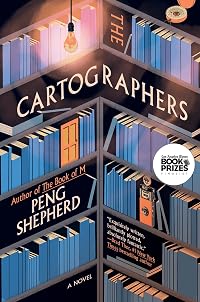
The Cartographers
by Peng Shepherd
On This Page
Description
From the critically acclaimed author of The Book of M, a highly imaginative thriller about a young woman who discovers that a strange map in her deceased father's belongings holds an incredible, deadly secret--one that will lead her on an extraordinary adventure and to the truth about her family's dark history. What is the purpose of a map? Nell Young's whole life and greatest passion is cartography. Her father, Dr. Daniel Young, is a legend in the field and Nell's personal hero. But she show more hasn't seen or spoken to him ever since he cruelly fired her and destroyed her reputation after an argument over an old, cheap gas station highway map. But when Dr. Young is found dead in his office at the New York Public Library, with the very same seemingly worthless map hidden in his desk, Nell can't resist investigating. To her surprise, she soon discovers that the map is incredibly valuable and exceedingly rare. In fact, she may now have the only copy left in existence... because a mysterious collector has been hunting down and destroying every last one--along with anyone who gets in the way. But why? To answer that question, Nell embarks on a dangerous journey to reveal a dark family secret and discovers the true power that lies in maps... Perfect for fans of Joe Hill and V. E. Schwab, The Cartographers is an ode to art and science, history and magic--a spectacularly imaginative, modern story about an ancient craft and places still undiscovered. show lessTags
Recommendations



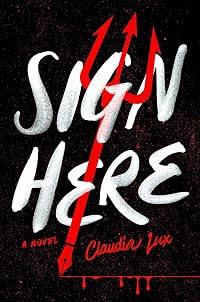
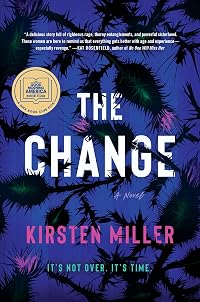

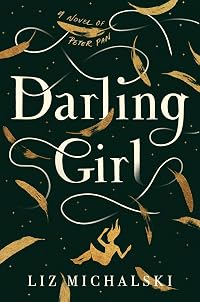


Member Reviews
This literary thriller deals with mysterious deaths and lost maps, and on paper it should have been an absolute slam dunk for me. I loved the premise (which I'm not going to go into detail about because it's spoilery, but let's say if you love books and wonder and maps, you'll probably love it too), but the book has no red herrings at all? There are a ton of reveals and know that I am not exaggerating (nor am I overly prone to figuring out plots in mysteries and thrillers) when I say that I had every. one. of them sorted beforehand. This made the read rather pedestrian, and it was all the more annoying since I *was* so fascinated by the premise. You know that story about how, as a boy, Tolkien read Macbeth and was so disappointed when show more Birnam Woods coming to Dunsinane turned out to be just dudes camouflaging themselves with branches and whatnot? That. That's how I felt reading this book. All that magic and it wasn't really Ents at all, just some guy with a stick. show less
UPDATE: Okay, so originally this was 1.5 stars rounded up, but I read this two and a half years ago and today I saw the cover and experienced just an absolute wash of enraged disgust, so I think rounding down is the right way to go here. For all the reasons enumerated below and so many more.
ORIGINAL REVIEW:
This book is weird in a way I've never encountered before. The author appears to have no experience living as a human, or else is the least observant human ever to have written a book.
Almost nothing in this book is right. If you are any kind of adult, you are likely to read this book and go, "Libraries don't work this way" or "Tech doesn't work this way" or "Academia doesn't work this way." And you'll be right every time; this book show more references real libraries (NYPL) and real universities (Wisconsin), but any time the book goes deeper than the name, it becomes nonsensical.
But that's not even the weirdest part. The author also doesn't know, or doesn't remember, how basic everyday life things work. At one point, the police are at the NYPL in force, and have been for hours, and the narrative mentions that the sirens are still blaring. Has the author never noticed that when police get to their destination, they might leave the lights on, but they turn the sirens off? At another point, a man who works for a big tech company sends some texts and they're not delivered, and his conclusion is that the red X means that the recipient has blocked him. How can he not know the difference between blocked (text says it's delivered but goes into a void) and unreachable (red X)? There are a million minor details like this that are just. Wrong. It's like the book version of the uncanny valley.
And even that is not the weirdest part, because the author also appears to have no experience in *being* a human. You know how human toddlers are famously stoic and their parents just kind of ignore their suffering? Yeah, that's what the author thinks, because at one point a toddler gets burned badly enough to need hospitalization and for her to have the scars as an adult, but the adults who love her leave her untreated for hours and she just. Sucks it up, apparently? Or there's this really awkward scene where a character is telling that toddler, now all grown up, about her sleeping with a dude who was partners with someone else, and the dude and the ex-partner are both also there, and the woman telling the story goes into, uh, a lot of detail about the kissing and sex? Or a woman lives absolutely alone and trapped for thirty-five years and seems cheerfully fine and definitely not crazy at the end of it? And there are, again, a million things like that. Things that, if a human does them, require explanation, because they're just not what the vast majority of humans could or would do.
(It seems churlish to keep on at this point, but I will also note that the author spoils the entire book in the Author's Note at the beginning, making it really not worth reading, and the characters' narratives are told in a way that makes no sense for the characters but is mandated by the story, and also every single "mystery" aspect of the story the author doesn't spoil is nonetheless clear and obvious by approximately 40%. And also that all of this being spoiled or obvious means the reader watches the main characters stumble around lost and confused for many chapters after the reader knows everything, which means the characters come off as the opposite of brilliant, which is what they're supposed to be. And I really need to stop, but know this: I'm not done.)
This would be a great book for someone who doesn't understand humans, the world, or fiction, but for the rest of us, my advice is: do not. show less
ORIGINAL REVIEW:
This book is weird in a way I've never encountered before. The author appears to have no experience living as a human, or else is the least observant human ever to have written a book.
Almost nothing in this book is right. If you are any kind of adult, you are likely to read this book and go, "Libraries don't work this way" or "Tech doesn't work this way" or "Academia doesn't work this way." And you'll be right every time; this book show more references real libraries (NYPL) and real universities (Wisconsin), but any time the book goes deeper than the name, it becomes nonsensical.
But that's not even the weirdest part. The author also doesn't know, or doesn't remember, how basic everyday life things work. At one point, the police are at the NYPL in force, and have been for hours, and the narrative mentions that the sirens are still blaring. Has the author never noticed that when police get to their destination, they might leave the lights on, but they turn the sirens off? At another point, a man who works for a big tech company sends some texts and they're not delivered, and his conclusion is that the red X means that the recipient has blocked him. How can he not know the difference between blocked (text says it's delivered but goes into a void) and unreachable (red X)? There are a million minor details like this that are just. Wrong. It's like the book version of the uncanny valley.
And even that is not the weirdest part, because the author also appears to have no experience in *being* a human. You know how human toddlers are famously stoic and their parents just kind of ignore their suffering? Yeah, that's what the author thinks, because at one point a toddler gets burned badly enough to need hospitalization and for her to have the scars as an adult, but the adults who love her leave her untreated for hours and she just. Sucks it up, apparently? Or there's this really awkward scene where a character is telling that toddler, now all grown up, about her sleeping with a dude who was partners with someone else, and the dude and the ex-partner are both also there, and the woman telling the story goes into, uh, a lot of detail about the kissing and sex? Or a woman lives absolutely alone and trapped for thirty-five years and seems cheerfully fine and definitely not crazy at the end of it? And there are, again, a million things like that. Things that, if a human does them, require explanation, because they're just not what the vast majority of humans could or would do.
(It seems churlish to keep on at this point, but I will also note that the author spoils the entire book in the Author's Note at the beginning, making it really not worth reading, and the characters' narratives are told in a way that makes no sense for the characters but is mandated by the story, and also every single "mystery" aspect of the story the author doesn't spoil is nonetheless clear and obvious by approximately 40%. And also that all of this being spoiled or obvious means the reader watches the main characters stumble around lost and confused for many chapters after the reader knows everything, which means the characters come off as the opposite of brilliant, which is what they're supposed to be. And I really need to stop, but know this: I'm not done.)
This would be a great book for someone who doesn't understand humans, the world, or fiction, but for the rest of us, my advice is: do not. show less
This originally appeared at The Irresponsible Reader.
---
“What do you know about that?” she asked.
"Not much,” Nell lied. “Ramona told me it was destroyed a long time ago.”
Eve grimaced. “It was dangerous, that thing. Cursed. Everyone who touched it got hurt.” Her eyes drifted back to the compass rose symbol. “And it’s still not over.”
WHAT'S THE CARTOGRAPHERS ABOUT?
This is hard—I tried to describe this to some friends earlier, and I tripped over myself so many times while trying to make this sound enticing while not giving anything away. I'd call that conversation a rough draft of this section, but it was so bad that Anne Lamott's going to have to revise the section in Bird by Bird about sh***y first drafts.
Nell show more Young has had a life-long obsession with maps—her parents have doctorates in cartography and it might as well have been encoded in her DNA. She and her boyfriend had internships in the New York Public Library where her father works, too. Then one day, she finds a couple of maps in a forgotten corner of the Library, one of which is an old gas station map. Her father flips out over what she found, for reasons she can't really understand—a major argument ensues and she's fired. So is Felix, her boyfriend. Not just that, but her father goes on to wage a war on their reputations—they're finished in academia.
Felix leaves the field and Nell goes to work for an Internet company making faux historical maps. Years pass without Nell speaking to her father, then he dies suddenly. While looking through his office, Nell finds that gas station map and is flabbergasted. Why would he keep that thing?
Nell starts asking questions and learning things about her family, and a whole lot more.
VISUAL AIDS
As is fitting for a book about maps, the novel has some. Not many, most of the ones in the book are described, not seen. But there are just enough—the important ones—to ensure the reader can visualize what's going on—we see what Nell and the rest see.
It's a great touch—I love that Shepherd included those—I'm one of those fantasy readers who rarely glances at the maps in those books—but I spent time on these.
I COULDN'T STOP THINKING ABOUT...
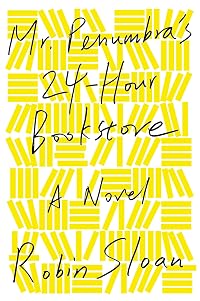
Last week, I quipped that this book was "very Mr. Penumbra-esque." This was too blithe and flippant. And yet...I couldn't get it out of my mind.
Shepherd doesn't write anything like Sloan, the worlds are completely different, and the way they approach character and narrative don't really overlap. Really I think the only thing I can point to that is a demonstrable similarity is the way that they approach Big Tech companies—but this novel's Haberson Global is more like the company in Sourdough, anyway, so I'm not sure it counts.
Again, I couldn't stop thinking about Mr. Penumbra’s 24‑Hour Bookstore. It's about some dedicated and brilliant people whose passion for and pursuit of something that everyone else in the world pretty much takes for granted. There's a little more to it, but I'd have to spoil stuff about both books, so I'm not going to get into it.
SO, WHAT DID I THINK ABOUT THE CARTOGRAPHERS?
I never, not for one minute, thought that a book about maps and mapmakers would be this riveting. And I was wrong. Not that I've spent that much time thinking about books about mapmakers, but you get the idea.
I've read some pretty strong thrillers that weren't as gripping as this. Shepherd paced this perfectly and kept building the tension in just the right manner. Even when I got to the point where I'd figured everything out—even the mind-bendy bits—and was just waiting for Nell and the rest to catch up, I was on the edge of my seat. That tension extends to things that happened before the novel's present time—we'd get chapters of first-person narration from some of Nell's father's friends from when she was a toddler. I knew where certain characters would end up because you'd met them already—but that didn't make the uncertainty about what was going to happen to them in the memory much easier to take.
But this isn't just a thriller—it's a story about a family. One of the sweetest, strangest, and saddest found families you're going to run into. A mantra that runs throughout this book the way Uncle Ben's "With great power..." runs through certain movies* is that the purpose of a map is to connect people. The way that these people are connected would be difficult to map out—the routes certainly are intricate and varied—but the connections are strong and lasting.
* Yes, I know it's from the comics first—but the comics rarely, if ever, beat that drum the way some of the movies do.
I was less than satisfied with the ending—because I thought it was headed somewhere else, and then it seemed to aim in a different direction, and it ended up in a third. I think the expectation problems are all mine, they're not from the text. I'm also sure that the ending we get is stronger than what I expected. Still, it's hard to for me accept what we got since I'd spent 100 or so pages sure we were getting something else.
None of that changes the bottom line of this post—you're going to want to read this book. I strongly recommend it. There are few books like it in the world, and that's a shame. But it means that there's every reason to read this. show less
---
“What do you know about that?” she asked.
"Not much,” Nell lied. “Ramona told me it was destroyed a long time ago.”
Eve grimaced. “It was dangerous, that thing. Cursed. Everyone who touched it got hurt.” Her eyes drifted back to the compass rose symbol. “And it’s still not over.”
WHAT'S THE CARTOGRAPHERS ABOUT?
This is hard—I tried to describe this to some friends earlier, and I tripped over myself so many times while trying to make this sound enticing while not giving anything away. I'd call that conversation a rough draft of this section, but it was so bad that Anne Lamott's going to have to revise the section in Bird by Bird about sh***y first drafts.
Nell show more Young has had a life-long obsession with maps—her parents have doctorates in cartography and it might as well have been encoded in her DNA. She and her boyfriend had internships in the New York Public Library where her father works, too. Then one day, she finds a couple of maps in a forgotten corner of the Library, one of which is an old gas station map. Her father flips out over what she found, for reasons she can't really understand—a major argument ensues and she's fired. So is Felix, her boyfriend. Not just that, but her father goes on to wage a war on their reputations—they're finished in academia.
Felix leaves the field and Nell goes to work for an Internet company making faux historical maps. Years pass without Nell speaking to her father, then he dies suddenly. While looking through his office, Nell finds that gas station map and is flabbergasted. Why would he keep that thing?
Nell starts asking questions and learning things about her family, and a whole lot more.
VISUAL AIDS
As is fitting for a book about maps, the novel has some. Not many, most of the ones in the book are described, not seen. But there are just enough—the important ones—to ensure the reader can visualize what's going on—we see what Nell and the rest see.
It's a great touch—I love that Shepherd included those—I'm one of those fantasy readers who rarely glances at the maps in those books—but I spent time on these.
I COULDN'T STOP THINKING ABOUT...
Last week, I quipped that this book was "very Mr. Penumbra-esque." This was too blithe and flippant. And yet...I couldn't get it out of my mind.
Shepherd doesn't write anything like Sloan, the worlds are completely different, and the way they approach character and narrative don't really overlap. Really I think the only thing I can point to that is a demonstrable similarity is the way that they approach Big Tech companies—but this novel's Haberson Global is more like the company in Sourdough, anyway, so I'm not sure it counts.
Again, I couldn't stop thinking about Mr. Penumbra’s 24‑Hour Bookstore. It's about some dedicated and brilliant people whose passion for and pursuit of something that everyone else in the world pretty much takes for granted. There's a little more to it, but I'd have to spoil stuff about both books, so I'm not going to get into it.
SO, WHAT DID I THINK ABOUT THE CARTOGRAPHERS?
I never, not for one minute, thought that a book about maps and mapmakers would be this riveting. And I was wrong. Not that I've spent that much time thinking about books about mapmakers, but you get the idea.
I've read some pretty strong thrillers that weren't as gripping as this. Shepherd paced this perfectly and kept building the tension in just the right manner. Even when I got to the point where I'd figured everything out—even the mind-bendy bits—and was just waiting for Nell and the rest to catch up, I was on the edge of my seat. That tension extends to things that happened before the novel's present time—we'd get chapters of first-person narration from some of Nell's father's friends from when she was a toddler. I knew where certain characters would end up because you'd met them already—but that didn't make the uncertainty about what was going to happen to them in the memory much easier to take.
But this isn't just a thriller—it's a story about a family. One of the sweetest, strangest, and saddest found families you're going to run into. A mantra that runs throughout this book the way Uncle Ben's "With great power..." runs through certain movies* is that the purpose of a map is to connect people. The way that these people are connected would be difficult to map out—the routes certainly are intricate and varied—but the connections are strong and lasting.
* Yes, I know it's from the comics first—but the comics rarely, if ever, beat that drum the way some of the movies do.
I was less than satisfied with the ending—because I thought it was headed somewhere else, and then it seemed to aim in a different direction, and it ended up in a third. I think the expectation problems are all mine, they're not from the text. I'm also sure that the ending we get is stronger than what I expected. Still, it's hard to for me accept what we got since I'd spent 100 or so pages sure we were getting something else.
None of that changes the bottom line of this post—you're going to want to read this book. I strongly recommend it. There are few books like it in the world, and that's a shame. But it means that there's every reason to read this. show less
Shepherd, Peng. The Cartographers. digital. 2022.
A fast paced thriller about the secrets maps can hold. When Nell's father is found murdered in his New York Public Library Office, there is no initial cause of alarm; it must have just been a heart attack. When Nell is going through her father's belongings she discovers an odd gas station map, the very one that caused their estrangement, hidden in her father's portfolio. What is the meaning of it and why has he saved it after all this time? After a string of connected murders in the New York Public Library, Nell is convinced that someone is after this seemingly worthless map, but why? She seeks the help of a mentor and an old flame and discovers that the map she discovered may be worth show more millions and may be the very last copy in existence. According to online records someone has stolen or destroyed every single copy of the map. What is it hiding and what dark family secrets will it lead her on? Narrated by a full cast, this wild adventure will keep listeners engaged and invested. From one rabbit hole to another, this mysterious map will lead Nell to a place she never knew she needed to discover. This action packed thriller is too unique to forget anytime soon! - Erin Cataldi, Johnson Co. Public Library, Franklin, IN show less
A fast paced thriller about the secrets maps can hold. When Nell's father is found murdered in his New York Public Library Office, there is no initial cause of alarm; it must have just been a heart attack. When Nell is going through her father's belongings she discovers an odd gas station map, the very one that caused their estrangement, hidden in her father's portfolio. What is the meaning of it and why has he saved it after all this time? After a string of connected murders in the New York Public Library, Nell is convinced that someone is after this seemingly worthless map, but why? She seeks the help of a mentor and an old flame and discovers that the map she discovered may be worth show more millions and may be the very last copy in existence. According to online records someone has stolen or destroyed every single copy of the map. What is it hiding and what dark family secrets will it lead her on? Narrated by a full cast, this wild adventure will keep listeners engaged and invested. From one rabbit hole to another, this mysterious map will lead Nell to a place she never knew she needed to discover. This action packed thriller is too unique to forget anytime soon! - Erin Cataldi, Johnson Co. Public Library, Franklin, IN show less
this is a hard one to rate because it's such an interesting and fun and innovative concept, it explores so many great philosophical questions, it has tense and intense interpersonal relationships, it's got a field of study that's unusual and interesting; but it also has plot holes both big and small, missteps of the same sizes, and what feels to me like a truly terrible last 15% (or so) of the novel. i really liked this for probably 75% of the book, and absolutely hated the last 15 or 20%, except the last few pages.
i love the questions she's asking about the interplay between creating and being - does art create the world or does the world create art? what is more real? can one become real because of the other? can science and beauty show more live and work together to make something even more perfect than each of them can be without the other? Less unique but still interesting is how secrets can destroy people, either from within, or interpersonally.
it's all so interesting and i love exploring themes like this in novels. and it was largely working for most of the book.it was a genuine surprise to find the book was about these phantom towns that actually exist, if you have the map leading you there. i didn't expect that. i also was surprised - and really, really pleased - when humphrey turned out to be bear. it was basically telegraphed from that point on, though, that william was wally, and i couldn't believe that was supposed to be shocking when it was revealed; i'd known for what seemed like 100 pages. but the book taking the fantasy turn was really surprising to me, and i thought it worked both because it was unexpected, and also because it wasn't too heavy on the fantasy elements. It was fun to see how keeping the secret of this town affected each of the members of the group, and how, in the end, it destroyed them all. they were so isolated already - first in their insular group at university, and then in this house for their project - that having this secret that isolated them even further was like doing a psych experiment on each of them. as much time as they'd spent together before, this really showed each of them the others' weaknesses and faults.
the unraveling of relationships can be really interesting to watch, and i felt like this largely was. some of the weak points were unexpected, like the fighting between tam and romi, but it made sense in the context of what they were working with, the pressure to both finish their project and make it something the world had never seen before, and their isolation. the way the secret of the town meant something different to each of them, and so how they responded differently to having this secret, and how this secret interacted with the secrets of their own that they were keeping from other members of the group. what made much, much less sense to me, was the entire ending. that these brilliant scholars could think of no other course of action than the one they took. even if, in the heat of the moment, they couldn't think of something else to do, that never over the decades that came after did anything else occur to them? it makes so little sense that they'd do what they did, and even less sense that they'd continue on that path once begun. for me, the entire novel unraveled with this ending. it was contrived, unsurprising at all the points it was supposed to be twisty, and nonsensical in a way that ruined the book for me.
what had been a unique, innovative, fascinating concept ended in such an annoying way for me. but the rest was good enough to make this worth reading, it was just such a disappointment by the end.
(at least 4 stars, in spite of the missteps and holes, for the first 2/3 or so, but maybe .5 star for the rest.) show less
i love the questions she's asking about the interplay between creating and being - does art create the world or does the world create art? what is more real? can one become real because of the other? can science and beauty show more live and work together to make something even more perfect than each of them can be without the other? Less unique but still interesting is how secrets can destroy people, either from within, or interpersonally.
it's all so interesting and i love exploring themes like this in novels. and it was largely working for most of the book.
what had been a unique, innovative, fascinating concept ended in such an annoying way for me. but the rest was good enough to make this worth reading, it was just such a disappointment by the end.
(at least 4 stars, in spite of the missteps and holes, for the first 2/3 or so, but maybe .5 star for the rest.) show less
Nell Young's dad had a secret he was willing to die to protect. At first, when he dies at his desk at the New York Public Library, police think it must be an accident. Then Nell ends up a suspect, due to a very public disagreement with her father that ended her career in cartography. Nell's convinced her dad was working on something big, something that may have attracted someone sinister. The more she retraces his steps, the more danger she finds herself in.
This book is a delightful mash-up of fantasy, thriller and literary fiction. I loved the touch of whimsy, combined with a sinister feeling. Despite some plot holes that were never fully explained - why did things HAVE to be that way? - it kept me flipping pages until the very end. I show more guessed some of the twists but had to keep reading to find out if I was right.
Nell also has a second-chance romance with the college boyfriend who walked out on her after her career tanked. He's now a single tech bro who can't stop thinking about her, and I enjoyed seeing if their reconnection would lead to anything.
The best part of the book, however, is glimpses back of Nell's dad and his group of friends, all just starting their careers with big dreams. Their idealism, smarts and close friendship made me want to be a part of their friend group. Each character is so well developed and compelling, even as lines get crossed and they all get pushed towards catastrophe. show less
This book is a delightful mash-up of fantasy, thriller and literary fiction. I loved the touch of whimsy, combined with a sinister feeling. Despite some plot holes that were never fully explained - why did things HAVE to be that way? - it kept me flipping pages until the very end. I show more guessed some of the twists but had to keep reading to find out if I was right.
Nell also has a second-chance romance with the college boyfriend who walked out on her after her career tanked. He's now a single tech bro who can't stop thinking about her, and I enjoyed seeing if their reconnection would lead to anything.
The best part of the book, however, is glimpses back of Nell's dad and his group of friends, all just starting their careers with big dreams. Their idealism, smarts and close friendship made me want to be a part of their friend group. Each character is so well developed and compelling, even as lines get crossed and they all get pushed towards catastrophe. show less
I need to get this part out of the way first: this is a great story, well written, with great characters. It started slow for me, but once the momentum kicked in, it didn't let up. I love how the author did multiple POVs without actually doing multiple POVs (well, there are two legitimate POVs, but the other's were tucked seamlessly into the narrative). The story is what I'd call a variation on the scavenger hunt theme, centering on a seemingly cheap, pedestrian road map that's really one-of-a-kind, and how it tore a group of friends that were as close as family apart, with a side helping of how obsessive love can corrupt. My biggest gripe is that, while the ending is hopefully and happy, it wasn't really an ending to my mind; I wanted show more at least a little bit more explanation.
But beyond all of that, and I know this makes me a massive nerd, what I loved most was what was in the author's note at the beginning, coupled with what was in the acknowledgments at the end. The story that emerges in these two is, to me, even better than the fictional story between, and no, I'm not sharing it; it would put a dent in the plot of the story, and might sap the joy of discovery from some other nerd out there that might find it as delightful as I do. show less
But beyond all of that, and I know this makes me a massive nerd, what I loved most was what was in the author's note at the beginning, coupled with what was in the acknowledgments at the end. The story that emerges in these two is, to me, even better than the fictional story between, and no, I'm not sharing it; it would put a dent in the plot of the story, and might sap the joy of discovery from some other nerd out there that might find it as delightful as I do. show less
Members
- Recently Added By
Lists

Pleasant Surprises: Books That Exceeded Our Expectations
418 works; 143 members

Top Five Books of 2022
736 works; 272 members

Books published and read in 2022
82 works; 5 members

Books Read in 2022
5,168 works; 114 members

Mysteries with Female cop, investigator etc.
33 works; 4 members

READ IN 2022
206 works; 2 members

Evan's Reading List 2023
20 works; 1 member

At the Library
217 works; 1 member

Book of the Month Selections 2016 to Present
130 works; 5 members

Books We Discovered On LibraryThing
530 works; 130 members

Fiction: Thriller
78 works; 1 member
Author Information

6+ Works 4,059 Members
Some Editions
Awards and Honors
Awards
Distinctions
Common Knowledge
- Canonical title
- The Cartographers
- Original publication date
- 2022-03
- People/Characters
- Nell Young; Felix Kimble; Ramona Wu; Humphrey Turan; Albert Wilson Swann
- Important places
- New York Public Library, New York, New York, USA; Rockland, New York, USA; Agloe, New York, USA (in the Catskills)
- First words
- We tend to think of maps as perfectly accurate - after all, that's the point of them. What good would a map that lied be. Bu in fact, many maps do just that. Unbeknownst to almost everyone who unfolds one and trusts it to tak... (show all)e them to where they want to go, there's a longstanding secret practice among cartographers of hiding intentional errors - phantom settlements - in their works. -Author's Note
In the dim light of her desk's single bulb lamp, the map nearly glowed.
Fra Mauro, it was called. It had been created in 1450 A.D. by a Camaldolese monk of the same name, who had designed it in his small cartography... (show all) studio in the Monastery of St. Michael, in that glittering, floating city of Venice -Chapter 1 - Last words
- (Click to show. Warning: May contain spoilers.)A map to somewhere new.
- Original language
- English
- Canonical DDC/MDS
- 813.6
- Canonical LCC
- PS3619.H4574
Classifications
Statistics
- Members
- 2,647
- Popularity
- 7,069
- Reviews
- 102
- Rating
- (3.52)
- Languages
- English, French
- Media
- Paper, Audiobook, Ebook
- ISBNs
- 18
- ASINs
- 8