On This Page
Description
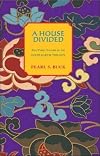
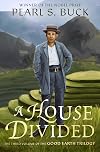
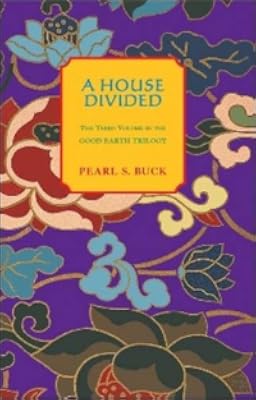
The conclusion to Buck's celebrated Good Earth trilogy: the story of a man's return to a homeland embroiled in revolution. On the eve of a popular rebellion, the Chinese government starts to crack down in cities across the country. Fleeing the turmoil, Wang Yuan, the son of a famous general and grandson of the patriarch of The Good Earth, leaves for America to study agriculture. When he returns to China six years later, he encounters a nation still in the grip of violent uprisings. show more Unprepared for the social upheaval, Wang is torn by the tensions between old traditions and new ways, and by his formidable family, whose struggles he hopes to solve. A reflective finale to Buck's groundbreaking and bestselling trilogy, A House Divided is a rich and unforgettable portrait of a family (and a nation) in transition. This ebook features an illustrated biography of Pearl S. Buck, including rare images from the author's estate. show lessTags
Recommendations

















Member Reviews
I have enjoyed the first two books in this trilogy, and this one did not disappoint. It was especially poignant in the main character's yearning to feel at home somewhere, as I've been musing on my own inability to claim any place as "my home."
Once, pondering on this in the black loneliness of night, it came to him that here in his own childhood bed, within his father's house, he felt as foreign as he had across the sea. It struck with a sudden bleakness, "How is it I have no home anywhere?"
And here:
...though he liked something about it very deeply, he knew now he could not live there as his grandfather once had lived in content, and feel it home. He was between, somehow, and it was a lonely place--between, as he was, this foreign house show more and the house of earth. He had no real home, and his was a very lonely heart which could not be wholly here nor there. show less
Once, pondering on this in the black loneliness of night, it came to him that here in his own childhood bed, within his father's house, he felt as foreign as he had across the sea. It struck with a sudden bleakness, "How is it I have no home anywhere?"
And here:
...though he liked something about it very deeply, he knew now he could not live there as his grandfather once had lived in content, and feel it home. He was between, somehow, and it was a lonely place--between, as he was, this foreign house show more and the house of earth. He had no real home, and his was a very lonely heart which could not be wholly here nor there. show less
"A House Divided" is the final segment Pearl Buck’s "The House of Earth" trilogy. Following the Wang family for three generations, this final book focuses on Wang Lung’s grandson, Wang Yuan, who is now nineteen years old.
The basic theme of the story is focused on Yuan’s difficulty adapting to the rapid changes occurring throughout China. Yuan is trapped between his fierce, non-compromising, traditional, authoritative father who is a feared warlord and the reality that everyone else around him is slowing adapting to Western ways. Yuan hates war. It pains him to see death and suffering and yet his father, Tiger the Warlord, expects him to inherit the throne of power in his regional kingdom which can only be kept by force and show more violence. Yuan craves companionship, yet his father taught him to trust no-one – especially women. While other young people adapt to the western ways with relative ease, going to dance clubs, dressing in trousers instead of traditional robes, speaking freely with women and openly disagreeing with their elders, Yuan lives a lonely isolated life.
Yuan’s cousin Meng is a revolutionary and he persuades Yuan to secretly join the crusade, but after authorities discover their subversive activities, Yuan is sent to school in America for safety. His six years of study in the United States only confirms his belief that many western customs are disrespectful, crude, and embarrassingly undignified. Yuan encounters prejudice and discrimination, and experiences zealous Christians who try to convert him. His return to China however, brings no comfort. The past is gone, but his future is elusive.
It amazes me that "The Good Earth" alone received the highest praise and continues to rate as one of the best classics of all time, yet only as a complete set does the reader view the transformation experienced by China. "The Good Earth" was all about tradition. In "Sons" and "A House Divided" Pearl Buck does a very thorough job demonstrating how the youth of China hungered for change. As the Cultural Revolution bubbled under the surface, young people restlessly questioned ancient customs and all previously learned principles: Confucian doctrine, war, freedom, tradition, family, hereditary laws, and the role women played in society. This saga of the Wang family is told in a simple straight-forward manner and beautifully written I have a wistful image of the peasant Wang Lung in the opening scene of "The Good Earth" preparing to meet his bride, and Wang Yuan in the closing scene of "A Divided House" laughing into the night. Too bad the two could not share time on earth. I think Wang Lung would have been tremendously proud of his grandson. show less
The basic theme of the story is focused on Yuan’s difficulty adapting to the rapid changes occurring throughout China. Yuan is trapped between his fierce, non-compromising, traditional, authoritative father who is a feared warlord and the reality that everyone else around him is slowing adapting to Western ways. Yuan hates war. It pains him to see death and suffering and yet his father, Tiger the Warlord, expects him to inherit the throne of power in his regional kingdom which can only be kept by force and show more violence. Yuan craves companionship, yet his father taught him to trust no-one – especially women. While other young people adapt to the western ways with relative ease, going to dance clubs, dressing in trousers instead of traditional robes, speaking freely with women and openly disagreeing with their elders, Yuan lives a lonely isolated life.
Yuan’s cousin Meng is a revolutionary and he persuades Yuan to secretly join the crusade, but after authorities discover their subversive activities, Yuan is sent to school in America for safety. His six years of study in the United States only confirms his belief that many western customs are disrespectful, crude, and embarrassingly undignified. Yuan encounters prejudice and discrimination, and experiences zealous Christians who try to convert him. His return to China however, brings no comfort. The past is gone, but his future is elusive.
It amazes me that "The Good Earth" alone received the highest praise and continues to rate as one of the best classics of all time, yet only as a complete set does the reader view the transformation experienced by China. "The Good Earth" was all about tradition. In "Sons" and "A House Divided" Pearl Buck does a very thorough job demonstrating how the youth of China hungered for change. As the Cultural Revolution bubbled under the surface, young people restlessly questioned ancient customs and all previously learned principles: Confucian doctrine, war, freedom, tradition, family, hereditary laws, and the role women played in society. This saga of the Wang family is told in a simple straight-forward manner and beautifully written I have a wistful image of the peasant Wang Lung in the opening scene of "The Good Earth" preparing to meet his bride, and Wang Yuan in the closing scene of "A Divided House" laughing into the night. Too bad the two could not share time on earth. I think Wang Lung would have been tremendously proud of his grandson. show less
I am not sure just how much readers will learn about China and Chinese culture from the Good Earth Trilogy. I do know you will learn a great deal about Pearl Buck, especially in this concluding volume, A House Divided. Buck does manage effectively to conclude the tale of the Wang family in a satisfying way, but she also indulges in her own ideological polemics. All her personal obsessions--mostly subsumed in the first two books--come to the fore in this final work. All the things Buck concerned herself with in private life are made public causes in A House Divided: women's rights, the cultural arrogance of foreign missionaries in China, the plight of foundlings, the intrusion of foreign ideologies, the issue of unbridgeable racial show more differences, and the impatience of 1930s youth with modernizing China. Little did she realize that this era, the 1920s and 1930s in China, was a Golden Age, in comparison with what was soon to follow: the murderous invasion of Japan in the "new city," Nanking, the civil war, Mao and communism that resulted in famines that would kill tens of millions, a Cultural Revolution that would suppress and seek to destroy independent thought, and a modern day China in the 21st century that has spoiled its land, left it polluted, and is engaging in a technological dystopia that seeks to encroach on free thought and personal independence.
All that would come after Buck's trilogy. For the readers engaged in the "present" of The Good Earth and its sequels, however, there are other changes. This last book displays an altered style of writing for Buck. One that is markedly inferior to the earlier volumes. The rhythm and the syntax of the earlier novels gives way to a shorter, clipped style. Perhaps this was inevitable as Buck moved her characters from an "archaic" age in the first two novels to a modernizing and revolutionary China in this last. Still, A House Divided often suffers in comparison.
At book's end, the final symbol of Mei-Ling and Yuan in the courtyard of the old earthen house probably gives us a last picture of what Buck wanted the new China to be. A place where people are rooted and belong to past traditions. But also a place willing to accept new ideas and seek to better their world through new ways of "seeing" that were dependent on their appropriateness to old China's ways. show less
All that would come after Buck's trilogy. For the readers engaged in the "present" of The Good Earth and its sequels, however, there are other changes. This last book displays an altered style of writing for Buck. One that is markedly inferior to the earlier volumes. The rhythm and the syntax of the earlier novels gives way to a shorter, clipped style. Perhaps this was inevitable as Buck moved her characters from an "archaic" age in the first two novels to a modernizing and revolutionary China in this last. Still, A House Divided often suffers in comparison.
At book's end, the final symbol of Mei-Ling and Yuan in the courtyard of the old earthen house probably gives us a last picture of what Buck wanted the new China to be. A place where people are rooted and belong to past traditions. But also a place willing to accept new ideas and seek to better their world through new ways of "seeing" that were dependent on their appropriateness to old China's ways. show less
This book mainly concentrates on the son of Wang the Tiger (and the grandson of the original Wang) but it does reveal a bit here and there of the three sons of Wang. Wang the Landlord and Wang the Merchant come across as spoiled even though they grew up on the farm and didn't get really rich until their adulthood. In this book, the Revolution is in full swing and it was interesting to see Wang's grandson deal with life in America. You can't help but feel sorry for poor Wang the Tiger after all he'd been through and what he did for his son to ensure the future of the son he loved. While 'The Good Earth' remains the best book in the trilogy - and one of Ms. Buck's best works overall - 'A House Divided' is a very good book in itself and is show more a definite must for any Pearl Buck fan. show less
This is the final book in The House of Earth trilogy (following The Good Earth and Sons). It continues the story of the same family, this time following one of Wang Lung's grandsons: Wang Yuan. After a falling out with his father over his future, Yuan goes to the big coastal city to see his sister and his father's other wife. Here he is immersed in the new ways that the coming revolution is bringing. He ends up spending six years in the United States getting a college degree in agriculture before he returns home to a completely changed China. Throughout the book, Yuan struggles to adapt to the new ways while still remaining true to his father and the old ways.
I like Pearl Buck (although her books are hit or miss), but I just don't see show more what the fuss over The Good Earth is about. She's written much better novels (for example, The Living Reed and Command the Morning). The whole trilogy just fell flat for me. There were no real likable characters, and the writing style, while it may have been appropriate for the culture it was representing, was just boring. show less
I like Pearl Buck (although her books are hit or miss), but I just don't see show more what the fuss over The Good Earth is about. She's written much better novels (for example, The Living Reed and Command the Morning). The whole trilogy just fell flat for me. There were no real likable characters, and the writing style, while it may have been appropriate for the culture it was representing, was just boring. show less
The Good Earth Trilogy Book 3 of 3, a classic Chinese fable, originally written in 1935.
There is a reason why I don't normally read trilogies. They usually get progressively worse and worse. Well, The Good Earth Trilogy is no different. Although, not the worst book I've ever read in my life, I really didn't think this one was ever going to end.
This 3rd book in the trilogy is all about Wang the Tiger's son, Wang Yuan, who struggles emotionally as the tide of new freedoms and the Revolution sweeps through China. He is divided on accepting the new freedom in women, making their own choices regarding marriage, dress, and mannerisms. He's completely lost in the direction of where his life should take him as China transitions into a more show more modern society.
His thoughts of love and hate for this or that just seem to ramble on endlessly. There wasn't anything outwardly that expressed his struggles. It was all mental...and boring. show less
There is a reason why I don't normally read trilogies. They usually get progressively worse and worse. Well, The Good Earth Trilogy is no different. Although, not the worst book I've ever read in my life, I really didn't think this one was ever going to end.
This 3rd book in the trilogy is all about Wang the Tiger's son, Wang Yuan, who struggles emotionally as the tide of new freedoms and the Revolution sweeps through China. He is divided on accepting the new freedom in women, making their own choices regarding marriage, dress, and mannerisms. He's completely lost in the direction of where his life should take him as China transitions into a more show more modern society.
His thoughts of love and hate for this or that just seem to ramble on endlessly. There wasn't anything outwardly that expressed his struggles. It was all mental...and boring. show less
This concludes the Good Earth trilogy, and focuses on Wang Lung's grandson, Yuan. It is a sweeping story of change in China, including time spent in America by Yuan and his cousin, Sheng. As I found with the second book, Sons, my enjoyment was very much enhanced by knowing the back stories; I'm not sure A House Divided would be a satisfying read for people who aren't familiar with Wang Lung and his sons.
Members
- Recently Added By
Lists

Best Books of 1926-1935
403 works; 10 members

Which house?
423 works; 16 members
Author Information

440+ Works 37,189 Members
Pearl S. Buck, June 26, 1892 - March 6, 1973 Pearl Sydenstricker Buck was an American author, best know for her novels about China. Buck was born on June 26, 1892, in Hillsboro, West Virginia, but as the daughter of Presbyterian missionaries she was taken to China in infancy. She received her early education in Shanghai, but returned to the United show more States to attend college, and graduated from Randolph-Macon Woman's College in Virginia in 1914. Buck became a university teacher there and married John Lossing Buck, an agricultural economist, in 1917. Buck and her husband both taught in China, and she published magazine articles about life there. Her first novel East Wind, West Wind was published in 1930. Buck achieved international success with The Good Earth, which won the Pulitzer Prize in 1932. This story of a Chinese peasant family's struggle for survival was later made into a MGM film. Buck resigned from the Presbyterian Board of Foreign Missions after publishing an article that was critical of missionaries. She returned to the United States because of political unrest in China. Buck's novels during this period include Sons, A House Divided, and The Mother. She also wrote biographies of her father (Fighting Angel) and her mother (The Exile). She won the Nobel Prize for Literature in 1938. During her career, Buck published over 70 books: novels, nonfiction, story collections, children's books, and translations from the Chinese. She also wrote under the pseudonym John Sedges. In the United States, Buck was active in the civil rights and women's rights movements. In 1942 she founded the East and West Association to promote understanding between Asia and the West. In 1949, Buck established Welcome House, the first international interracial adoption agency. In 1964, she established the Pearl S. Buck foundation to sponsor support for Amerasian children who were not considered adoptable. Pearl Buck died in Danbury, Vermont, on March 6, 1973. (Bowker Author Biography) show less
Some Editions
Series

Work Relationships
Common Knowledge
- Canonical title
- A House Divided
- Original title
- A House Divided
- Original publication date
- 1935
- People/Characters
- Wang Yuan; Wang the Tiger
- First words
- In this way Wang Yuan, son of Wang the Tiger, entered for the first time in his life the earthen house of his grandfather, Wang Lung.
- Last words*
- (Click to show. Warning: May contain spoilers.)"Wie beide," sagte er, "wir beide - wir brauchen vor nichts Furcht zu haben."
- Original language
- English
*Some information comes from Common Knowledge in other languages. Click "Edit" for more information.
Classifications
- Genres
- Fiction and Literature, General Fiction, Historical Fiction
- DDC/MDS
- 813.52 — Literature & rhetoric American literature in English American fiction in English 1900-1999 1900-1945
- LCC
- PS3503 .U198 .H68 — Language and Literature American literature American literature Individual authors 1900-1960
- BISAC
Statistics
- Members
- 635
- Popularity
- 45,976
- Reviews
- 15
- Rating
- (3.70)
- Languages
- 11 — Danish, Dutch, English, Finnish, French, German, Italian, Norwegian (Bokmål), Norwegian, Portuguese, Spanish
- Media
- Paper, Audiobook, Ebook
- ISBNs
- 29
- ASINs
- 22