On This Page
Description
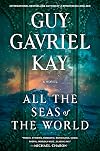
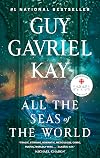
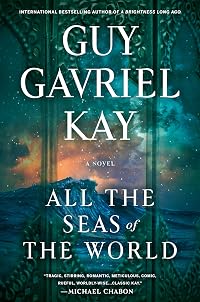
"Returning triumphantly to the brilliantly evoked near-Renaissance world of A Brightness Long Ago and Children of Earth and Sky, international bestselling author Guy Gavriel Kay deploys his signature "quarter turn to the fantastic" to tell a story of vengeance, power, and love. On a dark night along a lonely stretch of coast, a small ship sends two people ashore. Their purpose is assassination. They have been hired by two of the most dangerous men alive to alter the balance of power in the show more world. If they succeed, the consequences will affect the destinies of empires, and lives both great and small. One of those arriving at that beach is a woman abducted by corsairs as a child and sold into years of servitude. Having escaped, she is trying to chart her own course-and is bent upon revenge. Another is a seafaring merchant who still remembers being exiled as a child with his family from their home, for their faith, a moment that never leaves him. In what follows, through a story both intimate and epic, unforgettable characters are immersed in the fierce and deadly struggles that define their time. All the Seas of the World is a page-turning drama that also offers moving reflections on memory, fate, and the random events that can shape our lives-in the past, and today"-- show lessTags
Recommendations









Member Reviews
All the Seas of the World - Kay
Audio performance by Simon Vance
4.5 stars
Guy Gavriel Kay is back in his pseudo-Mediterranean Renaissance setting. Geographically it is the same location as in The Lions of Al Rassan, although several centuries later in time. Chronologically the events of this book follow those in A Brightness Long Ago with considerable overlap of characters. Had I known that, I would have reread the first book before starting this one. I have, at this point, reread both books. There’s a very significant horse race in the first one that connects both books. (As an additional FYI, although Children of Earth and Sky was published first, it follows this book chronologically.) In a previous review, I commented that Kay show more brings the reader into the interior lives of even minor characters. Several of those minor characters reappear with important roles in this book. I hardly remembered them, but on rereading, there they were, in the crowd at that important horse race. Their connections to new events are not immediately apparent, because this book begins with at least two completely new personalities.
All of these books are set in a time of extreme political turmoil. Religious intolerance between the Jaddites, Asherites, and Kindath (Kay’s stand-ins for Catholics, Muslims, and Jews) provides justification for border wars, invasions, and persecution. There’s also constant warfare between the petty kings or khalifs within the dominant religions. In all of these turbulent cultures, women have restricted lives and generally subservient roles; usually. Kay’s female characters never seem willing to sit passively on the sidelines. That is especially true in this book. The leading protagonist, Lenia Serrana, an escaped slave, is assertively unwilling to relinquish her personal agency to any man. I’ve said it before. Kay writes female characters who appeal to my feminist heart.
There is a great deal of activity in this book. There’s endless political maneuvering and lots of financial wheeling and dealing. The book begins with an assassination and several attempted assassinations follow. Kay gives the reader the introspective thoughts of characters dealing with challenge and change. In this book there’s a philosophical emphasis on the effects of exile and the idea of home. It seemed completely relevant to current events in the real world.
“The effect of being driven from home, and that home being despoiled … it can go on and on like sea-surf against rocks. On and on within a man or woman, or within a child as it grows up somewhere else, never at home only away” show less
Audio performance by Simon Vance
4.5 stars
Guy Gavriel Kay is back in his pseudo-Mediterranean Renaissance setting. Geographically it is the same location as in The Lions of Al Rassan, although several centuries later in time. Chronologically the events of this book follow those in A Brightness Long Ago with considerable overlap of characters. Had I known that, I would have reread the first book before starting this one. I have, at this point, reread both books. There’s a very significant horse race in the first one that connects both books. (As an additional FYI, although Children of Earth and Sky was published first, it follows this book chronologically.) In a previous review, I commented that Kay show more brings the reader into the interior lives of even minor characters. Several of those minor characters reappear with important roles in this book. I hardly remembered them, but on rereading, there they were, in the crowd at that important horse race. Their connections to new events are not immediately apparent, because this book begins with at least two completely new personalities.
All of these books are set in a time of extreme political turmoil. Religious intolerance between the Jaddites, Asherites, and Kindath (Kay’s stand-ins for Catholics, Muslims, and Jews) provides justification for border wars, invasions, and persecution. There’s also constant warfare between the petty kings or khalifs within the dominant religions. In all of these turbulent cultures, women have restricted lives and generally subservient roles; usually. Kay’s female characters never seem willing to sit passively on the sidelines. That is especially true in this book. The leading protagonist, Lenia Serrana, an escaped slave, is assertively unwilling to relinquish her personal agency to any man. I’ve said it before. Kay writes female characters who appeal to my feminist heart.
There is a great deal of activity in this book. There’s endless political maneuvering and lots of financial wheeling and dealing. The book begins with an assassination and several attempted assassinations follow. Kay gives the reader the introspective thoughts of characters dealing with challenge and change. In this book there’s a philosophical emphasis on the effects of exile and the idea of home. It seemed completely relevant to current events in the real world.
“The effect of being driven from home, and that home being despoiled … it can go on and on like sea-surf against rocks. On and on within a man or woman, or within a child as it grows up somewhere else, never at home only away” show less
It feels almost unfair to get Simon Vance to read a Guy Gavriel Kay book, elevating as it does the magnificent to the sublime. Returning yet again to his slightly-alternate pre-Renaissance world, this is the story of a merchant/corsair and his female partner, an ex-slave trained as a bodyguard, and the forces unleashed when they carry out an assassination culminating in an attack on another city as revenge for the fall of Sarantium years before. Kay does his usual weaving of stories that criss-cross the main narrative, tracing the effects of the actions of the main characters on the lives of people affected, for better or for worse, but the tapestry conceals a finely trained bow that send unerring arrows of bittersweet heartbreak to show more strike home nore often than seems reasonable even in a very good book like this. show less
A new Guy Gavriel Kay book is always a celebration, and something to meditate over, immerse yourself in. It's not just the style of his writing, which warrants rereading passages that are more poetry than prose. It's not just the characters whose inner and outer lives you are being gifted with, it's the whole. It's the world that you are being invited to enter, a world of glorious vistas, vistas, ancient gods, humans, love, and death. There's simply nothing else like it.
This book ties into the alt-Renaissance world he created earlier in so many of his books, but especially the more recent 'A Brightness Long Ago' and 'Children of Earth and Sky'. It can be read as a stand-alone, but benefits from familiarity with those other books.
As show more always, Kay raises timeless themes. In All the Seas of the World, he focuses on the exiled and displaced, in the form of his main characters Rafel ben Natan, a Kindath, and Lenia Seranna, a former slave. A theme that has not lost significance, as shown by the current Russian-Ukranian war. The theme echoes in other, secondary characters whose lack of significance in the plot is balanced by thoughtful commentary about the importance and significance of seemingly unimportant people in their own small circle of life. Much to ponder, as Kay’s work so often is.
Finishing one of Kay's books always sees me sitting in stillness for quite a while, still in the story, touched to the heart, grateful for the grace. I think I must reread all his work now. show less
This book ties into the alt-Renaissance world he created earlier in so many of his books, but especially the more recent 'A Brightness Long Ago' and 'Children of Earth and Sky'. It can be read as a stand-alone, but benefits from familiarity with those other books.
As show more always, Kay raises timeless themes. In All the Seas of the World, he focuses on the exiled and displaced, in the form of his main characters Rafel ben Natan, a Kindath, and Lenia Seranna, a former slave. A theme that has not lost significance, as shown by the current Russian-Ukranian war. The theme echoes in other, secondary characters whose lack of significance in the plot is balanced by thoughtful commentary about the importance and significance of seemingly unimportant people in their own small circle of life. Much to ponder, as Kay’s work so often is.
Finishing one of Kay's books always sees me sitting in stillness for quite a while, still in the story, touched to the heart, grateful for the grace. I think I must reread all his work now. show less
10/10
Oh, I loved this book! It’s told in such an interesting way—partly by an unknown narrator who offers philosophical insights and social commentary, partly in first person by characters in the book, and partly in third person but from the POV of various characters, frequently Lenia and Rafel, but others as well, both major and minor actors in the events of this story. Kay’s prose is a delight!
And the story itself? Intrigue around politics and religion, but also personal conflicts and growth around loyalty, loss, trust, love, and above all, the longing for and meaning of home.
I think by making this a “fantasy”, Kay is able to create his own historical context. So while it is firmly rooted in the Renaissance, the countries of show more Spain, France, the city-states of Italy, etc., and the three major religions of Islam, Catholicism, and Judaism, it is obviously not our world (two moons, for example). The author is free to borrow heavily from history while weaving his own tapestry. show less
Oh, I loved this book! It’s told in such an interesting way—partly by an unknown narrator who offers philosophical insights and social commentary, partly in first person by characters in the book, and partly in third person but from the POV of various characters, frequently Lenia and Rafel, but others as well, both major and minor actors in the events of this story. Kay’s prose is a delight!
And the story itself? Intrigue around politics and religion, but also personal conflicts and growth around loyalty, loss, trust, love, and above all, the longing for and meaning of home.
I think by making this a “fantasy”, Kay is able to create his own historical context. So while it is firmly rooted in the Renaissance, the countries of show more Spain, France, the city-states of Italy, etc., and the three major religions of Islam, Catholicism, and Judaism, it is obviously not our world (two moons, for example). The author is free to borrow heavily from history while weaving his own tapestry. show less
Classic Guy Gavriel Kay. I was pleasantly surprised to note that *All the Seas of the World* took place in the familiar pseudo-Mediterranean world of *The Lions of Al-Rassan* and *A Brightness Long Ago*—in fact a few old faces even show up—so it was obvious from the start this was going to be a comfy read.
Kay does try to twist this tale with a bit more "literary" bent — employing a deft hand with narrative structures and commentary on the nature of story and story-telling, but I am not sure it was exactly necessary. It certainly doesn't hurt though, and adds a pleasant lyrical tone to the book. Still, it's hard to judge how the tale would have stood up without it.
The story itself is not exactly a dynamic action tale of love, loss, show more exile and revenge although it contains all those elements. Instead it's more of an "epic" overview of the lives of his characters: their pasts, presents and futures, and their struggle with inevitable forces of time and change. Kay does introduce a little mysticism/magic here and there to add flavour and help intertwine the various plot threads but the story rests gently on those tropes and relies more on the characters themselves (or plain old fate) to move the action along. I enjoyed the story telling and found I sympathized with the characters—even the "bad" ones. And that, I think, is really a mark of good story.
I liked it. As I said it was classic Kay, huge in scope, narrow in focus, yet well written and not prone to getting caught up overly in its own mechanics. Just enough reliance on stock characters to make the situations accessible but more than enough detail and novelty to make sure no one was a stale representation of type. *All the Seas of the World* is not a short, exciting romp, but more than satisfying as a long leisurely tale of the storyteller milieu. But most especially, I like a book that helpfully includes a map and cast of characters, but is well written enough that they are essentially redundant—how could you not? show less
Kay does try to twist this tale with a bit more "literary" bent — employing a deft hand with narrative structures and commentary on the nature of story and story-telling, but I am not sure it was exactly necessary. It certainly doesn't hurt though, and adds a pleasant lyrical tone to the book. Still, it's hard to judge how the tale would have stood up without it.
The story itself is not exactly a dynamic action tale of love, loss, show more exile and revenge although it contains all those elements. Instead it's more of an "epic" overview of the lives of his characters: their pasts, presents and futures, and their struggle with inevitable forces of time and change. Kay does introduce a little mysticism/magic here and there to add flavour and help intertwine the various plot threads but the story rests gently on those tropes and relies more on the characters themselves (or plain old fate) to move the action along. I enjoyed the story telling and found I sympathized with the characters—even the "bad" ones. And that, I think, is really a mark of good story.
I liked it. As I said it was classic Kay, huge in scope, narrow in focus, yet well written and not prone to getting caught up overly in its own mechanics. Just enough reliance on stock characters to make the situations accessible but more than enough detail and novelty to make sure no one was a stale representation of type. *All the Seas of the World* is not a short, exciting romp, but more than satisfying as a long leisurely tale of the storyteller milieu. But most especially, I like a book that helpfully includes a map and cast of characters, but is well written enough that they are essentially redundant—how could you not? show less
It's always exciting to receive a new book by Guy Gavriel Kay. All the Seas of the World is the unofficial third book in an unofficial trilogy that includes A Brightness Long Ago and Children of Earth and Sky. I say trilogy because they all take place in the same Renaissance world with many of the same characters, so it is helpful to read the first two before reading this one.
The book centers around Lenia Serrana and Rafel ben Natan are merchants and partners who've taken on a special commission that sets in motion the events of the rest of the book. Lenia was taken as a slave when a child and Rafel is Kindath, a religion despised by the Jaddites for the most part. I should explain that this book is really historical fiction, not show more fantasy, at least more so than Mr. Kay's other books. Many of the events are recognizable from the history of that period including the Pazzi Conspiracy and the fall of Tunis. Though disguised, the Jaddites are Christians, the Kindath are Hebrews, and the Asharites are Muslim. The setting is around the Mediterranean, called the Middle Sea here, and the cities are generally recognizable though the names have been changed.
As always, the writing is superb, though I did get annoyed by the occasional use of a narrator voice that seemed a bit sententious at times. There are definite themes around slavery and the role of women in society that I've seen in Mr. Kay's other books; they can certainly make one think, whether as a reader or one of the characters in the book. However, I can't say this is one of my favorites of his books, maybe because the arc of the plot was laid out so clearly. Still, it's definitely a book worth reading: 3 1/2 stars rounded up show less
The book centers around Lenia Serrana and Rafel ben Natan are merchants and partners who've taken on a special commission that sets in motion the events of the rest of the book. Lenia was taken as a slave when a child and Rafel is Kindath, a religion despised by the Jaddites for the most part. I should explain that this book is really historical fiction, not show more fantasy, at least more so than Mr. Kay's other books. Many of the events are recognizable from the history of that period including the Pazzi Conspiracy and the fall of Tunis. Though disguised, the Jaddites are Christians, the Kindath are Hebrews, and the Asharites are Muslim. The setting is around the Mediterranean, called the Middle Sea here, and the cities are generally recognizable though the names have been changed.
As always, the writing is superb, though I did get annoyed by the occasional use of a narrator voice that seemed a bit sententious at times. There are definite themes around slavery and the role of women in society that I've seen in Mr. Kay's other books; they can certainly make one think, whether as a reader or one of the characters in the book. However, I can't say this is one of my favorites of his books, maybe because the arc of the plot was laid out so clearly. Still, it's definitely a book worth reading: 3 1/2 stars rounded up show less
I loved this, but I also found it frustrating. The merits of the book are numerous: lovely and evocative writing, richly-drawn settings and characters, compelling themes, and a pace at time both luxuriously slow and breath-takingly frentetic, with moment of high drama and rich pathos. What I found frustrating was the wandering point-of-view, which would shift from character-to-character mid-chapters, sometime alighting on a minor character who quickly died. Related to that, I found the transitions (in the audiobook) quite subtle and difficult to follow at times. These frustrations frequently took me out of the story, occasionally requiring a rewind just to make sure I knew whose POV I was following. So that was quite annoying at times. show more But the writing! It was just so good that it carried me along regardless. show less
Members
- Recently Added By
Lists

Top Five Books of 2022
736 works; 272 members

Books Read in 2022
5,168 works; 114 members

Globe and Mail | Canadian Fiction: June 4, 2022
10 works; 1 member

Globe and Mail | Canadian Fiction: June 11, 2022
10 works; 1 member

Top Five Books of 2025
954 works; 303 members

Canadian Jurist-Novelists
313 works; 1 member
Author Information

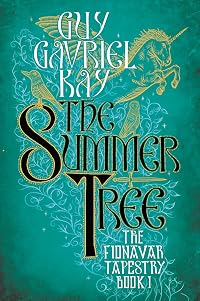
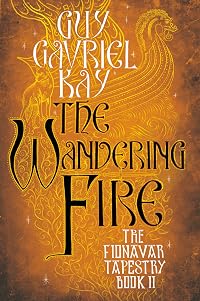
Guy Gavriel Kay was born on November 7, 1954 in Weyburn, Saskatchewan, Canada. He became interested in fantasy fiction while working as an assistant to Christopher Tolkien. He assisted him with the editing of J. R. R. Tolkien's The Silmarillion. After receiving a law degree from the University of Toronto, he became principal writer and associate show more producer for the CBC radio series, The Scales of Justice. He also wrote several episodes when the series moved to television. He has written social and political commentary for several publications including the National Post, The Globe and Mail, and The Guardian. His first fantasy novels were The Summer Tree, The Wandering Fire, and The Darkest Road, which make up the Fionavar Tapestry Trilogy. His other works include A Song for Arbonne, The Lions of Al-Rassan, Beyond This Dark House, The Last Light of the Sun, and Under Heaven. He has received numerous awards including and the Aurora Award for Tigana and The Wandering Fire, the 2008 World Fantasy Award for Best Novel for Ysabel, and the International Goliardos Award for his work in the fantasy field. (Bowker Author Biography) show less
Awards and Honors
Series

Common Knowledge
- Original title
- All the Seas of the World
- Original publication date
- 2022-05-17
- People/Characters
- Rafel ben Natan; Lenia Serrana; Folco Cino d'Acorsi; Guidanio "Danio" Cerra; Pierro Sardi; Antenami Sardi (show all 9); Ban Rasca Tripon; Raina Vidal; Leora Sachhetti
- Epigraph
- Swallow's heart, have mercy on them.
--Wisława Szymborska - Dedication
- Dedicated, with love, to the memory of
SYBIL KAY - First words
- The memory of home can be too far away, in time, in distance across the vastness of the earth, or of the sea.
- Last words
- (Click to show. Warning: May contain spoilers.)Stories are, as much as anything else, an act of love. They begin, they trace or weave their path for us, with us. They end. This one has, my loves.
- Original language
- English
Classifications
- Genres
- Fantasy, Fiction and Literature, General Fiction, Historical Fiction
- DDC/MDS
- 813.54 — Literature & rhetoric American literature in English American fiction in English 1900-1999 1945-1999
- LCC
- PR9199.3 .K39 .A78 — Language and Literature English English Literature English literature: Provincial, local, etc.
- BISAC
Statistics
- Members
- 478
- Popularity
- 63,571
- Reviews
- 21
- Rating
- (4.18)
- Languages
- English
- Media
- Paper, Audiobook, Ebook
- ISBNs
- 12
- ASINs
- 6