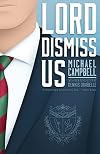
Lord Dismiss Us
by Michael Campbell
On This Page
Description
A new headmaster's attempts at turning around the declining fortunes of Weatherhill leads to hilarious disasters.Tags
Recommendations






















Member Reviews
Written in 1967, it takes place at a minor English public school in the last term of the school year. There's a new headmaster named Crabtree who is determined to restore the school's reputation for producing leaders of men and to crack down on "moral laxity". In addition to Crabtree, the characters include his "neurotic wife; his abominable adolescent daughter; the school chaplain, the Reverend Cyrill Starr, with his attendant coterie of young favorites , the Starlings; and the dispassionate housemaster." This latter finds little difference between the pupils when they came and not much more when they departed. "It was an agreeable occupation. The only drawback was the teaching.
Although the cover blurb makes it sound as though this is show more a funny book (and, indeed, bits of it are), it is really a rather dark book, as Crabtree's efforts to stamp out "particular friendships", and to enforce a uniformity of thought and action, damage, and in some cases destroy, boys in his charge, as well as staff. The hothouse atmosphere of the British public school, with its attendant homoeroticism, is the setting for some serious writing on the subject of love.
The book focuses on two people. Eric Ashley, a master who is clearly a brilliant teacher, is utterly unable to cope with his homosexuality and his feelings for one of his pupils. That pupil, Carleton, is discovering that his attraction for another boy means much more to him than the situational slap-and-tickle engaged in by others in the school.
I did find the end a bit unrealistic. It struck me as highly unlikely that Carleton's devastation at the breakup of his relationship with Allen would so suddenly have been alleviated by the news that a short story of his had been accepted for publication. Ashley's suicide, on the other hand, does seem inevitable. (One wonders how Carleton will react when he learns of it - the book ends before he does.)
I admit to not having a clue about the cricket match descriptions, but there is an absolutely stunning section in which Ashley and Carleton rework a short story the boy has written to prepare to submit it for publication. It's a very detailed explication of the writing and editing process, and you can see what a great teacher Ashley is as he makes Carleton tell him why a sentence or paragraph is wrong and helps him see how to fix it. Good stuff.
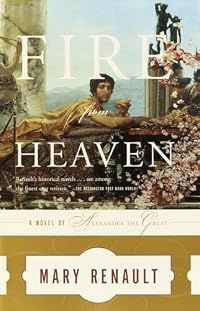
If you've read Mary Renault's The Charioteer, you will be reminded of the chapter early in that book set at Laurie's public school. show less
Although the cover blurb makes it sound as though this is show more a funny book (and, indeed, bits of it are), it is really a rather dark book, as Crabtree's efforts to stamp out "particular friendships", and to enforce a uniformity of thought and action, damage, and in some cases destroy, boys in his charge, as well as staff. The hothouse atmosphere of the British public school, with its attendant homoeroticism, is the setting for some serious writing on the subject of love.
The book focuses on two people. Eric Ashley, a master who is clearly a brilliant teacher, is utterly unable to cope with his homosexuality and his feelings for one of his pupils. That pupil, Carleton, is discovering that his attraction for another boy means much more to him than the situational slap-and-tickle engaged in by others in the school.
I did find the end a bit unrealistic. It struck me as highly unlikely that Carleton's devastation at the breakup of his relationship with Allen would so suddenly have been alleviated by the news that a short story of his had been accepted for publication. Ashley's suicide, on the other hand, does seem inevitable. (One wonders how Carleton will react when he learns of it - the book ends before he does.)
I admit to not having a clue about the cricket match descriptions, but there is an absolutely stunning section in which Ashley and Carleton rework a short story the boy has written to prepare to submit it for publication. It's a very detailed explication of the writing and editing process, and you can see what a great teacher Ashley is as he makes Carleton tell him why a sentence or paragraph is wrong and helps him see how to fix it. Good stuff.
If you've read Mary Renault's The Charioteer, you will be reminded of the chapter early in that book set at Laurie's public school. show less
This reminded me a lot of The Charioteer, in terms of prose style. It was very dense, and went back and forth between people's heads. Sometimes it read like something that had been translated from another language, with the way things seemed out of context sometimes. I think it's just the difference between 1960s dialogue and writing and nowadays, because all the books I've read written around this period share that peculiar characteristic.
I felt a little confused about just what the book was trying to tell me, in terms of homosexuality as something apart from the kind of romances that happened as a matter of course between boys in public schools. But I wonder how much of that was the time period - I wonder what the book would have show more been like if it had been written now.
All that aside, this was a very poignantly written record of that insulated world of the boy's school and that period between boy and adult. It had some very beautiful and insightful passages. show less
This reminded me a lot of The Charioteer, in terms of prose style. It was very dense, and went back and forth between people's heads. Sometimes it read like something that had been translated from another language, with the way things seemed out of context sometimes. I think it's just the difference between 1960s dialogue and writing and nowadays, because all the books I've read written around this period share that peculiar characteristic.
I felt a little confused about just what the book was trying to tell me, in terms of homosexuality as something apart from the kind of romances that happened as a matter of course between boys in public schools. But I wonder how much of that was the time period - I wonder what the book would have show more been like if it had been written now.
All that aside, this was a very poignantly written record of that insulated world of the boy's school and that period between boy and adult. It had some very beautiful and insightful passages. show less
Ratings
Members
- Recently Added By
Published Reviews
ThingScore 75
added by booksaplenty1949
Lists

Pre-1969 LGBTQ Literature
182 works; 66 members
Author Information

5 Works 110 Members
Common Knowledge
- Canonical title
- Lord Dismiss Us
- Original publication date
- 1967
- Important places
- Marston, Buckinghamshire, UK (fictional); Buckinghamshire, England, UK
Classifications
Statistics
- Members
- 96
- Popularity
- 334,378
- Reviews
- 3
- Rating
- (3.54)
- Languages
- English
- Media
- Paper, Ebook
- ISBNs
- 3
- UPCs
- 1
- ASINs
- 4